Who invented the camera?
Short answer
The camera was not invented by a single person but evolved from the camera obscura, an ancient optical concept. Joseph Nicéphore Niépce created the first permanent photograph in 1826 using a heliograph. Later, Louis Daguerre refined this process with the 1839 daguerreotype, marking the birth of practical, commercial photography for the public.
On this page
How did the camera evolve from ancient concepts?
The history of the camera begins with the camera obscura, a natural optical phenomenon known since antiquity. This device consists of a darkened room or box with a small hole in one side, which projects an inverted image of the outside world onto the opposite wall. Philosophers like Mozi in China and Aristotle in Greece documented the principle, though they lacked a way to capture the image permanently. During the Renaissance, artists used the camera obscura as a drawing aid to trace landscapes and portraits with greater accuracy.
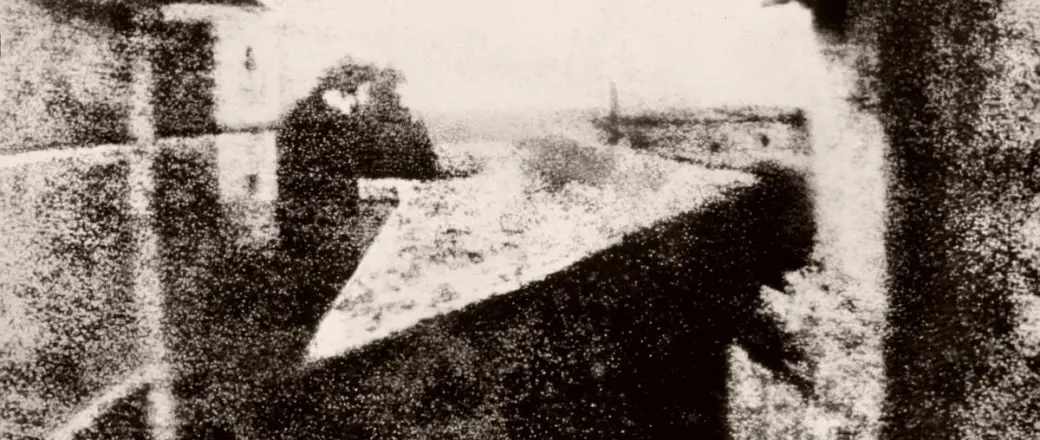
By the early 19th century, inventors sought to combine this optical projection with light-sensitive chemicals. Joseph Nicéphore Niépce, a French inventor, successfully achieved this in 1826 by coating a pewter plate with bitumen of Judea. He placed the plate inside a camera obscura and exposed it to sunlight for eight hours. This produced the world’s first permanent photograph, titled "View from the Window at Le Gras." While the image was blurry and required a long exposure, it proved that light could physically alter a surface to record reality.
Who were the key figures in early photography?
Following Niépce's death, his partner Louis Daguerre continued refining the process to make it more practical. In 1839, Daguerre unveiled the daguerreotype, which used silver-plated copper sheets treated with iodine vapor to create highly detailed, permanent images. This invention was the first to be commercially viable, sparking a global sensation. Simultaneously, British inventor William Henry Fox Talbot developed the calotype process, which utilized paper negatives. This was a revolutionary step because it allowed for the creation of multiple positive prints from a single negative, a fundamental principle that defined photography for the next 150 years.
Other contributors helped standardize the medium for the masses:
- George Eastman, who founded Kodak, introduced flexible roll film in 1888.
- Frederick Scott Archer invented the collodion process in 1851, which reduced exposure times significantly.
- Oscar Barnack developed the Leica I in 1925, popularizing 35mm film for portable, high-quality photography.
- Edwin Land revolutionized the industry in 1948 by introducing the Polaroid camera, providing instant physical prints.
How do modern cameras capture images?
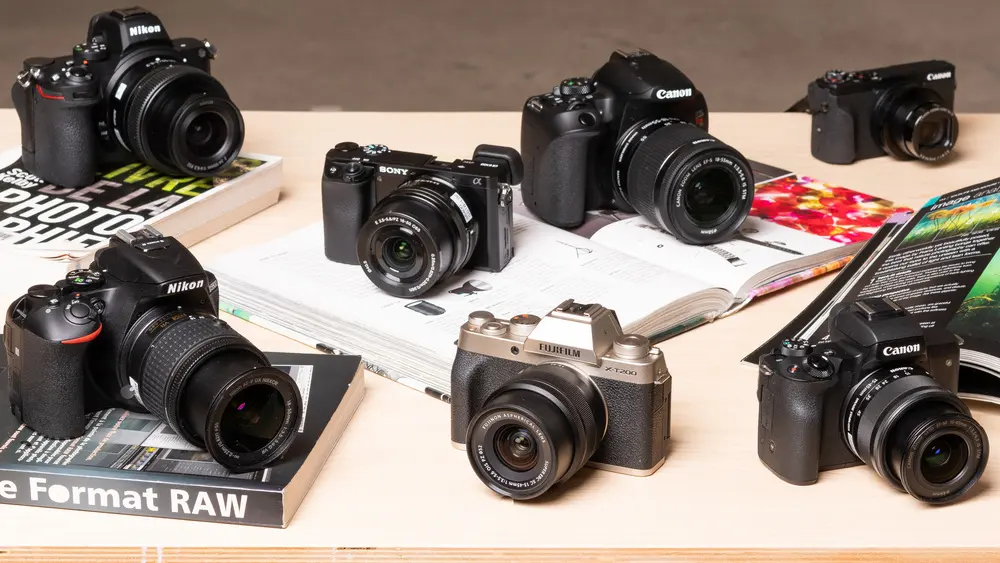
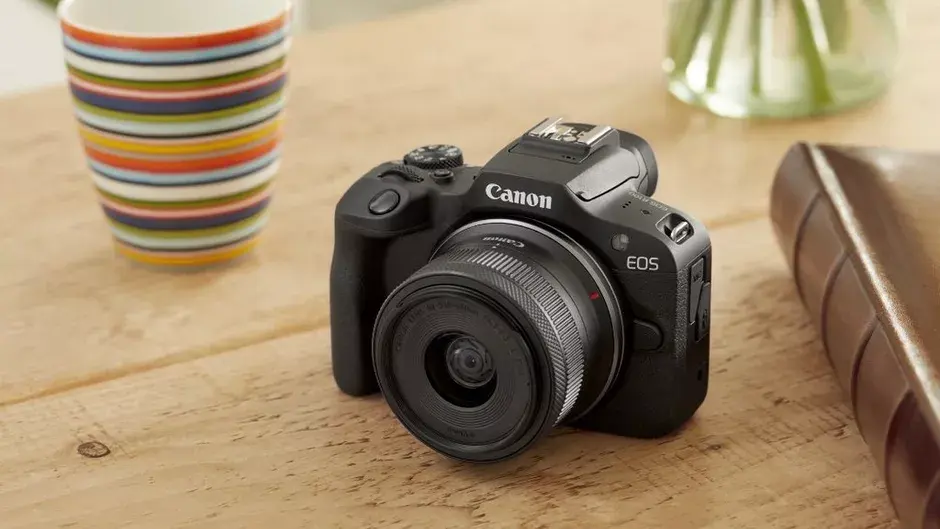
Modern cameras operate on the same basic principle as the camera obscura, though they replace chemical plates with digital sensors. When you press the shutter button, light enters through the lens, which focuses the image onto an image sensor composed of millions of light-sensitive pixels. These pixels convert light energy into electrical signals, which the camera’s processor then translates into digital data. This data is saved as an image file on a memory card, allowing for instant review and editing.
Digital cameras offer several advantages over their film-based predecessors, including the ability to adjust sensitivity to light, known as ISO, on the fly. Users can also change white balance settings to correct color casts caused by different light sources. To ensure high-quality results, follow these standard steps:
- Set your camera to a manual or semi-automatic mode to control aperture and shutter speed.
- Focus clearly on your subject by half-pressing the shutter button before taking the shot.
- Check your histogram to ensure the exposure is balanced and not losing detail in the highlights or shadows.
Common mistakes when learning photography
Beginners often struggle with basic exposure settings, leading to images that are either too dark or washed out. A frequent error is ignoring the "exposure triangle," which consists of aperture, shutter speed, and ISO. If your shutter speed is too slow, the image will likely suffer from motion blur, especially when shooting handheld. Conversely, setting the ISO too high introduces digital noise, which creates a grainy texture that degrades image quality. Always check your settings based on the available light before committing to a shot.
Another common mistake is poor composition or neglecting to stabilize the camera. Even the most advanced equipment cannot compensate for a shaky hand or a cluttered frame. To improve your technique, consider these tips:
- Use a tripod for long exposures to prevent camera shake.
- Apply the "rule of thirds" by placing key subjects along the grid lines rather than dead center.
- Avoid shooting directly into bright light sources unless you specifically intend to create a silhouette effect.
- Clean your lens regularly to prevent smudges and dust from appearing as blurry spots on your final images.
Why did photography change the world?
The invention of the camera fundamentally altered how humanity documents history and perceives reality. Before photography, visual records were limited to paintings, drawings, or written descriptions, all of which were subject to the artist's interpretation or bias. Photography provided an objective, mechanical way to freeze time, allowing families to preserve memories and scientists to record data with unprecedented precision. It democratized art, enabling people from all walks of life to capture their surroundings and share their unique perspectives with the world.
Beyond personal use, photography became a powerful tool for journalism, social reform, and scientific discovery. Images of war, poverty, and natural wonders have shaped public opinion and influenced political decisions throughout the 20th and 21st centuries. By making visual information portable and reproducible, the camera bridged cultural gaps and created a global visual language. As technology continues to advance, the core purpose of the camera remains unchanged: to serve as a bridge between the observer and the observed, ensuring that moments are not lost to the passage of time.
Key facts
- The camera obscura, a precursor to the modern camera, was described by Mozi in China around 400 BCE and later by Alhazen in the 11th century.
- Joseph Nicéphore Niépce created the first permanent photograph in 1826 or 1827 using a process called heliography.
- Louis Daguerre introduced the daguerreotype in 1839, which was the first commercially successful photographic process.
- George Eastman revolutionized photography in 1888 by launching the Kodak camera, making the technology accessible to the general public.
- To avoid blurry photos, always keep your elbows tucked against your body or use a tripod to stabilize the camera.
- When taking pictures, ensure your light source is behind you to properly illuminate your subject and avoid silhouetting.
The bottom line
The invention of the camera was not a single event but a cumulative evolution spanning centuries. From the ancient optical principles of the camera obscura to Niépce’s first permanent image and Eastman’s mass-market Kodak, photography transformed how we document history. Today, the core principles of optics and light exposure remain the foundation of all imaging technology, bridging the gap between scientific discovery and daily creative expression.
People also ask
What was the first photograph ever taken?
The world’s oldest surviving photograph is titled "View from the Window at Le Gras," captured by Joseph Nicéphore Niépce. It required an exposure time of at least eight hours, causing the sun to appear on both sides of the buildings.
How did early cameras work without film?
Early cameras used light-sensitive metal or glass plates coated with chemicals like silver halides. These materials reacted to light exposure, creating a latent image that was later developed using liquid chemical baths.
Who invented the first digital camera?
Steven Sasson, an engineer at Kodak, invented the first digital camera in 1975. It weighed eight pounds and captured black-and-white images on a standard cassette tape.
Why are old photos usually black and white?
Early chemical processes were only sensitive to light intensity rather than color wavelengths. It took several decades of experimentation with dye-sensitized emulsions before practical color photography became available to consumers.
What is the difference between a lens and a camera body?
The camera body houses the sensor or film and the shutter mechanism that controls exposure time. The lens is an optical component that focuses light onto the sensor to create a sharp image.
How can I keep my camera lens clean?
Use a dedicated microfiber cloth and an air blower to remove dust particles before wiping the glass. Avoid using paper towels or clothing, as these can leave scratches on the delicate lens coatings.
This answer was created with the help of AI research tools and reference sources. Spotted an error? Let us know — we correct mistakes quickly. See our editorial policy.