What are the best cameras for beginners?
Short answer
The best cameras for beginners are mirrorless models like the Sony Alpha a6400, Canon EOS R50, or Fujifilm X-T30 II. These devices offer a balance of compact size, intuitive controls, and excellent image quality. They provide the necessary manual flexibility for learning photography while including automated modes to ensure immediate, high-quality results.
On this page
Best mirrorless cameras for beginners
Mirrorless cameras are currently the gold standard for those starting their photography journey. Unlike older digital single-lens reflex (DSLR) cameras, mirrorless systems use an electronic viewfinder that displays exactly how your image will look before you press the shutter. This "what you see is what you get" feature is invaluable for understanding exposure and white balance in real time.
When choosing your first model, look for a camera with an interchangeable lens mount. This allows you to upgrade your glass as your skills improve, rather than replacing the entire camera body. The following models are widely considered the most beginner-friendly options available today:
- Sony Alpha a6400: Known for its industry-leading autofocus system that tracks subjects effortlessly.
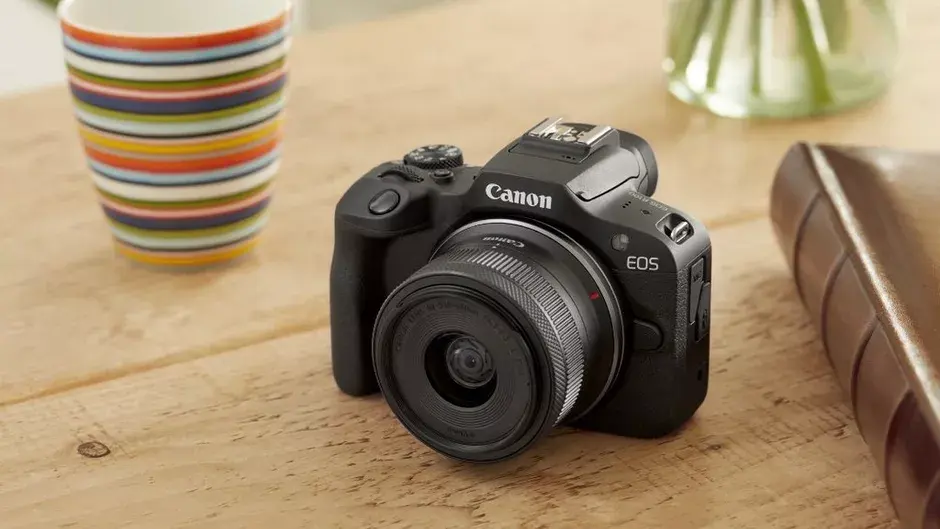
- Canon EOS R50: Features a highly intuitive menu system and a lightweight body perfect for travel.
- Fujifilm X-T30 II: Offers tactile physical dials that help beginners learn the relationship between shutter speed, aperture, and ISO.
- OM System OM-5: Provides robust weather sealing, making it ideal for outdoor and nature photography enthusiasts.
How to choose the right camera lens
The lens attached to your camera is often more important than the camera body itself. Most beginners start with a "kit lens," typically an 18-55mm zoom, which covers a versatile range of focal lengths. However, many experts recommend purchasing a "prime" lens, such as a 35mm or 50mm f/1.8, early on. These fixed-focal-length lenses force you to move your feet to frame a shot, which teaches you more about composition than a zoom lens ever could.
When selecting a lens, consider the "crop factor" of your camera sensor. Most beginner cameras use APS-C sensors, which effectively magnify the image compared to full-frame cameras. If you are buying a lens, ensure it is compatible with your specific mount type, such as Sony E-mount or Canon RF-mount. Consider these factors before making a purchase:
- Focal length: Lower numbers provide a wider field of view, while higher numbers zoom in closer.
- Aperture: A lower f-stop number (like f/1.8) allows for more light and creates a blurry background effect.
- Optical stabilization: This feature helps reduce blur if you are shooting handheld in low-light conditions.
Common mistakes when buying a camera
One of the most frequent errors beginners make is spending their entire budget on the camera body while neglecting essential accessories. You will inevitably need a high-speed SD memory card, a spare battery, and a comfortable neck or wrist strap. Additionally, many new photographers overlook the cost of image editing software, which is essential for processing raw files and refining your final output.
Another mistake is believing that more megapixels automatically result in better photos. While high resolution is beneficial for large prints, a camera with 20 to 24 megapixels is more than sufficient for social media and general hobbyist use. Focus instead on the camera’s ergonomics and how the device feels in your hands. If the camera is too heavy or the buttons are poorly placed, you will be less inclined to carry it with you. Always try to hold the camera in a retail store before committing to a purchase to ensure the grip fits your hand comfortably.
How to learn photography basics quickly
Mastering photography requires understanding the "exposure triangle," which consists of aperture, shutter speed, and ISO. Aperture controls the depth of field, shutter speed determines how motion is frozen or blurred, and ISO adjusts the sensor's sensitivity to light. You can learn these concepts by switching your camera to Manual (M) mode and deliberately changing one setting at a time to observe the impact on your image.
Do not be discouraged if your first attempts are blurry or poorly lit. Practice is the only way to build muscle memory for adjusting settings on the fly. Try to complete these three exercises to build your skills:
- Shoot a moving object, like a pet or a car, at different shutter speeds to see how motion blur changes.
- Take a portrait of a friend using the widest aperture available to see how the background becomes soft and out of focus.
- Photograph the same scene at different times of the day to see how natural light changes the mood and color of your images.
Why mirrorless cameras are better than smartphones
While modern smartphones have impressive computational photography features, dedicated cameras offer superior physical hardware. The larger sensors found in mirrorless cameras capture significantly more light and detail, especially in challenging lighting conditions. Furthermore, the ability to physically change lenses provides a creative range that no smartphone can replicate, regardless of how many lenses are built into the back of the phone.
Beyond image quality, using a dedicated camera changes your approach to the craft. It encourages you to be more intentional with every frame, as you are not simply tapping a screen to take a photo. This deliberate process helps you develop a unique artistic style over time. While a smartphone is convenient for quick snapshots, a dedicated camera is a tool for exploration and long-term skill development. By investing in a dedicated system, you are committing to a hobby that rewards patience, technical knowledge, and a keen eye for detail as you capture the world around you.
Key facts
- Mirrorless cameras are generally lighter and more compact than traditional DSLRs because they lack an internal mirror mechanism.
- APS-C sensors are ideal for beginners as they offer a balance between high image quality and affordable camera body sizes.
- A "kit lens," typically an 18-55mm zoom, is the best starting point for learning how focal lengths affect your framing.
- Aperture priority mode (labeled "A" or "Av" on the dial) allows you to control depth of field while the camera handles shutter speed.
- Always prioritize a camera with a comfortable grip and an intuitive menu system, as usability is more important than raw technical specs.
- Learning the "exposure triangle"—the relationship between aperture, shutter speed, and ISO—is the single most important step for any new photographer.
The bottom line
Choosing your first camera is less about finding the perfect machine and more about selecting a system that encourages you to shoot daily. Focus on ergonomic comfort and manual control accessibility rather than high-end megapixels. By mastering the exposure triangle on an entry-level mirrorless body, you will build a foundational skill set that remains relevant regardless of which camera brand or model you eventually upgrade to.
People also ask
Should I buy a new camera or a used one?
Buying used from reputable retailers is an excellent way to get professional-grade gear at a fraction of the cost. Ensure the shutter count is low and the sensor is free of scratches or debris.
Is a smartphone camera good enough for learning photography?
Smartphones are great for composition, but they lack the physical controls required to master manual settings. Dedicated cameras offer larger sensors that perform significantly better in low light and provide natural background blur.
What is the difference between a crop sensor and a full-frame sensor?
Full-frame sensors are larger, providing better performance in dim lighting and a wider field of view. Crop sensors are smaller, more affordable, and effectively "zoom in" on your subject, making them popular for wildlife and sports.
Do I need to buy extra lenses immediately?
Stick with your kit lens for at least three months to understand your preferred shooting style. Once you identify whether you prefer wide landscapes or tight portraits, invest in a "prime" lens with a fixed focal length.
How do I prevent blurry photos?
Blurry images are usually caused by a shutter speed that is too slow for the focal length being used. Increase your shutter speed or use a tripod to ensure your images remain sharp in varying light conditions.
What is the most common mistake beginners make?
The most common error is relying on "Auto" mode, which prevents you from learning how light behaves. Force yourself to use manual or semi-manual modes to understand how your settings impact the final look of your images.
This answer was created with the help of AI research tools and reference sources. Spotted an error? Let us know — we correct mistakes quickly. See our editorial policy.