Who invented photography?
Short answer
Photography was not invented by a single person but emerged through the collective work of several innovators. Joseph Nicéphore Niépce produced the first permanent photograph in 1826. Shortly after, Louis Daguerre refined the process to create the daguerreotype, while William Henry Fox Talbot simultaneously developed the negative-positive paper process that defined modern film photography.
On this page
Who actually invented photography?
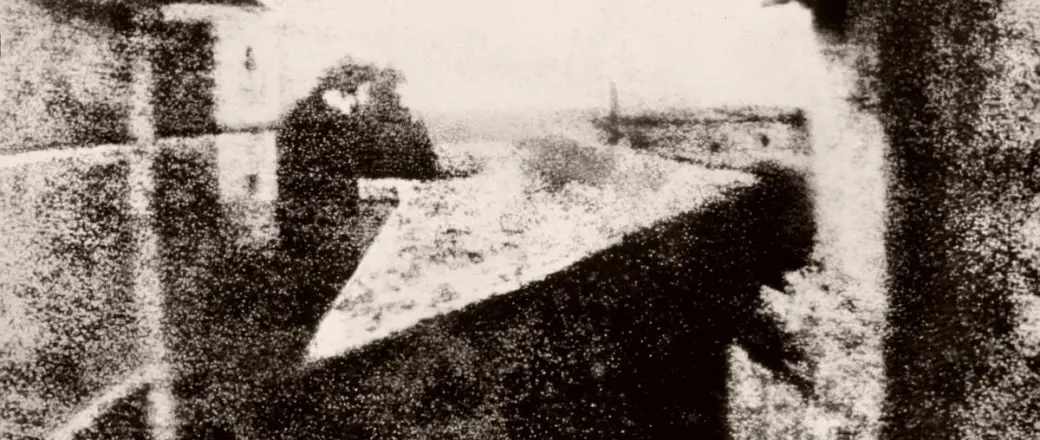
The invention of photography was a gradual evolution rather than a single "eureka" moment. While many credit Louis Daguerre due to his commercial success, he built upon the foundational experiments of Joseph Nicéphore Niépce. In 1826, Niépce used a process called heliography to capture a view from his window on a pewter plate coated with bitumen. This process required an exposure time of eight hours, making it impractical for daily use.
Following Niépce’s death, Daguerre partnered with him and later refined the chemical process. In 1839, the French government announced the daguerreotype, which used silver-plated copper sheets treated with iodine vapor. This method reduced exposure times to minutes and produced incredibly sharp, detailed images. Meanwhile, in England, William Henry Fox Talbot was working independently on the calotype process. His invention allowed for the creation of a paper negative, which meant multiple positive prints could be produced from a single exposure. This distinction between the unique daguerreotype and the reproducible calotype remains the most significant divide in early photographic history.
How did early cameras work?
Early cameras were based on the camera obscura, a device that had been known for centuries. The camera obscura, or "dark room," used a small hole or lens to project an inverted image of the outside world onto a surface inside a darkened box. Early inventors simply sought a way to make that projected image permanent by coating the surface with light-sensitive chemicals.
The transition from a simple optical projection to a photograph involved several key components that remain relevant today:
- The aperture: A small opening that controls the amount of light entering the box.
- The lens: A piece of glass used to focus the light onto the focal plane.
- The medium: A surface, such as a metal plate or paper, treated with light-sensitive silver salts.
- The shutter: A mechanism to control the duration of light exposure.
By manipulating these four elements, early photographers could capture light patterns that reacted with chemical coatings. Once the light hit the plate, the image was "fixed" using chemical baths to prevent it from fading further when exposed to daylight.
Why were early photographs so blurry?
Early photography suffered from long exposure times and the limitations of primitive lenses. Because the light-sensitive materials were not very reactive, the camera had to stay open for a long time to gather enough light. If a subject moved even slightly during this period, the resulting image would appear smeared or ghost-like. This is why people in 19th-century portraits often look stiff and unsmiling; they were held in place by metal headrests to ensure they remained perfectly still for the duration of the exposure.
Furthermore, early lenses were not "achromatic," meaning they could not focus all colors of light onto the same point. This resulted in chromatic aberration, which caused color fringing and a general lack of sharpness. Photographers had to learn how to compensate for these optical flaws by adjusting their focus and choosing specific lighting conditions. As glass manufacturing improved throughout the 1850s, lenses became faster and sharper, eventually allowing for the "instantaneous" photography that captured motion without the blur that plagued the earliest pioneers.
Common mistakes when using vintage techniques
Attempting to replicate early photographic processes requires extreme precision and safety awareness. Many beginners fail because they do not understand the volatility of the chemicals involved. For example, the collodion process, which became popular in the 1850s, requires the photographer to coat, expose, and develop the plate while it is still wet. If the plate dries, the image will not form correctly.
When experimenting with historical methods, avoid these common errors:
- Underestimating the danger of chemicals: Many early processes used toxic substances like potassium cyanide or ether. Always wear gloves and work in a well-ventilated space.
- Poor light-tightness: Even a tiny pinhole leak in your camera bellows will fog your entire plate, ruining the exposure.
- Improper chemical ratios: Early chemistry was sensitive to temperature and humidity; failing to measure ingredients by weight rather than volume often leads to inconsistent results.
- Rushing the development: Patience is essential, as the chemical reaction must be monitored carefully to achieve the correct contrast and density.
What is the legacy of these inventors?
The work of Niépce, Daguerre, and Talbot laid the foundation for every image-capturing device that followed. By proving that light could be harnessed to record reality, they fundamentally changed how humans document history, art, and personal memory. Their competition drove rapid innovation, pushing the technology from a scientific curiosity to a mass-market tool within just a few decades. By the late 1800s, George Eastman would further democratize the medium with the Kodak camera, but he was standing on the shoulders of the 1839 pioneers.
Today, we see the echoes of their work in every digital sensor. The fundamental principles of optics—aperture, shutter speed, and focal length—remain identical to those used in the first wooden box cameras. While the medium has shifted from silver-coated metal to silicon pixels, the core desire to preserve a fleeting moment in time remains the same. The inventors of photography did not just create a machine; they created a new language for human expression that continues to evolve in our modern, visually-driven world.
Key facts
- Joseph Nicéphore Niépce produced the first permanent photograph, View from the Window at Le Gras, around 1826.
- Louis Daguerre refined the process in 1839, creating the "daguerreotype," which used silver-plated copper sheets.
- William Henry Fox Talbot invented the calotype process, which introduced the concept of negative-to-positive printing.
- Early photographic exposures originally required several hours of sunlight to capture an image on a sensitized plate.
- To avoid blurry images, use a sturdy tripod to keep your camera perfectly still during long exposures.
- Always store light-sensitive film or prints in cool, dark environments to prevent chemical degradation over time.
The bottom line
Photography was not invented by a single person but evolved through the collaborative and competitive efforts of several 19th-century pioneers. While Niépce captured the first image, Daguerre and Talbot developed the practical methods that made the medium viable. Today, photography remains a blend of science and art, rooted in these early chemical discoveries that transformed how we document history and preserve our personal memories forever.
People also ask
What was the first photograph of a person?
The first photograph to feature a human was Boulevard du Temple, taken by Louis Daguerre in 1838. Because of the long exposure time, moving traffic disappeared, but a man getting his shoes shined remained visible.
How did the first cameras work?
Early cameras, known as camera obscuras, used a small hole or lens to project an image onto a surface. Photographers then placed light-sensitive chemicals on plates to capture that projected light permanently.
Who invented color photography?
James Clerk Maxwell produced the first durable color photograph in 1861 by photographing a tartan ribbon three times through red, blue, and green filters. These images were then projected back together to recreate the original colors.
Why were early photographs so expensive?
The process required rare chemicals, precious metals like silver, and highly skilled labor to prepare and develop the plates. Because each daguerreotype was a unique, one-of-a-kind object, it was a luxury item for the wealthy.
When did photography become accessible to the public?
Photography became a mass-market hobby in 1888 when George Eastman introduced the Kodak camera. It came pre-loaded with film, and users simply sent the entire camera back to the factory for processing.
What is a negative?
A negative is an image where the light and dark values are reversed, with light areas appearing dark and vice versa. This invention allowed photographers to create multiple positive prints from a single original capture.
This answer was created with the help of AI research tools and reference sources. Spotted an error? Let us know — we correct mistakes quickly. See our editorial policy.