Who invented playing cards?
Short answer
Playing cards were not invented by a single individual but evolved in 9th-century China during the Tang Dynasty. These early cards, known as "leaf games," likely served as both currency and gaming tools. They eventually spread through trade routes to the Islamic world and finally reached Europe in the late 14th century.
On this page
Where did playing cards originate?
The earliest evidence of card games points to 9th-century China. Historical texts from the Tang Dynasty mention the "leaf game," which used paper sheets decorated with intricate designs. These cards were likely a development of earlier paper money, which featured denominations and symbols. As paper production became more efficient, these sheets transitioned from simple currency into recreational tools for gambling and strategy.
By the 11th century, these games had evolved into more complex formats involving suits and ranks. While the exact rules of these early games remain lost to history, they established the fundamental concept of using a standardized deck for play. From China, the concept traveled westward along the Silk Road, influencing gaming cultures in Persia and the Mamluk Sultanate of Egypt. These regional variations introduced the structural elements that would eventually define the modern deck.
How did playing cards reach Europe?
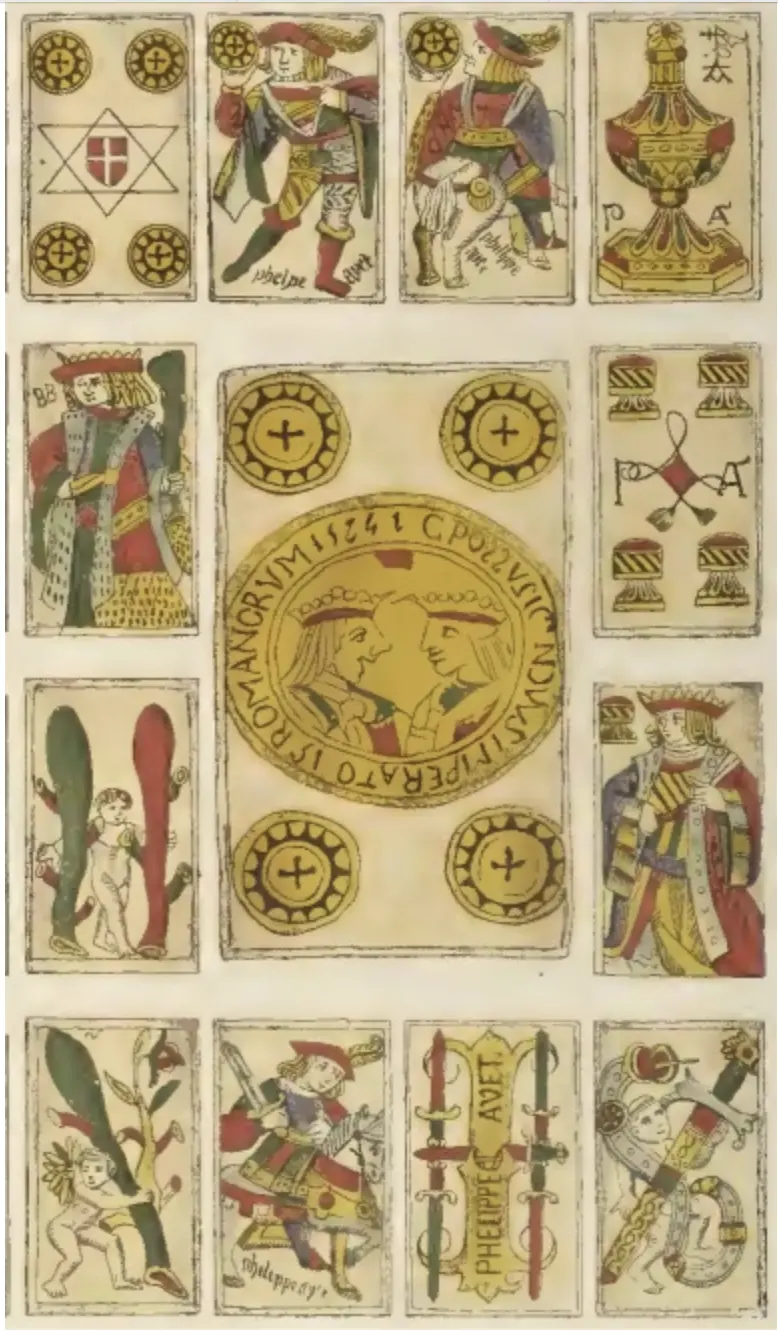
Playing cards arrived in Europe around 1370, likely entering through Mediterranean trade ports in Italy and Spain. The Mamluk deck, which featured four suits—coins, cups, swords, and polo sticks—served as the primary template for early European designs. European artisans quickly adapted these symbols to reflect their own social hierarchies and cultural interests, leading to the development of the Latin-suited decks still used in parts of Spain and Italy today.
The transition to the familiar French-suited deck—hearts, diamonds, clubs, and spades—occurred in the 15th century. This design was favored for its simplicity, as the geometric shapes were easier to mass-produce using woodblock printing. This innovation allowed cards to become affordable for the general public rather than being exclusive luxuries for the aristocracy. The standardization of the 52-card deck solidified during this period, creating a universal language for card games across the continent.
What are the standard components of a deck?
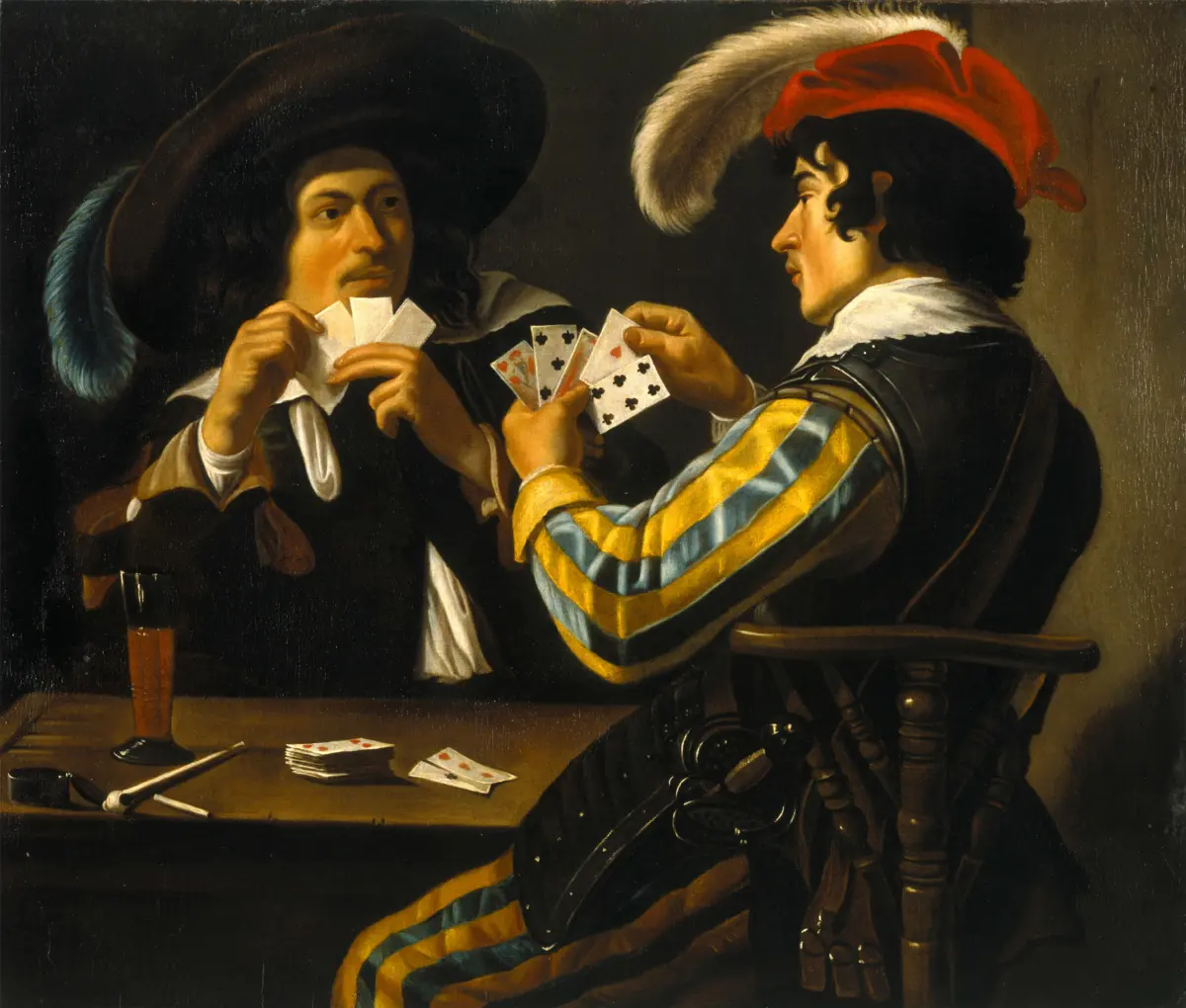
A modern standard deck consists of 52 cards divided into four distinct suits. Each suit contains 13 ranks, typically ranging from an ace to a ten, followed by three face cards: the jack, queen, and king. This structure is designed to provide a balanced distribution of probability, which is essential for the vast majority of card games played today.
- Hearts: Traditionally associated with the clergy or the heart.
- Diamonds: Represented the merchant class or wealth.
- Clubs: Symbolized the peasantry or agriculture.
- Spades: Derived from the Italian "spada," representing the nobility or military.
The inclusion of the joker is a much later addition, appearing in the United States around the 1860s. Originally created as a "best bower" card for the game of Euchre, it eventually became a versatile wild card. Understanding these components is vital for anyone looking to learn traditional games like poker, bridge, or rummy.
How do you care for a deck of cards?
Maintaining the condition of your cards is essential for ensuring fair play and ease of handling. Modern cards are typically made of cardstock coated with a plastic or polymer finish to prevent moisture absorption and wear. To keep your deck in top shape, always store it in its original box in a cool, dry place away from direct sunlight, which can cause colors to fade and paper to become brittle.
Common mistakes when maintaining a deck include:
- Leaving cards exposed to humidity, which causes them to warp or stick together.
- Using dirty hands, which transfers oils and grime that degrade the finish.
- Attempting to shuffle too aggressively, which can bend corners and ruin the structural integrity.
- Storing the deck in a loose bag where cards can be easily crushed or lost.
If a card becomes sticky, you can gently wipe it with a dry, lint-free cloth. Never use water or cleaning agents, as these will permanently damage the paper core.
Why are there so many different games?
The versatility of the 52-card deck is the primary reason for its enduring popularity. Because the deck provides a finite set of variables—four suits and thirteen ranks—it can be used to simulate everything from complex warfare to simple chance. Games are generally categorized by their mechanics, such as trick-taking, shedding, or matching. This variety ensures that card games remain intellectually stimulating regardless of the player's age or skill level.
- Learn the basic mechanics of a specific genre, such as trick-taking games like Hearts or Spades.
- Practice tracking the cards that have already been played to improve your strategic decision-making.
- Focus on the rules of one game at a time to avoid confusion between different scoring systems.
- Observe experienced players to understand how they manage their hands and anticipate opponents' moves.
By mastering the fundamentals of probability and observation, players can elevate their experience from simple luck to a sophisticated exercise in logic and psychological maneuvering. This adaptability is exactly why, centuries after their invention, playing cards remain a staple of global entertainment.
Key facts
- Playing cards originated in 9th-century China during the Tang Dynasty, likely evolving from paper money or gaming tiles.
- The earliest known printed cards were discovered in the form of "leaf game" pages, which functioned as both currency and entertainment.
- Cards reached Europe via Islamic trade routes around the 1370s, appearing first in Italy, Spain, and Germany.
- The standard 52-card deck with four suits—hearts, diamonds, clubs, and spades—was popularized by French card makers in the 15th century.
- Avoid the common misconception that cards were invented in Egypt; there is no archaeological evidence to support the theory that they originated there.
- When handling antique cards, always store them in acid-free sleeves to prevent the paper from yellowing or becoming brittle due to humidity.
The bottom line
Playing cards emerged in 9th-century China before migrating to Europe through trade networks by the late 1300s. While their exact origins remain a subject of historical study, the transition from Chinese paper tiles to the recognizable 52-card French deck transformed global leisure. Understanding this history highlights how simple tools evolve through cultural exchange, eventually becoming a universal medium for strategy, gambling, and social interaction worldwide.
People also ask
Why are there 52 cards in a standard deck?
The 52-card structure is often linked to the 52 weeks in a year. While historical evolution played a larger role than intentional design, the number became standardized in the 17th century to accommodate various European games.
What do the four suits represent?
In the French deck, the suits represented the four pillars of medieval society: hearts for the clergy, diamonds for the merchant class, clubs for the peasantry, and spades for the nobility.
Are Tarot cards older than standard playing cards?
No, Tarot cards were developed in 15th-century Italy as a game called tarocchini. They were created long after standard playing cards had already become established across the European continent.
Why do face cards have specific designs?
The designs are largely based on the standardized patterns developed by Parisian card makers in the 1500s. These designs were simplified over time to make them easier to mass-produce using woodblock printing.
Can you use any deck for any card game?
Most games require specific deck compositions, such as removing certain cards or adding jokers. Always check the rules of a specific game before starting to ensure your deck is prepared correctly.
How should I shuffle cards to avoid damaging them?
Use the "riffle shuffle" by splitting the deck into two halves and letting the edges interleave. Avoid bending the cards too sharply, as this creates permanent creases that can mark the deck.
This answer was created with the help of AI research tools and reference sources. Spotted an error? Let us know — we correct mistakes quickly. See our editorial policy.