Who invented hockey?
Short answer
Modern ice hockey was not invented by a single individual, but rather evolved from various stick-and-ball games played in the British Isles and North America. James Creighton is widely credited with organizing the first indoor game in Montreal in 1875, which established the foundational rules that transformed the sport into modern ice hockey.
On this page
How did ice hockey originate?
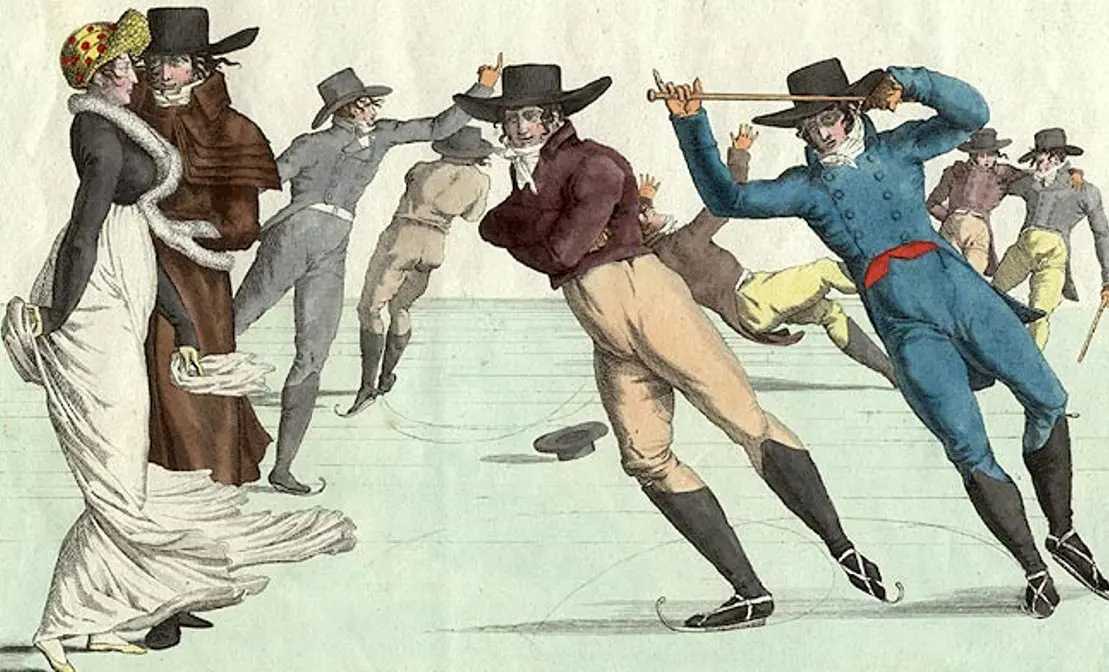
Ice hockey emerged from a blend of traditional field games such as hurling, shinty, and field hockey. As European immigrants settled in Canada during the 18th and 19th centuries, they brought these pastimes with them, adapting them to the harsh winter conditions of the North American climate. These early versions were played on frozen ponds and rivers using makeshift equipment, including tree branches for sticks and frozen cow dung or wooden blocks as pucks.
The transition from a casual outdoor pastime to an organized sport occurred incrementally as communities sought structured winter recreation. By the mid-1800s, students at McGill University in Montreal began codifying these informal games. The evolution was driven by a desire for consistency, leading to the adoption of specific rules that limited the number of players and defined the playing area. This period of experimentation laid the groundwork for the organized league structures that would eventually define the professional sport.
Who was James Creighton?
James Creighton is often cited as the father of organized hockey due to his pivotal role in moving the game indoors. A native of Nova Scotia, he moved to Montreal in the early 1870s, bringing his passion for the sport with him. On March 3, 1875, he organized the first recorded indoor game at the Victoria Skating Rink, which featured two teams of nine players and a flat wooden disk instead of a ball.
Creighton’s influence extended beyond the initial game, as he helped draft the first set of formal rules, known as the Montreal Rules. These regulations were essential for standardizing gameplay and reducing the chaos inherent in earlier, less structured matches. His efforts transformed hockey from a disorganized street game into a legitimate athletic pursuit that could be played in a controlled environment, paving the way for the establishment of the Amateur Hockey Association of Canada in 1886.
What are the Montreal Rules?
The Montreal Rules were the first attempt to create a uniform framework for hockey, ensuring that teams played by the same standards. These rules were heavily influenced by the existing regulations of field hockey and rugby, focusing on safety and fair competition. Key components of these early regulations included the following:
- The game was played with a flat, circular wooden puck to prevent it from bouncing and hitting spectators.
- Each team was limited to nine players on the ice at one time.
- The game was divided into two halves, with a set duration for each period.
- Fighting and rough play were strictly prohibited to maintain the sport's reputation.
- The use of a stick was restricted to a specific length and shape to ensure consistency.
These rules were instrumental in the sport’s growth, as they allowed different clubs to compete against one another without confusion. By providing a clear structure, the Montreal Rules encouraged the formation of new teams and leagues across Canada and the United States.
How did hockey equipment evolve?
The equipment used in hockey has undergone significant changes since the 1875 game. Early players wore simple leather skates and minimal padding, often relying on thick wool clothing for protection against the cold and the impact of the puck. As the game became faster and more competitive, the need for specialized gear became apparent to prevent serious injuries.
- Sticks transitioned from simple tree branches to laminated wood, and eventually to high-tech carbon fiber composites.
- Skates evolved from metal blades strapped to leather boots to integrated, molded plastic and composite boots.
- Protective gear, including helmets, gloves, and shoulder pads, became mandatory as the speed of the game increased.
- Goaltenders began using specialized masks in the 1950s after Jacques Plante pioneered the practice to protect his face.
This progression reflects the sport's shift toward professionalization and safety. Modern players now utilize lightweight, durable materials that allow for greater speed and agility while significantly reducing the risk of long-term injury.
Common mistakes when learning hockey history
A frequent error in understanding hockey history is the belief that one person invented the sport in a single moment. In reality, the game is a cultural hybrid that developed over decades through the contributions of many individuals and regional variations. Attributing the sport to a single inventor ignores the historical context of the indigenous games and European influences that shaped its development. Another common mistake is assuming the game was always played with modern equipment.
When researching the origins of the sport, it is important to avoid these pitfalls:
- Overlooking the role of indigenous games that existed in North America long before European arrival.
- Assuming the game was immediately popular across all regions; it actually grew slowly through local clubs.
- Ignoring the influence of field hockey and lacrosse on the early development of ice hockey mechanics.
- Crediting the National Hockey League with the invention of the game, rather than recognizing it as a later entity that organized existing clubs.
By recognizing the collaborative and evolutionary nature of the sport, one gains a more accurate perspective on how hockey became the global phenomenon it is today.
Key facts
- Modern ice hockey was first played indoors in Montreal, Canada, on March 3, 1875.
- James Creighton is widely credited with organizing the first recorded indoor game at the Victoria Skating Rink.
- The game evolved from field hockey, hurling, and lacrosse, which were played on ice by early settlers.
- The first set of formal rules, known as the "Montreal Rules," was published in 1877.
- Early pucks were often made of wood or frozen cow dung before vulcanized rubber became the standard.
- Avoid confusing ice hockey with field hockey or bandy, as these are distinct sports with different equipment and surfaces.
The bottom line
While no single person "invented" hockey in a vacuum, James Creighton and his contemporaries in 1875 Montreal formalized the game into the version we recognize today. By moving the sport indoors and establishing consistent rules, they transformed informal ice games into a structured, competitive athletic pursuit. Hockey’s history is a blend of cultural traditions that eventually coalesced into the fast-paced, professional global sport played today.
People also ask
When was the first professional hockey league formed?
The International Professional Hockey League was the first to openly pay players, established in 1904 in Sault Ste. Marie, Michigan. It operated for three seasons before folding in 1907.
Who donated the Stanley Cup?
Lord Stanley of Preston, the Governor General of Canada, donated the trophy in 1892. It was originally intended to be awarded to the top amateur hockey team in Canada.
Why are hockey rinks rounded at the corners?
The rounded corners were introduced to keep the game moving and prevent the puck from getting stuck in sharp angles. This design allows players to use the boards to bank passes and maintain momentum.
What is the difference between a puck and a ball?
A puck is a flat, vulcanized rubber disc used in ice hockey to ensure predictable sliding on ice. A ball is typically used in field hockey or street hockey variants to accommodate different playing surfaces.
How did the goalie position change over time?
Early goalies were not allowed to drop to their knees to make saves until rule changes in the early 20th century. Modern goaltending has evolved into a highly technical position focused on butterfly-style blocking.
Are there different versions of hockey played globally?
Yes, variations include field hockey, roller hockey, and floorball. Each sport uses specific equipment adapted for its unique surface, such as grass, wood, or concrete.
This answer was created with the help of AI research tools and reference sources. Spotted an error? Let us know — we correct mistakes quickly. See our editorial policy.