How do you start bread baking?
Short answer
Start bread baking by mastering a simple lean dough consisting of flour, water, salt, and yeast. Begin with a basic no-knead recipe to understand fermentation and gluten development without complex techniques. Focus on temperature control and patience, allowing the dough to rise properly before shaping, proofing, and baking in a hot oven.
On this page
What equipment do you need to start baking bread?
You do not need expensive professional gear to bake excellent loaves at home. A few fundamental tools will suffice for most beginner recipes, allowing you to focus on technique rather than hardware. The most critical items are a large mixing bowl, a digital kitchen scale, and a sturdy baking sheet or a heavy cast-iron Dutch oven. A scale is significantly more accurate than measuring cups, as flour density varies wildly depending on how it is packed.
Beyond these basics, a bench scraper helps handle sticky dough, and a simple plastic bowl cover or damp kitchen towel keeps the surface from drying out during fermentation. If you plan to bake artisan-style crusty loaves, a Dutch oven is highly recommended because it traps steam during the initial bake, which is essential for a professional-quality crust.
- Digital scale for precise measurements
- Large mixing bowl (glass or stainless steel)
- Bench scraper for portioning and cleaning
- Dutch oven or heavy-duty baking sheet
- Parchment paper to prevent sticking
How to make your first loaf of bread
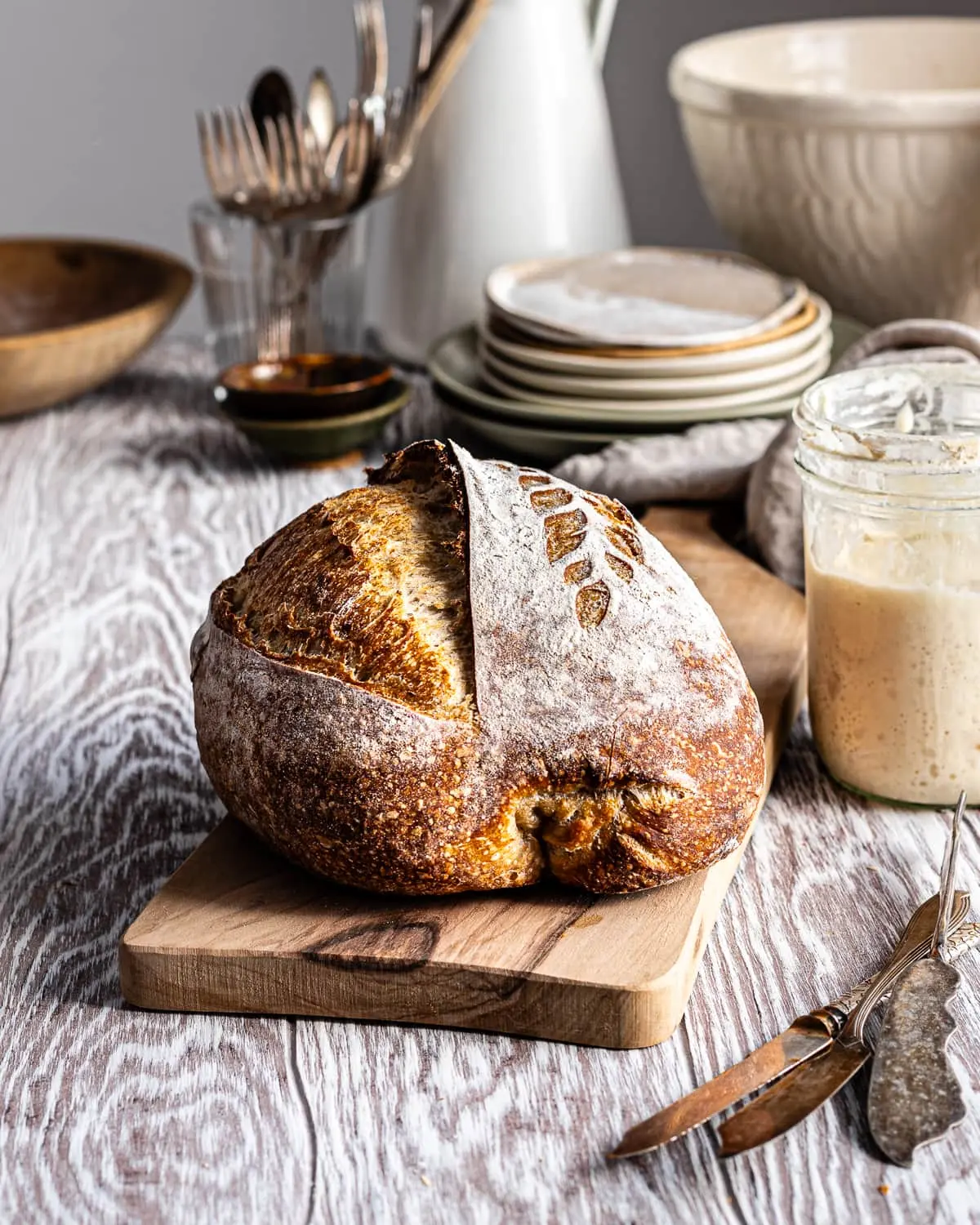
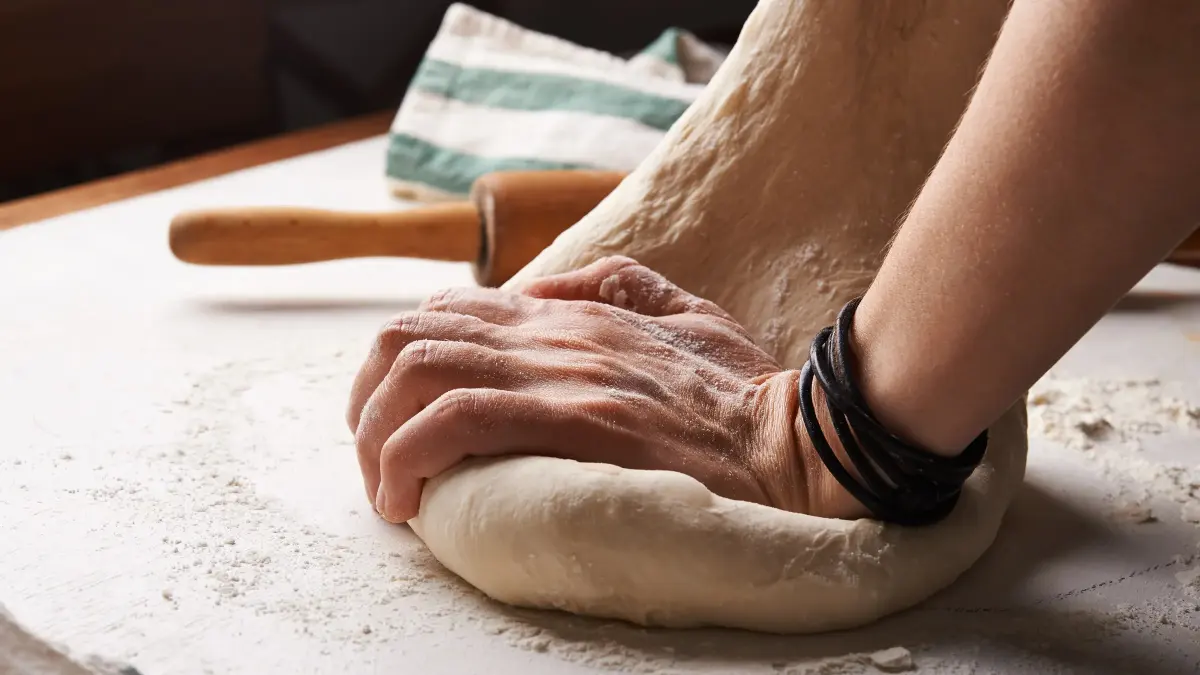
The simplest entry point is a basic white loaf made with all-purpose or bread flour. Start by mixing 500 grams of flour, 350 grams of warm water, 8 grams of salt, and 5 grams of instant yeast. Stir the ingredients until a shaggy mass forms, then cover the bowl and let it rest at room temperature for about two to three hours. This period, known as bulk fermentation, allows the yeast to consume sugars and produce carbon dioxide, which creates the airy structure of the bread.
Once the dough has doubled in size, gently shape it into a round ball on a floured surface. Place the shaped dough into a proofing basket or a bowl lined with a floured cloth for a final rise of about 45 minutes. Preheat your oven to 450°F (230°C) with your Dutch oven inside. Carefully transfer the dough into the hot pot, score the top with a sharp knife to control expansion, and bake covered for 30 minutes, then uncovered for another 15 minutes until deep golden brown.
Why does dough need to rise?
Rising, or fermentation, is the most vital stage of bread making. During this time, yeast metabolizes the starches in the flour, releasing carbon dioxide gas and ethanol. The gluten network, which is formed when flour proteins interact with water, traps these gas bubbles, causing the dough to expand and become aerated. Without sufficient rising time, the resulting loaf will be dense, heavy, and difficult to digest.
Temperature plays a major role in how quickly this process occurs. Yeast is a living organism that thrives in warm environments, typically between 75°F and 85°F. If your kitchen is cold, the dough will take significantly longer to rise; if it is too hot, the yeast may over-activate, leading to a collapse of the structure. Always aim for a consistent, draft-free spot in your kitchen to ensure predictable results. Watching the dough’s volume rather than strictly following a clock is the best way to determine when it is ready for the next step.
Common mistakes when baking bread
The most frequent error beginners make is over-handling or under-proofing the dough. When you shape the loaf, you must be gentle to preserve the gas bubbles created during fermentation. If you deflate the dough too aggressively, you destroy the structure you worked so hard to build. Similarly, rushing the final proof can lead to a loaf that does not rise in the oven, resulting in a gummy, dense crumb that lacks flavor.
Another common pitfall is failing to use enough salt or using water that is too hot. Salt is essential for flavor and also acts as a regulator for yeast activity. If you use water that exceeds 120°F, you risk killing the yeast entirely, which will prevent the bread from rising. Always check your water temperature with a thermometer to ensure it feels warm to the touch, similar to bathwater, rather than steaming hot.
- Measuring ingredients by volume instead of weight.
- Using water that is too hot and kills the yeast.
- Rushing the fermentation process.
- Failing to preheat the oven sufficiently.
- Cutting into the bread while it is still steaming hot.
How long does it take to bake bread?
While the actual time spent hands-on with the dough is often less than 30 minutes, the entire process requires several hours of waiting. A standard loaf typically takes between four and six hours from the initial mix to the final bake. This includes the bulk fermentation, shaping, proofing, and the final bake time. Many bakers prefer to extend the fermentation process by placing the dough in the refrigerator overnight, which develops deeper, more complex flavors.
Patience is the primary ingredient in successful baking. You must also allow the bread to cool completely on a wire rack for at least one hour after removing it from the oven. If you slice into a hot loaf, the internal structure is still setting, and the steam escaping will turn the inside of your bread gummy and wet. Waiting for the loaf to cool ensures the crumb is perfectly set and the flavor is fully developed, rewarding your hours of effort with the best possible texture.
Key facts
- Flour, water, salt, and yeast are the four essential ingredients required to make basic bread.
- Bread flour contains 12% to 14% protein, which creates a stronger gluten network than all-purpose flour.
- Yeast is a living fungus that consumes sugars in flour to produce carbon dioxide, which makes dough rise.
- The "windowpane test" involves stretching a small piece of dough until it is thin enough to let light through without tearing.
- Proofing is the final rise of shaped dough before it enters the oven, typically lasting 30 to 60 minutes.
- Scoring the top of a loaf with a sharp blade or "lame" controls where the bread expands during the oven spring.
The bottom line
Starting your journey into bread baking requires patience and attention to the science of fermentation. By mastering the fundamental ratio of flour, water, salt, and yeast, you gain the foundation to create endless varieties of loaves. Focus on proper kneading techniques and monitoring rise times to ensure a light, airy crumb. With consistent practice and careful temperature control, you will successfully produce bakery-quality bread at home.
People also ask
Why did my bread turn out dense and heavy?
This usually happens because the dough did not rise long enough or the yeast was inactive. Ensure your water temperature is between 100°F and 110°F to keep the yeast healthy without killing it.
How do I know when my bread is fully baked?
The loaf should sound hollow when tapped on the bottom, and an internal temperature probe should read between 190°F and 210°F. Visual cues include a deep golden-brown crust.
What is the difference between active dry yeast and instant yeast?
Active dry yeast requires proofing in warm water before use, while instant yeast can be mixed directly into dry ingredients. Both are interchangeable in most recipes if adjusted for hydration.
Should I knead my dough by hand or use a machine?
Both methods are effective, but hand-kneading allows you to feel the dough's texture and elasticity better. Machines save time and effort, especially when working with high-hydration or sticky doughs.
Why must I let bread cool before slicing it?
Bread continues to cook internally after leaving the oven through residual steam. Cutting into a hot loaf releases this moisture prematurely, resulting in a gummy or doughy crumb texture.
How can I store homemade bread to keep it fresh?
Keep bread at room temperature in a paper bag or a bread box for up to two days. Avoid the refrigerator, as the cold environment causes starch molecules to recrystallize and stale quickly.
This answer was created with the help of AI research tools and reference sources. Spotted an error? Let us know — we correct mistakes quickly. See our editorial policy.