What causes thunder and lightning?
Short answer
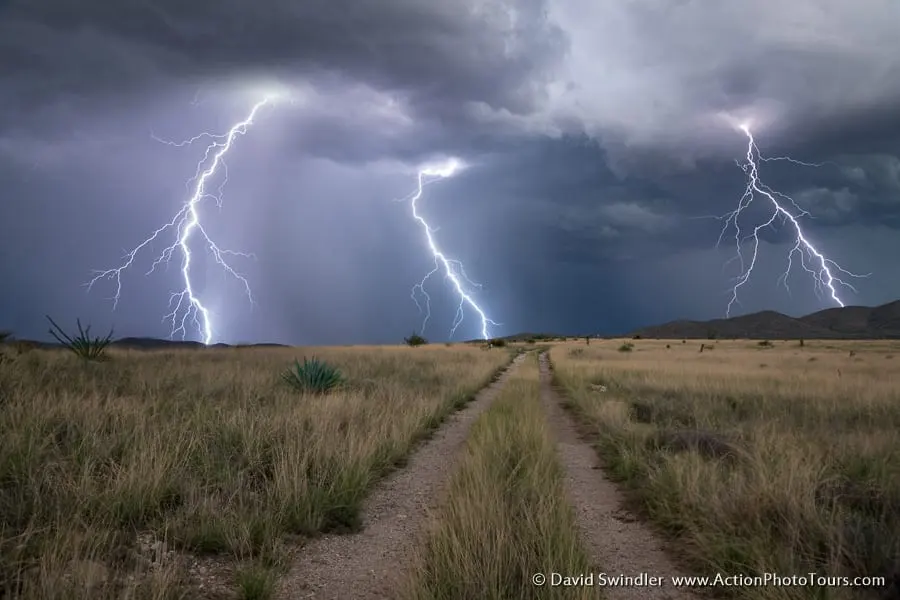
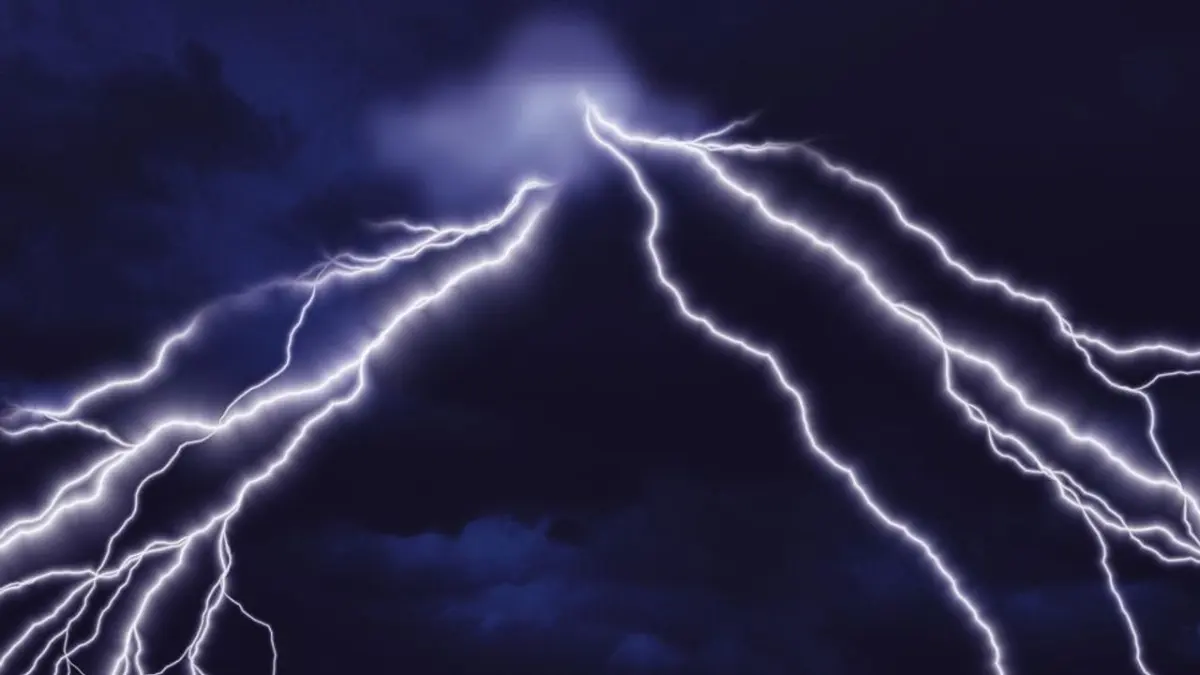
Lightning is a massive electrostatic discharge caused by the separation of positive and negative charges within storm clouds. As these charges neutralize, they heat the surrounding air to temperatures reaching 50,000 degrees Fahrenheit. This intense, rapid heating creates a shockwave that expands outward, which we perceive as the sound of thunder.
On this page
Why lightning happens during storms
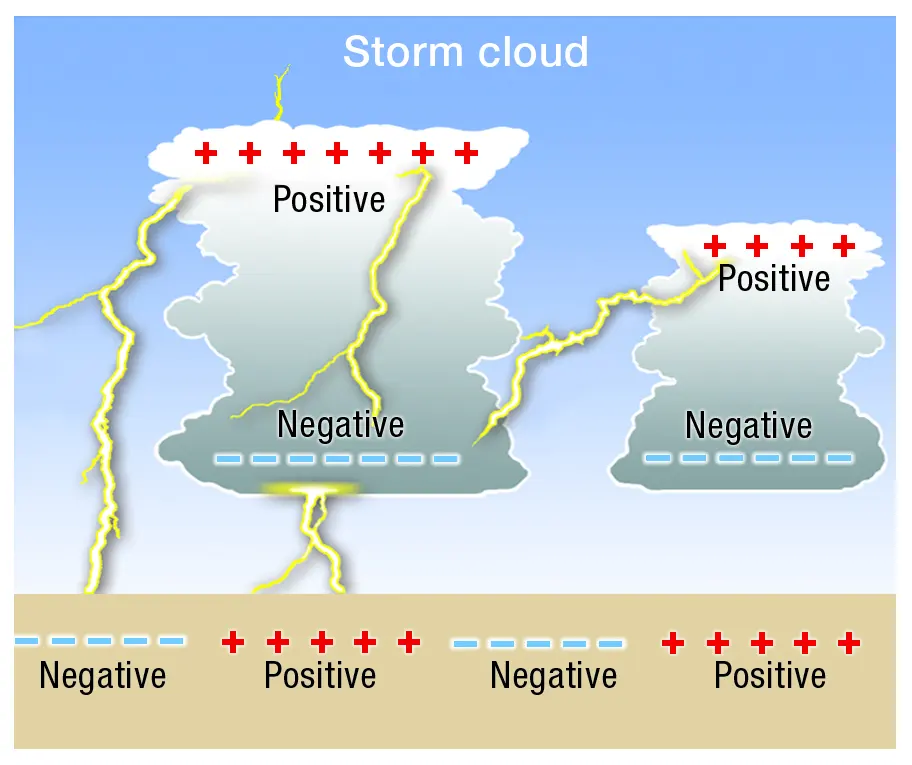
Lightning begins deep within a cumulonimbus cloud, where turbulent air currents cause ice crystals and graupel—small, soft hail—to collide. These collisions strip electrons from the rising ice crystals and transfer them to the heavier, falling graupel. This process creates a separation of electrical charges, with the top of the cloud becoming positively charged and the base accumulating a strong negative charge.
When the electrical potential difference between these regions becomes great enough, the air can no longer act as an insulator. The cloud attempts to neutralize this imbalance through a massive discharge of electricity. This path of ionized air, known as a stepped leader, moves toward the ground in rapid, invisible steps. Once it nears the surface, a positive streamer rises to meet it, completing the circuit and triggering the brilliant flash of light we see as lightning.
How thunder is produced by heat
Thunder is the acoustic result of the extreme heat generated by a lightning bolt. When the electrical discharge travels through the atmosphere, it creates a narrow channel of plasma that reaches temperatures five times hotter than the surface of the sun. This sudden, violent heating causes the air within and around the channel to expand explosively at supersonic speeds.
This rapid expansion creates a high-pressure shockwave that travels outward from the lightning channel. As the shockwave moves away, it loses energy and slows down, eventually transitioning into the rolling, rumbling sound of thunder. Because light travels significantly faster than sound, the flash is always visible before the noise reaches the observer. The duration and character of the sound are influenced by the length of the lightning bolt and the echoes reflecting off terrain features like hills or buildings.
How to calculate the distance of a storm
You can estimate how far away a lightning strike occurred by using the "flash-to-bang" method. Because light travels at approximately 186,000 miles per second, the visual flash is essentially instantaneous for observers on the ground. Sound, however, travels much slower, moving at roughly one mile every five seconds. By counting the seconds between the flash and the sound, you can determine the distance of the strike.
- Watch the sky for a flash of lightning.
- Begin counting seconds immediately until you hear the first rumble of thunder.
- Divide the total number of seconds by five to get the distance in miles.
- If the count is less than 30 seconds, the storm is close enough to pose a danger.
This method is a reliable way to gauge the proximity of a storm. However, it is important to remember that lightning can strike from a cloud miles away from the main rain shaft.
Common mistakes when tracking lightning
Many people underestimate the danger of lightning by assuming that a storm is safe if it is not directly overhead. A frequent mistake is waiting for rain to begin before seeking shelter, even though lightning can strike well outside the area where precipitation is falling. Another error is relying on the flash-to-bang method to determine if it is safe to remain outdoors. If you can hear thunder, you are already within striking distance of the storm.
- Staying in open fields, on high ground, or under isolated trees.
- Seeking cover in small structures like sheds, picnic pavilions, or tents.
- Touching metal objects, including fences, plumbing, or corded electronic equipment.
- Staying in a swimming pool or near large bodies of water.
- Using a landline telephone during an active thunderstorm.
Avoiding these behaviors is essential for safety. If you are caught outside, the safest place is a fully enclosed metal vehicle or a substantial building with plumbing and wiring.
Best practices for staying safe
If you are caught outdoors during a thunderstorm, your primary goal is to minimize your profile and reduce the risk of becoming a path for electricity. If no safe building or vehicle is nearby, move away from open areas and avoid tall objects that could attract a strike. While it is a common myth that you should lie flat on the ground, this actually increases your exposure to ground currents. Instead, crouch down into a ball-like position with your feet together to minimize contact with the earth.
- Move to a low-lying area, such as a ditch or a depression, but be mindful of potential flash flooding.
- If you are in a group, spread out to reduce the risk of multiple people being struck simultaneously.
- Remove any metal jewelry or equipment that might conduct electricity.
- Wait at least 30 minutes after the last sound of thunder before resuming your outdoor activities.
Following these steps significantly reduces the risk of injury. Always prioritize finding a permanent structure, as no outdoor location is truly immune to the unpredictable nature of electrical discharges.
Key facts
- Lightning is an electrical discharge caused by the separation of positive and negative charges within a storm cloud.
- Thunder is the explosive sound wave produced by the rapid heating of air around a lightning bolt to temperatures as high as 50,000 degrees Fahrenheit.
- You can estimate your distance from a storm by counting the seconds between the flash and the thunder, then dividing by five to get the distance in miles.
- If you hear thunder, you are close enough to be struck by lightning; seek shelter inside a substantial building or a hard-topped metal vehicle immediately.
- Avoid using corded electronics or plumbing during a storm, as lightning can travel through electrical wiring and metal pipes.
- Never take shelter under a lone tree or in an open field, as these locations increase your risk of becoming a lightning rod.
The bottom line
Lightning and thunder are inseparable components of powerful electrical storms, created when ice crystals and water droplets collide within clouds to generate massive static charges. While lightning provides a spectacular light show, its intense heat creates the sonic boom we recognize as thunder. Always prioritize safety by moving indoors when you hear thunder, as the speed of light makes lightning an immediate threat regardless of the distance.
People also ask
Does lightning ever strike the same place twice?
Yes, lightning frequently strikes the same location, especially tall, isolated structures like the Empire State Building, which is hit dozens of times each year.
Why do we see lightning before we hear thunder?
Light travels at approximately 186,000 miles per second, while sound travels much slower at about one mile every five seconds, causing the delay.
Can you get struck by lightning if it is not raining?
Yes, "bolts from the blue" can occur when lightning travels horizontally for miles away from the main storm cloud, striking areas where the sky appears clear.
Are rubber tires what protect people inside cars during a lightning strike?
No, it is the car's metal frame that conducts the electricity around the exterior of the vehicle and into the ground, protecting the occupants inside.
What is the difference between cloud-to-ground and cloud-to-cloud lightning?
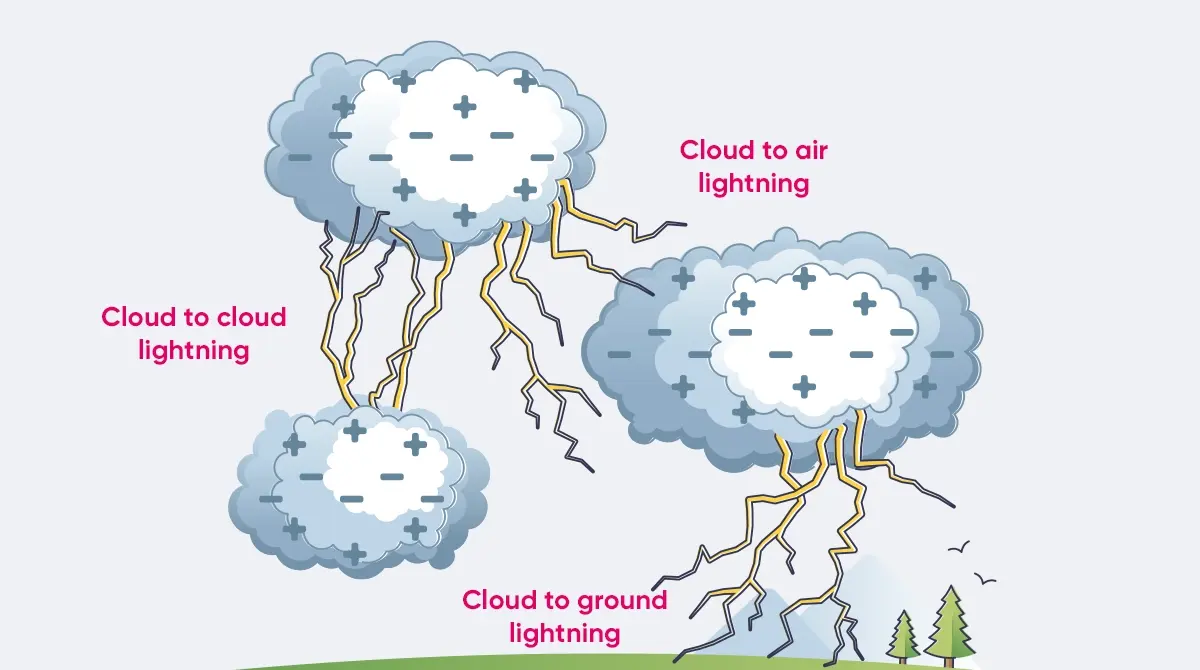
Cloud-to-ground lightning is a discharge between the atmosphere and the earth, while cloud-to-cloud lightning occurs entirely within or between storm clouds.
Is ball lightning a real weather phenomenon?
Ball lightning is a rare and poorly understood atmospheric electrical phenomenon described as glowing, spherical objects that move slowly and persist longer than standard bolts.
This answer was created with the help of AI research tools and reference sources. Spotted an error? Let us know — we correct mistakes quickly. See our editorial policy.