What is meditation?
Short answer
Meditation is a mental training practice involving focused attention, mindfulness, or breathing exercises to cultivate awareness and emotional regulation. By intentionally directing the mind, practitioners aim to reduce stress, improve concentration, and foster psychological clarity. It is a secular, accessible technique used globally to enhance overall well-being and mental health stability.

On this page
What is the history of meditation?
Meditation is an ancient practice with roots tracing back thousands of years across diverse global cultures. While its exact origins are difficult to pinpoint, the earliest written records of meditative practices appear in the Hindu Vedas of India, dating back to approximately 1500 BCE. These early techniques were primarily integrated into religious traditions, serving as a means to achieve deeper spiritual understanding and union with the divine.
Over subsequent centuries, meditation spread across Asia, evolving into distinct forms within Buddhism, Taoism, and later, Islamic Sufism and Christian contemplative prayer. In the mid-20th century, meditation began to gain significant traction in the West, largely stripped of its strictly religious connotations. By the 1970s, researchers like Dr. Herbert Benson at Harvard Medical School began documenting the physiological effects of the "relaxation response," effectively bridging the gap between ancient spiritual traditions and modern medical science.
How to start meditating for beginners
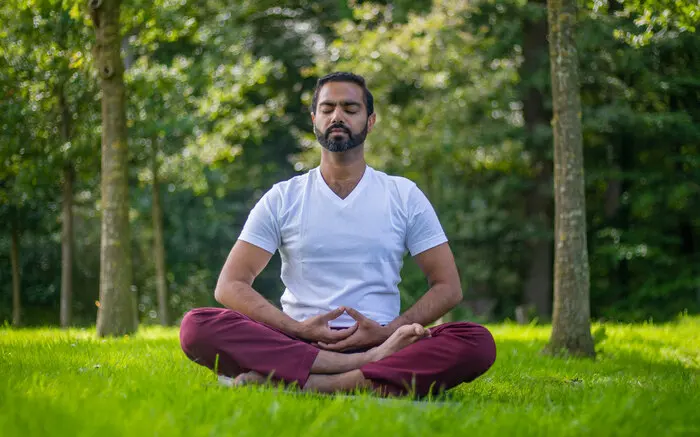
Beginning a meditation practice requires very little equipment, making it one of the most accessible habits to adopt. The goal is not to "empty" the mind of all thoughts, but rather to observe them without judgment. Consistency often proves more important than the duration of each session, especially when first establishing the routine.
- Find a quiet, comfortable space where you can sit upright without being disturbed.
- Set a timer for five to ten minutes to avoid checking the clock.
- Close your eyes or soften your gaze, focusing your attention on the physical sensation of your breath.
- When your mind wanders—which it will—gently acknowledge the thought and return your focus to your breathing.
- Conclude your session by slowly opening your eyes and noticing how your body feels before moving on with your day.
Why meditation affects the brain
Neuroscientific research has provided compelling evidence regarding how meditation alters brain structure and function. Studies using magnetic resonance imaging (MRI) have shown that regular practitioners often exhibit increased gray matter density in the hippocampus, a region associated with memory and learning. Conversely, these same individuals frequently show decreased activity in the amygdala, the part of the brain responsible for the "fight or flight" stress response.
This neurological shift explains why meditation is often linked to improved emotional regulation and lower anxiety levels. When the amygdala becomes less reactive, the brain is better equipped to handle stressors without triggering an overwhelming physiological reaction. Furthermore, meditation has been shown to enhance connectivity between the prefrontal cortex and other brain regions, which supports better focus, decision-making, and impulse control. These changes are not instantaneous but tend to accumulate over weeks and months of dedicated practice.
How long does it take to see results?
The timeline for experiencing the benefits of meditation varies significantly from person to person. Some individuals report a sense of immediate calm after their very first session, while others may require several weeks of consistent practice to notice meaningful changes. Clinical studies suggest that measurable improvements in stress markers, such as cortisol levels, can often be detected after eight weeks of daily practice.
- Week 1–2: You may notice increased awareness of your own thought patterns and a slight improvement in sleep quality.
- Week 4–6: Many practitioners report feeling more patient during daily interactions and less reactive to minor irritations.
- Week 8+: Significant shifts in emotional stability and sustained focus typically become more apparent to both the practitioner and those around them.
It is important to remember that meditation is a skill, much like playing an instrument or learning a new language. The "results" are not a destination but a gradual refinement of your ability to remain present.
Common mistakes when meditating
One of the most frequent errors beginners make is the belief that they are "doing it wrong" because their mind is busy. It is a common misconception that meditation should be a state of total silence or bliss. In reality, the act of noticing that your mind has wandered and choosing to return to your breath is the actual exercise. Every time you redirect your attention, you are strengthening your mental focus.
- Trying to force a specific feeling, such as relaxation or happiness, which often creates more tension.
- Setting unrealistic goals, such as attempting to meditate for an hour immediately, which leads to burnout.
- Ignoring physical discomfort, which can be addressed by using cushions or chairs to support your posture.
- Judging yourself for having "bad" sessions where your mind feels particularly cluttered or restless.
By avoiding these pitfalls and maintaining a compassionate, patient attitude toward your own mental process, you can build a sustainable practice that supports long-term mental clarity and emotional health.
Key facts
- Meditation is a practice of training attention and awareness to achieve mental clarity and emotional stability.
- Research published in JAMA Internal Medicine suggests that mindfulness meditation can help reduce symptoms of anxiety and depression.
- The practice dates back thousands of years, with roots in ancient Indian traditions such as Hinduism and Buddhism.
- Modern secular mindfulness, popularized by figures like Jon Kabat-Zinn in 1979, focuses on non-judgmental awareness of the present moment.
- A common technique is focused attention, where the practitioner concentrates on a single object, such as the breath or a mantra.
- Beginners should aim for consistency over duration, starting with just 5 to 10 minutes per day to build a sustainable habit.
The bottom line
Meditation is a practical tool for cultivating presence and emotional regulation in an increasingly distracted world. By dedicating a few minutes daily to observing your thoughts without judgment, you can lower stress levels and improve your cognitive focus. Whether you choose guided imagery or simple breath awareness, the primary goal is to foster a consistent, compassionate relationship with your own mind to improve overall well-being.
People also ask
Do I need special equipment to meditate?
No equipment is required. You only need a quiet space, comfortable clothing, and a chair or cushion to support an upright posture.
Is meditation a form of religion?
While meditation is deeply rooted in various religious traditions, it is practiced globally as a secular technique for stress reduction and mental health. It does not require adherence to any specific belief system.
How do I know if I am doing it correctly?
There is no "perfect" way to meditate. If your mind wanders and you notice it, simply return your focus to your anchor; the act of noticing the distraction is the practice itself.
Can meditation help with physical pain?
Studies indicate that mindfulness-based stress reduction can change how the brain processes pain signals. While it does not eliminate the source of pain, it can alter the emotional response to it.
What is the best time of day to meditate?
The best time is whenever you can be most consistent. Many practitioners prefer the morning to set a calm tone for the day, while others use it to decompress in the evening.
How long does it take to see results?
Neuroplasticity research suggests that structural changes in the brain can begin to occur after eight weeks of daily practice. However, many people report feeling a sense of immediate relaxation after a single session.
This answer was created with the help of AI research tools and reference sources. Spotted an error? Let us know — we correct mistakes quickly. See our editorial policy.