What is Diego Velázquez's most famous painting?
Short answer
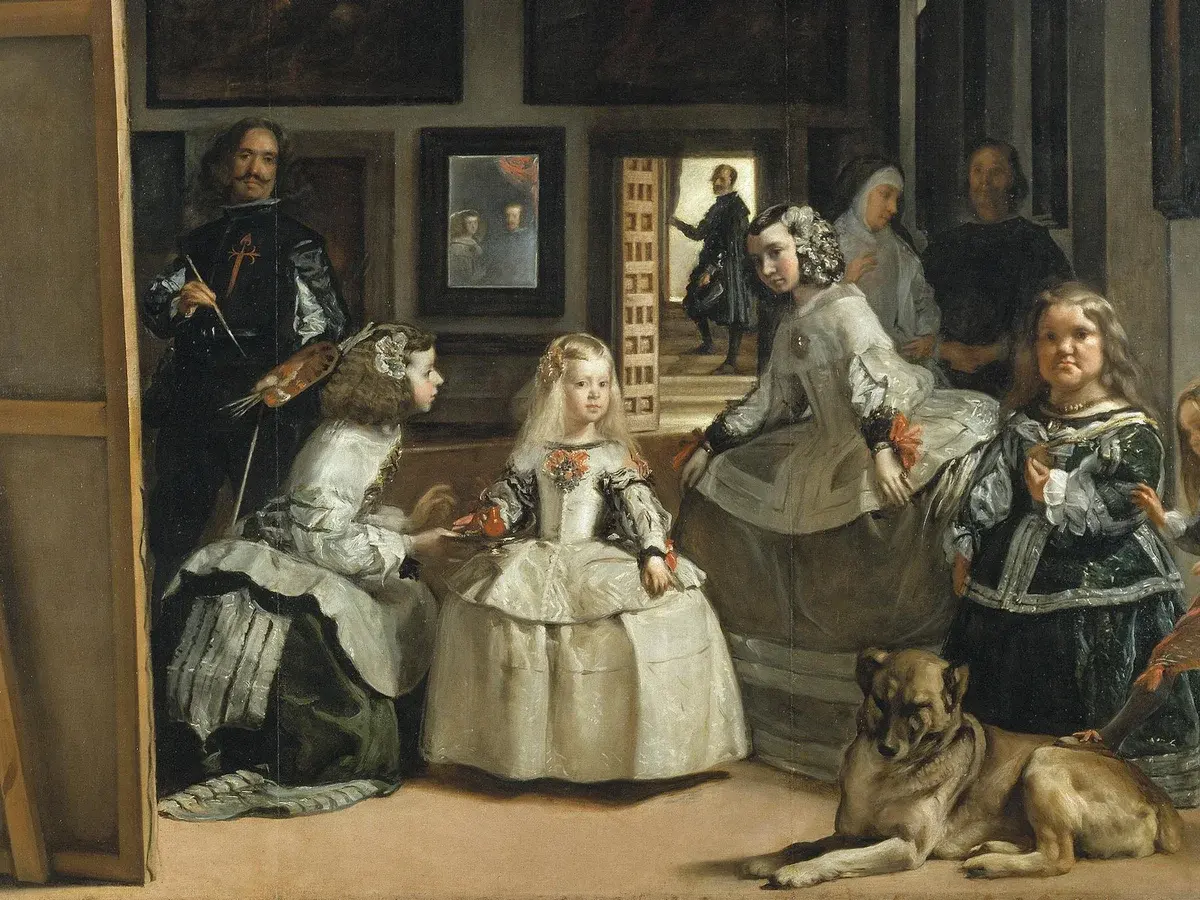
Diego Velázquez’s most famous painting is Las Meninas, completed in 1656. This complex masterpiece serves as a profound meditation on the nature of reality and illusion within the Spanish court. Housed in the Museo del Prado in Madrid, it remains one of the most analyzed and influential works in Western art history.
On this page
Why is Las Meninas so famous?
Las Meninas, which translates to "The Ladies-in-Waiting," is celebrated for its intricate composition and its revolutionary approach to perspective. At its center stands the young Infanta Margaret Theresa, surrounded by her entourage of maids, dwarfs, and a dog. However, the painting’s true genius lies in its meta-fictional elements, as Velázquez depicts himself standing before a massive canvas, inviting the viewer to question what he is actually painting.
The work is frequently cited as a masterpiece of European art because of its sophisticated use of light and shadow, known as chiaroscuro. By placing a mirror on the back wall that reflects the images of King Philip IV and Queen Mariana, Velázquez creates a complex spatial puzzle. This inclusion forces the audience to consider the position of the royal couple, who appear to be standing exactly where the viewer is currently positioned.
How to interpret the composition
Understanding the painting requires looking past the surface to see how Velázquez manipulated space. He utilized a series of receding planes to create a sense of deep, atmospheric perspective that feels remarkably three-dimensional. The arrangement of figures creates a narrative flow that moves from the bright, central focus of the Infanta to the darker, more mysterious corners of the room.
To analyze the composition effectively, consider these key elements:
- The focal point: The Infanta Margaret Theresa, illuminated by a strong light source from the right.
- The artist’s presence: Velázquez himself, wearing the cross of the Order of Santiago, asserting his status as a high-ranking intellectual.
- The mirror: A crucial element that bridges the gap between the painted world and the real space occupied by the viewer.
- The open door: The figure of José Nieto, the queen’s chamberlain, standing in the doorway, which adds a sense of depth and mystery to the background.
Where can you see the painting today?
The painting is permanently housed in the Museo del Prado in Madrid, Spain. It is displayed in a dedicated room that allows visitors to view it from a distance, which is essential for appreciating its massive scale. Standing at approximately 10.5 feet by 9 feet, the canvas dominates the gallery space and provides an immersive experience that digital reproductions cannot replicate.
If you are planning a visit to see this masterpiece, keep the following tips in mind:
- Book your tickets online in advance to avoid long queues at the museum entrance.
- Visit during the museum’s "free entry" hours, which typically occur in the late afternoon, though be prepared for larger crowds.
- Take time to look at the surrounding rooms, which contain other works by Velázquez and his contemporaries, providing necessary context for his career.
- Use the museum’s audio guide to understand the historical significance of the Spanish Golden Age.
Common mistakes when studying Velázquez
A frequent error when analyzing this painting is assuming it is merely a portrait of the royal family. While it features the Infanta, the work is primarily a statement about the nobility of painting as a profession. During the 17th century, painters were often viewed as mere craftsmen, but Velázquez used this work to argue that art was an intellectual pursuit requiring deep mathematical and philosophical knowledge.
Another mistake is ignoring the brushwork upon close inspection. From a distance, the figures appear photorealistic, but up close, the paint is applied in loose, fluid strokes that seem almost abstract. This technique, known as "alla prima," was centuries ahead of its time and significantly influenced later movements like Impressionism. Avoid the urge to only look at the subjects; instead, observe how the paint itself creates the illusion of texture, fabric, and light.
What is the historical context of the work?
Velázquez served as the court painter to King Philip IV for over three decades, a position that granted him intimate access to the daily life of the Spanish monarchy. Las Meninas was painted during the final years of the king's reign, a period marked by political decline and economic hardship for Spain. Despite these challenges, the court remained a center for artistic patronage, and this painting represents the pinnacle of that era's cultural achievements.
The painting also reflects the changing social status of the artist within the rigid hierarchy of the Spanish court. By including himself in the company of royalty, Velázquez made a bold claim about his own importance and the dignity of his craft. This work serves as a testament to the power of art to transcend the limitations of its time, ensuring that the legacy of the Spanish Golden Age continues to influence artists and scholars across the globe today.
Key facts
- Diego Velázquez’s most famous painting is Las Meninas, completed in 1656.
- It is currently housed in the Museo del Prado in Madrid, Spain.
- The canvas is massive, measuring approximately 10.5 feet by 9 feet.
- The painting depicts the five-year-old Infanta Margaret Theresa surrounded by her entourage of maids, chaperones, and a dog.
- Velázquez included a self-portrait within the work, showing himself standing at a large canvas.
- A common mistake when viewing the painting is to focus only on the Infanta; look instead at the mirror on the back wall, which reflects the King and Queen.
The bottom line
Las Meninas remains the definitive work of Diego Velázquez, serving as a profound exploration of optics and royal status. By masterfully manipulating depth and reflection, the artist invites the viewer into a complex dialogue about the nature of representation. To truly appreciate this iconic painting, observe how the figures interact with the unseen space, effectively placing the viewer in the position of the Spanish monarchs.
People also ask
Where can I see Las Meninas in person?
You can view the masterpiece at the Museo del Prado in Madrid. It is displayed in a dedicated room that allows visitors to appreciate its scale and complex composition.
What is the significance of the mirror in the painting?
The mirror on the back wall reflects King Philip IV and Queen Mariana of Austria. Scholars debate whether the couple is standing where the viewer is or if they are being painted by Velázquez on the canvas he is working on.
Why is the painting considered a masterpiece of Western art?
It is celebrated for its complex use of perspective, light, and shadow. The painting challenges the viewer by blurring the lines between reality, illusion, and the act of painting itself.
Did Velázquez paint himself into other works?
Yes, he included his own likeness in several pieces, but Las Meninas is his most famous self-portrait. By placing himself in the royal company, he elevated the status of the artist from a mere craftsman to a respected intellectual.
What does the title Las Meninas mean?
The title translates from Spanish to "The Ladies-in-Waiting." These were the young noblewomen who served the Infanta, two of whom are prominently featured in the foreground of the composition.
Are there any hidden symbols in the painting?
The red cross on Velázquez’s chest is a notable detail. It represents the Order of Santiago, a prestigious knighthood he received years after the painting was completed, reportedly added by the King himself.
This answer was created with the help of AI research tools and reference sources. Spotted an error? Let us know — we correct mistakes quickly. See our editorial policy.