What is a Zen garden?
Short answer
A Zen garden, or karesansui, is a stylized Japanese landscape featuring gravel, sand, rocks, and occasionally moss. Originally designed to facilitate Zen Buddhist meditation, these dry gardens represent water and mountains through minimalist arrangements. They offer a tranquil space for contemplation by stripping away distractions and focusing the mind on simple, natural forms.
On this page
What is the history of Zen gardens?
The karesansui style emerged in Japan during the Muromachi period, which lasted from 1336 to 1573. Zen Buddhist monks developed these gardens as aids for meditation, using them to represent the essence of nature rather than a literal depiction of a landscape. By removing water and lush vegetation, the creators forced the viewer to engage in abstract thinking and deep internal reflection.
The most famous example is the Ryoan-ji temple in Kyoto, established around 1450. It features fifteen rocks arranged in five groups within a sea of raked white gravel. The design is intentionally ambiguous; no matter where a visitor stands, at least one rock is always obscured from view. This architectural choice serves as a reminder of the limitations of human perception and the complexity of the natural world.
How do Zen gardens represent nature?
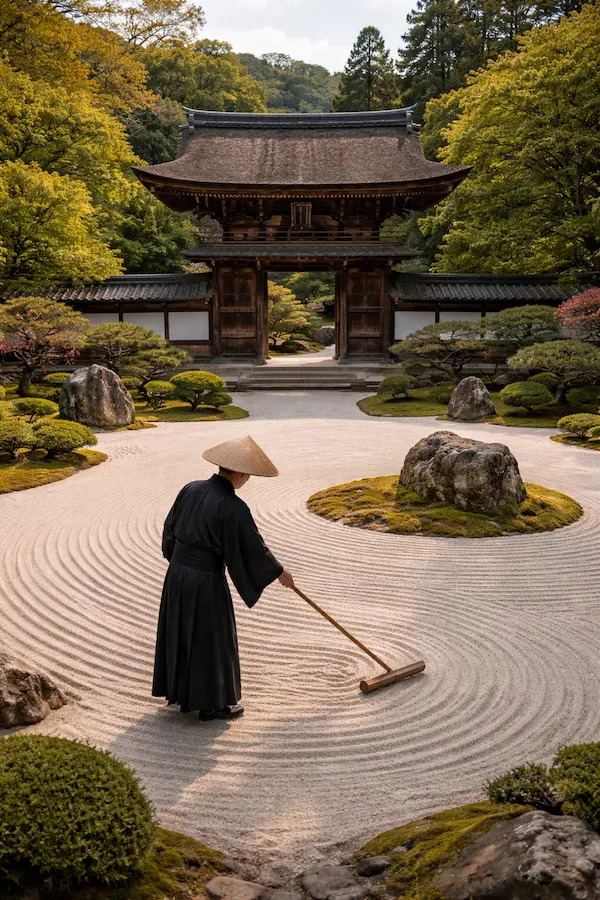
Zen gardens utilize symbolism to mimic the vastness of the natural environment within a confined space. Sand or finely crushed gravel is raked into patterns that represent flowing water, ripples, or waves. Large, weathered stones are placed strategically to represent islands, mountains, or even leaping tigers, depending on the viewer's interpretation and the specific cultural context of the garden.
The aesthetic relies on the principle of yohaku-no-bi, or "the beauty of empty space." By leaving large areas of the garden intentionally vacant, the designer creates a sense of openness that prevents the mind from dwelling on clutter. This minimalism encourages a meditative state, as the simplicity of the materials mirrors the clarity sought during Zen practice.
- Gravel or sand acts as the "water" element.
- Rocks serve as the "mountains" or "islands."
- Moss is often used to represent lush, forested areas.
- Raked lines symbolize the movement of tides or currents.
How to build a Zen garden at home
Building a home garden requires careful planning and a commitment to simplicity. You do not need a large yard; a small wooden frame or a corner of a patio is sufficient for a desktop or balcony version. The key is to select materials that offer high contrast, such as light-colored sand and dark, textured stones, to create visual depth.
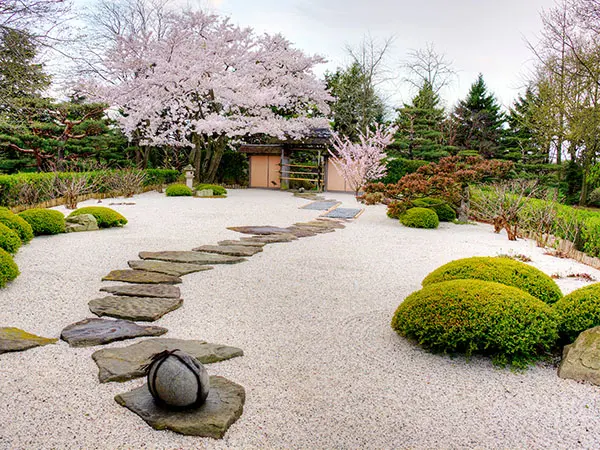
Begin by leveling your chosen area and installing a weed barrier to keep the space pristine. Fill the area with a layer of gravel or sand, then place your chosen stones in asymmetrical, odd-numbered groupings. Avoid placing rocks in straight lines or symmetrical patterns, as these feel artificial and disrupt the natural flow. Finally, use a wooden rake to create patterns around the stones, ensuring the lines remain consistent and undisturbed.
- Clear the area thoroughly of debris and weeds.
- Use granite sand or decomposed granite for better pattern retention.
- Select stones with unique shapes, textures, or lichen growth.
- Keep the design asymmetrical to mirror organic landscapes.
Common mistakes when designing Zen gardens
A frequent error is over-complicating the design by adding too many decorative elements. Zen gardens are defined by their restraint; adding lanterns, statues, or colorful plants often distracts from the meditative purpose. Stick to a monochromatic or neutral color palette to ensure the focus remains on the texture and the arrangement of the primary elements rather than visual variety.
Another mistake is failing to maintain the garden properly. The gravel must be raked regularly to keep the patterns crisp and to remove fallen leaves or debris. If the gravel becomes messy or cluttered, the garden loses its ability to focus the mind. Consistency in maintenance is part of the meditative process itself, turning the act of raking into a daily ritual of mindfulness.
Why Zen gardens require regular maintenance
Maintenance is not merely a chore but an essential component of the Zen experience. The act of raking the gravel allows the gardener to practice samu, or work as a form of meditation. By focusing entirely on the movement of the rake and the pattern emerging in the sand, one can achieve a state of mental stillness that carries over into other aspects of life.
Over time, weather and wind will naturally disturb the patterns, requiring the gardener to reset the space. This cycle of building, enjoying, and clearing away reflects the Buddhist concept of impermanence. By accepting that the garden will never stay perfect, the practitioner learns to let go of attachment to specific outcomes. This ongoing process of renewal ensures the garden remains a living, breathing space for quiet contemplation and spiritual growth.
Key facts
- Zen gardens, known as kare-sansui or "dry landscapes," originated in Japan during the Muromachi period (1336–1573).
- These gardens typically feature raked gravel or sand to represent water, while carefully placed rocks symbolize mountains or islands.
- The primary purpose of a Zen garden is to facilitate meditation and provide a space for quiet contemplation.
- Plants are used sparingly, if at all, to maintain a minimalist aesthetic that emphasizes texture and shadow over color.
- When raking gravel, use a specialized wooden rake to create straight lines or wave patterns that mimic the flow of water.
- A common mistake is overcrowding; leave significant negative space to allow the eyes and mind to rest.
The bottom line
A Zen garden is a minimalist landscape design rooted in Japanese Buddhist traditions, intended to foster inner peace through simplicity. By utilizing carefully arranged rocks and raked gravel, these spaces serve as physical manifestations of meditative focus. Whether in a large courtyard or a small indoor tray, the garden encourages a quiet, intentional state of mind, stripping away external chaos to reveal the beauty of empty space.
People also ask
Are plants allowed in a traditional Zen garden?
While moss and evergreen shrubs are sometimes used, they are kept minimal. The focus is on stone, sand, and gravel to avoid the distraction of changing seasonal colors.
Why is the sand raked into patterns?
The patterns represent ripples in water or waves in the ocean. Raking is also a meditative practice that helps the gardener focus their attention on the present moment.
Can I build a Zen garden in a small apartment?
Yes, tabletop Zen gardens are popular and effective. They use a small wooden tray, fine sand, and a few smooth stones to provide the same meditative benefits as a full-scale garden.
Do Zen gardens require a lot of maintenance?
They require regular raking to maintain the patterns and occasional weeding if plants are present. However, they lack the complex irrigation and pruning needs of traditional flower gardens.
What is the significance of the rocks?
Rocks are placed to represent mountains, islands, or animals, depending on their shape and arrangement. They are considered the "bones" of the garden and provide permanent structure.
Is it necessary to follow specific design rules?
Traditional gardens often follow principles of asymmetry and odd-numbered groupings. Following these guidelines helps create a natural, balanced environment rather than a rigid or artificial one.
This answer was created with the help of AI research tools and reference sources. Spotted an error? Let us know — we correct mistakes quickly. See our editorial policy.