What are the benefits of meditation?
Short answer
Meditation offers significant mental and physical health benefits, including reduced stress, improved emotional regulation, and enhanced cognitive focus. By training the mind to achieve a state of calm awareness, practitioners often experience lower blood pressure, decreased anxiety symptoms, and better sleep quality, contributing to overall long-term psychological and physiological well-being.
On this page
How does meditation improve mental health?
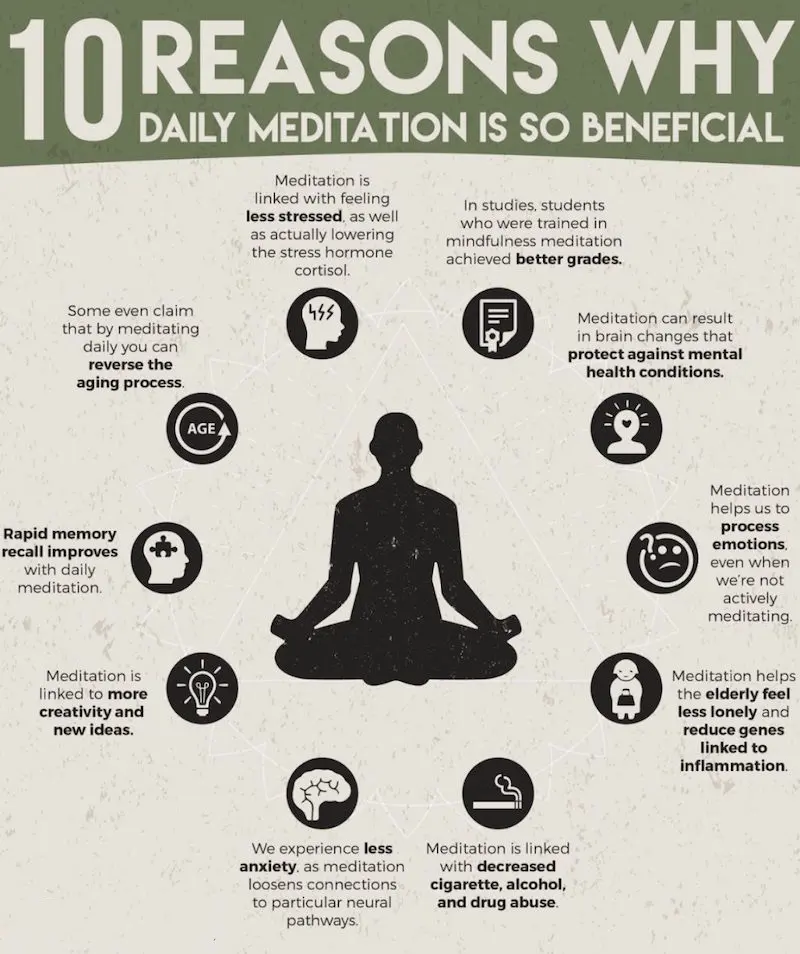
Meditation functions as a form of mental training that alters brain activity and structure. Research conducted by neuroscientists, such as those at Harvard Medical School in 2011, demonstrated that consistent mindfulness practice can increase gray matter density in the hippocampus, the area responsible for learning and memory. Simultaneously, it often decreases volume in the amygdala, which governs the "fight or flight" stress response.
By fostering a non-judgmental awareness of thoughts, individuals can break the cycle of rumination that often leads to depression and anxiety. This practice encourages a detached perspective, allowing people to observe their emotions without becoming overwhelmed by them. Over time, this regulation leads to a more stable mood and a greater capacity for resilience when facing daily life stressors.
- Reduced symptoms of generalized anxiety disorder.
- Increased ability to manage intrusive or negative thoughts.
- Improved emotional stability and self-awareness.
- Greater capacity for empathy and social connection.
How long does it take to see results?
The timeline for experiencing the benefits of meditation varies significantly based on the frequency and consistency of the practice. While some individuals report a sense of immediate relaxation after a single ten-minute session, structural changes in the brain generally require a more sustained commitment. Most clinical studies suggest that significant improvements in stress markers and cognitive function appear after eight weeks of daily practice.
Consistency is far more important than the duration of individual sessions. A person who practices for ten minutes every day will likely see more profound results than someone who meditates for an hour once a week. The goal is to integrate the practice into a daily routine, much like physical exercise or personal hygiene, to allow the nervous system to adapt to a baseline of lower tension.
- Start with 5 to 10 minutes daily to build a habit.
- Gradually increase duration as your focus improves.
- Track your mood and stress levels over a 30-day period.
- Maintain the practice even on days when you feel busy.
Best meditation techniques for beginners
For those new to the practice, simple techniques are often the most effective for establishing a long-term habit. Focused attention meditation involves concentrating on a single object, such as the breath, a mantra, or a physical sensation. When the mind wanders, the practitioner gently redirects their focus back to the chosen anchor, which strengthens the brain's "attention muscle."
Body scan meditation is another excellent starting point, especially for those who struggle with physical tension. This technique involves mentally scanning the body from head to toe, noticing sensations without attempting to change them. It is particularly helpful for individuals who have trouble sleeping or who hold stress in their shoulders, jaw, or stomach. Both methods require no special equipment and can be performed in any quiet, comfortable space.
- Focused Attention: Concentrating on the rhythm of your inhalation and exhalation.
- Body Scan: Systematically releasing tension from each muscle group.
- Loving-Kindness: Silently repeating phrases of goodwill toward yourself and others.
- Walking Meditation: Maintaining mindfulness while moving at a slow, deliberate pace.
Common mistakes when starting meditation
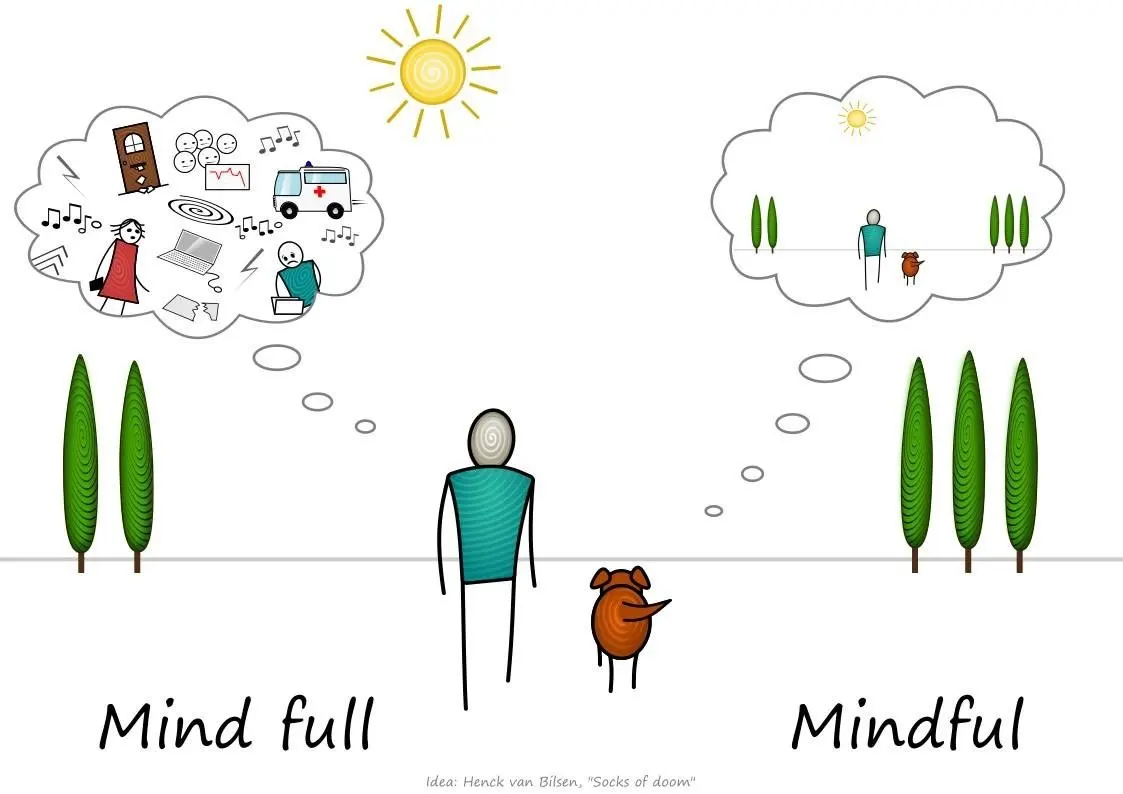
A frequent error for beginners is the belief that meditation requires "clearing the mind" of all thoughts. This is a misconception; the goal is not to stop thinking, but to notice when the mind has wandered and return to the present moment. Becoming frustrated by a busy mind is counterproductive, as the act of noticing the distraction is actually the core of the practice.
Another mistake is setting unrealistic expectations regarding immediate enlightenment or total stress elimination. Meditation is a practice, not a quick fix, and some sessions will inevitably feel more difficult than others. Avoid the trap of judging your performance; there is no "good" or "bad" meditation. Simply showing up consistently is the only metric of success that truly matters for long-term health and psychological growth.
- Trying to force the mind to be silent or empty.
- Setting overly ambitious goals, such as meditating for an hour daily.
- Judging yourself for having distracting or intrusive thoughts.
- Neglecting to find a comfortable posture, leading to physical discomfort.
Why meditation helps with physical health
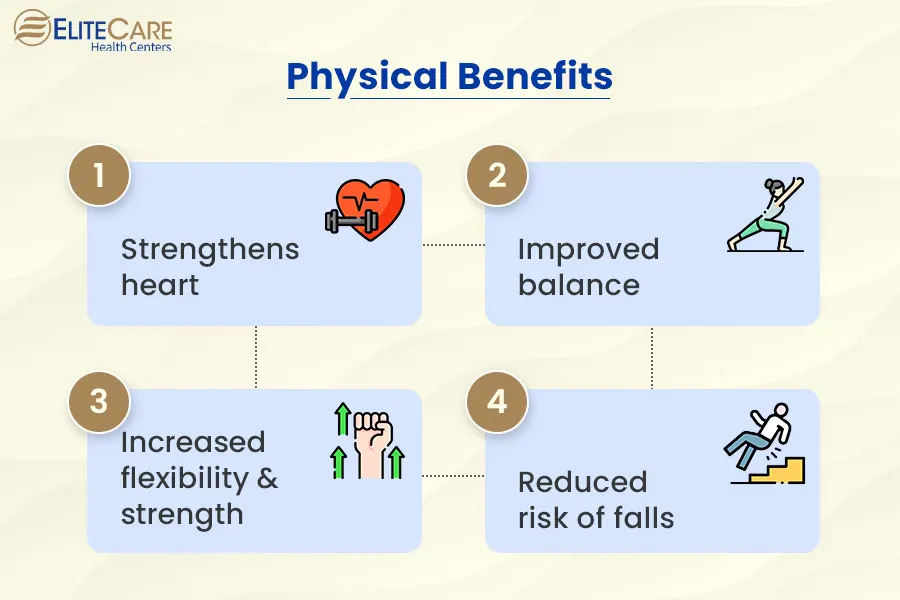
Beyond the psychological advantages, meditation provides measurable benefits to physical health. By activating the parasympathetic nervous system, meditation helps counter the effects of chronic stress, which is linked to inflammation and heart disease. Studies have shown that regular practitioners often exhibit lower resting heart rates and improved blood pressure, as the body learns to exit the high-alert state more efficiently.
Furthermore, meditation has been shown to improve sleep quality by reducing the physiological arousal that keeps the mind racing at night. By calming the endocrine system, it can also influence the production of cortisol, the body’s primary stress hormone. When cortisol levels are managed, the immune system functions more effectively, and the body can better repair itself. This holistic impact makes meditation a powerful tool for maintaining overall physical vitality and longevity.
Key facts
- Mindfulness meditation can reduce symptoms of anxiety and depression by altering brain activity in the amygdala, the area responsible for processing fear.
- Regular practice is linked to increased gray matter density in the hippocampus, which is associated with improved memory and emotional regulation.
- A study published in JAMA Internal Medicine found that mindfulness programs can provide moderate improvements in psychological stress.
- Meditation can lower blood pressure by inducing the "relaxation response," which decreases the production of stress hormones like cortisol.
- Beginners should aim for consistency over duration, starting with just 5 to 10 minutes of daily practice rather than long, infrequent sessions.
- A common mistake is trying to "empty the mind," whereas the goal is actually to observe thoughts without judgment as they arise.
The bottom line
Meditation is a scientifically backed tool for enhancing mental clarity, emotional stability, and physical health. By dedicating a few minutes each day to focused breathing or mindful observation, you can lower stress levels and improve your brain's resilience. The key to success lies in consistent, non-judgmental practice, allowing you to observe your thoughts objectively and cultivate a greater sense of peace in your daily life.
People also ask
Does meditation require sitting in a specific pose?
No, you do not need to sit in a lotus position to meditate effectively. You can meditate while sitting in a chair, lying down, or even walking, provided your posture is comfortable and keeps you alert.
How long does it take to see results?
Many practitioners report feeling calmer after a single session, but structural brain changes typically require consistent practice over several weeks. Most clinical studies observe significant mental health improvements after eight weeks of daily meditation.
Is meditation a religious practice?
While meditation has roots in various religious traditions, secular mindfulness practices focus solely on psychological and physiological benefits. You can practice meditation as a mental training exercise without any spiritual or religious affiliation.
Can meditation help with physical pain?
Research suggests that mindfulness-based interventions can change how the brain perceives pain signals. While it does not remove the underlying cause of pain, it can reduce the emotional distress and suffering associated with chronic conditions.
What should I do if I get distracted?
Getting distracted is a normal part of the process, not a sign of failure. When you notice your mind wandering, simply acknowledge the thought and gently return your focus to your breath or chosen anchor.
Is it better to meditate in the morning or at night?
The best time to meditate is whenever you can be most consistent. Morning sessions can help set a calm tone for the day, while evening sessions are often effective for unwinding and improving sleep quality.
This answer was created with the help of AI research tools and reference sources. Spotted an error? Let us know — we correct mistakes quickly. See our editorial policy.