How long is the Great Wall of China?
Short answer
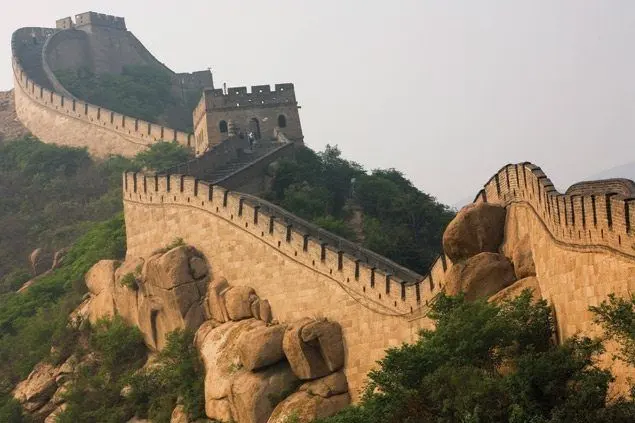
The Great Wall of China spans approximately 13,171 miles (21,196 kilometers) in total length. This figure, released by China’s State Administration of Cultural Heritage in 2012, accounts for all wall segments built across various dynasties, including trenches, natural defensive barriers like hills and rivers, and the iconic stone-and-brick structures seen today.
On this page
Why is the length of the Great Wall debated?
The difficulty in defining a single length for the Great Wall stems from its complex history and fragmented construction. It is not a single, continuous line but rather a vast network of walls, earthworks, and trenches built by different dynasties over two millennia. Many sections have eroded, disappeared into the landscape, or were built using materials that blend into the surrounding terrain, making them difficult to measure accurately.
Early estimates often focused only on the well-preserved Ming Dynasty sections, which are the most famous parts of the structure. Modern archaeological surveys have utilized advanced mapping technology, such as infrared rangefinders and GPS, to identify hidden or collapsed segments. Consequently, the official length has grown significantly as researchers discover more buried remnants. When evaluating the wall's size, it is essential to distinguish between the visible, restored segments and the total archaeological footprint that encompasses the entire defensive system.
How do experts measure the Great Wall?
Measuring the Great Wall requires a combination of historical research and modern geospatial technology. Archaeologists examine ancient records and maps to identify potential sites, then conduct ground surveys to verify the existence of wall remnants. Because the structure spans diverse environments—from high mountain ridges to arid deserts—the methods used to document it vary by region.
The current official measurement of 13,171 miles includes several distinct components that form the defensive network:
- Constructed brick and stone masonry walls.
- Earth and rammed-earth ramparts.
- Natural defensive barriers, such as steep mountain cliffs.
- Trenches and moats dug into the ground.
- Watchtowers, beacon towers, and garrison stations.
By including these diverse features, researchers provide a more comprehensive view of how the wall functioned as a holistic military defense system rather than just a simple barrier. This holistic approach ensures that the historical significance of the entire network is preserved in the official record.
What are the most famous sections to visit?
Most tourists visit the sections near Beijing, as these are the best-preserved and most accessible parts of the structure. These areas primarily date back to the Ming Dynasty, featuring iconic watchtowers and steep, winding paths that offer dramatic views. While these sections represent only a small fraction of the total length, they provide the most authentic experience of the wall's architectural grandeur.
If you are planning a visit, consider these popular locations:
- Badaling: The most famous and heavily restored section, ideal for first-time visitors but often very crowded.
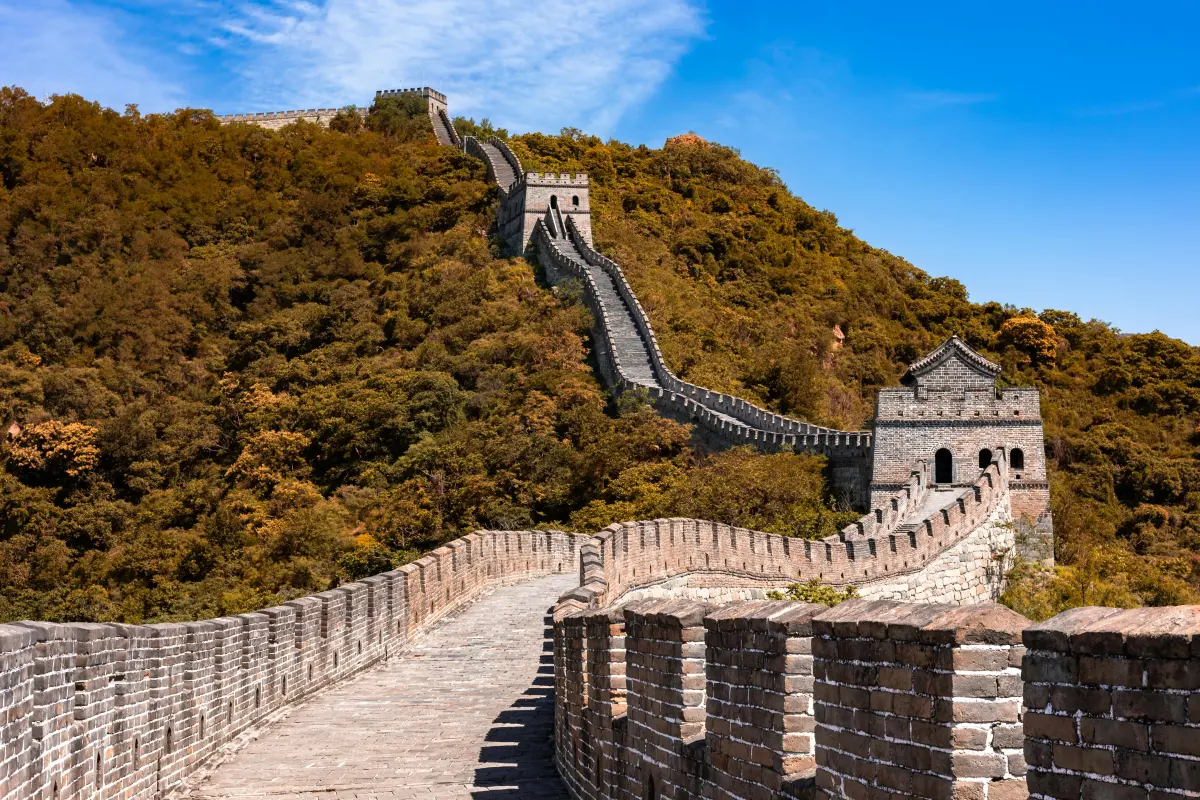
- Mutianyu: A well-restored section that offers a cable car ride and a fun toboggan slide down, balancing history with convenience.
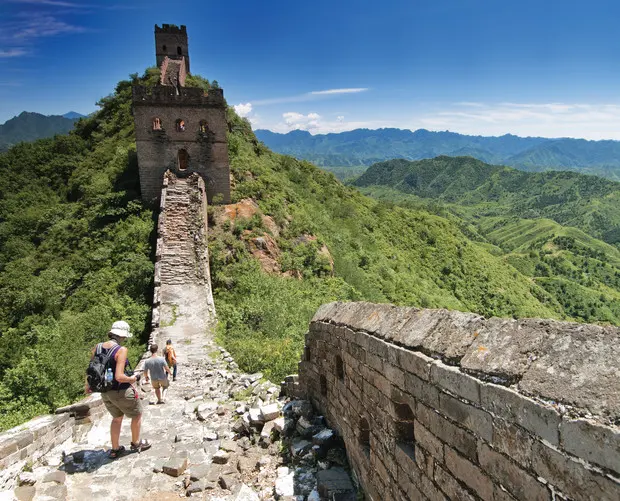
- Jinshanling: Known for its beautiful, rugged scenery and original, unrestored brickwork, perfect for photography enthusiasts.
- Jiankou: A challenging, wild section that is largely unrestored, recommended only for experienced hikers with proper gear.
Common mistakes when visiting the Great Wall
A frequent mistake travelers make is underestimating the physical demands of hiking the wall. The terrain is often steep, with uneven stone steps that can be slippery or crumbling in unrestored areas. Many visitors arrive wearing inappropriate footwear, such as flip-flops or sandals, which increases the risk of injury. Always wear sturdy hiking shoes with good grip to navigate the uneven surfaces safely.
Another common error is failing to account for the weather and crowd density. Popular sections like Badaling can become overwhelmed with tourists during weekends and public holidays, significantly detracting from the experience. To avoid this, try to visit on a weekday or arrive as soon as the gates open. Additionally, the wall offers little shade, so carry plenty of water and sun protection, as the sun can be intense even on cooler days.
How to preserve the Great Wall for the future
The Great Wall faces significant threats from both natural erosion and human activity. Weathering, wind, and seismic activity continue to degrade the structure, while local development and tourism put additional pressure on the remaining segments. Conservation efforts are currently focused on stabilizing fragile areas and preventing further collapse. However, the sheer scale of the wall makes comprehensive maintenance an enormous logistical and financial challenge for authorities.
Visitors play a crucial role in preservation by following a few simple guidelines:
- Stay on marked paths to prevent further erosion of the surrounding soil and wall structure.
- Never remove stones, bricks, or artifacts from the site, as this is illegal and damages the historical integrity.
- Refrain from graffiti or carving your name into the bricks, which is a major concern for site managers.
- Pack out all trash to keep the site clean and protect the local environment from pollution.
By respecting these rules, tourists help ensure that this architectural marvel remains standing for future generations to study and admire.
Key facts
- The official length of the Great Wall of China is 21,196 kilometers (13,171 miles), according to the State Administration of Cultural Heritage.
- This measurement includes all known sections built across various dynasties, including earthworks, trenches, and natural barriers like mountains and rivers.
- The most famous and best-preserved sections were constructed during the Ming Dynasty (1368–1644) and span approximately 8,850 kilometers.
- Many parts of the wall are not continuous stone structures; much of the ancient perimeter consists of rammed earth or isolated watchtowers.
- Erosion, human development, and agricultural expansion have caused significant portions of the wall to disappear or crumble over the centuries.
- When visiting, focus on restored sections like Badaling or Mutianyu, as many "wild" sections are structurally unstable and dangerous to hike.
The bottom line
The Great Wall of China is a complex, discontinuous network of fortifications rather than a single stone line. While its official total length exceeds 21,000 kilometers, this figure encompasses diverse structures built over centuries. For travelers, the wall remains a monumental feat of ancient engineering, though only specific, restored sections are suitable for public exploration. Understanding its fragmented nature is essential for appreciating its true historical scale.
People also ask
Can you see the Great Wall of China from space with the naked eye?
No, this is a common myth. The wall is too narrow and its color blends into the natural landscape, making it impossible to see from low Earth orbit without aid.
Who built the Great Wall of China?
The wall was built by various Chinese dynasties over two millennia, starting as early as the 7th century BCE. The Qin Dynasty famously connected earlier fortifications, while the Ming Dynasty built the iconic stone structures seen today.
Is the Great Wall of China a single continuous wall?
No, it is a vast network of walls, trenches, and natural defensive barriers. These segments were built at different times and often do not connect to form one unbroken line.
Why was the Great Wall of China built?
It was primarily constructed as a defensive military system to protect Chinese states and empires against raids and invasions from nomadic groups in the Eurasian Steppe.
Are there parts of the Great Wall that are still being discovered?
Yes, archaeologists continue to use satellite imagery and ground surveys to identify previously unknown sections of the wall, particularly those made of earth that have been buried by time.
What is the best way to visit the Great Wall?
Most visitors travel from Beijing to sections like Mutianyu or Jinshanling, which offer well-maintained paths and cable cars. Avoid visiting during national holidays to escape extreme overcrowding.
This answer was created with the help of AI research tools and reference sources. Spotted an error? Let us know — we correct mistakes quickly. See our editorial policy.