How do you draw the Great Wall of China?
Short answer
Drawing the Great Wall requires capturing its rhythmic, serpentine path across rugged terrain. Focus on the repeating watchtowers, the textured stone battlements, and the undulating ridgelines of the mountains. By using perspective to show the wall receding into the distance, you create a sense of the structure's immense, historic scale.
On this page
How to sketch the basic form of the Great Wall
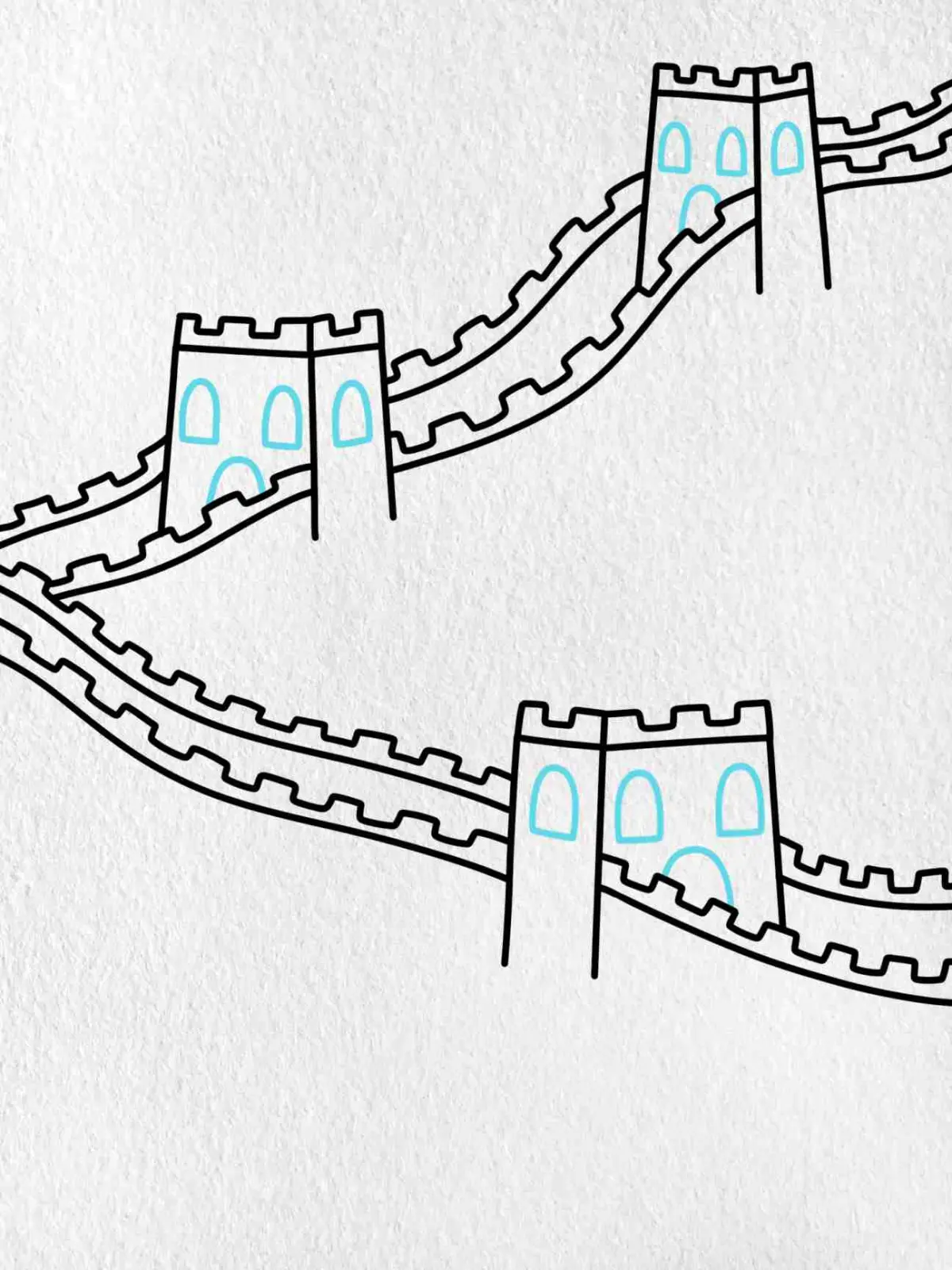
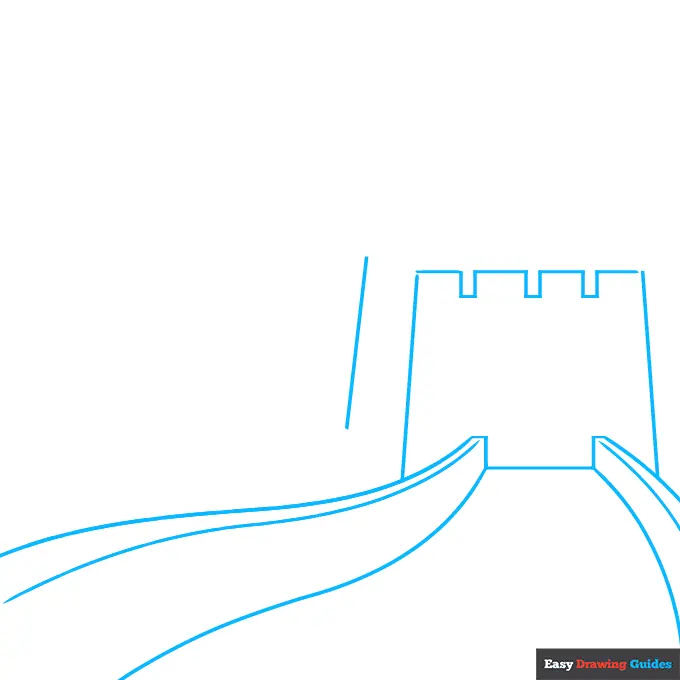
The Great Wall is defined by its relationship with the landscape, as it follows the crests of mountain ridges. To begin, draw a faint, flowing "S" curve or a zigzag line across your paper to represent the path of the wall. This line should mimic the natural contours of the terrain, rising and falling with the peaks. Avoid drawing perfectly straight lines, as the wall’s charm lies in its organic, hand-built adaptation to steep slopes.
Once the path is established, add a parallel line to create the width of the wall. Keep the space between these lines consistent, though you should taper them slightly as they recede toward the horizon to create depth. Use these simple steps to build your foundation:
- Sketch a light horizon line to establish your eye level.
- Draw the primary path of the wall using a soft graphite pencil.
- Add a second line to give the wall volume and thickness.
- Mark the placement of watchtowers at intervals along the curves.
How to draw the watchtowers accurately
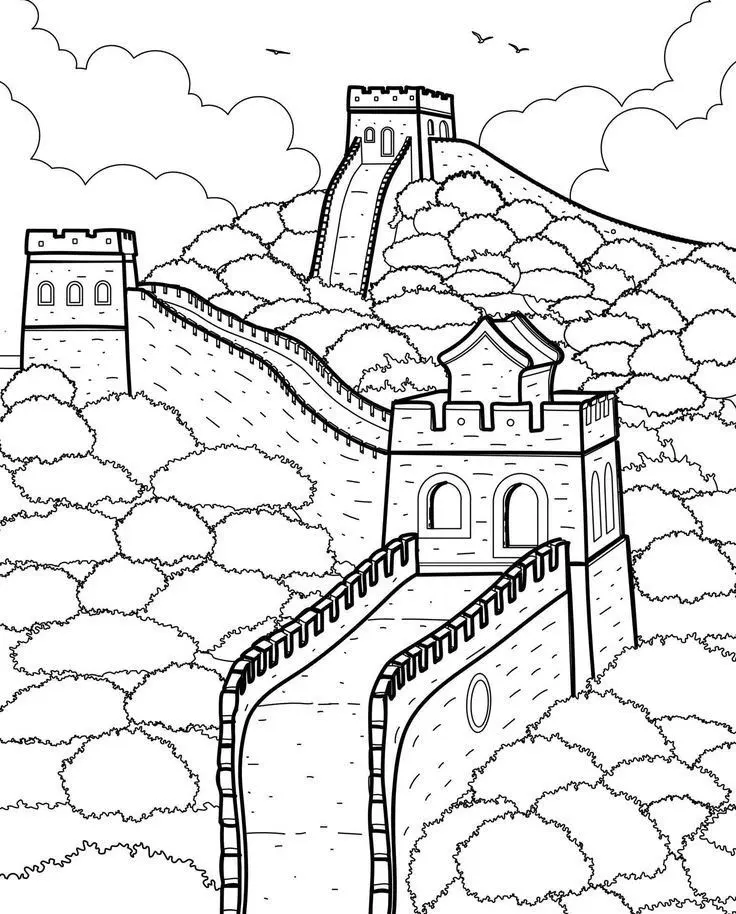
Watchtowers are the most recognizable features of the Great Wall, typically appearing as rectangular, boxy structures. These towers should be placed at strategic points, such as high mountain summits or sharp turns in the wall. Draw them as simple cubes or rectangular prisms sitting directly on top of your previously drawn path. Ensure the base of each tower aligns with the perspective of the wall to maintain a realistic look.
Add details to the towers to reflect their historic architecture, such as arched doorways or small window slits. Because these towers were constructed of brick and stone, they should look solid and heavy. Use these techniques to enhance your towers:
- Draw a slightly wider base for stability and structural realism.
- Add a flat or slightly pitched roofline to the top of the tower.
- Include subtle vertical lines to suggest the brickwork or masonry joints.
- Keep the towers smaller as they move further away to emphasize distance.
Best shading techniques for stone textures
The Great Wall is composed of grey stone, brick, and earth, which requires varied shading to look authentic. Use cross-hatching or stippling to suggest the rough, weathered texture of the stones. Focus your darkest shadows on the side of the wall facing away from your light source, often the side tucked into the mountain's shadow. This contrast between light and dark highlights the three-dimensional form of the battlements.
Avoid shading every single stone individually, as this can make the drawing look cluttered and flat. Instead, group areas of shadow to suggest the overall volume of the wall. Use a blending stump or a soft eraser to pull out highlights on the top edges of the crenelated battlements. By focusing on the interplay of light across the uneven surface, you create a sense of age and permanence that defines this ancient monument.
Common mistakes when drawing the Great Wall
One frequent error is drawing the wall as a perfectly flat road. In reality, the Great Wall features steep staircases and uneven segments that reflect the mountain's incline. If you draw the wall as a flat ribbon, you lose the dramatic tension of the landscape. Always anchor your wall to the mountainside, showing how it climbs and dips rather than floating above the terrain.
Another mistake involves neglecting the surrounding environment. The wall is inseparable from the rugged hills of northern China, so adding trees, rocks, or distant misty peaks provides necessary context. Without these elements, the wall appears isolated and lacks scale. Remember these tips to avoid common pitfalls:
- Do not make the wall too thin; it should look wide enough for troops to march.
- Avoid perfectly uniform spacing for watchtowers, as they were built to fit the terrain.
- Ensure the wall follows the natural ridgeline rather than cutting through valleys.
- Vary the line weight to push background sections further into the distance.
How to add depth and perspective to your drawing
To make your drawing feel expansive, you must utilize atmospheric perspective. Elements closer to the viewer should have sharper details, darker lines, and higher contrast. As the wall winds away toward the horizon, make the lines lighter and thinner, and reduce the amount of visible detail. This technique mimics how the human eye perceives distance, making the structure appear to stretch for miles.
You can also use overlapping to improve the composition. If the wall winds behind a mountain peak or another section of the wall, leave that part hidden. This creates a sense of mystery and emphasizes the winding, complex nature of the fortification. By applying these principles, you transform a simple line drawing into a compelling scene that captures the grandeur of the Ming Dynasty’s most famous defensive project. Finalize your work by cleaning up any stray construction lines and adding a light wash of grey or brown to give the stone a more lifelike, weathered appearance.
Key facts
- The Great Wall stretches over 13,000 miles, but most iconic drawings focus on the Ming Dynasty sections featuring crenelated parapets and square watchtowers.
- Start by drawing a long, undulating horizontal line to represent the mountain ridge, ensuring the wall follows the natural contours of the terrain.
- Use a series of repeating rectangular blocks to create the battlements, spacing them evenly to maintain a sense of architectural scale.
- Incorporate watchtowers at irregular intervals, as these structures were strategically placed on high points to monitor the surrounding landscape.
- Add texture to the wall’s surface by sketching irregular shapes to represent stone masonry and bricks, avoiding perfectly smooth lines.
- Use atmospheric perspective by drawing the wall sections in the foreground with darker, sharper lines and fading the distant sections into the background.
The bottom line
Drawing the Great Wall requires balancing architectural precision with the organic flow of nature. By focusing on the rhythmic pattern of battlements and watchtowers, you can capture the wall’s immense scale. Remember to let the structure follow the landscape’s contours, using varying line weights to create depth. With careful attention to perspective and texture, you can effectively illustrate this iconic feat of ancient human engineering.
People also ask
What is the best medium for drawing the Great Wall?
Graphite pencils are ideal for beginners because they allow for precise shading and easy corrections. Ink pens work well for capturing the sharp, geometric edges of the watchtowers and brickwork.
How do I make the wall look realistic on a mountain?
Focus on the "serpentine" nature of the wall by letting it twist and turn with the topography. If the wall ignores the landscape, it will appear as if it is floating rather than built into the earth.
Should I draw every single brick on the wall?
Avoid drawing every individual brick, as this creates a cluttered and unnatural look. Instead, suggest the texture with scattered marks or short lines in specific areas to imply the masonry.
How do I draw the watchtowers correctly?
Treat the towers as solid, box-like structures that sit slightly higher than the wall itself. Add a small roof with slightly curved corners to reflect traditional Chinese architectural styles.
What is a common mistake when drawing the wall's perspective?
A common error is making the wall the same width throughout the entire drawing. Remember that the part of the wall closest to the viewer should be wider and more detailed than the distant sections.
How do I add depth to the surrounding landscape?
Use cross-hatching to create shadows on the mountain slopes behind the wall. This contrast helps the stone structure stand out against the natural environment.
This answer was created with the help of AI research tools and reference sources. Spotted an error? Let us know — we correct mistakes quickly. See our editorial policy.