Who was Julius Caesar?
Short answer
Julius Caesar was a Roman general, statesman, and dictator whose actions led to the collapse of the Roman Republic and the rise of the Roman Empire. Born in 100 BCE, he conquered Gaul, crossed the Rubicon to seize power, and implemented sweeping reforms before his assassination on the Ides of March, 44 BCE.
On this page
Who was Julius Caesar in history?
Gaius Julius Caesar was a member of the aristocratic Julia family who rose through the Roman political system, known as the cursus honorum. He served as a quaestor, aedile, and praetor before being elected consul in 59 BCE. His political career was defined by his alliance with Pompey the Great and Marcus Licinius Crassus, a partnership known as the First Triumvirate. This coalition allowed him to bypass traditional senatorial opposition and secure a lengthy governorship in Gaul.
Beyond his political maneuvering, Caesar was a brilliant military strategist. During his time in Gaul, he expanded Roman territory to the Rhine and the English Channel, documenting his campaigns in Commentarii de Bello Gallico. These writings served as both military reports and political propaganda to maintain his popularity in Rome. His success made him immensely wealthy and earned him the fanatical loyalty of his veteran legions, setting the stage for a dramatic confrontation with the Roman Senate.
How did Caesar take control of Rome?
The transition from a republic to a centralized power began when the Senate, fearing Caesar’s growing influence, ordered him to disband his army and return to Rome. Caesar refused, choosing instead to march his troops across the Rubicon River in 49 BCE, an act of treason that triggered a brutal civil war. He defeated his rival, Pompey, in several decisive battles, including the Battle of Pharsalus in 48 BCE. By 45 BCE, Caesar had effectively crushed all organized resistance.
Once in control, he was named dictator perpetuo, or dictator for life. He used this authority to centralize the Roman government and initiate significant social changes. His actions were designed to stabilize a society exhausted by decades of civil strife, though they alienated the traditionalist senators who viewed him as a tyrant. Key aspects of his administration included:
- Reforming the calendar to create the Julian calendar, which remained in use for centuries.
- Granting Roman citizenship to many people living in the provinces.
- Establishing colonies for his veterans and the urban poor to alleviate overcrowding.
- Reducing the debt burden for many citizens to prevent further economic collapse.
Why was Julius Caesar assassinated?
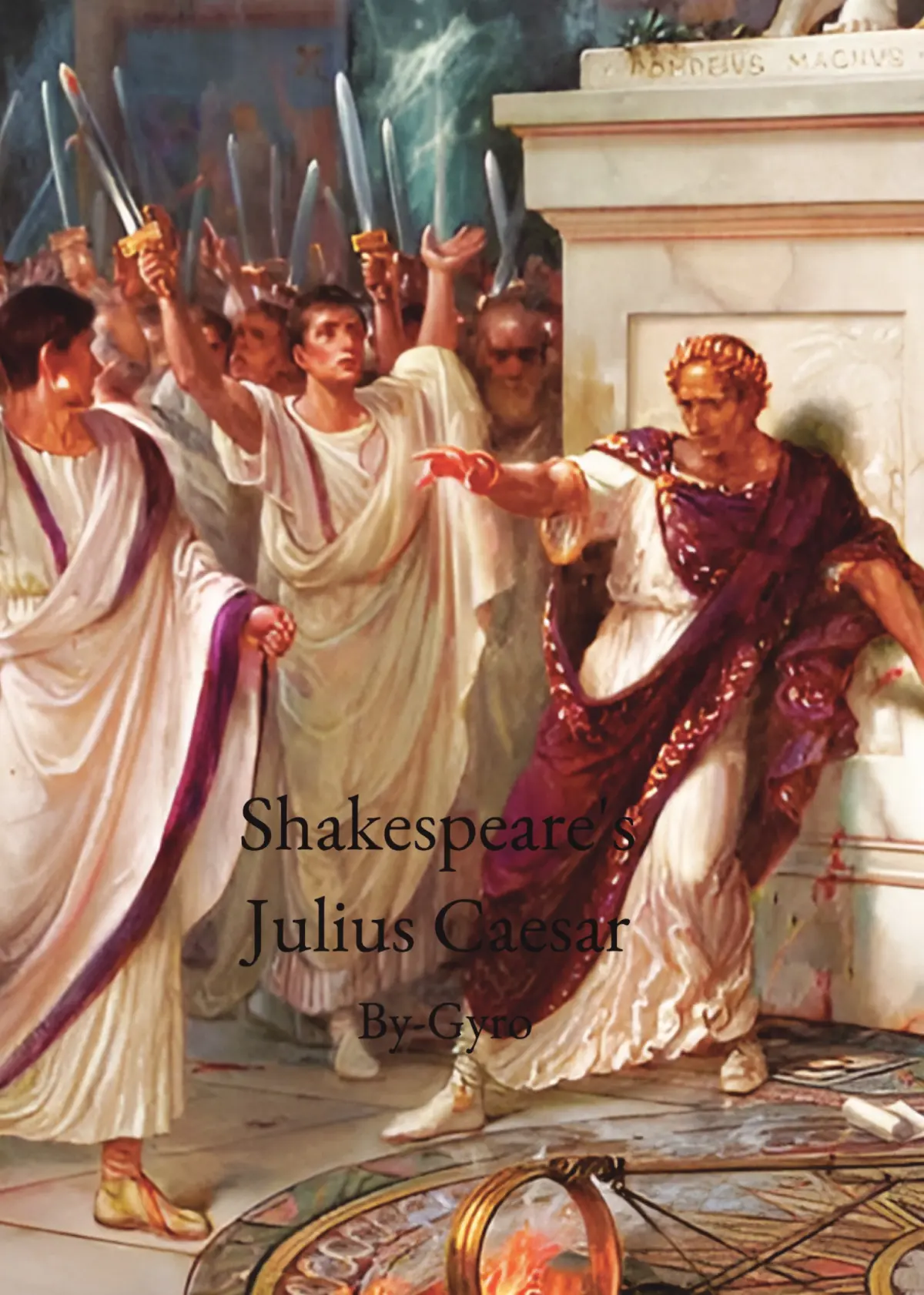
The assassination of Caesar on March 15, 44 BCE, was the result of deep-seated resentment among members of the Roman Senate. These conspirators, led by Marcus Junius Brutus and Gaius Cassius Longinus, feared that Caesar intended to declare himself king. In the Roman political culture of the time, the title of king was synonymous with tyranny and the loss of traditional republican liberties. The conspirators believed that killing him would restore the Republic to its former glory.
However, the assassination failed to achieve its intended goal of restoring the old political order. Instead, it plunged Rome into a new series of civil wars that ultimately destroyed the remaining republican institutions. The public, who largely supported Caesar for his populist reforms, turned against the conspirators. This power vacuum allowed Caesar’s adopted son, Octavian, to emerge as the victor, eventually becoming Augustus, the first emperor of Rome. The death of Caesar marked the definitive end of the Roman Republic and the beginning of the imperial era.

Common mistakes when studying Caesar
Students often make the mistake of viewing Caesar as a modern-day monarch or a simple villain. It is important to remember that he operated within a complex, highly competitive political system where violence was a standard tool for advancement. Another frequent error is assuming that the Roman Republic was a democracy in the modern sense. It was an oligarchy where power was concentrated in the hands of a few wealthy families and the Senate, which Caesar exploited to his advantage.
To better understand his life, avoid these common pitfalls:
- Ignoring the role of the First Triumvirate, which was essential to his early rise.
- Overlooking the importance of his writings, which were crafted to shape public opinion.
- Attributing his success solely to military skill while ignoring his mastery of political patronage.
- Assuming the Senate was a unified body, when it was actually deeply divided by factional interests.
Best ways to learn about Caesar
For those interested in a deeper dive into his life, start by reading primary sources alongside modern academic analysis. Caesar’s own commentaries provide a first-hand account of his military logic, though they must be read with the understanding that they are biased. Supplementing these with biographies from historians like Suetonius or Plutarch provides a broader picture of his personal character and the political climate of the late Republic.
When researching his life, focus on the following areas to gain a practical understanding:
- The structure of the Roman military and how it functioned as a political force.
- The social and economic tensions in Rome that made the populace support a dictator.
- The transition of power from the Republic to the Empire under Augustus.
- The architectural and cultural legacy he left behind, such as the Forum of Caesar.
By analyzing these specific areas, you can move beyond the myths surrounding his death and appreciate the complex political evolution that defined his era. Understanding Caesar is essential to understanding the foundations of Western political history and the inherent vulnerabilities of republican governance.
Key facts
- Julius Caesar was a Roman general and statesman who played a critical role in the demise of the Roman Republic and the rise of the Roman Empire.
- He was born in 100 BCE and rose to power through a combination of military genius, political alliances, and populist appeal.
- In 49 BCE, he famously crossed the Rubicon River with his army, an act of treason that triggered a civil war against Pompey the Great.
- He was appointed dictator for life in 44 BCE, centralizing power and implementing significant reforms to the Roman calendar and administrative systems.
- On March 15, 44 BCE, known as the Ides of March, Caesar was assassinated by a group of senators who feared his growing tyranny.
- When studying Caesar, avoid the mistake of viewing him solely as a villain or a hero; he was a complex figure whose actions were both destructive and transformative.
The bottom line
Julius Caesar remains one of history’s most influential figures, bridging the gap between the Roman Republic and the Roman Empire. His military brilliance and political maneuvers fundamentally altered the trajectory of Western civilization. While his life ended in betrayal and violence, his institutional reforms and legacy of centralized authority set the stage for centuries of imperial rule, making him a central study in the nature of power.
People also ask
How did Julius Caesar change the calendar?
Caesar introduced the Julian calendar in 46 BCE to replace the chaotic Roman lunar calendar with a solar-based system. This reform established the 365-day year and the leap year, forming the basis for the Gregorian calendar used globally today.
Was Julius Caesar an emperor?
No, Caesar was never officially an emperor. While he held the title of dictator for life, the formal office of Roman Emperor did not exist until his grandnephew, Augustus, established the Principate after Caesar's death.
Why was Julius Caesar assassinated?
A group of senators, led by Brutus and Cassius, assassinated him because they feared he intended to abolish the Republic and establish a monarchy. They believed his death would restore the traditional power of the Senate and republican government.
What does "crossing the Rubicon" mean?
The phrase refers to an irreversible decision that commits a person to a risky course of action. It stems from Caesar’s decision to march his army into Italy, which made armed conflict with the Roman state inevitable.
Did Julius Caesar have children?
Caesar had one legitimate daughter, Julia, with his first wife, Cornelia. He also famously fathered a son named Caesarion with the Egyptian queen Cleopatra, though the child was never formally recognized as his heir under Roman law.
What was the significance of Caesar's Gallic Wars?
The Gallic Wars, fought between 58 and 50 BCE, resulted in the conquest of Gaul, significantly expanding Roman territory. These campaigns also provided Caesar with the immense wealth and loyal military force necessary to challenge his political rivals in Rome.
This answer was created with the help of AI research tools and reference sources. Spotted an error? Let us know — we correct mistakes quickly. See our editorial policy.