What is High Renaissance art?
Short answer
High Renaissance art refers to the pinnacle of artistic achievement in Italy between approximately 1490 and 1527. Characterized by technical mastery, balanced compositions, and idealized human forms, it represents the synthesis of classical antiquity and Christian themes. Centered primarily in Rome and Florence, this period produced the era’s most iconic masterpieces.
On this page
What defines High Renaissance art?
High Renaissance art is defined by a pursuit of harmony, proportion, and naturalism. Artists sought to move beyond the experimental techniques of the Early Renaissance, aiming instead for a sense of stability and ideal beauty. This was achieved through the use of sophisticated linear perspective, anatomical precision, and the careful arrangement of figures within a pictorial space. The period reflects a humanistic worldview where the physical world was studied with scientific rigor, yet imbued with spiritual depth.
The movement was heavily influenced by the recovery of classical texts and the patronage of powerful figures, most notably the popes in Rome. Artists were no longer viewed as mere craftsmen but as intellectuals and visionaries. This shift in status allowed for more ambitious projects, such as the decoration of the Vatican and the creation of monumental sculpture. The era reached its zenith with the work of three primary masters: Leonardo da Vinci, Michelangelo, and Raphael.
Who are the key artists of the High Renaissance?
The High Renaissance is dominated by the "Big Three" whose contributions fundamentally altered the course of Western art history. Each artist brought a distinct focus to their work, yet all shared an obsession with technical perfection and expressive power. Their influence was so profound that their styles became the standard for academic art for centuries.
- Leonardo da Vinci: Known for his mastery of sfumato (smoky blending) and psychological depth, as seen in the Mona Lisa.
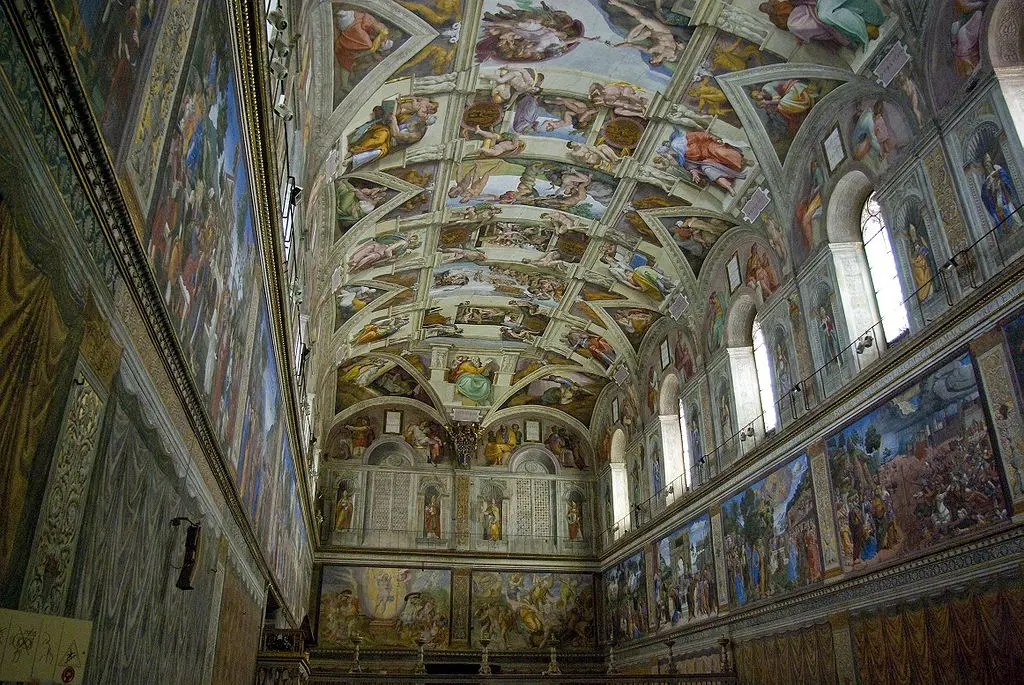
- Michelangelo Buonarroti: Renowned for his focus on the human form, particularly in the Sistine Chapel ceiling and the David statue.
- Raphael Sanzio: Celebrated for his clarity of form and ease of composition, best exemplified by The School of Athens.
These artists did not work in isolation. They often competed for the same commissions, which pushed them to innovate constantly. Their ability to balance complex theological narratives with realistic human anatomy remains the hallmark of the period's output.
How to identify High Renaissance paintings
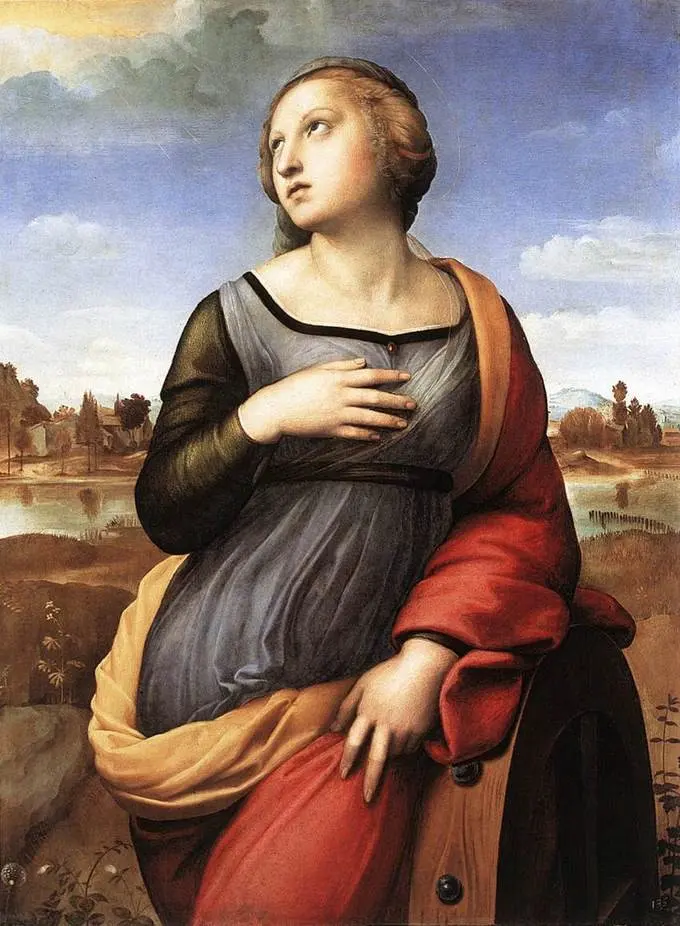
Identifying art from this period requires looking for specific visual cues that distinguish it from earlier or later styles. The compositions are typically pyramidal, providing a sense of balance and calm. Unlike the cluttered scenes of the medieval period, High Renaissance works prioritize a clear focal point, guiding the viewer's eye through the narrative with intentionality.
- Look for the "pyramidal composition," where figures are arranged in a triangular shape to create stability.
- Observe the lighting, which is often soft and gradual, avoiding the harsh contrasts found in later Mannerist or Baroque works.
- Check for anatomical accuracy, as artists during this time studied human dissection to understand how muscles and bones moved.
- Note the background, which often features atmospheric perspective, where distant objects appear blurrier and cooler in color.
Avoid mistaking the High Renaissance for the Early Renaissance, which often features flatter, more rigid figures, or the Mannerist period, which is characterized by elongated limbs and artificial, jarring colors.
Where to see High Renaissance masterpieces
While major works are spread across the globe, the most significant concentration remains in Italy. Rome is the primary destination, as the Vatican Museums house the Sistine Chapel and the Raphael Rooms. These sites offer an unparalleled look at the intersection of religious power and artistic genius. Florence remains equally important, serving as the cradle of the movement where many of these artists began their training.
Beyond Italy, the Louvre in Paris holds essential works by Leonardo da Vinci, while the National Gallery in London and the Prado in Madrid possess significant collections of Raphael’s paintings. When visiting these sites, it is helpful to look for the "High Renaissance" label, which distinguishes these works from the later, more dramatic Baroque art. If you are unable to travel, many major museums provide high-resolution digital archives that allow for the inspection of brushwork and composition in great detail.
Common mistakes when studying High Renaissance art
A frequent error is assuming that the High Renaissance was a uniform style across all of Europe. In reality, the movement was a localized Italian phenomenon, specifically centered on the cultural hubs of Rome and Florence. While Northern European artists like Albrecht Dürer visited Italy and were influenced by these techniques, they maintained their own distinct traditions, such as a greater focus on minute detail and oil-based textures.
Another mistake is viewing these works purely as religious propaganda. While the Catholic Church was the primary patron, the art also served as a vehicle for political prestige and philosophical inquiry. The inclusion of pagan figures alongside biblical ones in works like the Sistine Chapel demonstrates the period's complex synthesis of classical mythology and Christian doctrine. By ignoring the intellectual context of the philosophers and poets who surrounded these artists, one misses the true depth of the High Renaissance. Always consider the intent of the patron alongside the skill of the artist to gain a complete understanding of these historical treasures.
Key facts
- High Renaissance art flourished in Italy between approximately 1490 and 1527, marking the peak of artistic achievement in the period.
- The style is defined by perfect balance, harmonious proportions, and a sophisticated understanding of human anatomy.
- Leonardo da Vinci, Michelangelo, and Raphael are considered the three primary masters of this era.
- Artists utilized linear perspective to create the illusion of three-dimensional depth on two-dimensional surfaces.
- Sfumato, a technique of blending colors and tones so subtly that there is no perceptible transition, was perfected by Leonardo da Vinci.
- To appreciate these works, look for the "pyramidal composition," where figures are arranged in a triangular shape to provide stability and focus.
The bottom line
High Renaissance art represents the pinnacle of Western technical skill, blending classical ideals with scientific observation. By mastering perspective, anatomical precision, and subtle lighting, masters like Raphael and Michelangelo transformed painting and sculpture into vehicles for profound human expression. For the modern viewer, these works remain the gold standard of visual harmony, offering a timeless window into the intellectual and cultural ambitions of 16th-century Italy.
People also ask
How does High Renaissance art differ from the Early Renaissance?
Early Renaissance art focused on discovering perspective and basic anatomy, often resulting in slightly rigid figures. High Renaissance art refined these techniques to achieve naturalism, emotional depth, and idealized beauty.
Why did the High Renaissance end in 1527?
The period is generally considered to have concluded with the Sack of Rome in 1527. This event caused many artists to flee the city, leading to the emergence of the more distorted and complex Mannerist style.
What is the significance of the "pyramidal composition" in this style?
This technique organizes figures into a stable, triangular structure that draws the viewer's eye to the center. It creates a sense of calm, order, and monumentality that was highly valued by Renaissance patrons.
Did High Renaissance artists only paint religious subjects?
While the Catholic Church was the primary patron and commissioned many biblical scenes, artists also painted portraits and mythological subjects. These secular works reflected the era's growing interest in humanism and classical antiquity.
What is the most common mistake when viewing High Renaissance art?
A common error is focusing only on the subject matter rather than the technical mastery of light and space. To avoid this, observe how the artist uses shadows to model the body and how the background recedes into the distance.
How did the invention of oil paint influence this period?
The transition from tempera to oil paint allowed artists to achieve richer colors and smoother blending. This technical shift was essential for creating the realistic skin tones and atmospheric effects characteristic of the era's masterpieces.
This answer was created with the help of AI research tools and reference sources. Spotted an error? Let us know — we correct mistakes quickly. See our editorial policy.