What does a lamb symbolize in art?
Short answer
In art, the lamb primarily symbolizes innocence, purity, and sacrificial love. Most frequently associated with Jesus Christ in Christian iconography, it represents the "Lamb of God" who bears the sins of the world. Beyond religious contexts, the lamb signifies gentleness, vulnerability, and the peaceful nature of the pastoral or idyllic life.
On this page
What does the lamb represent in Christian art?
The lamb is one of the most enduring symbols in Western art, serving as a direct visual metaphor for Jesus Christ. This association stems from the biblical description of Christ as the "Lamb of God," a reference to his role as a sacrificial figure who offers redemption. In paintings and sculptures, the lamb is often depicted with a halo or carrying a banner, signifying victory over death and the triumph of divine grace.
Artists frequently utilize this symbol to evoke themes of humility and obedience. By portraying Christ as a lamb rather than a powerful king, religious works emphasize the accessibility and self-sacrificing nature of the divine. This imagery became particularly prominent during the Middle Ages and the Renaissance, appearing in countless altarpieces and frescoes. When viewing these works, look for specific attributes that clarify the symbolism:
- A cross or banner held by the lamb indicates Christ’s resurrection.
- A golden halo signifies the lamb’s divine nature.
- A book or scroll beneath the lamb refers to the Book of Life mentioned in the Book of Revelation.
How to identify a lamb in classical paintings
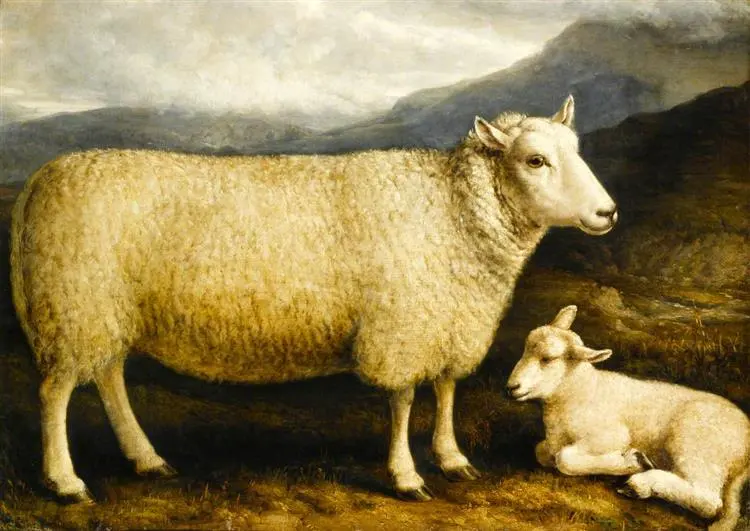
Identifying a lamb in a historical painting requires distinguishing it from other livestock, such as goats or rams. Lambs in art are typically rendered with soft, curly white wool and a gentle, downward-gazing expression. They lack the curved, aggressive horns of a ram or the vertical pupils often associated with goats. If the animal is positioned near a shepherd or a group of saints, it is almost certainly intended to carry symbolic weight.
Artists often place the lamb in a central position to draw the viewer’s eye toward the moral message of the scene. In works depicting the "Adoration of the Shepherds," the lamb serves as a foreshadowing of Christ's eventual sacrifice. If you are analyzing a painting, consider the following steps to interpret the animal's presence:
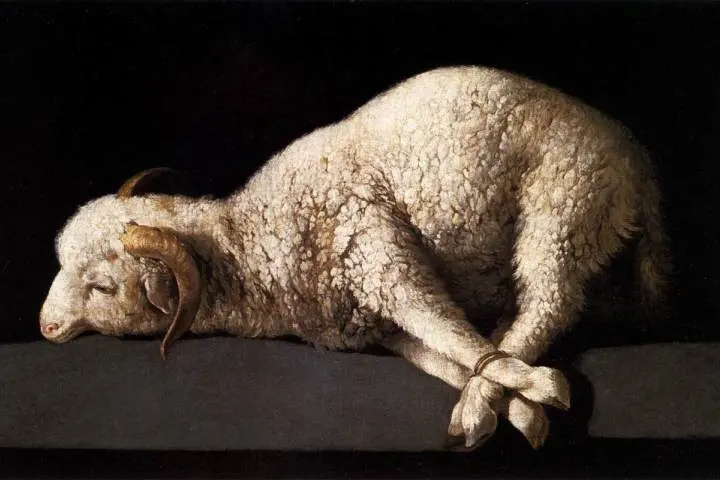
- Examine the animal's posture; a recumbent lamb often suggests peace or a state of waiting.
- Check for surrounding figures; if the lamb is being held by a child, it reinforces the theme of innocence.
- Look for blood or wounds on the lamb, which explicitly link the animal to the concept of martyrdom.
Why is the lamb associated with innocence and youth?
Outside of strictly religious contexts, the lamb is a universal symbol of youth, helplessness, and inherent goodness. Its biological nature—being small, soft, and entirely dependent on its mother—makes it an ideal visual shorthand for the vulnerable. In secular art, particularly from the 18th and 19th centuries, the lamb is often paired with children to highlight their lack of worldly corruption. This pairing suggests a state of grace that exists before the complexities of adulthood take hold.
The lamb also features prominently in pastoral art, a genre that celebrates the simple, virtuous life of the countryside. Here, the lamb represents a harmonious relationship between humanity and nature. It serves as a reminder of a world that is uncomplicated and free from the anxieties of industrialization. When an artist includes a lamb in a landscape, they are often inviting the viewer to contemplate a sense of tranquility and moral purity that is increasingly rare in the modern world.
Common mistakes when interpreting lamb symbolism
A frequent error in interpreting art is assuming that every lamb is a religious symbol. While the Christian connotations are powerful, they are not universal. In some contexts, particularly in classical mythology or folk art, the lamb may simply represent wealth, agricultural prosperity, or the concept of the "flock" under a leader's care. Failing to account for the historical or cultural context of a piece can lead to a narrow and potentially inaccurate reading of the artist's intent.
Another mistake is ignoring the condition of the lamb within the composition. An artist may depict a lamb that is injured, lost, or trapped in brambles, which changes the meaning from one of peaceful innocence to one of distress or the need for salvation. To avoid misinterpretation, always consider these factors:
- The setting: Is it a church, a royal palace, or a rural field?
- The interaction: Is the lamb being protected, sacrificed, or ignored by other figures?
- The medium: Is it a delicate sketch, a monumental stone carving, or a vibrant oil painting?
How to appreciate lamb imagery in modern art
Modern artists often subvert traditional symbols to challenge the viewer's expectations. While the lamb remains a symbol of innocence, contemporary works may use it to comment on the loss of that innocence in a cynical world. By placing a lamb in an urban or chaotic setting, an artist might highlight the fragility of goodness or the way society treats the vulnerable. This shift in context forces the viewer to reevaluate the traditional meaning of the symbol.
To appreciate these modern interpretations, you must be willing to look beyond the historical definitions. Ask yourself how the artist has altered the traditional presentation of the animal. Has the lamb been stylized, distorted, or placed in an ironic situation? By engaging with these variations, you gain a deeper understanding of how symbols evolve over time. The lamb remains a potent image because it taps into fundamental human emotions, ensuring its continued relevance in both traditional and avant-garde artistic expressions for generations to come.
Key facts
- The lamb is the most prominent symbol for Jesus Christ in Christian art, representing his role as the "Lamb of God" who was sacrificed for humanity.
- In depictions of the "Agnus Dei" (Lamb of God), the animal is often shown carrying a banner or a cross, symbolizing victory over death.
- A lamb lying down represents peace and innocence, frequently appearing in pastoral scenes or depictions of the Garden of Eden.
- When a lamb is shown with a shepherd, it signifies the guidance, protection, and care provided by a religious leader or deity.
- To distinguish a lamb from other sheep in art, look for its smaller size, curly wool, and often a halo or a posture of submission.
- Avoid confusing a lamb with a goat; goats in art often symbolize the "damned" or sinners, whereas the lamb represents purity and the saved.
The bottom line
The lamb serves as a versatile icon in art, primarily functioning as a symbol of innocence, purity, and sacrificial love. While its religious connotations as the Lamb of God remain its most recognizable usage, it also represents the vulnerability of the human spirit in secular contexts. Understanding these nuances helps viewers interpret the emotional and theological weight behind the animal’s frequent appearance in historical masterpieces.
People also ask
Why is the lamb often shown with a wound in its chest?
This imagery refers to the crucifixion of Jesus, where he was pierced by a Roman spear. The blood flowing into a chalice represents the Eucharist and the sacrifice made to cleanse the world of sin.
Does the lamb always represent religious themes?
No, in secular art from the Renaissance and the Romantic era, the lamb often symbolizes innocence, childhood, and the simplicity of rural life. It is frequently used to contrast the purity of nature with the corruption of urban society.
What does a black lamb symbolize in art?
A black lamb is often used to represent an outcast or a deviation from the norm, sometimes signifying the "black sheep" of a family. In rare occult or folklore-inspired art, it may also represent dark omens or hidden knowledge.
How do artists differentiate between a lamb and a ram?
A ram is characterized by large, curved horns and is typically associated with strength, virility, and stubbornness. A lamb is always hornless or has very small buds, emphasizing its vulnerability and docile nature.
Is the lamb a symbol in non-Christian cultures?
Yes, in ancient Greek mythology, the Golden Fleece of a winged ram was a symbol of authority and kingship. In various Eastern traditions, lambs are sometimes associated with the arrival of spring and the renewal of life.
What is the significance of the lamb in the "Adoration of the Mystic Lamb"?
Painted by Jan van Eyck in 1432, this work places the lamb on an altar to signify the perpetual sacrifice of Christ. It serves as the central focal point for the entire altarpiece, emphasizing the theme of salvation.
This answer was created with the help of AI research tools and reference sources. Spotted an error? Let us know — we correct mistakes quickly. See our editorial policy.