What is Ilya Repin known for?
Short answer
Ilya Repin was the preeminent Russian realist painter of the 19th century, celebrated for his profound psychological insight and mastery of social commentary. He is best known for his monumental depictions of Russian life, including the iconic Barge Haulers on the Volga, and his intimate, technically brilliant portraits of cultural figures.
On this page
What is Ilya Repin famous for?
Ilya Repin is widely considered the greatest master of the Peredvizhniki, or "Wanderers," a group of Russian artists who rebelled against the rigid academic style of the 19th century. His fame rests on his ability to capture the soul of the Russian people, moving beyond mere representation to convey intense emotional and social truths. Whether painting the crushing labor of the peasantry or the refined features of the intellectual elite, Repin maintained a commitment to realism that defined an entire era of Russian art.
His work serves as a historical record of the Russian Empire’s social tensions, ranging from revolutionary fervor to the quiet dignity of everyday existence. By rejecting idealized subjects, he brought subjects like impoverished laborers and political dissidents into the mainstream of high art. Today, his canvases are housed in major institutions like the State Tretyakov Gallery in Moscow and the State Russian Museum in St. Petersburg, where they remain central to the national identity of Russia.
How to identify a Repin painting
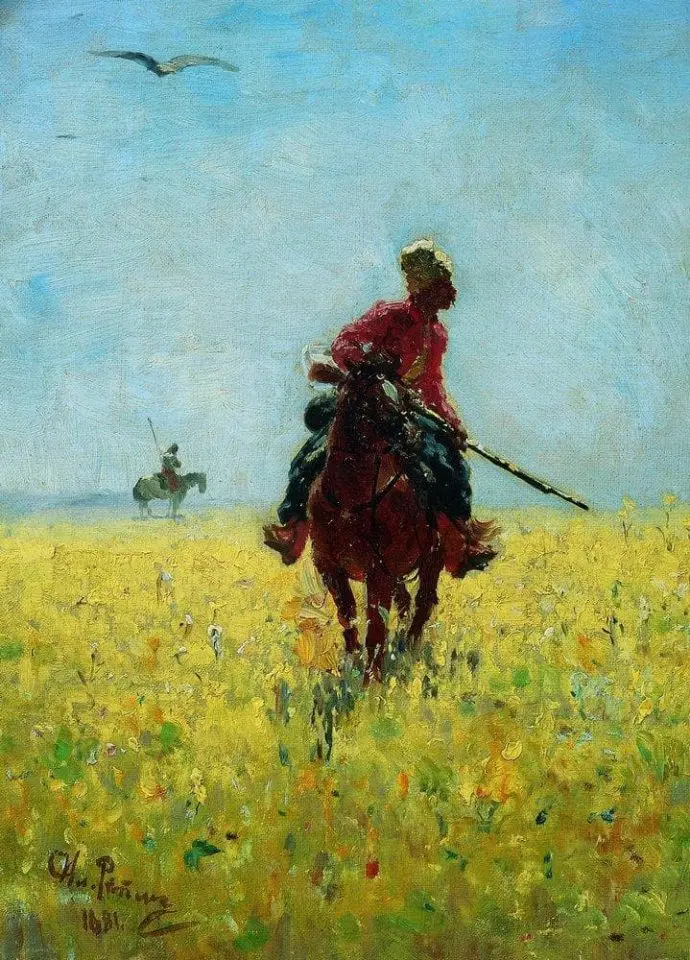
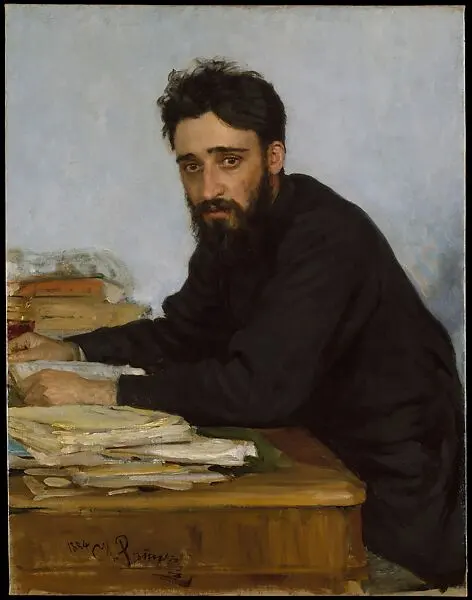
Identifying a Repin work requires looking for his signature blend of dramatic lighting, expressive brushwork, and deep psychological characterization. He was a master of composition, often arranging figures to tell a complex story within a single frame. His palette shifted throughout his career, moving from the earthy, somber tones of his early realist works to the more vibrant, impressionistic colors of his later period.
When viewing his paintings, pay close attention to the eyes of his subjects, which he rendered with startling clarity and depth. To distinguish his work from his contemporaries, look for these specific hallmarks:
- A focus on the "psychological portrait," where the subject's inner life is as important as their physical appearance.
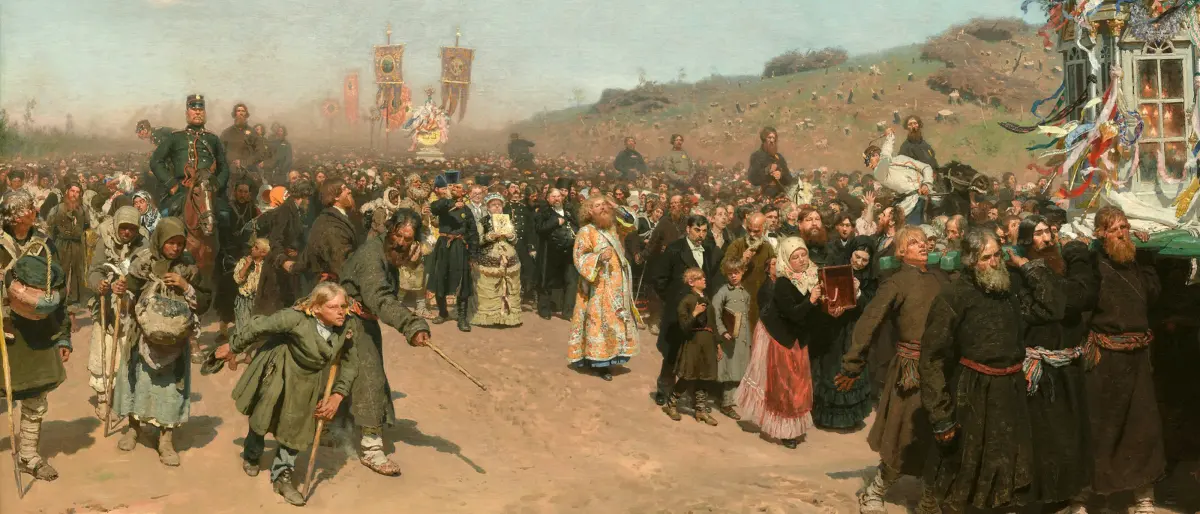
- The use of dynamic, often crowded compositions that create a sense of movement or tension.
- A profound sympathy for the marginalized, which distinguishes his work from the more decorative art of the Imperial Academy.
- Technical precision in the depiction of textures, particularly in fabrics, skin, and natural landscapes.
Which Repin paintings should you see first?
For those new to Repin’s work, starting with his most famous masterpieces provides the best overview of his range. These works demonstrate his technical prowess and his ability to engage with the most pressing social issues of his time. His career spanned several decades, and his most recognizable pieces remain touchstones of European art history.
- Barge Haulers on the Volga (1870–1873): This monumental work depicts the brutal reality of labor in tsarist Russia and launched his career.
- Religious Procession in Kursk Province (1880–1883): A massive, panoramic view of Russian society that captures everything from the clergy to the impoverished peasantry.
- Ivan the Terrible and His Son Ivan (1885): A harrowing, emotionally charged painting that showcases his ability to depict extreme human suffering.
- Reply of the Zaporozhian Cossacks (1880–1891): A vibrant, humorous, and highly detailed historical work that highlights his talent for group dynamics.
- Portrait of Modest Mussorgsky (1881): An intimate, poignant portrait of the famous composer, painted just days before his death.
Why his work matters today
Repin’s significance lies in his role as a bridge between traditional academic painting and the modern era. He proved that art could be a powerful tool for social critique without sacrificing aesthetic beauty or technical mastery. His influence extended far beyond Russia, impacting the development of realism across Europe and providing a template for how artists could engage with political and social change.
His legacy also persists through his influence on subsequent generations of Russian painters who adopted his focus on humanism and narrative. By treating the peasant and the aristocrat with the same level of artistic seriousness, he helped democratize the subject matter of fine art. His work challenges viewers to confront the human condition, making his paintings as relevant to contemporary audiences as they were to his original 19th-century contemporaries.
Common mistakes when studying Repin
A frequent error when studying Repin is assuming his work is purely documentary or political. While he was deeply involved in the social movements of his day, he was first and foremost a painter obsessed with the craft of light, color, and composition. Reducing his work to mere political propaganda ignores his immense contribution to the technical evolution of oil painting.
Another common mistake is overlooking his later, more impressionistic works. Many viewers focus exclusively on his early, dark-toned realist masterpieces and neglect the vibrant, experimental pieces he produced in his later years in Finland. To fully appreciate his artistic journey, you should avoid these common pitfalls:
- Viewing his historical paintings without researching the specific cultural context or folklore involved.
- Ignoring the influence of his time spent in Paris, which introduced him to the techniques of the French Impressionists.
- Assuming his portraits were purely commissioned work, when in fact many were deeply personal studies of friends and family.
- Failing to observe the evolution of his brushwork, which became increasingly fluid and confident as his career progressed toward the 20th century.
Key facts
- Ilya Repin (1844–1930) is celebrated as the preeminent Russian realist painter of the 19th century.
- His masterpiece, Reply of the Zaporozhian Cossacks, took over a decade to complete, spanning from 1880 to 1891.
- He was a central figure in the Peredvizhniki (The Wanderers) movement, which sought to bring art to the Russian public outside of elite academic circles.
- Repin’s portraiture is noted for its psychological depth, capturing the inner lives of figures like Leo Tolstoy and Modest Mussorgsky.
- A common mistake when studying his work is overlooking his early academic training; he was a gold medalist at the Imperial Academy of Arts in St. Petersburg.
- To appreciate his technique, observe how he used rapid, expressive brushstrokes to contrast with the highly detailed faces of his subjects.
The bottom line
Ilya Repin stands as a titan of Russian art, remembered for his ability to translate the complex social and psychological landscape of his era onto canvas. By championing realism and human emotion over academic formality, he bridged the gap between the aristocracy and the public. His legacy remains defined by his technical brilliance and his unwavering commitment to portraying the authentic spirit of the Russian people.
People also ask
What was the significance of the Peredvizhniki movement?
This group of artists broke away from the restrictive Imperial Academy to organize traveling exhibitions across Russia. Their goal was to make art accessible to the common people and to depict social realities rather than idealized historical scenes.
How did Repin’s relationship with Leo Tolstoy influence his art?
Repin and Tolstoy maintained a close friendship for decades, resulting in numerous portraits that captured the writer's intellectual intensity. These works are considered some of the most intimate and revealing depictions of the author ever created.
Did Repin paint historical events or just portraits?
He was a master of both, often blending the two genres to create powerful social commentary. His historical canvases, such as Ivan the Terrible and His Son Ivan, are famous for their visceral emotional impact and dramatic lighting.
Why did Repin move to Finland later in his life?
Following the Russian Revolution of 1917, his estate in Kuokkala became part of the newly independent Finland. He chose to remain there for the rest of his life, effectively ending his direct involvement in the Soviet art scene.
What is the defining characteristic of Repin's painting style?
His style is defined by "psychological realism," where the subject's personality and emotional state take precedence over mere physical likeness. He used a rich, naturalistic palette to ground his subjects in tangible, often gritty, reality.
Where can one view his most famous paintings today?
The majority of his major works are housed in the State Tretyakov Gallery in Moscow and the State Russian Museum in St. Petersburg. These institutions hold the most comprehensive collections of his sketches, portraits, and large-scale canvases.
This answer was created with the help of AI research tools and reference sources. Spotted an error? Let us know — we correct mistakes quickly. See our editorial policy.