What is the oldest painting in the world?
Short answer
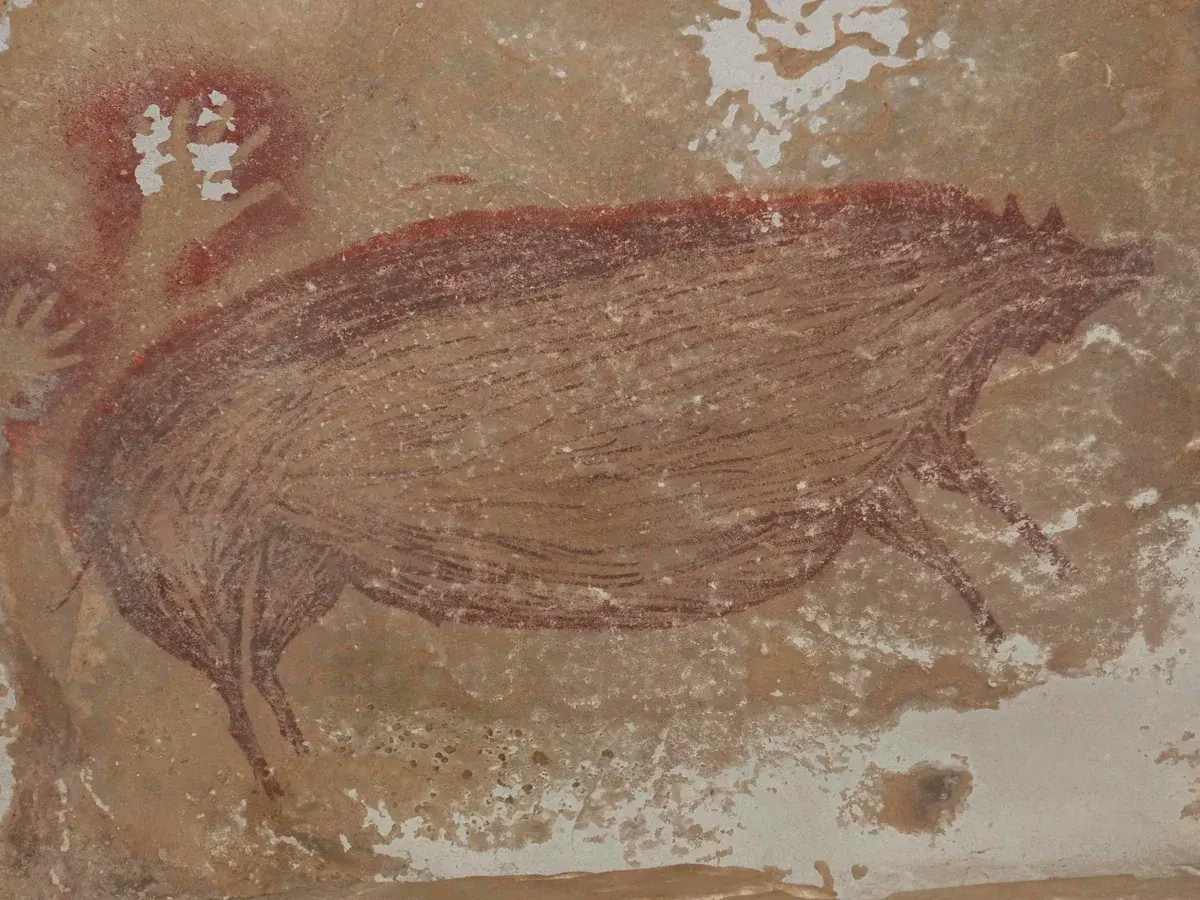
The oldest known figurative painting in the world is a depiction of a Sulawesi warty pig found in the Leang Tedongnge cave in Indonesia. Dated to at least 45,500 years ago, this rock art provides evidence of early human artistic expression and sophisticated cognitive abilities long before previously estimated historical milestones.
On this page
How is the age of ancient cave paintings determined?
Archaeologists and geologists primarily use a technique called uranium-series dating to establish the age of cave art. This method measures the radioactive decay of uranium into thorium within thin layers of calcium carbonate, known as flowstone, that form over or under the paintings. Because these mineral deposits accumulate naturally over time, they act as a geological clock that provides a minimum or maximum age for the artwork beneath or above them.
This process is highly precise but requires careful sampling to avoid damaging the integrity of the site. Researchers must also account for environmental factors, such as water seepage or mineral contamination, which could potentially skew the results. By combining radiometric dating with stylistic analysis and archaeological context, experts can build a reliable timeline for human creativity.
- Locate mineral deposits covering the pigment.
- Carefully extract a small sample of the calcite crust.
- Analyze the isotope ratios in a specialized laboratory.
- Compare the results with surrounding geological features.
Where are the oldest paintings in the world found?
Most of the world's oldest known figurative art is concentrated in the limestone karst regions of Indonesia, specifically on the islands of Sulawesi and Borneo. These caves offer a unique environment that has preserved thousands of years of ochre-based pigments. The humid, tropical climate of Southeast Asia was once thought to be hostile to the preservation of such ancient art, but recent discoveries have shattered that assumption.
Europe also contains significant clusters of Paleolithic art, most notably in France and Spain. Sites like Chauvet and Lascaux feature remarkably detailed animal depictions that date back roughly 30,000 to 35,000 years. While these European sites were long considered the cradle of human artistic development, the Indonesian findings have shifted the archaeological focus toward a more global origin of symbolic behavior.
- Leang Tedongnge, Sulawesi: 45,500 years old.
- Leang Bulu’ Sipong 4, Sulawesi: 43,900 years old.
- El Castillo, Spain: 40,800 years old.
- Chauvet Cave, France: 32,000 years old.
What did early humans paint on cave walls?
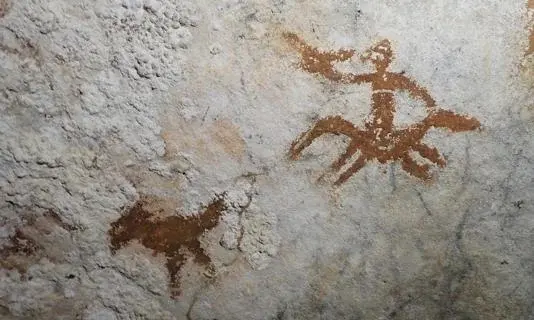
The subject matter of the oldest paintings is almost exclusively focused on the natural world, particularly large animals that were significant to the survival of early human groups. The Sulawesi warty pig, for instance, is a species still found in the region today, suggesting that these animals held both practical and perhaps spiritual importance. These depictions are often rendered in red or mulberry-colored ochre, a natural earth pigment that has remarkable longevity.
Beyond animal figures, early artists also experimented with hand stencils and abstract geometric patterns. Hand stencils were created by blowing pigment over a hand held against the cave wall, leaving a permanent silhouette. These marks are deeply personal and serve as a direct, tangible connection to the individuals who lived tens of thousands of years ago, representing an early form of human identity and social signaling.
Why is it difficult to find older paintings?
The primary challenge in identifying older art is the natural degradation of cave environments over tens of thousands of years. Many caves are subject to flooding, tectonic shifts, or the growth of bacteria and fungi that can consume or obscure pigments. Furthermore, many ancient paintings were likely created on surfaces that no longer exist, such as open-air rock faces or organic materials like wood and animal hides that decompose rapidly.
Another obstacle is the difficulty of distinguishing between intentional human art and natural mineral staining. Over millennia, water runoff can create shapes and colors on rock walls that mimic the appearance of figures or animals. Archaeologists must be extremely rigorous in their examination of brush strokes, pigment application, and the presence of human-made tools to confirm that a marking is indeed a deliberate work of art rather than a geological coincidence.
Common mistakes when studying ancient rock art
One frequent error is assuming that early art was purely decorative or meant to represent "art for art’s sake." Many researchers now believe these paintings served complex functions, such as ritualistic storytelling, hunting magic, or marking territories. Misinterpreting the intent behind these paintings can lead to a shallow understanding of the sophisticated social structures that existed during the Paleolithic era.
Another mistake is relying solely on stylistic comparisons to date art from different continents. Because artistic traditions evolved independently in various regions, a style that looks "primitive" in one area might be much younger than a highly detailed work found elsewhere. It is essential to prioritize physical evidence, such as radiometric dating, over subjective aesthetic judgments when attempting to place a painting within the broader history of human cultural development. Always consult peer-reviewed archaeological reports to ensure the information is based on current, verified scientific data rather than outdated theories.
Key facts
- The oldest known figurative painting is a depiction of a warty pig found in the Leang Tedongnge cave on the Indonesian island of Sulawesi.
- Radiocarbon dating of calcium carbonate deposits suggests this artwork is at least 45,500 years old.
- Before this discovery, the oldest known cave art was a red hand stencil in the Maltravieso cave in Spain, dated to 64,000 years ago, though it was created by Neanderthals.
- Cave paintings typically utilized natural pigments such as ochre, hematite, and manganese oxide mixed with water or animal fat.
- To identify ancient art, researchers look for mineral crusts called speleothems that form over the paint, allowing for precise uranium-series dating.
- Avoid mistaking "petroglyphs" (carvings into rock) for "pictographs" (paintings applied to rock surfaces), as the two methods are distinct archaeological categories.
The bottom line
The title of the world’s oldest figurative painting belongs to a 45,500-year-old warty pig discovered in an Indonesian cave. While older abstract symbols exist, this masterpiece marks a pivotal moment in human history, demonstrating that early humans possessed complex cognitive abilities and artistic traditions. Understanding these ancient works provides a profound window into the origins of human culture and our enduring desire to record the world.
People also ask
How do experts determine the age of ancient cave paintings?
Scientists use uranium-series dating on the thin layers of calcite that grow over the paintings. This method measures the radioactive decay of isotopes to provide a minimum age for the artwork underneath.
Were these paintings created by modern humans or other hominids?
While the Sulawesi pig was created by Homo sapiens, some older abstract markings in Europe have been attributed to Neanderthals. This suggests that the capacity for symbolic expression existed in multiple human lineages.
Why are so many of these paintings found in caves?
Caves provided a stable, protected environment that shielded pigments from erosion, sunlight, and extreme weather. This natural preservation allowed delicate works to survive for tens of thousands of years.
What subjects were most common in prehistoric art?
Early artists frequently depicted large animals like bison, horses, and pigs, as well as hand stencils and geometric patterns. These subjects likely held significant ritualistic or social meaning for the hunter-gatherer groups.
Can I visit these ancient painting sites in person?
Most sites are restricted to researchers to prevent damage from carbon dioxide, humidity, and bacteria brought by visitors. Replicas, such as those at Lascaux, are often built nearby to allow the public to view the art safely.
Is it possible that older paintings exist but haven't been found?
It is highly probable that many older paintings existed on perishable materials like wood, skin, or open-air rock faces that have since eroded. Archaeologists continue to discover new sites as remote areas are explored with advanced technology.
This answer was created with the help of AI research tools and reference sources. Spotted an error? Let us know — we correct mistakes quickly. See our editorial policy.