Why did the Roman Empire fall?
Short answer
The Roman Empire did not fall due to a single event, but rather a centuries-long decline caused by economic instability, political corruption, and relentless external pressures. While the Western Roman Empire officially collapsed in 476 CE when Odoacer deposed Romulus Augustulus, the Eastern half persisted for nearly another millennium as Byzantium.
On this page
Why did the Roman Empire collapse?
The collapse of the Western Roman Empire was a complex process driven by systemic failures rather than a sudden catastrophe. By the third century, the empire faced "The Crisis of the Third Century," a period of civil war, plague, and economic collapse that weakened the state’s foundations. Constant turnover of emperors—often installed and removed by the military—eroded the central authority needed to manage such a vast territory.
External threats exacerbated these internal fractures. Germanic tribes, such as the Goths, Vandals, and Franks, migrated into Roman lands, often fleeing the Huns. Rome struggled to integrate these groups or repel them, leading to significant military defeats like the Battle of Adrianople in 378 CE. By the time Odoacer seized power in 476 CE, the Western Empire was already a shell of its former self, lacking the resources to maintain its borders or enforce its laws.
How did economic problems weaken Rome?
Economic instability acted as a primary catalyst for the empire's decline. As expansion halted, the steady influx of gold, silver, and slaves—the engines of the Roman economy—dried up. To pay for the massive military budget, emperors frequently debased the currency by reducing the precious metal content in coins. This triggered hyperinflation, causing prices to skyrocket and destroying the purchasing power of the average citizen.
The tax burden also became unsustainable for the middle and lower classes. Wealthy landowners often used their political influence to avoid taxes, shifting the burden onto small farmers. Many farmers, unable to pay, abandoned their lands and became tenant farmers or fled to the protection of wealthy estates, which eventually evolved into the feudal system of the Middle Ages. This shrinking tax base left the state unable to fund basic infrastructure or defensive operations.
What role did military issues play?
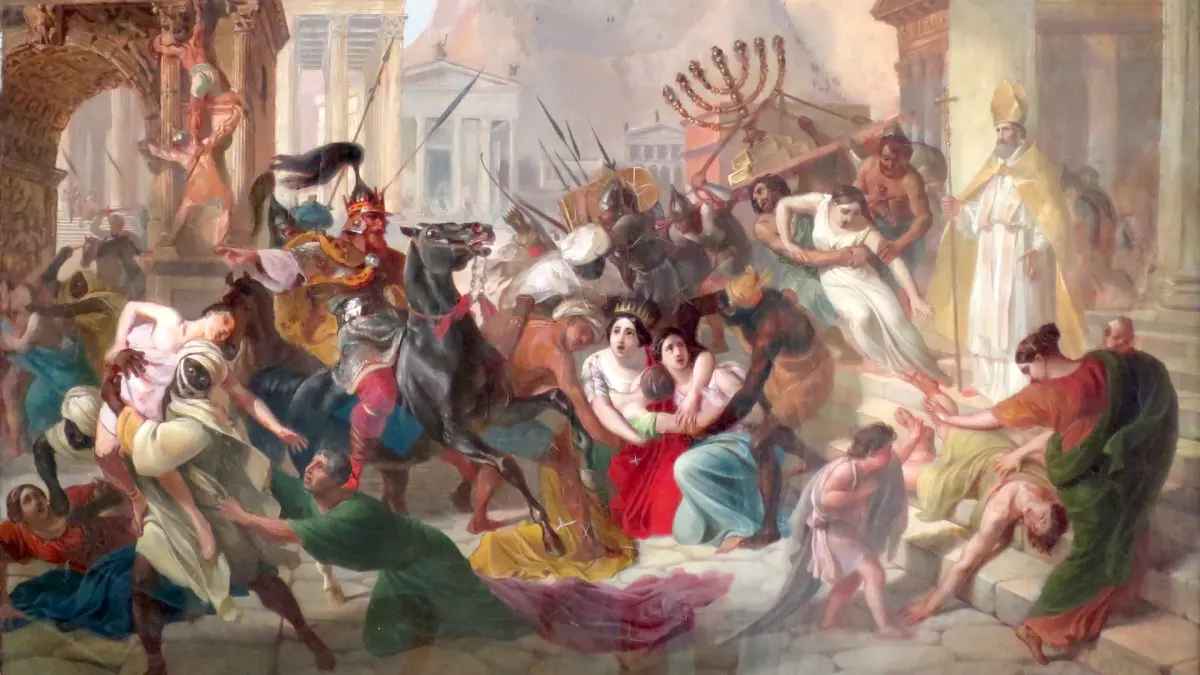
The Roman military evolved from a citizen-soldier force into a professional army that increasingly relied on mercenaries. These soldiers, often recruited from the very Germanic tribes Rome was fighting, lacked traditional Roman loyalty. Their allegiance was frequently to their immediate commanders rather than the state, leading to frequent military coups and political instability.
- Recruitment: The empire struggled to fill ranks, leading to the "barbarization" of the army.
- Training: Standards declined as the military moved away from traditional drill and discipline.
- Funding: Soldiers demanded higher pay, which the bankrupt treasury could not consistently provide.
- Loyalty: Commanders used troops to seize the throne, prioritizing civil war over border defense.
These factors meant that when the empire faced coordinated invasions, the military was often preoccupied with internal power struggles, leaving the frontiers vulnerable to penetration by migratory groups.
How did political corruption affect Rome?
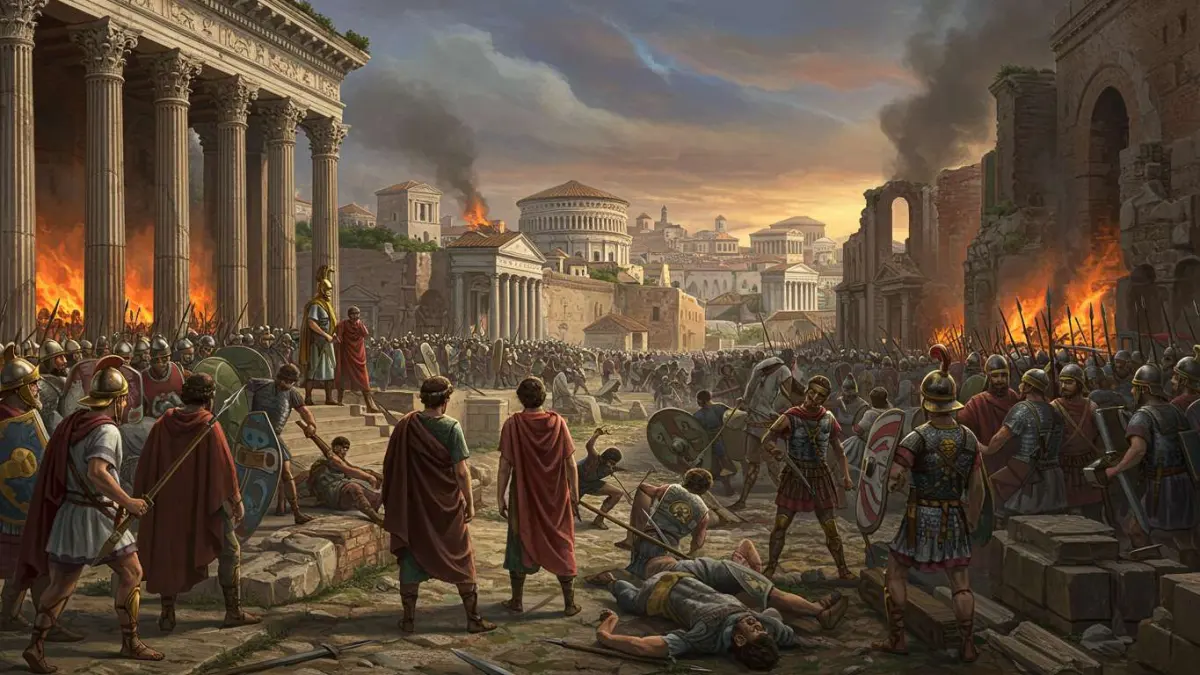
Political instability became the norm in the later centuries, making effective governance nearly impossible. The process for choosing an emperor was never clearly defined, leading to frequent succession crises. Between 235 and 284 CE, there were over 20 emperors, most of whom were assassinated by their own guards or rivals. This constant instability prevented the implementation of long-term policies to address economic or social issues.
Common mistakes when analyzing Roman politics include:
- Assuming the empire was a monolith; the East and West had different political trajectories.
- Overestimating the impact of Christianity, which some historians once blamed for undermining traditional Roman values.
- Ignoring the administrative burden of managing a territory that stretched from Britain to the Euphrates.
The bureaucracy became bloated and corrupt, with officials often prioritizing personal enrichment over the needs of the state. This led to a profound loss of public trust, as citizens felt disconnected from a government that provided little protection or stability.
What can we learn from the fall of Rome?
Studying the fall of Rome offers practical lessons on the fragility of large-scale institutions. The primary takeaway is that systemic decline is rarely the result of one factor, but rather a feedback loop where economic, military, and political failures reinforce one another. When an institution stops providing value to its members and loses the ability to adapt to changing external conditions, its collapse becomes a matter of time.
To understand historical decline, follow these steps:
- Identify the core economic drivers that sustain an institution.
- Evaluate whether the leadership is focused on long-term stability or short-term survival.
- Monitor the gap between the ruling class and the general population.
- Assess the institution's ability to integrate new groups or adapt to external shocks.
Avoiding the trap of oversimplification is essential. Rome’s legacy persisted through its laws, language, and the survival of the Eastern Roman Empire, demonstrating that while political structures may fall, the cultural and intellectual foundations often endure. By examining these patterns, one gains a clearer perspective on the cyclical nature of human governance and the importance of maintaining institutional integrity.
Key facts
- The Western Roman Empire officially ended in 476 CE when the Germanic leader Odoacer deposed the teenage emperor Romulus Augustulus.
- Economic instability, driven by hyperinflation and excessive taxation to fund a massive military, crippled the Roman middle class over several centuries.
- The empire was split into Western and Eastern halves in 285 CE by Diocletian, making the Western half increasingly difficult to defend and govern.
- Constant pressure from migrating tribes, such as the Visigoths and Vandals, forced the Romans to spend resources on border defense rather than infrastructure.
- Lead poisoning from pipes and wine vessels is a popular theory, but modern historians largely discount it as a primary cause of systemic collapse.
- To avoid oversimplifying history, view the "fall" as a gradual transformation of political structures rather than a sudden, single catastrophic event.
The bottom line
The fall of the Western Roman Empire was not a singular event but a complex disintegration caused by economic stagnation, military overreach, and relentless external pressure. By failing to adapt its political and fiscal systems to changing realities, Rome became vulnerable to internal decay and foreign incursions. Ultimately, the empire’s collapse serves as a historical reminder that institutional stability requires both economic resilience and unified leadership.
People also ask
Did Rome fall in a single day?
No, the decline was a centuries-long process involving economic decay, political corruption, and military overextension. The year 476 CE serves as a symbolic marker rather than the precise moment the entire civilization vanished.
What role did Christianity play in the decline of Rome?
Some historians, notably Edward Gibbon, argued that Christianity weakened the traditional Roman martial spirit by emphasizing pacifism. However, most modern scholars suggest the religion actually helped unify the empire's diverse population during its final stages.
Why was the Eastern Roman Empire able to survive?
The Eastern Roman Empire, later known as the Byzantine Empire, possessed a stronger economy, a more defensible capital in Constantinople, and shorter, more manageable borders. It continued to thrive for nearly a thousand years after the West collapsed.
Was the Roman military too weak to defend the borders?
The military suffered from a reliance on "foederati," or foreign mercenaries, who often lacked loyalty to the Roman state. As the empire lost tax revenue, it could no longer afford to maintain the professional legions that had once conquered the Mediterranean.
Did plague contribute to the fall of Rome?
Yes, major outbreaks like the Antonine Plague in the 2nd century significantly reduced the population and labor force. This led to decreased agricultural output and a smaller pool of recruits for the Roman army.
How did political corruption hasten the end?
Frequent assassinations and civil wars created a volatile political environment where emperors were often puppets of the military. This instability prevented long-term planning and eroded public trust in the central government’s authority.
This answer was created with the help of AI research tools and reference sources. Spotted an error? Let us know — we correct mistakes quickly. See our editorial policy.