What is Byzantine art?
Short answer
Byzantine art refers to the religious and imperial aesthetic produced within the Eastern Roman Empire from the 4th century until the fall of Constantinople in 1453. Characterized by stylized, two-dimensional figures, lavish gold backgrounds, and intricate mosaics, this art form prioritized spiritual symbolism and theological narrative over realistic, three-dimensional physical representation.
On this page
What defines the style of Byzantine art?
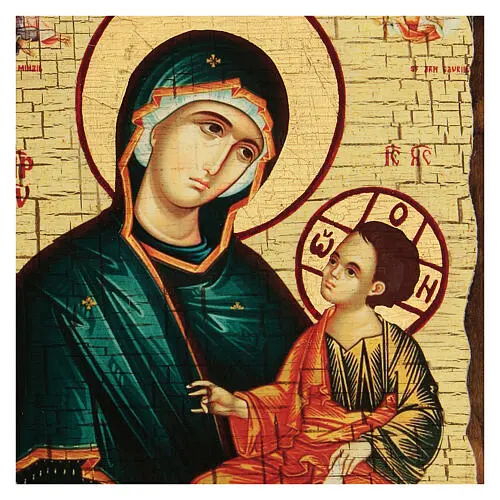
Byzantine art is defined by its departure from the naturalism of Classical antiquity in favor of a more symbolic, flattened aesthetic. Artists focused on conveying spiritual truth rather than earthly reality, resulting in elongated figures, large almond-shaped eyes, and rigid, frontal poses. This stylistic choice aimed to transport the viewer from the mundane world into a divine, eternal realm.
The use of light and color played a vital role in this transformation. Gold leaf was frequently applied to backgrounds, creating a shimmering, ethereal environment that defied traditional spatial depth. Mosaics, which were the crowning achievement of the era, utilized glass tesserae set at slight angles to catch candlelight, ensuring the artwork appeared to glow or move during religious services.
- Frontality: Figures are typically depicted facing forward to engage directly with the viewer.
- Symbolism: Objects and gestures carry specific theological meanings rather than literal ones.
- Lack of perspective: Backgrounds are often flat or abstract, emphasizing the spiritual importance of the subject.
- Rich materials: Extensive use of marble, gold, and precious stones to manifest divine glory.
How did Byzantine art evolve over time?
The development of Byzantine art is generally divided into three major periods, each marked by shifting political and religious climates. The Early Byzantine period, spanning the 4th to 7th centuries, saw the transition from Roman styles to a distinct Christian aesthetic. The construction of the Hagia Sophia in Constantinople during the 6th century remains the most significant architectural and artistic achievement of this formative era.
The Middle Byzantine period, lasting from the 9th to the 13th century, followed the Iconoclastic Controversy, a period where religious images were banned. Once the use of icons was restored, the church established a standardized decorative program for churches. This period solidified the "Byzantine look" that remains recognizable today. The final era, the Palaiologan Renaissance, occurred shortly before the empire's collapse and saw a brief return to more expressive, humanistic features in painting and manuscript illumination.
- Early Period: Establishment of Christian iconography and monumental architecture.
- Iconoclasm: A turbulent era of destruction that forced artists to rethink the purpose of imagery.
- Middle Period: Standardization of church interiors and the perfection of mosaic techniques.
- Palaiologan Period: A final flowering of detail and emotional depth in religious frescoes.
Where can you see Byzantine art today?
While much of the original Byzantine heritage was lost to conflict and urban development, several key sites preserve the grandeur of the empire. Istanbul, formerly Constantinople, remains the primary destination for those wishing to see the Hagia Sophia and the Chora Church, the latter of which contains some of the best-preserved late-period mosaics and frescoes. These sites offer a direct connection to the imperial past.
Italy also houses significant collections, largely due to historical trade and political ties between the West and the East. The city of Ravenna is essential for any study of the style, as it contains the Basilica of San Vitale. This structure features world-famous mosaics of Emperor Justinian and Empress Theodora. Additionally, Venice’s St. Mark’s Basilica serves as a massive repository of Byzantine-influenced art, showcasing how the aesthetic spread across the Mediterranean.
Why is Byzantine art important to history?
Byzantine art acted as a bridge between the ancient world and the Renaissance. By preserving classical knowledge and techniques while infusing them with new Christian meaning, the empire ensured that the artistic traditions of Greece and Rome were not entirely forgotten during the Middle Ages. The influence of these works traveled into Russia, the Balkans, and Western Europe, shaping the development of religious iconography for centuries.
Furthermore, the Byzantine approach to art influenced the early Italian Renaissance. Painters like Duccio and Giotto were deeply inspired by the compositions and formal intensity of Byzantine icons. By studying the way Byzantine artists handled light and spiritual narrative, Western artists began to experiment with their own techniques, eventually leading to the radical shifts in perspective and humanism that defined the 15th-century art world.
Common mistakes when analyzing Byzantine art
A frequent error is evaluating Byzantine works using the standards of the later Italian Renaissance. Viewers often mistakenly label the lack of perspective or anatomical realism as a lack of skill. In reality, these choices were intentional and highly sophisticated. The goal was never to mimic nature but to create an abstract, sacred space that functioned as a window into the divine.
Another common mistake is ignoring the context of the artwork. Byzantine art was rarely created for private enjoyment or gallery display; it was designed for the liturgy. To understand these pieces, one must imagine them in their original setting: dimly lit, filled with incense, and accompanied by chanting. Viewing them in a brightly lit, sterile museum environment often strips away the intended psychological impact and spiritual resonance that the original creators worked so diligently to achieve.
Key facts
- Byzantine art spans from the founding of Constantinople in 330 CE to its fall in 1453.
- The style prioritizes spiritual representation over realistic anatomy, often using flat, two-dimensional figures.
- Gold backgrounds were standard to represent the divine, non-earthly realm of heaven.
- Mosaics were the primary medium for decorating church interiors, using glass tesserae to reflect candlelight.
- Iconography followed strict, traditional rules to ensure religious figures were instantly recognizable to the faithful.
- To identify Byzantine work, look for elongated faces, almond-shaped eyes, and rigid, frontal poses.
The bottom line
Byzantine art is a sophisticated, symbolic tradition that dominated the Eastern Mediterranean for over a millennium. By prioritizing spiritual transcendence over physical realism, it created a distinct aesthetic defined by shimmering mosaics, rigid icons, and golden light. Understanding this style requires looking past the lack of perspective to appreciate the profound, otherworldly intensity that defined the visual culture of the Byzantine Empire and influenced later Renaissance masters.
People also ask
How does Byzantine art differ from Roman art?
Roman art focused on naturalism, depth, and the realistic portrayal of physical human form. Byzantine art abandoned these techniques in favor of symbolic, stylized imagery intended to inspire religious devotion rather than mimic reality.
Why are there so few Byzantine paintings on canvas?
Most Byzantine art was created as frescoes, mosaics, or wood-panel icons. Canvas was not a standard medium for religious art during this era, as the focus remained on permanent wall surfaces or portable wooden panels.
What is an icon in the context of Byzantine art?
An icon is a sacred image of Christ, the Virgin Mary, or a saint, typically painted on wood. These objects were considered windows to the divine and were central to private and public worship.
Did Byzantine artists sign their work?
Byzantine artists rarely signed their work because they viewed themselves as humble servants of the church. The goal was to glorify God rather than to establish individual artistic fame or personal style.
What are the most famous examples of Byzantine mosaics?
The Basilica of San Vitale in Ravenna, Italy, contains some of the best-preserved Byzantine mosaics in the world. These include the famous depictions of Emperor Justinian I and Empress Theodora, created in the 6th century.
How can I distinguish between Byzantine and Gothic art?
Gothic art, which emerged later in Western Europe, introduced more naturalistic movement and human emotion. Byzantine art remains noticeably stiffer, more formal, and relies heavily on gold leaf and symbolic, rather than narrative, composition.
This answer was created with the help of AI research tools and reference sources. Spotted an error? Let us know — we correct mistakes quickly. See our editorial policy.