What is a polyptych?
Short answer
A polyptych is a work of art, typically a painting, divided into four or more panels hinged together. These panels often feature a central image flanked by smaller side wings, allowing the structure to fold. Historically used as altarpieces in churches, polyptychs serve to organize complex religious narratives into sequential, portable, or displayable formats.
On this page
What is the history of polyptychs?
The polyptych emerged as a prominent art form during the Middle Ages and the early Renaissance, primarily serving as devotional objects within European cathedrals. Artists designed these multi-paneled structures to function as narrative storytelling devices, often depicting the life of a saint or scenes from the Bible. By using hinges, the panels could be opened or closed, revealing different images depending on the liturgical calendar or the specific occasion.
The most famous example of this tradition is the Ghent Altarpiece, completed by Hubert and Jan van Eyck in 1432. This massive work consists of twelve panels, many of which are painted on both sides to allow for varied viewing experiences. During the Renaissance, the complexity of these works grew, often incorporating elaborate gilded frames and intricate carvings. While the popularity of the form waned after the 16th century, the concept of dividing a single composition into multiple segments remains a foundational technique in Western art history.
How are polyptychs classified by panel count?
Art historians categorize polyptychs based on the number of panels they contain. While the term generally refers to works with four or more sections, specific names exist for pieces with fewer components. These classifications help viewers understand the scale and intended function of the artwork, as larger pieces were typically commissioned for high altars, while smaller ones were intended for private domestic worship.
- Diptych: A two-paneled work, often hinged like a book.
- Triptych: A three-paneled work, featuring a large center and two smaller wings.
- Quadriptych: A four-paneled work.
- Pentaptych: A five-paneled work.
- Hexaptych: A six-paneled work.
Understanding these distinctions is essential for identifying the structural complexity of a piece. A triptych is the most common variation, but as the number of panels increases, the artist faces greater challenges in maintaining visual cohesion across the physical gaps created by the hinges.
How to create a modern polyptych?
Creating a modern polyptych involves careful planning to ensure the individual panels form a unified image when displayed together. You must decide whether the panels will be physically hinged or simply hung in close proximity to create a sense of continuity. Regardless of the method, the composition must account for the "gutter" or the space between the panels, which will inevitably interrupt the viewer's eye.
- Choose a subject that benefits from fragmentation, such as a wide landscape or an abstract pattern.
- Sketch the entire composition on a single surface before dividing it into sections.
- Prepare your panels, ensuring they are identical in thickness and material to maintain a flush appearance.
- Apply your medium, taking care to wrap the image around the edges of each panel for a professional finish.
- Measure the spacing between panels precisely to ensure the image aligns perfectly once mounted on the wall.
Why use a polyptych for interior design?
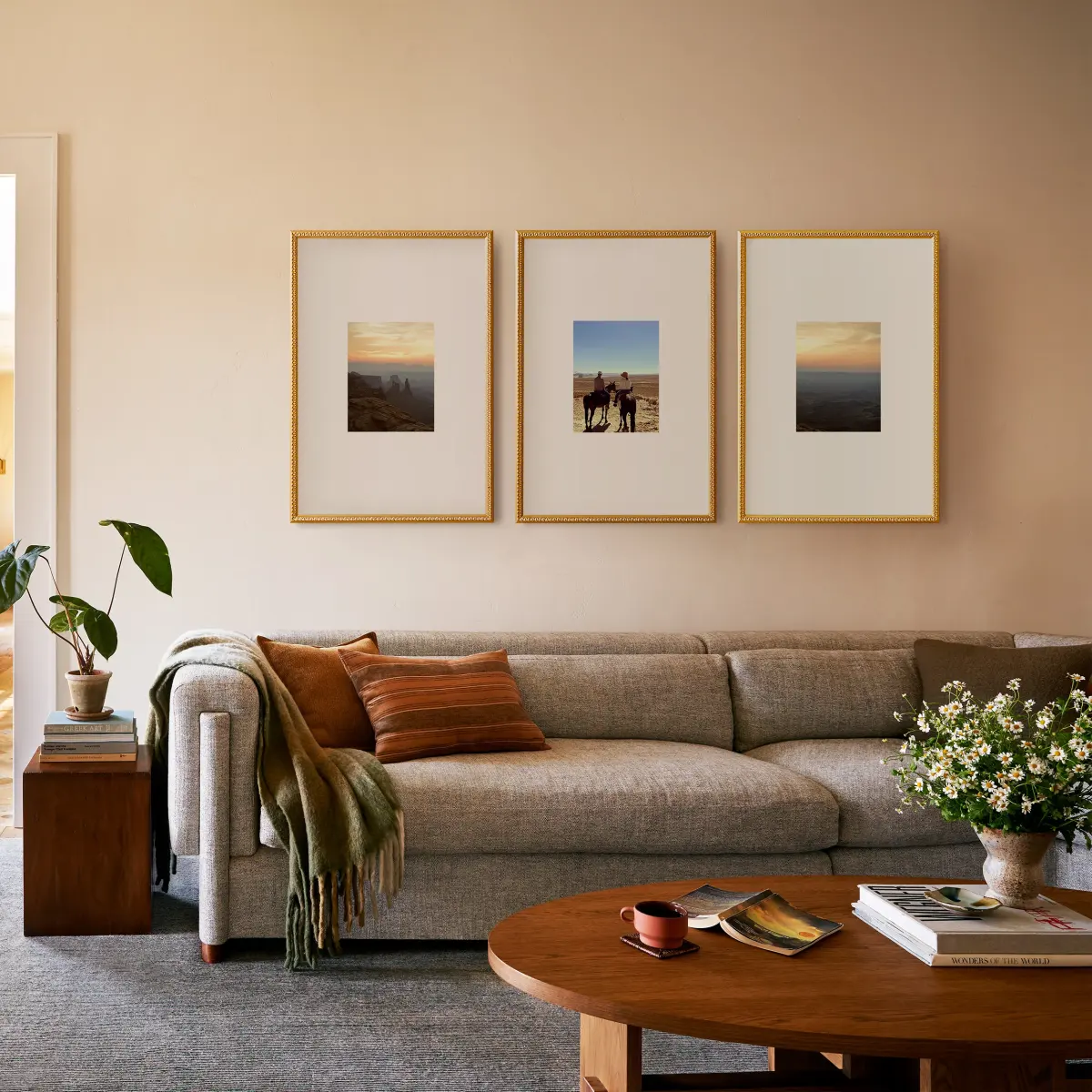
In contemporary interior design, polyptychs are frequently used to fill large wall spaces that a single canvas might overwhelm. By breaking a large image into several parts, you create a dynamic visual rhythm that draws the viewer into the work. This technique is particularly effective for photography and abstract art, where the physical separation of panels adds a layer of depth and modern sophistication to the room.
The visual impact of a polyptych depends heavily on the scale of the panels relative to the surrounding furniture. A common strategy is to align the top edges of the panels to create a stable horizontal line, or to stagger them to create a more energetic, asymmetrical arrangement. Because these works occupy a significant footprint, they act as a focal point, often eliminating the need for additional wall decor in a living room or office setting.
Common mistakes when hanging polyptychs
One of the most frequent errors when installing a polyptych is failing to account for the width of the gaps between panels. If the spacing is inconsistent, the image will appear distorted, causing the viewer to perceive the work as disjointed rather than cohesive. Always use a spacer tool, such as a piece of cardboard or a level, to ensure that every gap is uniform throughout the entire installation process.
Another mistake is ignoring the sightline of the room. Because polyptychs are large, they should be hung so that the center of the total arrangement sits at standard eye level, which is approximately 57 to 60 inches from the floor. Avoid hanging the panels too high, as this forces the viewer to crane their neck, detracting from the immersive experience of the artwork. Finally, ensure that all panels are perfectly level; even a slight tilt in one section will be magnified across the entire series, making the composition look sloppy and poorly executed.
Key facts
- A polyptych is a painting or relief work divided into four or more panels, typically hinged together to allow for folding.
- The term originates from the Greek words "poly," meaning many, and "ptychē," meaning fold.
- Panels are often arranged with a large central piece flanked by smaller side panels, known as wings.
- These artworks were primarily commissioned for church altarpieces during the late Middle Ages and the Renaissance.
- When closed, the outer panels of a polyptych often feature simpler, monochromatic paintings, while the interior reveals elaborate, colorful imagery.
- To preserve a polyptych, avoid placing it in direct sunlight or areas with fluctuating humidity, as wood panels can warp or crack over time.
The bottom line
The polyptych is a versatile, multi-paneled art form that served as a centerpiece for religious devotion throughout the Renaissance. By utilizing hinged sections, artists created dynamic works that could transform from simple exterior displays to complex, expansive interior narratives. Today, the format continues to influence modern art, offering a unique method for artists to explore scale, sequence, and storytelling across several distinct, interconnected physical surfaces.
People also ask
What is the difference between a diptych, a triptych, and a polyptych?
A diptych consists of two panels, a triptych has three, and a polyptych refers to any work with four or more panels. While their construction differs, all three formats were historically used for portable religious art.
Why were polyptychs designed to fold?
Folding allowed the artwork to be protected during transport and kept the ornate interior imagery hidden until specific liturgical feast days. This mechanism created a sense of revelation when the panels were opened for the congregation.
Who are some famous artists known for their polyptychs?
Jan van Eyck is perhaps the most famous for his masterpiece, the Ghent Altarpiece, completed in 1432. Other notable examples include works by Rogier van der Weyden and Hieronymus Bosch.
Are polyptychs still made today?
While they are no longer standard for religious altarpieces, contemporary artists use the polyptych format for multi-panel photography and abstract painting. It remains a popular way to present a single narrative across multiple physical surfaces.
What is a common mistake when displaying a polyptych?
A common mistake is failing to account for the weight and structural stress on the hinges. Ensure the wall mount or frame is sturdy enough to support the combined weight of all panels when fully extended.
Can a polyptych be displayed permanently open?
Yes, many polyptychs in museums are displayed permanently open to allow viewers to see the entire composition at once. However, this requires careful climate control to prevent the wooden panels from bowing due to environmental changes.
This answer was created with the help of AI research tools and reference sources. Spotted an error? Let us know — we correct mistakes quickly. See our editorial policy.