How do you design a character?
Short answer
Designing a character involves balancing visual appeal with internal depth. You must establish a clear silhouette, define a core motivation, and create distinct personality traits. By combining physical traits that reflect a character’s history with a specific goal, you build a believable persona that resonates with an audience across any medium.
On this page
How to start the character design process
Begin by defining the character’s "hook," a single core concept that distinguishes them from others. This could be a unique role, a specific struggle, or a signature visual element. Before drawing or writing, answer three fundamental questions: What does the character want, what are they afraid of, and what is their greatest flaw? These internal pillars guide every external choice you make.
Once you have a concept, focus on the character’s silhouette. A strong design should be recognizable even when rendered as a solid black shape. If your character’s outline is generic, the design is likely too cluttered. Simplify the shapes and prioritize one or two iconic features, such as a oversized coat, a specific hairstyle, or a unique weapon.
- Determine the character's archetype or role in the story.
- Draft a brief biography focusing on their primary motivation.
- Sketch basic, exaggerated shapes to define the character's silhouette.
- Select a limited color palette to establish a consistent visual identity.
Best tools for character design beginners
You do not need expensive software to begin. Start with traditional media like pencils, charcoal, or markers to understand anatomy and form. If you prefer digital tools, industry standards like Adobe Photoshop, Procreate, or Clip Studio Paint offer extensive brush libraries that mimic traditional textures. The best tool is simply the one that allows you to iterate quickly without frustration.
Regardless of the medium, focus on the "line of action." This is the imaginary line that runs through the character's spine or body, dictating their posture and energy. A dynamic line of action makes a character feel alive, while a stiff or straight line makes them feel static. Practice drawing characters in motion rather than just standing still to master the flow of a pose.
- Use reference photos of real people to understand muscle structure.
- Keep your initial sketches loose and messy to encourage experimentation.
- Study color theory to ensure your character's palette evokes the right mood.
- Use layers in digital software to separate line art from color blocking.
Why character consistency matters
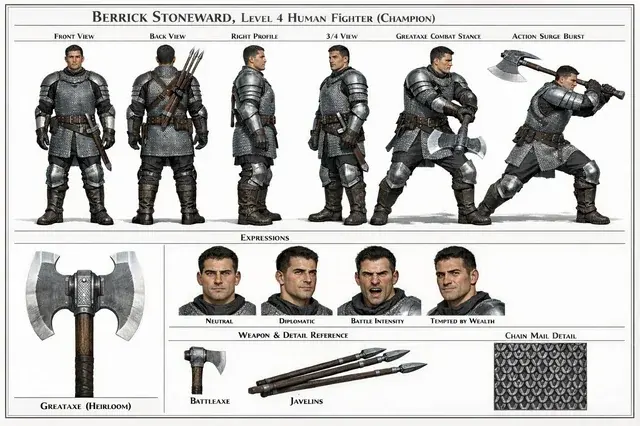
Consistency ensures that your character remains recognizable throughout a narrative. Whether you are drawing a comic, animating a scene, or writing a novel, the character must behave and look like themselves in every instance. Create a "character sheet" that displays the subject from the front, side, and back, along with various facial expressions. This serves as a reference point to prevent proportions from shifting unintentionally.
Psychological consistency is equally vital. If a character is established as cautious, they should not suddenly act recklessly without a significant plot-driven reason. When a character acts out of character without explanation, the audience loses trust in the narrative. Keep a list of your character's rules, such as their favorite phrases, typical reactions to stress, and personal habits, to maintain a cohesive identity.
Common mistakes when designing a character
A frequent error is "over-designing," where creators add too many accessories, patterns, or complex armor pieces. This creates visual noise, making it difficult for the audience to focus on the character's face. If you find yourself adding details just to fill space, remove them. A clean, simple design is almost always more memorable and easier to replicate across multiple scenes.
Another mistake is ignoring the relationship between physical appearance and personality. If a character is a rugged survivalist, they should look like they have lived through hardship; if they are a scholar, their attire should reflect their focus on knowledge. Every element of their appearance should tell a story. If your design choices do not serve the character’s background, they are likely distracting rather than enhancing the overall concept.
- Avoid using too many colors, which can overwhelm the viewer's eye.
- Do not ignore the character's environment; their clothes should fit their world.
- Avoid making a character "perfect" by giving them flaws that hinder their goals.
- Do not rely on clichés, such as giving every villain a scar or dark clothing.
How to refine your character design
Refinement is the process of stripping away the unnecessary to reveal the character's essence. Look at your design and ask if every element serves a purpose. If a belt, a piece of jewelry, or a specific color does not contribute to the character's story or silhouette, consider removing it. This process of subtraction often leads to the most iconic designs in history, such as Mickey Mouse or Sherlock Holmes.
Finally, test your character by placing them in different scenarios. Imagine them in a high-stress situation, a quiet moment of reflection, or interacting with a rival. Does their design still feel appropriate? Does their personality hold up? By iterating and testing, you transform a simple drawing or idea into a fully realized character ready to inhabit any story you choose to tell.
Key facts
- Start with a core motivation, such as a desperate need for revenge or a secret desire for belonging, to drive character actions.
- Use a "visual silhouette" test; a well-designed character should be instantly recognizable by their outline alone, like Mickey Mouse or Batman.
- Assign a specific "flaw" or internal contradiction, as perfect characters often feel flat and fail to resonate with audiences.
- Establish a distinct voice or speech pattern, such as using short, clipped sentences or overly formal vocabulary, to define personality.
- Limit a character's color palette to three primary colors to ensure visual balance and prevent the design from appearing cluttered.
- Create a "want" versus a "need"; the character should pursue a tangible goal while subconsciously requiring a deeper emotional lesson.
The bottom line
Designing a compelling character requires balancing internal depth with external clarity. Start by defining a strong motivation and a defining flaw, then craft a visual silhouette that reflects their personality. By ensuring your character has a clear "want" and a unique voice, you create a relatable figure that can drive a narrative forward. Consistency in these elements is the final key to creating truly memorable, timeless characters.
People also ask
How do I make a character look unique?
Focus on exaggerated shapes and iconic accessories that hint at their history. For example, a character who carries a rusted locket suggests a tragic past without requiring a single word of dialogue.
What is the biggest mistake in character design?
The most common error is creating a character without a clear motivation. If the audience does not understand why a character acts the way they do, they will quickly lose interest in the story.
Should a character be likable?
Not necessarily, but they must be compelling. Even villains can be fascinating if their goals are clear and their internal logic is consistent, even if their actions are morally reprehensible.
How do I write a believable backstory?
Focus on one or two formative events that shaped the character's current worldview. You do not need to write a biography; just identify the specific trauma or triumph that defines their present behavior.
How do names influence character perception?
Names carry cultural and phonetic associations that prime the audience. Harsh, plosive sounds like "K" or "T" often feel aggressive, while soft, flowing sounds like "S" or "L" can suggest elegance or mystery.
How do I know when a character is finished?
A character is complete when their personality, appearance, and motivations are consistent enough to predict how they would react to any situation. If you can imagine them in a new scenario, the design is successful.
This answer was created with the help of AI research tools and reference sources. Spotted an error? Let us know — we correct mistakes quickly. See our editorial policy.