What is a turnaround sheet?
Short answer
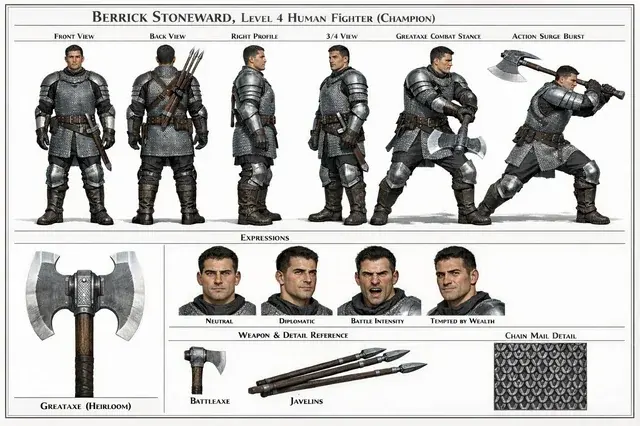
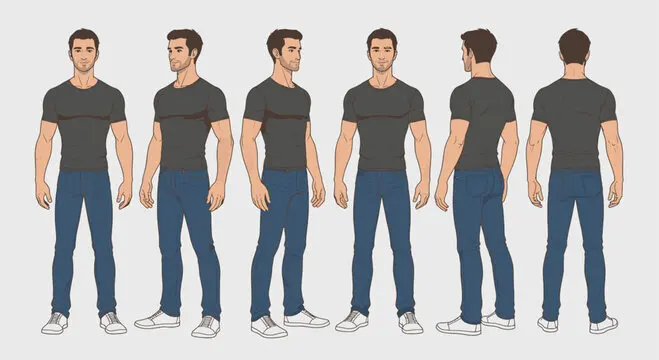
A turnaround sheet is a comprehensive technical reference document used in animation, character design, and game development. It displays a character from multiple angles—typically front, side, three-quarter, and back views—on a single page. This visual guide ensures consistency, allowing artists to maintain accurate proportions and details throughout a production cycle.
On this page
What is a turnaround sheet used for?
A turnaround sheet serves as the definitive blueprint for any character intended for visual media. When a character is drawn by different artists or animated across hundreds of frames, slight variations in design can easily occur. The turnaround sheet acts as a control document, providing a standardized reference that keeps the character’s physical traits, clothing, and accessories identical regardless of the artist or the angle of the shot.
Beyond simple consistency, these sheets are essential for the technical pipeline of 3D modeling. A modeler uses the front and side views as a backdrop in software like Maya or Blender to "trace" the geometry of the character. Without these precise orthographic projections, the resulting model would likely suffer from distorted anatomy or mismatched limbs. By establishing these views early, production teams save hundreds of hours that would otherwise be spent correcting errors in the rigging or animation phases.
How to create a turnaround sheet
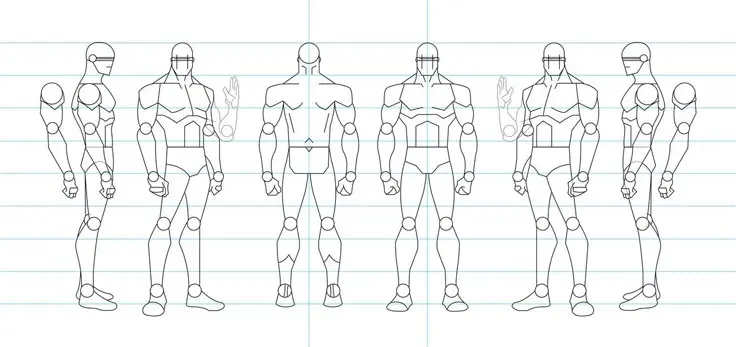
Creating an effective turnaround sheet requires careful planning and a focus on geometric accuracy. Artists typically begin by establishing the character's height using a vertical grid or a series of horizontal lines to ensure the head, shoulders, waist, and feet align perfectly across all views. This alignment is critical; if the character’s belt or eyes shift position between the front and side views, the final animation will appear unstable or "off-model."
Follow these steps to construct a professional-grade sheet:
- Define the character’s proportions using a basic skeleton or mannequin to maintain height consistency.
- Draw the front view first, as it contains the most critical design information and color palette.
- Use vertical guidelines to project key features like the nose, chin, and knees onto the side and back views.
- Add a three-quarter view to provide extra depth, which helps animators understand how the character’s volume shifts during movement.
- Include a small color palette swatch in the corner to ensure consistent shading and material rendering.
What is included in a character turnaround
A complete turnaround sheet must contain more than just the basic poses. While the primary views—front, side, three-quarter, and back—are the core components, professional sheets often include supplementary details that clarify complex design elements. These might include close-ups of intricate accessories, such as a specific belt buckle, a weapon, or a unique hairstyle that might be obscured in the main views.
The document should also be clean and easy to read, usually set against a neutral gray or white background. Many artists include a "height chart" or measurement scale alongside the character to indicate their size relative to other objects. Including these elements helps the entire production team understand the scale of the character, which is vital for building environments and props that fit the character’s physical dimensions. By providing this wealth of information, the turnaround sheet becomes a single source of truth for the entire creative team.
Common mistakes when making turnaround sheets
One of the most frequent errors is failing to align features across views. If the character’s shoulders are at different heights in the front and side views, the character will appear to "wobble" when animated. Another common mistake is neglecting to account for volume. A character might look correct in a flat, 2D drawing, but when viewed from the side, the depth might not match the front, leading to a model that looks too thin or too bulky.
To avoid these pitfalls, keep the following tips in mind:
- Avoid overly complex poses; keep the character in a "neutral" or "T-pose" to make modeling easier.
- Do not forget to include the back view, as it is essential for understanding how clothing and hair interact with the body.
- Ensure that the lighting is flat and neutral to avoid confusing the modeler with painted-in shadows.
- Check that all accessories are present in every view so that no part of the design is left to guesswork.
Why is a turnaround sheet important for animation
In the animation industry, consistency is the foundation of believability. If a character’s proportions change from scene to scene, the audience becomes distracted by the visual inconsistency, which breaks the immersion of the story. The turnaround sheet is the primary tool used to prevent this, acting as a constant reminder of how the character should look. This is especially important in large-scale productions where dozens of artists might be working on different parts of the same film.
Furthermore, these sheets are instrumental in the transition from 2D concepts to 3D assets. By providing a clear, orthographic representation, the turnaround sheet bridges the gap between the concept artist’s imagination and the technical requirements of the 3D pipeline. It reduces the need for constant communication between departments, as the sheet answers most questions regarding anatomy, costume, and scale. Ultimately, the turnaround sheet is an indispensable asset that ensures a character remains recognizable and functional from the first sketch to the final frame of the finished production.
Key facts
- A turnaround sheet is a technical drawing used in animation and character design to show a character from multiple angles.
- Standard views included are the front, side, three-quarter, and back profiles to ensure consistency.
- These sheets act as a blueprint for animators, ensuring the character looks the same in every frame regardless of who is drawing it.
- Designers often include a height chart or scale reference next to the character to maintain accurate proportions.
- Essential details like color palettes, clothing textures, and unique markings are typically mapped out on the side of the drawing.
- A common mistake is failing to align the character's feet across all views, which causes the character to appear to "float" or change height during animation.
The bottom line
A turnaround sheet is the fundamental blueprint for any character-driven production, serving as a vital guide for maintaining visual consistency. By detailing a character’s proportions, anatomy, and color from multiple perspectives, it prevents costly animation errors and ensures a professional, cohesive look. Whether you are a beginner or a seasoned designer, mastering the turnaround is the most effective way to bring a character to life reliably.
People also ask
Why are turnaround sheets essential for animation studios?
They provide a unified reference point for large teams of artists working on the same project. Without these sheets, subtle variations in drawing style would make the character appear inconsistent throughout a film or series.
What software is commonly used to create these sheets?
Most professional designers use digital illustration tools like Adobe Photoshop, Clip Studio Paint, or Toon Boom Harmony. These programs allow for precise measurement and easy layering of guides to ensure symmetry.
Should a turnaround sheet include facial expressions?
While the primary purpose is structural, many designers include a "model sheet" section that features key expressions. This helps animators understand how the character’s features deform when they smile, frown, or speak.
How many views are strictly necessary for a basic turnaround?
A minimum of three—front, side, and back—is usually required to understand the full volume of a character. Adding a three-quarter view is highly recommended to show how the character’s depth works in perspective.
Can a turnaround sheet be used for 3D modeling?
Yes, 3D modelers use these sheets as "image planes" inside software like Maya or Blender. They place the drawings in the background to trace the character's silhouette and ensure the 3D mesh matches the original design.
What is the difference between a turnaround and a pose sheet?
A turnaround focuses on the neutral, static structure of a character from various angles. A pose sheet displays the character in dynamic, action-oriented positions to show how they move and behave in a scene.
This answer was created with the help of AI research tools and reference sources. Spotted an error? Let us know — we correct mistakes quickly. See our editorial policy.