What is Giotto known for?
Short answer
Giotto di Bondone is celebrated as the father of Western painting, credited with breaking away from the rigid, flat style of Byzantine art. By introducing naturalistic figures, emotional depth, and spatial perspective during the early 14th century, he revolutionized European art and paved the way for the Renaissance masters who followed.
On this page
Why is Giotto considered a pioneer of the Renaissance?
Giotto di Bondone, active in the early 1300s, fundamentally changed how artists approached the human form. Before his influence, European painting was dominated by the Italo-Byzantine style, which favored stylized, two-dimensional icons with little anatomical variation. Giotto introduced a sense of weight and physical presence to his subjects, making them appear as if they occupied actual space rather than a symbolic void.
His innovations focused on humanizing religious narratives. By depicting figures with recognizable expressions of grief, joy, and contemplation, he moved art away from stiff formality toward psychological realism. This shift allowed viewers to empathize with the subjects, creating a bridge between the divine and the human experience. His work serves as the essential link between the medieval period and the later achievements of artists like Masaccio, Michelangelo, and Leonardo da Vinci.
What are Giotto's most famous works?
The Scrovegni Chapel in Padua stands as the definitive masterpiece of Giotto’s career. Painted between 1303 and 1305, the interior is covered in a cycle of frescoes depicting the lives of Christ and the Virgin Mary. The emotional intensity of the "Lamentation" scene, where figures mourn the dead Christ, remains one of the most studied compositions in art history.
Beyond Padua, his contributions to the Basilica of Saint Francis of Assisi are equally significant. These works demonstrate his early mastery of narrative clarity and architectural settings. Key elements of his artistic output include:
- The Scrovegni Chapel frescoes, featuring the revolutionary "Lamentation."
- The Ognissanti Madonna, which established a new standard for three-dimensional volume in altarpieces.
- The cycles in the Bardi and Peruzzi Chapels in Florence, which show his mature handling of complex spatial arrangements.
- The design of the Florence Cathedral campanile, showcasing his versatility as an architect and sculptor.
How to identify Giotto's artistic style?
Identifying a work by Giotto requires looking for specific technical hallmarks that differentiate his hand from his contemporaries. His figures are typically robust, with heavy drapery that follows the contours of the body, providing a sense of mass. He frequently used architectural or landscape elements to frame his scenes, creating a stage-like environment that guides the viewer’s eye toward the central action.
When observing his paintings, pay close attention to these visual markers:
- Volumetric figures: Look for rounded, solid forms that suggest bone and muscle beneath the robes.
- Naturalistic gestures: Observe how hands and heads are turned to convey specific human reactions.
- Spatial depth: Note the use of simple, receding architectural structures to imply a three-dimensional room.
- Emotional focus: Identify the central character's face, which usually serves as the psychological anchor of the composition.
Common mistakes when studying Giotto's art
A frequent error is assuming that Giotto mastered linear perspective in the modern, mathematical sense. While he was a master of creating the illusion of depth, his "perspective" was intuitive rather than geometric. He lacked the formal rules of vanishing points, which would not be codified until the 15th century by Brunelleschi. Expecting his work to adhere to later Renaissance mathematical rigor often leads to a misunderstanding of his actual goals.
Another mistake is attributing every fresco in the Assisi cycle to him. Scholars continue to debate the "Assisi Problem," noting that many works previously credited to him were likely the product of his large workshop or his followers. It is vital to distinguish between works documented as his own and those that reflect the broader "Giottoesque" style. Relying on verified primary sources and stylistic analysis is necessary to separate his personal genius from the collective output of his studio.
How to appreciate Giotto's influence today?
To truly appreciate Giotto, one must understand that he transformed the act of painting into a form of storytelling. He taught future generations that a painting should be a window into a believable world. By prioritizing the narrative flow and the dignity of the human figure, he elevated the status of the artist from a mere craftsman to an intellectual creator. His legacy is not just in the paint on the walls, but in the conceptual shift that allowed art to become a mirror of human life.
If you are planning to study his work, consider these steps:
- Visit the Scrovegni Chapel to experience the immersive nature of his narrative cycles.
- Compare his "Lamentation" with a Byzantine icon to see the contrast in emotional expression.
- Research the transition from tempera on wood to fresco on plaster to understand the technical constraints he overcame.
- Analyze how his influence traveled through the Tuscan school to shape the visual language of the entire Italian Renaissance.
Key facts
- Giotto di Bondone (c. 1267–1337) is widely considered the father of Western painting because he broke away from the rigid, flat style of Byzantine art.
- His most famous work is the fresco cycle in the Scrovegni Chapel in Padua, completed around 1305, which depicts the life of Christ and the Virgin Mary.
- He introduced naturalism to painting by giving his figures weight, volume, and realistic human emotions rather than stylized, mask-like expressions.
- To achieve depth, Giotto utilized early techniques of perspective, creating architectural settings that look like three-dimensional spaces rather than flat backdrops.
- When viewing his frescoes, look for the "Lamentation" panel, where the raw, physical grief of the figures revolutionized how artists portrayed human storytelling.
- Avoid the mistake of looking for perfect mathematical linear perspective in his work; while he pioneered depth, the precise geometric rules of perspective were not formalized until the Renaissance.
The bottom line
Giotto di Bondone transformed Western art by shifting focus from symbolic, flat icons to human-centered, emotional storytelling. By grounding his figures in physical reality and psychological depth, he bridged the gap between the medieval tradition and the Renaissance. His legacy remains in the way he taught artists to observe the world, proving that painting could be a powerful tool for expressing the complexity of the human experience.
People also ask
Did Giotto paint the Sistine Chapel?
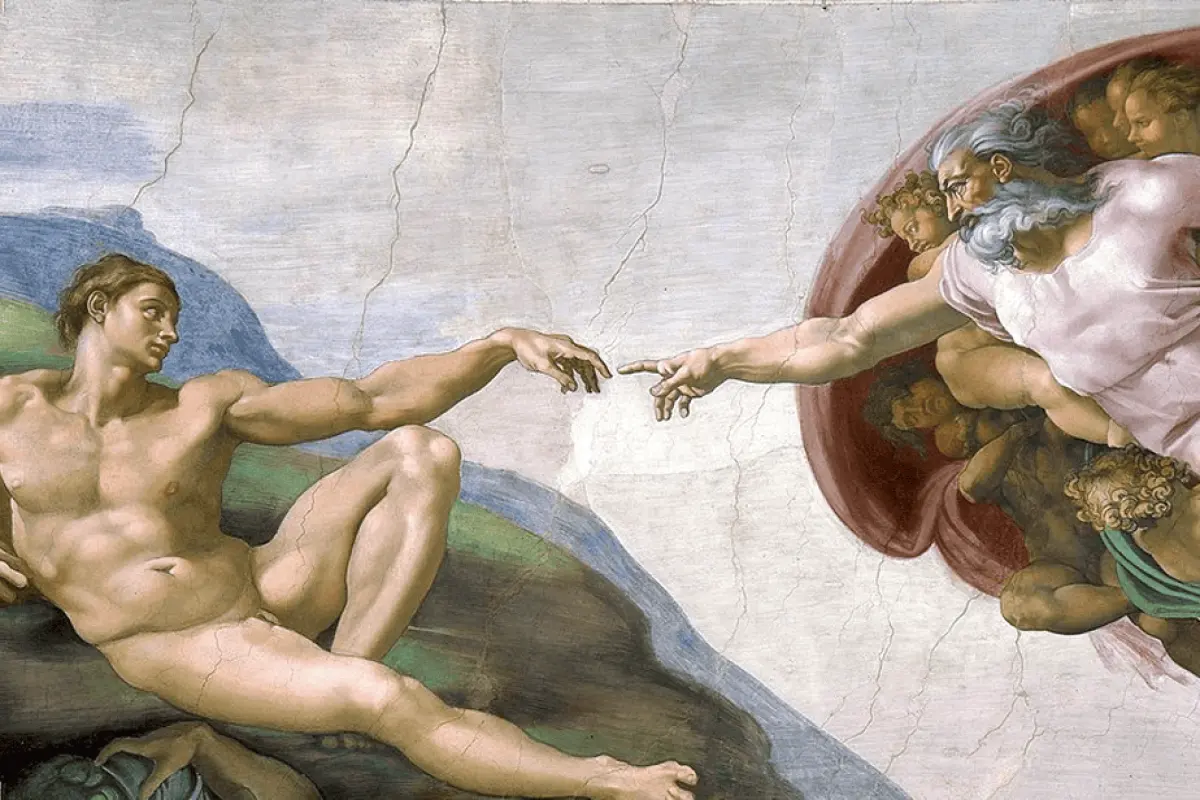
No, Giotto did not paint the Sistine Chapel. That masterpiece was created by Michelangelo nearly 200 years after Giotto’s death.
What is the "Giotto style"?
The Giotto style is characterized by heavy, sculptural figures that occupy a clear physical space. He focused on human drama and emotional realism instead of the decorative, gold-ground flatness common in medieval art.
Where can I see Giotto's work today?
You can see his most significant works in Italy, specifically at the Scrovegni Chapel in Padua, the Basilica of St. Francis in Assisi, and the Santa Croce church in Florence. Many museums worldwide also hold smaller panel paintings attributed to his studio.
Was Giotto also an architect?
Yes, Giotto was appointed the master of the Florence Cathedral in 1334. He is credited with designing the famous campanile, or bell tower, which still stands in Florence today.
How did Giotto change the way artists paint faces?
Before Giotto, faces were often stiff and uniform. He began painting individuals with distinct expressions, showing genuine sorrow, joy, or fear, which helped viewers connect emotionally with religious narratives.
Is Giotto considered a Renaissance artist?
Giotto is technically a Late Gothic artist, but he is often called a "proto-Renaissance" painter. His focus on humanism and naturalism laid the essential groundwork that later Renaissance masters like Masaccio and Michelangelo would build upon.
This answer was created with the help of AI research tools and reference sources. Spotted an error? Let us know — we correct mistakes quickly. See our editorial policy.