How do you draw a constellation?
Short answer
Drawing a constellation involves mapping the relative positions of stars onto paper to create a recognizable pattern. By using a star chart as a reference, you plot the brightest stars first, connect them with lines to form the traditional shape, and add surrounding stars to provide depth and accurate celestial context.
On this page
How to map stars accurately
The most effective way to draw a constellation is to treat the night sky as a two-dimensional grid. Begin by selecting a high-quality star map or an astronomy application to identify the specific asterism you wish to replicate. Do not attempt to draw from memory, as the human eye often perceives patterns that do not exist in the actual celestial arrangement. Instead, focus on the primary stars that define the shape of the constellation.
- Identify the brightest stars in the group, known as the primary stars.
- Place these points on your paper first to establish the scale of your drawing.
- Use a light pencil to mark these positions before committing to permanent ink.
- Compare your spacing against the star chart to ensure the proportions are correct.
- Once the main stars are plotted, fill in the fainter stars that provide the constellation's characteristic texture.
What tools are needed for star mapping
You do not need expensive equipment to begin drawing constellations, though precision is helpful. A simple graphite pencil, a white eraser, and a piece of heavy-weight paper are sufficient to start. If you want to create a more professional look, use a fine-liner pen to connect the stars after you have finalized your pencil sketch. Many artists prefer using a compass or a circular stencil to represent stars as dots of varying sizes, which helps indicate their apparent magnitude.
- Use a 2H pencil for light initial sketching.
- Employ a fine-tip black ink pen for the final constellation lines.
- Keep a red-light flashlight nearby if you are drawing while observing the night sky, as this preserves your night vision.
- Use a ruler if you prefer geometric, stylized representations of the constellations.
- Consider using white gel pens on dark blue or black paper to mimic the appearance of the night sky.
How to connect the dots correctly
Connecting the stars is where the artistic interpretation of a constellation occurs. While the International Astronomical Union recognizes 88 official constellations, the lines connecting these stars are historically arbitrary and vary between cultures. You should follow the standard lines found in modern star atlases if you want your drawing to be recognizable to other astronomers. However, you are free to draw your own lines if you are creating a personal interpretation of the star field.
When drawing these lines, avoid making them too thick, as they should remain secondary to the stars themselves. Use a straight edge to ensure that your lines are clean and do not obscure the stars they connect. If you are drawing a complex constellation like Scorpius or Cygnus, work in sections to ensure the lines flow logically from one star to the next. Remember that the lines are merely a tool to help the viewer identify the shape within the vast, scattered field of stars.
Why star magnitude matters
In astronomy, the brightness of a star is referred to as its magnitude. When drawing constellations, representing this difference in brightness is essential for an accurate depiction. If you draw all stars as identical dots, the constellation will appear flat and lose its distinct character. Use varying dot sizes to indicate the magnitude, making the brightest stars, such as Sirius or Vega, significantly larger than the dimmer background stars.
To achieve this effect, practice drawing dots of different diameters on a scrap piece of paper. A large, bold dot represents a first-magnitude star, while a tiny, faint point represents a star of the fourth or fifth magnitude. By carefully varying these sizes, you create a sense of depth that mimics the actual appearance of the sky. This technique transforms a simple connect-the-dots drawing into a sophisticated astronomical representation that captures the true essence of the night sky.
Common mistakes when drawing constellations
One of the most frequent errors is failing to account for the curvature of the sky. Because the sky is a sphere, translating it onto a flat sheet of paper often leads to distortion, especially near the edges of your drawing. To avoid this, keep your constellation centered on the page and avoid trying to draw too many adjacent constellations at once. Another common mistake is drawing the lines too heavily, which can make the constellation look like a rigid cage rather than a loose collection of stars.
- Avoid drawing lines that pass directly through the center of a star; instead, have the lines terminate at the star's edge.
- Do not crowd your drawing with too many faint stars, as this can make the constellation difficult to identify.
- Check your orientation frequently, as it is easy to accidentally rotate the pattern while drawing.
- Ensure your pencil lines are light enough to be erased if you miscalculate the distance between two stars.
- Always verify your work against a reliable source to ensure you have not accidentally swapped the positions of two stars.
Key facts
- Constellations are officially defined by the International Astronomical Union (IAU) as 88 distinct regions of the celestial sphere.
- To draw a constellation, identify the brightest stars first, which are often labeled with Greek letters like Alpha or Beta.
- Use a star map or a mobile astronomy application to verify the official "stick figure" pattern recognized by astronomers.
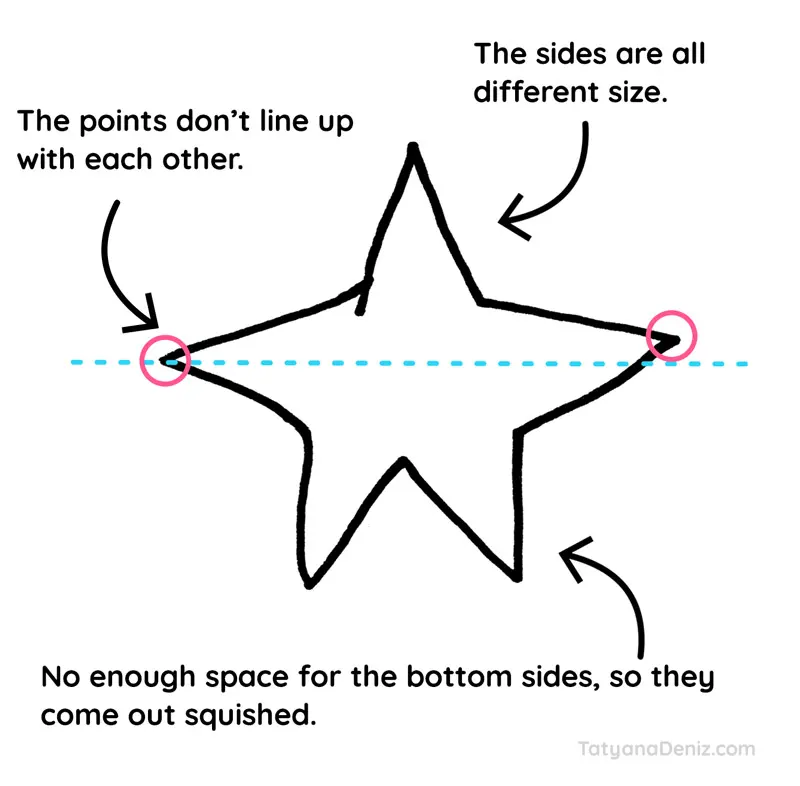
- Connect the stars using straight lines to create a simplified geometric shape, rather than trying to draw complex artistic figures.
- Always orient your paper or screen to match the current cardinal directions—North, South, East, or West—relative to your position.
- Avoid the common mistake of connecting stars that appear close together but are actually at vastly different distances from Earth.
The bottom line
Drawing a constellation is an exercise in pattern recognition and spatial orientation. By focusing on the brightest stars and connecting them into simple geometric shapes, you can effectively map the night sky. Remember that these patterns are subjective cultural constructs rather than physical groupings. With a reliable star map and a clear view of the horizon, you can accurately document the celestial architecture above your location.
People also ask
Are constellations physical objects in space?
No, constellations are merely two-dimensional projections of stars as seen from Earth. The stars within a single constellation are often hundreds of light-years apart from one another.
Why do some constellations look different in the Southern Hemisphere?
Because the Earth is a sphere, your perspective of the sky changes based on your latitude. Observers in the Southern Hemisphere see different regions of the celestial sphere than those in the Northern Hemisphere.
Can I create my own constellations?
You certainly can create "asterisms," which are informal patterns of stars. While these are fun for personal navigation or storytelling, only the 88 IAU-recognized constellations are used for professional scientific mapping.
Do stars move enough to change the shape of constellations?
Yes, stars have "proper motion," meaning they drift through space over time. However, these changes occur over tens of thousands of years, so constellations remain stable for human lifetimes.
How do I find the North Star to help me orient my drawing?
Locate the Big Dipper and follow the two stars at the end of its "cup" upward. These stars point directly toward Polaris, which marks the approximate position of the North Celestial Pole.
Should I draw the stars as circles or dots?
Using circles of varying sizes is best to represent the apparent magnitude, or brightness, of each star. Larger circles indicate stars that appear brighter to the naked eye.
This answer was created with the help of AI research tools and reference sources. Spotted an error? Let us know — we correct mistakes quickly. See our editorial policy.