What is Michelangelo known for?
Short answer
Michelangelo Buonarroti was a preeminent Italian Renaissance sculptor, painter, and architect. He is best known for his mastery of the human form, exemplified by the statue of David and the frescoes on the ceiling of the Sistine Chapel. His work profoundly influenced Western art through its emotional intensity and technical precision.
On this page
What are Michelangelo’s most famous sculptures?
Michelangelo viewed himself primarily as a sculptor, believing that the figure already existed within the marble block waiting to be released. His most iconic work, David, was carved between 1501 and 1504 from a single, massive piece of Carrara marble. Standing over 17 feet tall, the statue represents the biblical hero before his battle with Goliath, showcasing the artist’s deep understanding of human anatomy and tension.
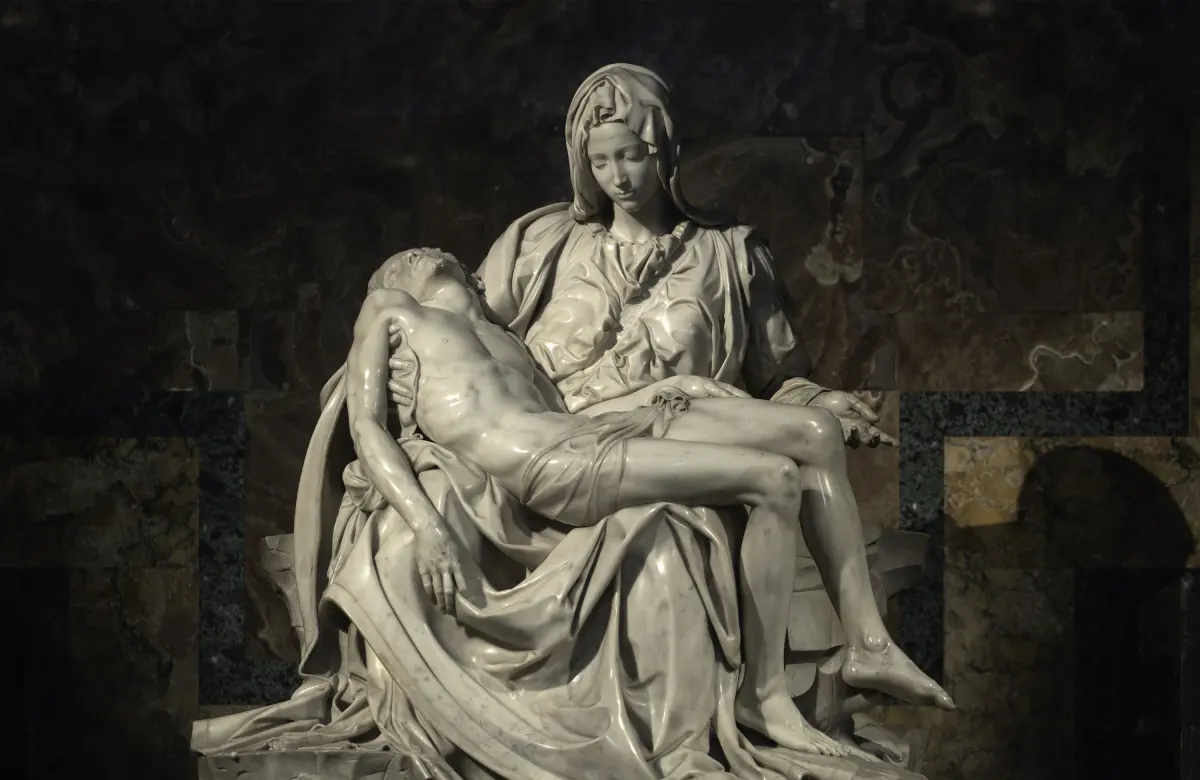
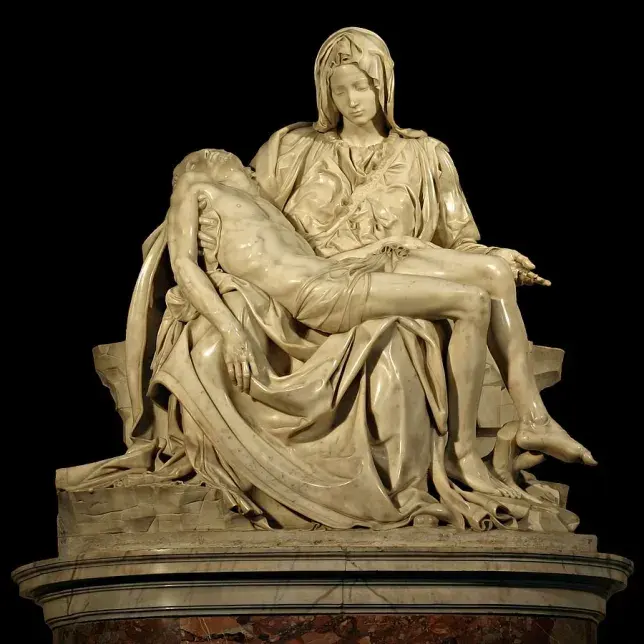
Another significant sculptural achievement is the Pietà, housed in St. Peter’s Basilica. Completed when he was only 24, it remains the only work he ever signed. The sculpture depicts the Virgin Mary cradling the body of Jesus after the Crucifixion. Beyond these masterpieces, his later works include:
- The Moses for the tomb of Pope Julius II, featuring dramatic musculature and psychological depth.
- The Dying Slave and Rebellious Slave, which emphasize the struggle of the human spirit.
- The Bacchus, his first large-scale attempt at classical mythological themes.
How did he paint the Sistine Chapel?
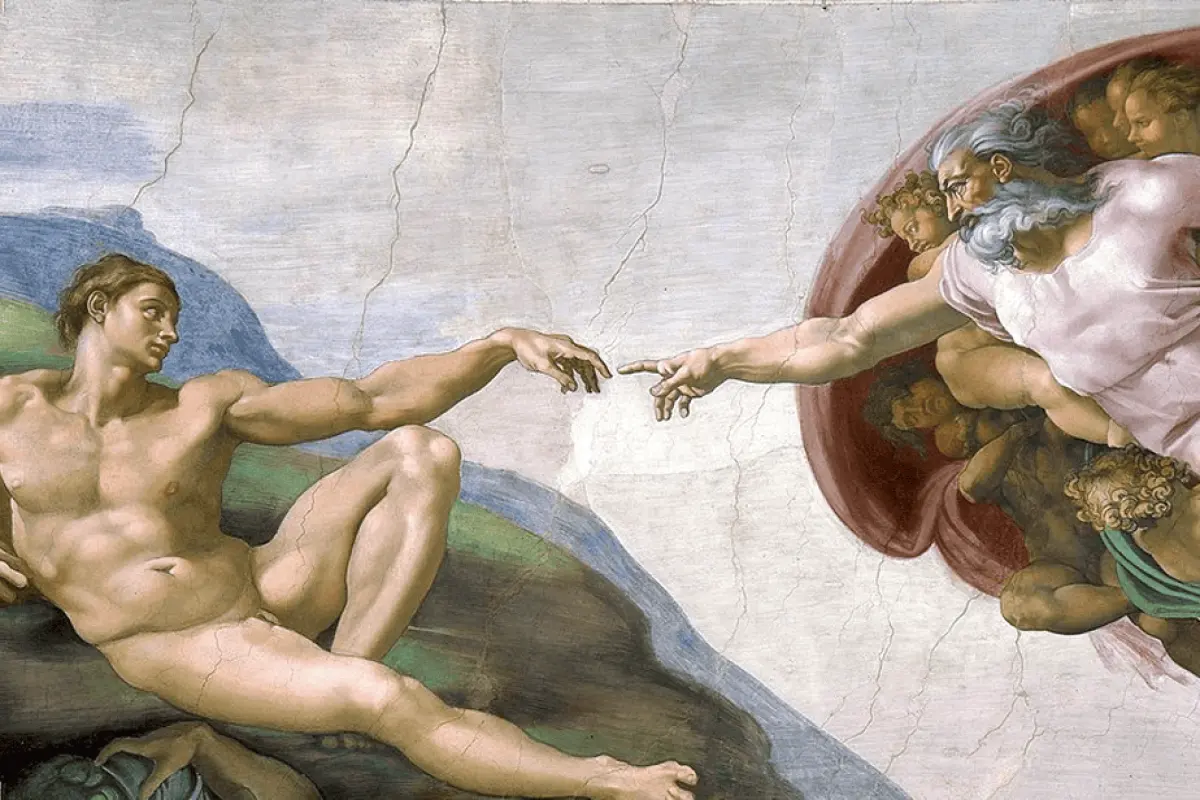
Commissioned by Pope Julius II, Michelangelo painted the Sistine Chapel ceiling between 1508 and 1512. Despite his initial reluctance to take on a painting project, he produced a complex narrative featuring over 300 figures. The central panels depict scenes from the Book of Genesis, including the famous Creation of Adam, where the fingers of God and Adam nearly touch.
Working on high wooden scaffolding, Michelangelo did not lie on his back as popular myth suggests. Instead, he stood with his head tilted back, often enduring physical strain and paint dripping into his eyes. He utilized the buon fresco technique, which required applying pigment to wet lime plaster. This method demanded extreme speed and precision because the paint had to be absorbed before the plaster dried.
What role did he play in architecture?
Michelangelo’s architectural contributions are defined by his rejection of traditional rules in favor of dynamic, sculptural forms. He was appointed the chief architect of St. Peter’s Basilica in 1546, where he redesigned the structure to emphasize a centralized plan. His most significant contribution to the project was the design of the massive dome, which remains a defining feature of the Roman skyline today.
His approach to architecture can be summarized by these key principles:
- Treating buildings as sculptural objects rather than mere functional spaces.
- Using "mannerist" elements, such as distorted proportions and unconventional window placements.
- Integrating structural stability with aesthetic grandeur to create a sense of monumental movement.
His other notable architectural projects include the Laurentian Library in Florence, where he designed a staircase that appears to spill into the room like flowing lava, defying classical rigidity.
Why is his work considered so influential?
The influence of Michelangelo stems from his ability to convey profound human emotion through the physical body. He pioneered the concept of terribilità, an awe-inspiring intensity that characterizes his figures. By studying human cadavers, he gained an unparalleled knowledge of anatomy, allowing him to depict muscles, veins, and skeletal structures with lifelike accuracy that pushed the boundaries of the High Renaissance.
Artists who followed him, particularly those in the Baroque period, looked to his work for inspiration on how to portray drama and movement. His legacy is not just in the objects he created, but in the standard he set for the "artist-genius." He transformed the social status of the creator from a mere craftsman to an intellectual visionary, a shift that permanently altered the trajectory of Western art history.
Common mistakes when analyzing Michelangelo’s art
A frequent error when studying Michelangelo is assuming his work was purely religious in nature. While much of his output was commissioned by the Catholic Church, his personal interest in Neoplatonism and classical antiquity often infused his figures with secular, humanistic meaning. Another mistake is ignoring the unfinished nature of many of his sculptures. He often left works in a "non-finito" state, intentionally revealing the rough stone to symbolize the struggle of the soul to emerge from the material world.
To better appreciate his work, avoid these pitfalls:
- Viewing his paintings in isolation from the architectural spaces they were designed to inhabit.
- Overlooking the influence of his poetry, which provides essential context for his internal struggles.
- Misinterpreting his anatomical exaggerations as errors rather than deliberate artistic choices to heighten emotional impact.
By focusing on the tension between the physical form and the spiritual intent, you can gain a deeper understanding of his enduring mastery.
Key facts
- Michelangelo Buonarroti (1475–1564) was a central figure of the Italian Renaissance, excelling as a sculptor, painter, architect, and poet.
- His most famous sculpture, the David, stands 17 feet tall and was carved from a single block of marble between 1501 and 1504.
- He spent four years, from 1508 to 1512, painting the ceiling of the Sistine Chapel in the Vatican, covering over 5,000 square feet.
- To appreciate his work, look for contrapposto, a pose where the figure's weight is shifted onto one leg to create a sense of movement.
- When visiting his sculptures, avoid focusing only on the faces; observe the intricate anatomical detail in the hands, veins, and musculature.
- His architectural legacy includes the design of the dome of St. Peter's Basilica, which remains a defining feature of the Rome skyline.
The bottom line
Michelangelo remains one of history’s most influential artists because he pushed the boundaries of human expression through marble, paint, and stone. By mastering anatomy and perspective, he transformed the Western artistic tradition. His legacy is defined by a relentless pursuit of perfection and a unique ability to imbue cold stone with profound psychological depth, ensuring his works remain globally recognized masterpieces of human achievement today.
People also ask
Was Michelangelo a painter or a sculptor primarily?
Michelangelo considered himself primarily a sculptor, often signing his letters as "Michelangelo, Sculptor." He frequently expressed frustration with painting, viewing it as a secondary discipline despite his monumental success with the Sistine Chapel.
How long did it take to complete the Sistine Chapel ceiling?
The project lasted from 1508 to 1512. Michelangelo worked under physically grueling conditions, often painting while standing on scaffolding with his head tilted back for years.
Did Michelangelo have any rivals during his lifetime?
His most famous rival was Leonardo da Vinci, as the two men held contrasting artistic philosophies and temperaments. Their competition was intense, particularly during their time working on competing mural commissions in Florence.
What is the significance of the Pietà?
The Pietà is the only work Michelangelo ever signed, located on a sash across the Virgin Mary's chest. Completed when he was only 24, it established his reputation as a master of marble carving.
Did Michelangelo design any buildings?
Yes, he was a prolific architect who designed the Laurentian Library in Florence and the Piazza del Campidoglio in Rome. His architectural style emphasized structural harmony and bold, unconventional forms.
Why are his figures so muscular?
Michelangelo was obsessed with the human form and studied anatomy through the dissection of cadavers. He believed that the body was a reflection of the soul, using exaggerated musculature to express intense emotion and divine power.
This answer was created with the help of AI research tools and reference sources. Spotted an error? Let us know — we correct mistakes quickly. See our editorial policy.