What is a kinetic sculpture?
Short answer
A kinetic sculpture is a form of art that incorporates movement as a primary aesthetic element. These works utilize mechanical systems, natural forces like wind, or manual interaction to change their physical configuration over time. By shifting through space, kinetic sculptures bridge the gap between static traditional art and performance-based experiences.

On this page
What defines a kinetic sculpture
Kinetic art distinguishes itself from traditional sculpture by embracing the fourth dimension: time. While a marble statue remains fixed, a kinetic piece evolves, offering the viewer a constantly shifting visual narrative. This movement can be subtle, such as a slow rotation, or dynamic, involving complex mechanical sequences that activate and reset in a loop.
The movement is typically categorized by the power source driving the action. Some works rely on external forces, such as air currents or water flow, while others utilize internal motors, clockwork gears, or magnetic fields. By integrating motion, artists can explore themes of rhythm, entropy, and the passage of time. These sculptures effectively turn the surrounding environment into a participant, as the work reacts to the conditions of the space it occupies.
How kinetic sculptures create movement
Artists employ a variety of engineering techniques to achieve fluid motion. The mechanical design must account for weight distribution, friction, and structural integrity to ensure the piece functions reliably without mechanical failure. Precision is essential, as even minor misalignments can cause a sculpture to stall or become unbalanced during operation.
Common methods for generating motion include:
- Wind-driven sails or vanes that capture air currents to rotate components.
- Electric motors paired with gearboxes to control speed and torque.
- Counterweights and pendulums that utilize gravity to create rhythmic, swinging motions.
- Magnetic levitation or repulsion to allow parts to float or shift without physical contact.
- Manual interfaces, such as cranks or levers, that invite the audience to operate the mechanism.
These systems are often hidden within the sculpture’s frame, allowing the viewer to focus on the aesthetic result rather than the technical complexity of the underlying engineering.
Who are the most famous kinetic artists
The history of kinetic art is defined by visionaries who pushed the boundaries of sculpture. Marcel Duchamp is often credited with creating the first kinetic work in 1913, a bicycle wheel mounted on a stool. However, the movement gained significant momentum in the 20th century through the work of Alexander Calder, whose "mobiles" revolutionized the field by using delicate balance to respond to ambient air currents.
Other influential figures include:
- Jean Tinguely, known for his chaotic, self-destructing "metamechanical" machines.
- George Rickey, who focused on precise, gravity-defying steel structures that moved with graceful, mathematical regularity.
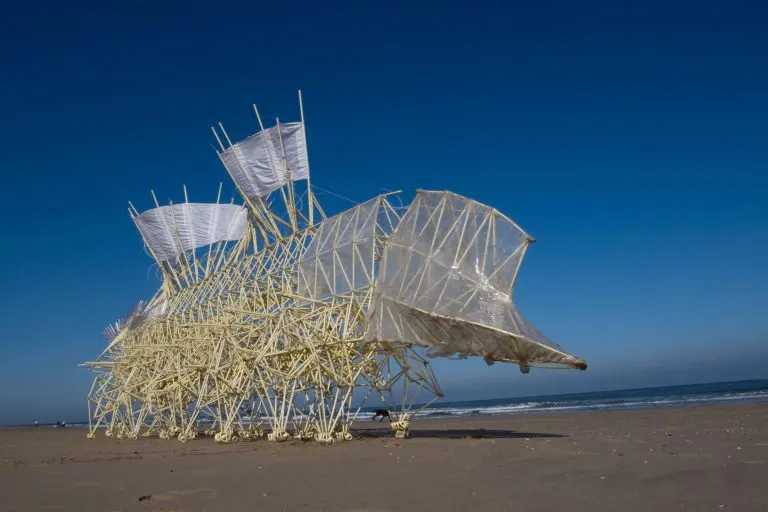
- Theo Jansen, whose "Strandbeest" creations are massive, wind-powered skeletons that walk along beaches.
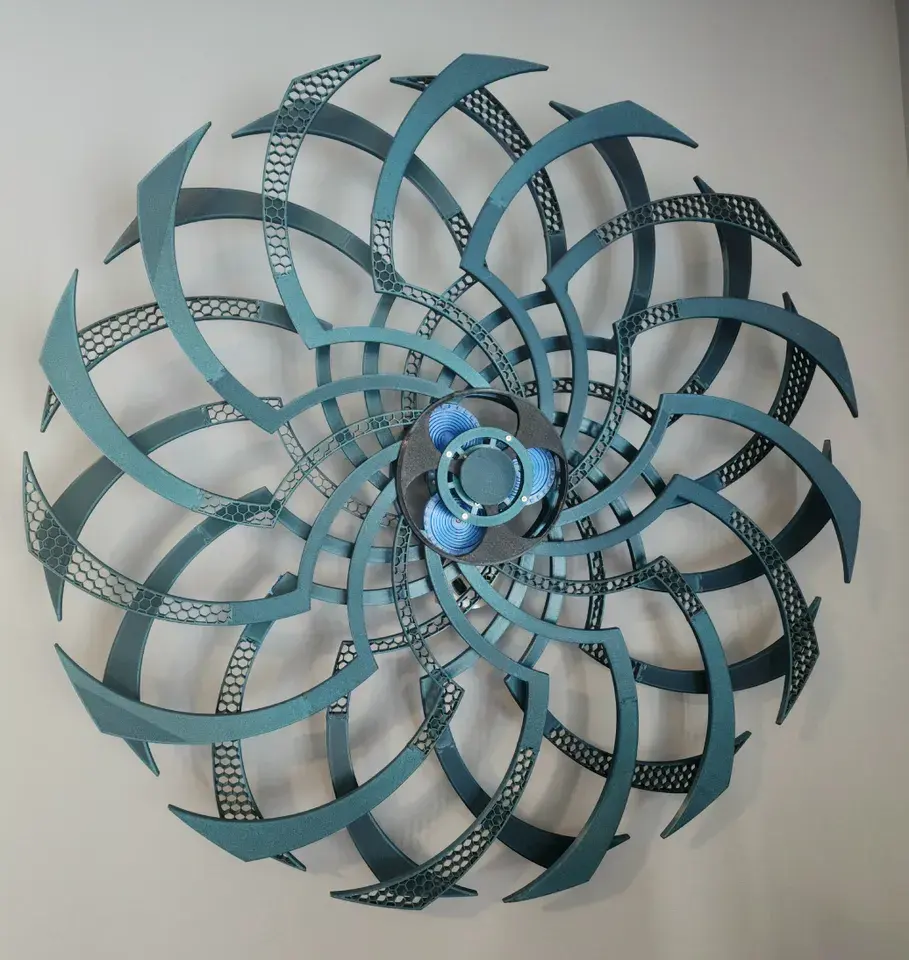
- Anthony Howe, a contemporary artist famous for his complex, hypnotic wind-driven metal mandalas.
These artists transitioned sculpture from a static object into a living, breathing entity that interacts directly with the physical laws of the universe.
How to build a simple kinetic sculpture
Creating a basic kinetic piece requires careful planning and an understanding of balance. Beginners should start with simple gravity-based designs before attempting complex motorized systems. The goal is to create a structure that moves fluidly while maintaining structural stability throughout its entire range of motion.
Follow these steps to construct a basic balance-based mobile:
- Select a lightweight, rigid material such as thin aluminum rods or balsa wood for the arms.
- Determine the center of gravity for each component by testing the balance point on your finger.
- Attach weights to the ends of the arms, ensuring they are proportional to the length of the lever.
- Connect the arms using thin, high-tensile wire or monofilament to allow for free rotation.
- Suspend the entire assembly from a single pivot point, adjusting the weights until the sculpture hangs level.
Always test your sculpture in a draft-free room first to ensure the balance is perfect before introducing it to air currents.
Common mistakes when making kinetic art
One of the most frequent errors in kinetic design is failing to account for friction at pivot points. If a joint is too tight, the sculpture will remain static; if it is too loose, the components may wobble or collide. Using high-quality ball bearings or polished contact surfaces is essential for achieving smooth, long-lasting movement that does not degrade over time.
Another common mistake involves ignoring the long-term effects of gravity and material fatigue. Metals like aluminum can bend under their own weight if the span is too long, and plastic parts may become brittle. Designers often overlook the importance of maintenance, as moving parts inevitably require lubrication or adjustments. To avoid these issues, always build a prototype to test the structural load and ensure that all moving parts are easily accessible for future repairs. By prioritizing durability alongside aesthetics, artists ensure their kinetic sculptures remain functional for years to come.
Key facts
- Kinetic sculpture is any three-dimensional artwork that incorporates movement, either through mechanical systems or natural forces like wind.
- The term was first popularized in 1955 during the "Le Mouvement" exhibition at the Denise René Gallery in Paris.
- Marcel Duchamp’s 1913 "Bicycle Wheel" is widely considered the first kinetic sculpture, consisting of a wheel mounted on a wooden stool.
- Alexander Calder revolutionized the genre in the 1930s by inventing the "mobile," a delicate structure balanced to move with air currents.
- Common materials for kinetic art include lightweight metals, plastics, ball bearings, motors, and counterweights to ensure fluid motion.
- When designing your own kinetic piece, always prioritize balance and friction reduction; a common mistake is using heavy materials that prevent the sculpture from moving naturally.
The bottom line
Kinetic sculpture bridges the gap between static art and performance by introducing the element of time through motion. Whether driven by complex motors or simple air currents, these works transform how viewers perceive space and balance. By understanding the principles of physics, gravity, and material weight, artists create dynamic experiences that evolve continuously, proving that art is not merely a fixed object but a living, moving process.
People also ask
How do kinetic sculptures move without electricity?
Many kinetic sculptures rely on passive energy sources such as wind, thermal currents, or gravity. Artists use counterweights and aerodynamic shapes to ensure that even a slight breeze can trigger rotation or oscillation.
What is the difference between a mobile and a stabile?
A mobile is a kinetic sculpture designed to move freely in space, often suspended from the ceiling. A stabile is the stationary counterpart, designed to look like it might move while remaining firmly anchored to the ground.
Can kinetic sculptures be displayed outdoors?
Yes, many large-scale kinetic sculptures are designed for public parks and plazas. These must be engineered with weather-resistant materials like stainless steel or treated aluminum to withstand high winds and corrosion.
Do kinetic sculptures require constant maintenance?
Mechanical kinetic art often requires regular lubrication of joints and inspection of motors to prevent wear. Sculptures driven by natural forces require less maintenance but should be checked periodically for structural fatigue or debris buildup.
Who are the most famous kinetic artists?
Alexander Calder is the most iconic figure in the field, followed by Jean Tinguely, who created complex, self-destructing machines. Other notable artists include George Rickey, known for his precise, geometric steel sculptures, and Theo Jansen, famous for his wind-powered "Strandbeests."
Is digital art considered kinetic sculpture?
Kinetic sculpture generally refers to physical objects moving in three-dimensional space. While digital art may feature moving images, it lacks the tangible, mechanical, or physical interaction with the environment that defines the kinetic sculpture tradition.
This answer was created with the help of AI research tools and reference sources. Spotted an error? Let us know — we correct mistakes quickly. See our editorial policy.