How do you paint sunflowers in watercolor?
Short answer
Painting sunflowers in watercolor requires layering transparent washes, starting with light yellows and building depth with oranges and deep browns. Focus on the contrast between the vibrant petals and the dark, textured center. By using wet-on-wet techniques for the background and dry-brushing for details, you can capture the flower's organic, sun-drenched appearance.
On this page
Best watercolor supplies for beginners
To achieve professional results with sunflowers, start with high-quality materials. Artist-grade watercolor paper, specifically 140-pound (300 gsm) cold-press paper, is essential because it holds water well without warping. For brushes, a size 8 or 10 round brush is versatile enough for both large washes and finer petal details. A smaller size 4 round brush is necessary for the intricate seeds in the center.
When selecting paints, focus on a warm palette. You will need:
- Cadmium Yellow or Lemon Yellow for the petals.
- Burnt Sienna or Raw Umber for the center.
- Sap Green or Olive Green for the stems and leaves.
- Cobalt Blue or Ultramarine for creating shadows.
Avoid student-grade sets, as they often contain too much filler, making it difficult to achieve the vibrant, glowing yellows that define a healthy sunflower. Investing in a few professional-grade tubes will provide better pigment load and easier color mixing.
How to sketch sunflowers before painting
A successful watercolor painting begins with a light, accurate pencil sketch. Use a hard lead pencil, such as an H or HB, to keep your lines faint so they do not show through the transparent paint. Start by drawing a large circle for the center and then outline the petals radiating outward. Do not aim for perfect symmetry; sunflowers are organic and often have slightly irregular petal shapes.
Follow these steps to prepare your composition:
- Lightly draw the central disk, keeping it slightly off-center for a more dynamic composition.
- Sketch the petals as elongated ovals, varying their length and curve to suggest movement.
- Add the stem and a few large, heart-shaped leaves to ground the flower.
- Erase any heavy lines, leaving only a faint ghost of your drawing, which prevents graphite from smearing when you apply wet paint.
How to paint vibrant sunflower petals
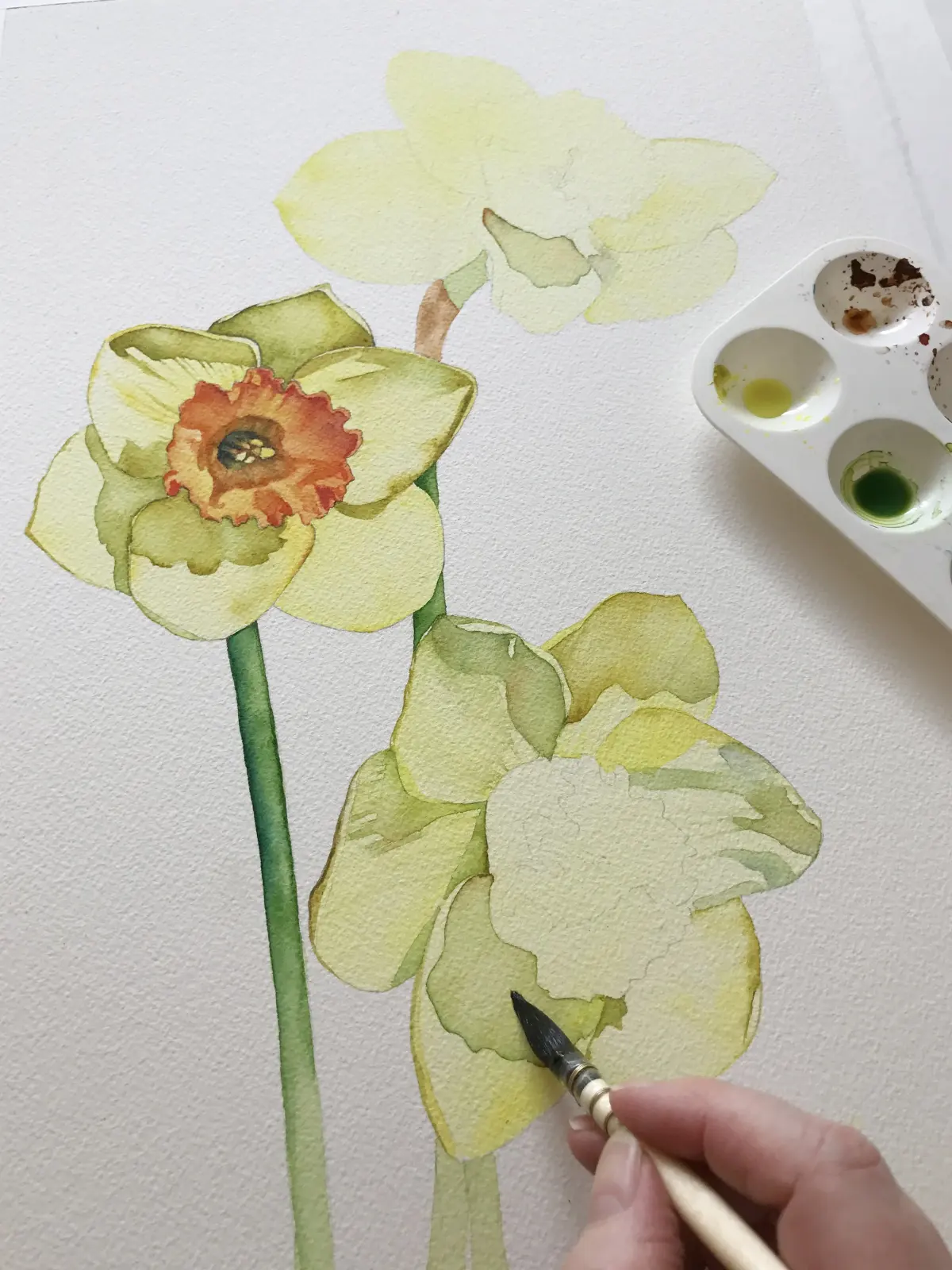
The key to painting petals is layering from light to dark. Begin by applying a thin wash of your lightest yellow across all petals. While this is still damp, drop in a slightly darker orange or gold near the base of the petal where it meets the center. This creates a natural gradient that gives the flower dimension. Use a clean, damp brush to soften the edges so the transition looks seamless.
Avoid overworking the petals, as this can make the colors look muddy. Let each layer dry completely before adding a second, darker wash to define individual petal shadows. If you want to show light hitting the flower, leave small slivers of white paper untouched. This "negative space" technique is a hallmark of watercolor painting and makes the petals appear as if they are glowing from within.
How to texture the sunflower center
The center of a sunflower is a dense collection of tiny florets, which requires a different technique than the petals. Start by applying a base wash of light brown or yellow-ochre. While the paint is still wet, use a stippling motion with the tip of your brush to add dots of darker Burnt Sienna and Sepia. This creates the appearance of texture without needing to paint every individual seed.
To add depth:
- Wait for the first layer to dry until it is just damp.
- Use a concentrated, dark mixture of brown and blue to dab in shadows on one side of the center.
- Allow the colors to bleed slightly, which mimics the natural, fuzzy look of the seed head.
- Use a dry brush technique at the very end to add tiny, sharp highlights or dark spots, which helps the center look three-dimensional and realistic.
Common mistakes when painting sunflowers
One of the most frequent errors is using too much water, which causes the colors to lose their intensity and become pale. If your colors look washed out, you are likely using too much water relative to the pigment on your brush. Conversely, adding too much paint at once can create "blooms" or hard edges that look messy. Always test your color consistency on a scrap piece of paper before applying it to your main painting.
Another common mistake is neglecting the stems and leaves. Beginners often paint these a flat, singular green, which makes the plant look artificial. Instead, mix your green with a touch of red or purple to create a more natural, muted tone. Vary the pressure of your brush to make the leaves look organic and flowing. Remember that shadows on leaves should be cool-toned, so adding a touch of blue to your green mixture will help create a realistic sense of light and shade.
Key facts
- Use high-quality 140lb (300gsm) cold-press watercolor paper to prevent buckling when applying wet washes.
- Start with a light yellow base for the petals, layering darker oranges and browns toward the center to create depth.
- Use a round brush size 6 or 8 for petals and a smaller size 2 or 4 for fine details in the seeds.
- Apply the "wet-on-wet" technique for soft, blended petals and "wet-on-dry" for sharp, defined edges.
- Mix sap green with a touch of burnt sienna to create natural, non-uniform tones for the stems and leaves.
- Always wait for the initial yellow wash to dry completely before adding dark brown centers to prevent muddy colors.
The bottom line
Painting sunflowers in watercolor requires a balance of patience and layering. By starting with light, transparent washes and gradually building depth with darker pigments, you can capture the vibrant essence of the flower. Focus on maintaining clean edges and using complementary colors for shadows to ensure your work remains bright. With practice and the right materials, you will successfully master this classic botanical subject.
People also ask
What is the best way to paint the dark center of a sunflower?
Use a stippling technique with a round brush to create a textured, dotted appearance. Mix burnt umber and indigo for a rich, dark base, then add tiny dots of yellow or orange once dry to represent individual seeds.
How do I keep my colors from looking muddy?
Avoid over-mixing paints on the paper and ensure each layer is fully dry before adding a new one. Clean your brush thoroughly between color changes and use a limited palette to maintain color harmony.
Should I draw the sunflower in pencil first?
Yes, a light graphite sketch helps establish the composition and petal placement. Use a hard lead pencil like an H or 2H so the lines do not smudge or show through the transparent watercolor layers.
How do I create realistic shadows on the petals?
Use a diluted mixture of purple or violet to shade the yellow petals, as purple is the complementary color to yellow. This creates a natural contrast without making the petals appear dirty or brown.
What kind of watercolor paint is best for beginners?
Student-grade pan sets are excellent for beginners because they are portable and easy to manage. As you progress, consider professional-grade tubes for better pigment concentration and smoother blending capabilities.
How do I fix a mistake if I paint outside the lines?
While the paint is still wet, use a clean, damp brush or a paper towel to lift the pigment. If the paint has dried, you can gently scrub the area with a stiff brush and a small amount of water to lighten the color.
This answer was created with the help of AI research tools and reference sources. Spotted an error? Let us know — we correct mistakes quickly. See our editorial policy.