Why is Van Gogh's Sunflowers so famous?
Short answer
Vincent van Gogh’s Sunflowers series is famous for its revolutionary use of color, emotional intensity, and technical innovation. By utilizing bold, unmixed pigments and thick impasto brushwork, Van Gogh transformed a simple floral subject into a powerful expression of gratitude and optimism, cementing his status as a pioneer of modern Expressionism.
On this page
Why is Van Gogh’s Sunflowers so famous?
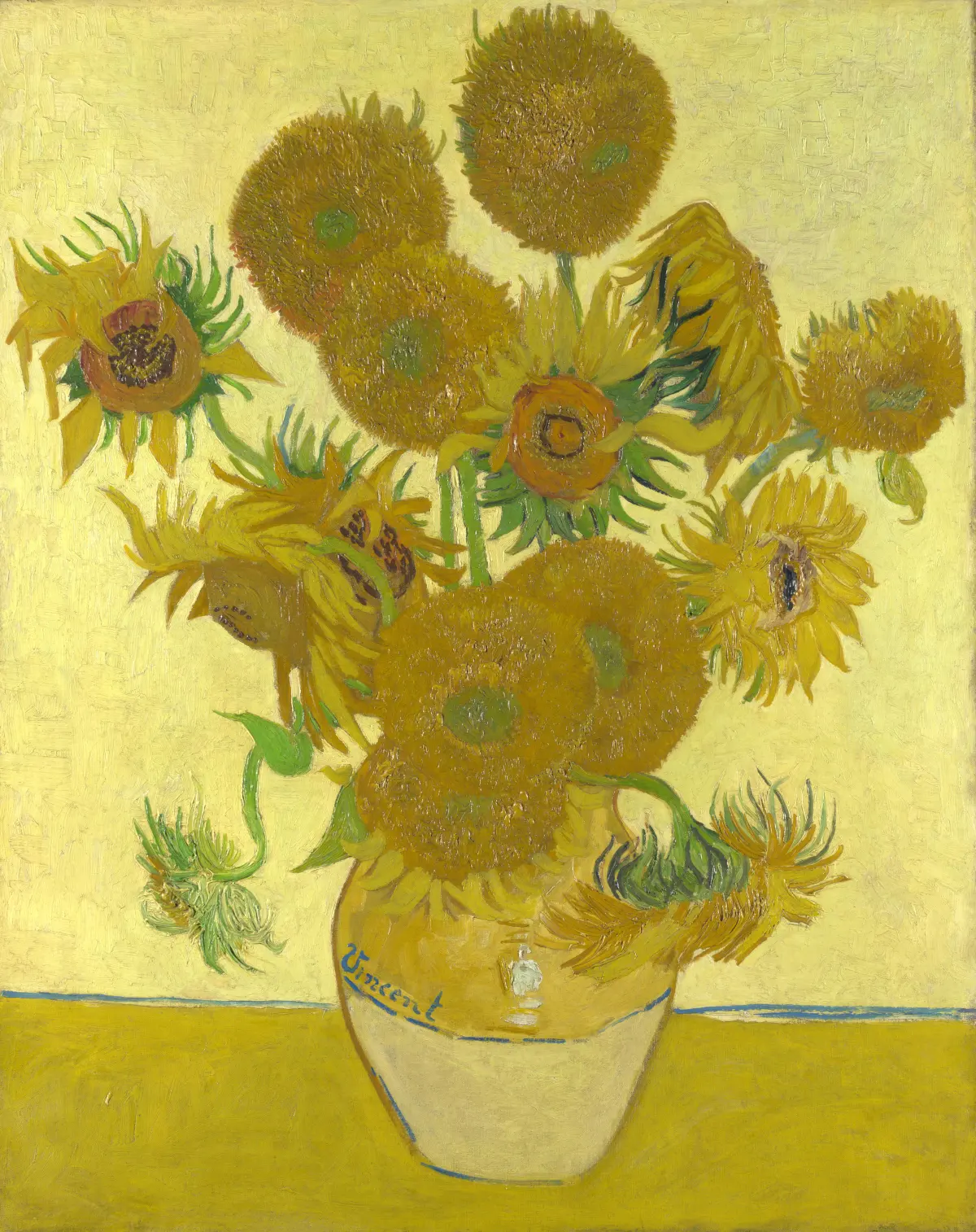
The fame of the Sunflowers series stems from its role as a pivotal moment in the evolution of modern art. Painted in Arles between 1888 and 1889, these works moved beyond traditional still-life painting by prioritizing the artist’s subjective experience over realistic representation. Van Gogh used the yellow flower as a symbol of friendship and light, intending to decorate his "Yellow House" for the arrival of Paul Gauguin.
Beyond the emotional narrative, the technical execution remains a masterclass in color theory. Van Gogh explored the luminosity of yellow by layering various shades—ranging from pale lemon to deep ochre—against contrasting blue backgrounds. This daring use of color influenced generations of artists, particularly the Fauvists, who later pushed these boundaries even further. Today, the paintings serve as a testament to his ability to find profound meaning in humble, everyday objects.
How to identify the different versions of Sunflowers
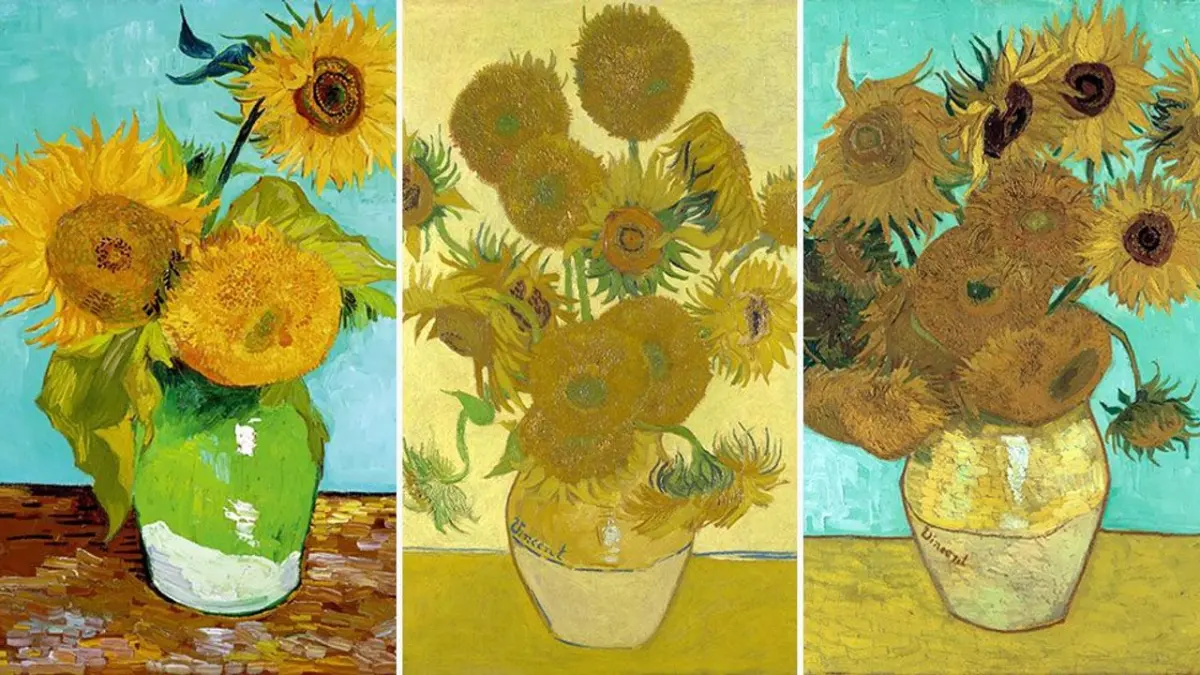
Van Gogh painted two distinct sets of Sunflowers. The first series, created in the summer of 1888, features the flowers lying on a table. The second, more famous series, depicts the sunflowers arranged in a vase. There are five main versions of the vase paintings that survive today, each housed in prestigious institutions across the globe:
- The National Gallery, London
- The Van Gogh Museum, Amsterdam
- The Neue Pinakothek, Munich
- The Philadelphia Museum of Art
- The Sompo Museum of Art, Tokyo
The London and Amsterdam versions are arguably the most celebrated. The London painting is noted for its vibrant, golden hues, while the Amsterdam version is celebrated for its slightly more experimental composition and texture. Each version showcases Van Gogh’s rapid, confident brushwork, which he executed quickly to capture the fleeting beauty of the flowers before they withered.
What techniques did Van Gogh use in Sunflowers?
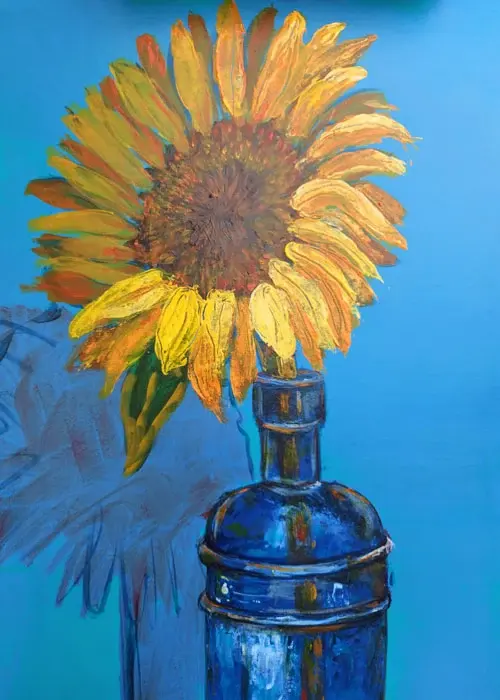
Van Gogh’s technique was defined by his use of impasto, a method where paint is applied so thickly that it stands out from the canvas. By loading his brush with pigment and applying it directly, he created a three-dimensional surface that catches light and creates shadows. This physical texture gives the sunflowers a sense of vitality and movement that flat painting cannot achieve.
To achieve this bold look, follow these professional practices:
- Use high-quality, heavy-body oil paints to ensure the texture holds its shape.
- Apply paint with a firm, hog-hair brush to maintain visible, expressive strokes.
- Layer colors wet-on-wet to allow for subtle blending directly on the canvas surface.
- Focus on the direction of the strokes to guide the viewer's eye across the composition.
By avoiding over-blending, Van Gogh ensured that each stroke remained distinct. This approach allowed him to convey the energy of the flowers rather than just their botanical likeness.
Common mistakes when analyzing Van Gogh’s work
One frequent error is viewing the Sunflowers as a purely decorative project. While Van Gogh did intend them to be beautiful, he also viewed them as a declaration of his artistic identity and a way to welcome his peers. Ignoring the psychological context of his life in Arles leads to an incomplete understanding of why the paintings feel so urgent and intense.
Another common mistake is assuming the colors have remained exactly as they were in 1888. Over time, some of the pigments, particularly the chrome yellows, have faded or shifted due to light exposure and chemical instability.
- Avoid assuming the current color is the original intended shade.
- Do not ignore the influence of Japanese woodblock prints on his composition.
- Refrain from judging his work by the standards of academic realism.
Recognizing these factors helps viewers appreciate the historical and material reality of the paintings.
How to appreciate Van Gogh's legacy today
To truly appreciate these works, one must consider how they changed the trajectory of art history. Before Van Gogh, still-life paintings were often expected to be subdued and precise. Sunflowers shattered these expectations, proving that art could be a raw, unfiltered expression of the human spirit. His influence is visible in the works of early 20th-century painters who embraced his rejection of traditional color palettes.
If you are visiting a museum to see these works, try these steps to deepen your experience:
- Stand at a distance to see the overall composition, then move closer to observe the thickness of the paint.
- Note how the colors interact; look for where he placed complementary colors like blue and orange side-by-side.
- Consider the speed of the brushstrokes and how they imply the artist's mood at the moment of creation.
By engaging with the art in this way, you move beyond the fame of the image and connect with the artist's original vision.
Key facts
- Vincent van Gogh painted seven versions of sunflowers in vases between 1888 and 1889 in Arles, France.
- He used a limited palette dominated by vibrant yellow, a color he associated with gratitude and friendship.
- The paintings are famous for their thick impasto technique, where paint is applied so heavily it creates a 3D texture.
- One version of the series was sold to a private collector in 1987 for $39.9 million, setting a world record at the time.
- To appreciate the work, view it in person to observe how the brushstrokes create movement and energy across the canvas.
- Avoid judging the paintings solely by digital reproductions, as these often fail to capture the luminosity and depth of the original oil pigments.
The bottom line
The fame of Van Gogh’s Sunflowers stems from their revolutionary use of color, emotional intensity, and the artist's unique impasto technique. By transforming a simple botanical subject into a vibrant expression of his inner world, Van Gogh redefined modern art. These masterpieces remain iconic because they bridge the gap between technical brilliance and raw human experience, continuing to captivate audiences worldwide with their enduring, golden energy.
People also ask
Where are the different versions of Sunflowers currently located?
The paintings are held in prestigious institutions including the National Gallery in London, the Van Gogh Museum in Amsterdam, and the Philadelphia Museum of Art. One version was destroyed by fire during World War II, and others remain in private collections.
Did Van Gogh paint these sunflowers from life?
Yes, he painted them quickly during the summer of 1888 to decorate his studio for the arrival of his friend, Paul Gauguin. He worked rapidly to capture the flowers before they wilted in the heat.
Why did Van Gogh choose sunflowers as his subject?
He viewed the sunflower as a symbol of light and life, representing the warmth of the southern French sun. He found the complex structure of the petals and the bold color range technically challenging and emotionally resonant.
What is the significance of the yellow color in these paintings?
Van Gogh used yellow to express intense emotion and optimism, moving away from the dark, somber tones of his earlier Dutch period. He experimented with various shades, from chrome yellow to pale lemon, to create a sense of harmony.
Are all the sunflower paintings identical?
No, each version varies in the number of flowers, the color of the background, and the composition of the vase. Some feature a simple blue background, while others use shades of turquoise or royal blue to make the yellow pop.
How did the artist apply the paint to create such texture?
He used a technique called impasto, applying paint directly from the tube or with a stiff brush without thinning it. This allowed him to sculpt the surface of the canvas, giving the flowers a tactile, living quality.
This answer was created with the help of AI research tools and reference sources. Spotted an error? Let us know — we correct mistakes quickly. See our editorial policy.