What is the Pre-Raphaelite Brotherhood?
Short answer
The Pre-Raphaelite Brotherhood was a secret society of English painters, poets, and critics founded in 1848. They rejected the rigid, formulaic styles taught at the Royal Academy, favoring intense colors, complex compositions, and a return to the detailed, naturalistic aesthetic found in art created before the Italian Renaissance master Raphael.
On this page
Who started the Pre-Raphaelite Brotherhood?
The group was established in London in September 1848 by three young students who met at the Royal Academy of Arts. These founders were William Holman Hunt, John Everett Millais, and Dante Gabriel Rossetti. They were quickly joined by four other members to form a seven-man brotherhood, including James Collinson, Frederic George Stephens, Thomas Woolner, and William Michael Rossetti. These young men were united by their shared dissatisfaction with the contemporary British art scene, which they felt had become stagnant and overly reliant on the artificial conventions of the High Renaissance.
The Brotherhood operated with a sense of rebellion against the established order of the art world. They signed their works with the initials "PRB," a secret code that caused significant controversy once its meaning was revealed to the public. Their philosophy was heavily influenced by the writings of John Ruskin, a prominent critic who championed their dedication to truth in nature. By rejecting the "sloshy" style of their predecessors, they aimed to restore a sense of sincerity and moral purpose to painting, often drawing inspiration from medieval history, Arthurian legends, and Romantic poetry.
What are the key characteristics of Pre-Raphaelite art?
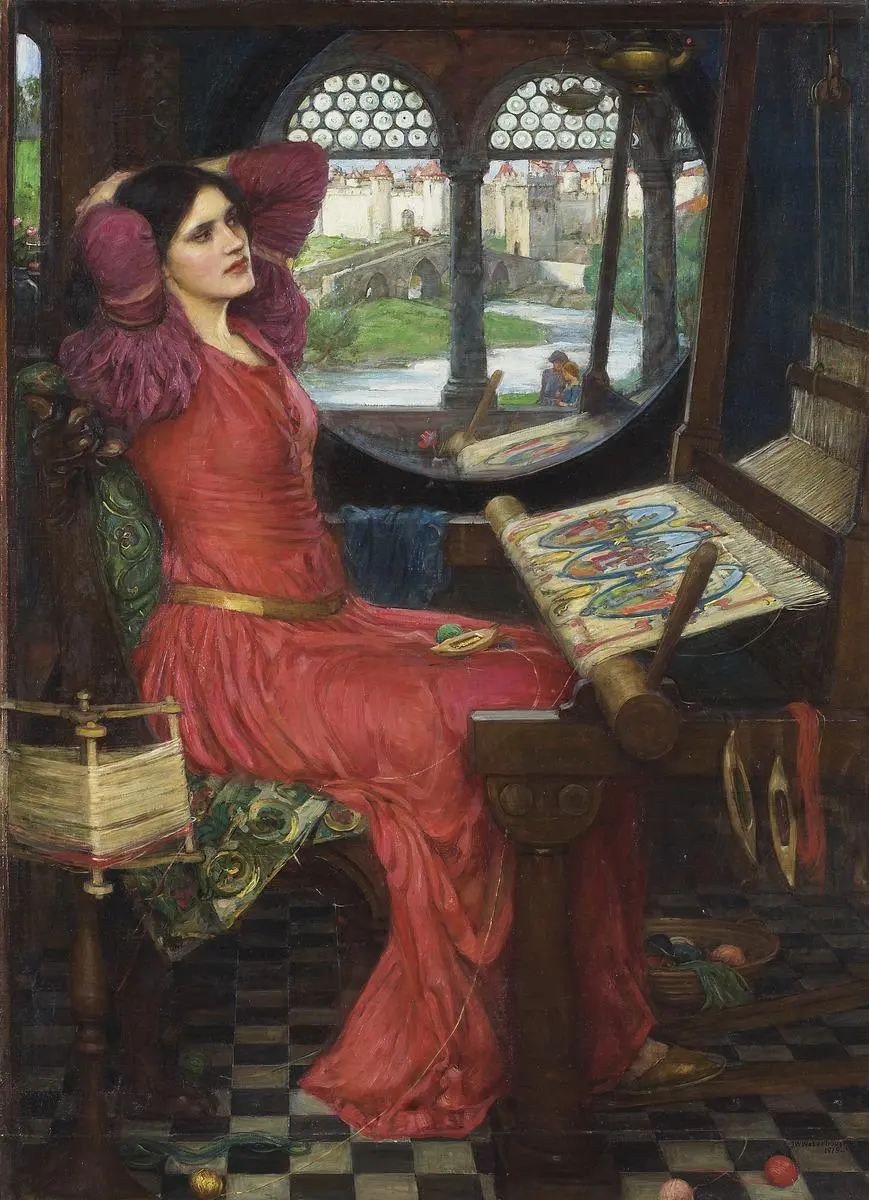
Pre-Raphaelite paintings are immediately recognizable due to their distinct visual language. Artists in this movement prioritized clarity and luminosity, often painting on a wet white ground to ensure that their colors remained vibrant and jewel-like. They avoided the dark, muddy shadows common in academic art, choosing instead to flood their canvases with bright, natural light. This technical approach required immense patience and precision, as the artists often spent months on a single painting to capture every minute detail.
The movement is defined by several core aesthetic principles that guide the viewer’s eye:
- Intense, saturated color palettes that mimic the brilliance of stained glass or illuminated manuscripts.
- A focus on "truth to nature," where every leaf, petal, and fabric texture is rendered with photographic accuracy.
- Complex, often crowded compositions that emphasize narrative and symbolism over traditional perspective.
- The use of literary and historical themes, moving away from contemporary genre scenes toward idealized, romanticized visions of the past.
- A preference for elongated, ethereal figures that depart from the muscular, idealized forms of the classical tradition.
How to identify a Pre-Raphaelite painting
If you are visiting a gallery or studying art history, identifying a work from this movement involves looking for specific thematic and technical markers. First, examine the subject matter; these artists frequently depicted tragic heroines, scenes from Shakespeare, or moments from the Bible. The figures are often portrayed with a melancholic or intense expression, reflecting the emotional depth favored by the Brotherhood. You will rarely find a Pre-Raphaelite painting that lacks a clear, often symbolic, narrative thread.
When analyzing the technical execution, look for these specific indicators:
- Examine the background foliage for microscopic detail; the artists often painted plants and flowers from life to ensure botanical accuracy.
- Check for the absence of deep, black shadows, which the movement considered a sign of artistic laziness.
- Look for the "PRB" monogram, which is often hidden within the painting’s intricate details.
- Observe the skin tones of the figures, which are typically painted with a pale, luminous quality that contrasts sharply with the rich, dark backgrounds.
- Identify the presence of "flat" perspective, as these artists intentionally ignored the atmospheric depth that was standard in Renaissance art.
Why did the movement change over time?
The original Brotherhood was short-lived, effectively dissolving by 1853 as the members moved in different directions. John Everett Millais began to embrace a more commercially successful style, eventually becoming the president of the Royal Academy, which was the very institution the group had originally set out to challenge. Meanwhile, Dante Gabriel Rossetti moved toward a more mystical and decorative style, focusing on idealized female beauty and sensual, dreamlike imagery. This second phase of the movement, often called the "Late" or "Second-Generation" Pre-Raphaelitism, moved away from the strict naturalism of the early years.
Despite the dissolution of the formal group, the influence of the Pre-Raphaelites continued to ripple through the late 19th century. Their focus on decorative arts, craftsmanship, and the integration of beauty into everyday life laid the groundwork for the Arts and Crafts movement led by William Morris. By shifting the focus of art from mere representation to the expression of internal states and poetic atmosphere, they fundamentally altered the trajectory of British art. Their legacy remains one of the most significant bridges between the traditional art of the past and the modern movements that would follow.
Common mistakes when studying the Pre-Raphaelites
A frequent error is assuming that all Pre-Raphaelite art looks identical, failing to distinguish between the early, rigorous naturalism of Hunt and the later, highly stylized romanticism of Burne-Jones. Another common mistake is ignoring the role of the women associated with the movement, such as Elizabeth Siddal, Jane Morris, and Christina Rossetti. These women were not merely passive muses; they were active participants, poets, and artists who shaped the movement’s intellectual and visual identity. To truly understand the Brotherhood, one must look beyond the male painters and recognize the collaborative nature of their social and creative circles.
When researching or viewing their work, avoid these pitfalls:
- Do not assume the movement was an organized, long-term institution; it was a loose, evolving association of individuals.
- Avoid conflating the Pre-Raphaelites with the much later Surrealists, despite their shared interest in dreamlike and symbolic imagery.
- Do not overlook the political and social critiques often embedded in their work, such as the commentary on labor and industrialization found in paintings like "Work" by Ford Madox Brown.
- Be careful not to dismiss their work as purely decorative, as the movement was deeply rooted in the philosophical and religious debates of the Victorian era.
Key facts
- The Pre-Raphaelite Brotherhood (PRB) was founded in London in 1848 by seven young artists, including William Holman Hunt, John Everett Millais, and Dante Gabriel Rossetti.
- The group rejected the rigid, formulaic style taught at the Royal Academy, which they believed was overly influenced by the Renaissance artist Raphael.
- They advocated for a return to the intense colors, complex compositions, and meticulous detail found in Italian art from before the time of Raphael.
- Members frequently painted subjects from literature, mythology, and the Bible, often using real people as models to achieve a sense of naturalism.
- To identify their collaborative works, members signed their paintings with the initials "PRB" alongside their own signatures.
- When studying their work, look for bright, jewel-toned pigments and sharp focus on foreground elements, which were revolutionary departures from the dark, muted tones common at the time.
The bottom line
The Pre-Raphaelite Brotherhood was a transformative 19th-century artistic movement that challenged the status quo by favoring vibrant colors, intricate detail, and emotional honesty. By looking backward to medieval aesthetics, they revolutionized British art and paved the way for modern design. Their legacy remains visible today in the enduring popularity of their evocative, narrative-driven paintings and their profound influence on the decorative arts and modern visual culture.
People also ask
Why did the Pre-Raphaelites choose that specific name?
They chose the name to signify their rejection of the artistic conventions established by the High Renaissance painter Raphael. They believed that art had become stagnant and artificial after his influence took hold, and they sought to emulate the sincerity and detail of medieval and early Renaissance artists.
Did the group remain together for a long time?
The original Brotherhood was short-lived, effectively dissolving as a formal group by 1853. However, the movement's influence persisted for decades, evolving into a broader aesthetic style that impacted later artists and writers.
What are some famous examples of Pre-Raphaelite paintings?
Notable works include John Everett Millais’s "Ophelia," which features a meticulously detailed natural landscape, and William Holman Hunt’s "The Awakening Conscience." These paintings are celebrated for their vibrant colors and deep symbolic meaning.
How did the public react to their art?
The group initially faced harsh criticism from the art establishment, including Charles Dickens, who found their realistic depictions of religious figures unsettling. Over time, however, their commitment to technical precision and emotional depth earned them significant acclaim and popularity.
Who was the most important woman associated with the movement?
Elizabeth Siddal is perhaps the most famous figure, serving as a primary muse and model for many members, including Rossetti. She was also a talented poet and artist in her own right, though her contributions were often overshadowed by her male peers.
Is Pre-Raphaelite art only about painting?
No, the movement significantly influenced decorative arts, furniture design, and literature. Figures like William Morris expanded these ideals into the Arts and Crafts movement, emphasizing high-quality craftsmanship and the beauty of natural forms in everyday objects.
This answer was created with the help of AI research tools and reference sources. Spotted an error? Let us know — we correct mistakes quickly. See our editorial policy.