Why is The Lady of Shalott so famous?
Short answer
"The Lady of Shalott" is famous for its haunting blend of Arthurian legend, Victorian anxiety, and exquisite lyrical imagery. Alfred, Lord Tennyson’s 1832 and 1842 versions created an iconic archetype of the isolated artist. Its enduring cultural resonance stems from its evocative exploration of the tension between creative detachment and human experience.
On this page
Why is The Lady of Shalott so famous?
The poem’s fame rests primarily on its status as a masterpiece of Victorian Romanticism. It tells the tragic story of a woman imprisoned in a tower on the island of Shalott, forbidden from looking directly at the world. She must view reality through a mirror, weaving what she sees into a tapestry. When she finally glimpses Sir Lancelot riding toward Camelot, she turns to look out the window, breaking the curse and leading to her death.
This narrative resonated deeply with 19th-century readers who were grappling with the rapid industrialization of society. The Lady serves as a powerful metaphor for the artist, who often feels isolated from the world they observe. By weaving her life into art, she represents the struggle to balance aesthetic beauty with the messy, dangerous reality of lived experience. Her eventual sacrifice remains one of the most poignant moments in English literature.
How did the Pre-Raphaelite Brotherhood influence its popularity?
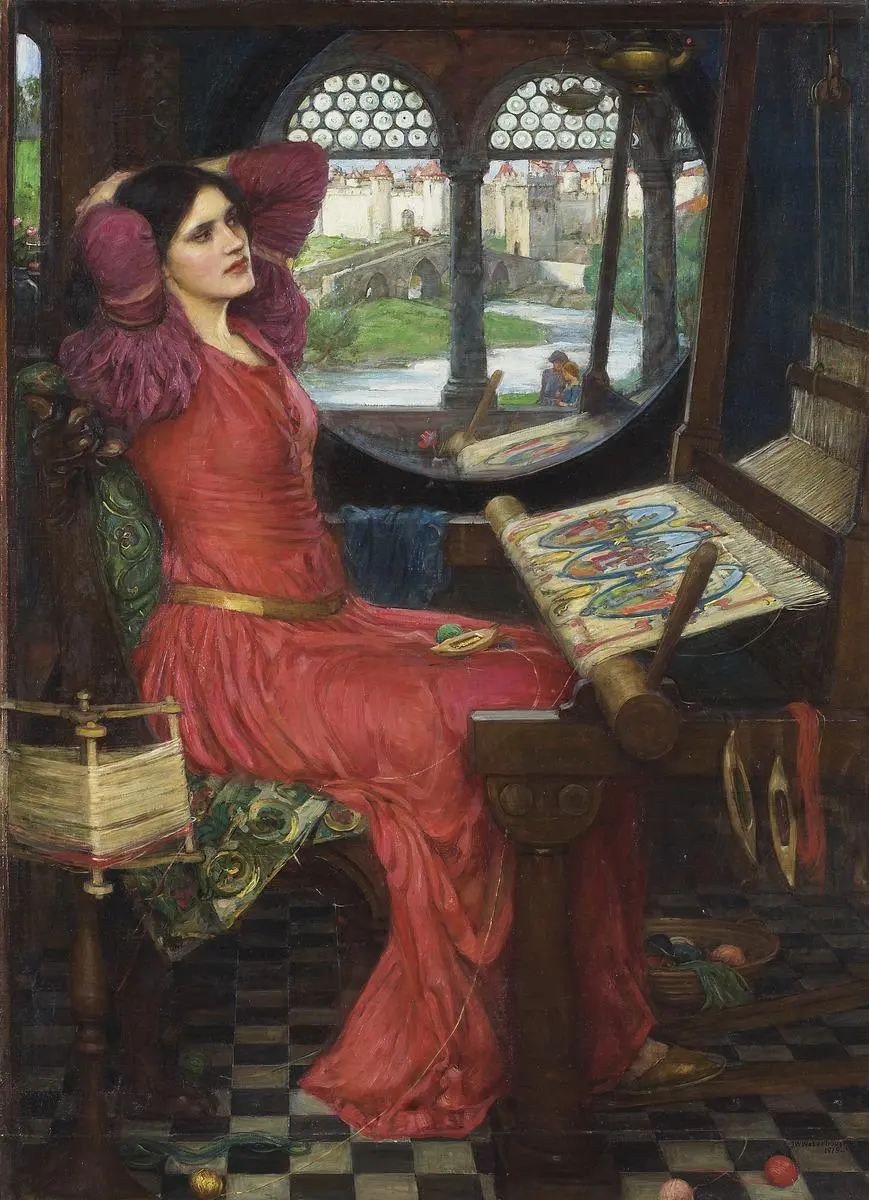
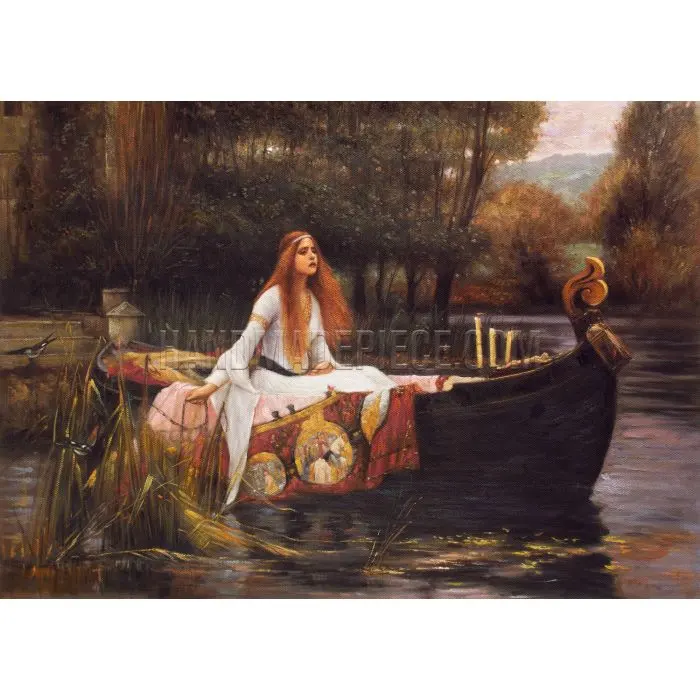
The poem became a visual obsession for the Pre-Raphaelite Brotherhood, a group of artists who sought to return to the detail and intensity of medieval art. Figures like John William Waterhouse and William Holman Hunt transformed the poem’s words into iconic paintings. Waterhouse’s 1888 depiction of the Lady drifting down the river in a boat is perhaps one of the most recognizable images in Western art history.
These visual interpretations cemented the poem’s place in the public imagination. By translating Tennyson’s vivid descriptions into oil on canvas, these artists ensured that the Lady of Shalott became a permanent fixture of popular culture. The poem’s fame is inextricably linked to these paintings, which continue to be reproduced on everything from book covers to home decor. The visual legacy includes:
- Waterhouse’s 1888, 1894, and 1915 iterations of the theme.
- Elizabeth Siddal’s sketches, which added a feminine perspective to the tragedy.
- The influence of the poem on later fashion and aesthetic movements.
What are the key themes in the poem?
The poem explores themes of isolation, artistic duty, and the dangers of desire. The Lady exists in a state of suspended animation, her life defined by the reflection in her mirror. This mirrors the Victorian concept of the "separate spheres," where women were often expected to remain within the domestic, private realm. When she chooses to engage with the outside world, she is destroyed, suggesting that the pursuit of reality comes at a fatal cost.
Furthermore, the poem serves as a meditation on the nature of creativity. The Lady is a weaver, a traditional feminine craft, but her work is also a form of recording history. She is the ultimate observer, yet she is denied participation in the events she chronicles. This tension between the observer and the participant is a universal human struggle. Consider these core thematic elements:
- The mirror as a mediator between art and reality.
- The curse as a metaphor for the social constraints placed on women.
- The inevitability of fate once the boundary between art and life is crossed.
Why do readers still study it today?
Modern readers continue to find relevance in the poem’s exploration of digital and psychological isolation. In an age where many people view the world through screens—much like the Lady views the world through her mirror—the poem feels remarkably contemporary. It invites questions about whether we are truly living our lives or merely watching them pass by from a safe, detached distance.
The poem’s musicality also contributes to its longevity. Tennyson was a master of sound, using rhythmic cadences and internal rhyme to create a hypnotic, dreamlike atmosphere. Teachers often use the poem to demonstrate how structure and meter can enhance the emotional weight of a narrative. Its accessibility, combined with its layers of symbolic depth, makes it a staple in classrooms worldwide. It remains a foundational text for understanding how poetry can bridge the gap between myth and modern psychological reality.
Common mistakes when analyzing the poem
A frequent error is interpreting the Lady’s death purely as a punishment for her vanity or curiosity. While the poem contains elements of a moral fable, it is more accurately read as a tragedy of necessity. The Lady does not break the curse because she is wicked; she breaks it because she is human and can no longer sustain the artificiality of her existence. Ignoring the nuance of her choice leads to a shallow reading of her character.
Another common mistake is overlooking the role of Sir Lancelot. Readers sometimes focus exclusively on the Lady, but Lancelot’s presence is the catalyst for the entire tragedy. He represents the world of action, heroism, and vitality that she is excluded from. To understand the poem fully, one must consider:
- The contrast between the static, grey tower and the bright, active world of Camelot.
- The significance of the Lady’s song as she drifts toward her end.
- The final, ironic reaction of the knights and ladies who see her body.
By avoiding these analytical pitfalls, readers can appreciate the full complexity of Tennyson’s vision and the enduring power of his most famous, melancholic heroine.
Key facts
- Alfred, Lord Tennyson published the first version of "The Lady of Shalott" in 1832 and a revised, more famous version in 1842.
- The poem is based on the Arthurian legend of Elaine of Astolat, who was cursed to watch the world only through a mirror.
- John William Waterhouse’s 1888 painting of the Lady drifting toward Camelot is one of the most recognizable images in British art.
- The poem features a repetitive, musical structure with a rhyme scheme that emphasizes the Lady’s isolation and eventual tragedy.
- To analyze the poem effectively, focus on the contrast between the vibrant, "real" world outside and the static, reflected world inside the tower.
- A common mistake is interpreting the poem solely as a romantic tragedy; scholars also view it as an allegory for the conflicted role of the artist in society.
The bottom line
"The Lady of Shalott" remains famous because it masterfully blends haunting Arthurian mythology with profound psychological themes. Its enduring appeal lies in the evocative imagery of the isolated artist and the tragic consequences of seeking connection. By combining rhythmic beauty with complex symbolism, Tennyson created a timeless work that continues to inspire painters, musicians, and writers to explore the delicate balance between artistic observation and living.
People also ask
What is the specific curse placed upon the Lady of Shalott?
The curse dictates that the Lady must remain in her tower weaving a tapestry, never looking directly at Camelot. If she glances out the window toward the town, she will suffer a mysterious and fatal doom.
Why does the Lady finally decide to look out the window?
She sees Sir Lancelot riding by in his shining armor and singing. Captivated by his beauty and the lively world he represents, she turns away from her mirror to look at him directly, triggering the curse.
What happens to the Lady after she breaks the curse?
The mirror cracks from side to side, and the web she was weaving flies out into the room. She realizes her end is near, finds a boat, writes her name on the prow, and dies while drifting down the river to Camelot.
How does the poem reflect the Victorian era?
It mirrors Victorian anxieties regarding gender roles, the dangers of isolation, and the tension between public duty and private desire. The poem’s focus on medieval themes was also a hallmark of the Romantic and Pre-Raphaelite aesthetic movements.
What is the significance of the tapestry in the poem?
The tapestry serves as a medium through which the Lady experiences life without living it. It represents the artistic process, where the creator captures reality but remains detached from the actual human experience.
Are there other versions of this story in literature?
Yes, the story originates from the 13th-century Italian novella Donna di Scalotta and is closely linked to Sir Thomas Malory’s Le Morte d'Arthur. Tennyson adapted these older, darker sources into his own lyrical, symbolic narrative.
This answer was created with the help of AI research tools and reference sources. Spotted an error? Let us know — we correct mistakes quickly. See our editorial policy.