What is Constantin Brâncuși known for?
Short answer
Constantin Brâncuși is widely considered the pioneer of modern sculpture. He is best known for stripping away realistic detail to reveal the essential, underlying form of his subjects. By emphasizing simplicity, smooth surfaces, and the intrinsic qualities of materials like bronze, marble, and wood, he revolutionized 20th-century artistic expression.
On this page
What defined Brâncuși’s artistic style
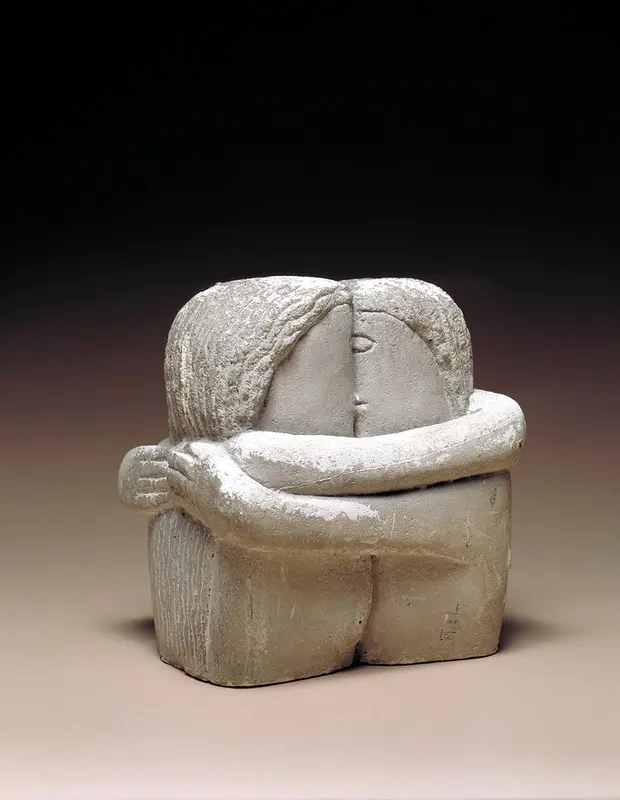
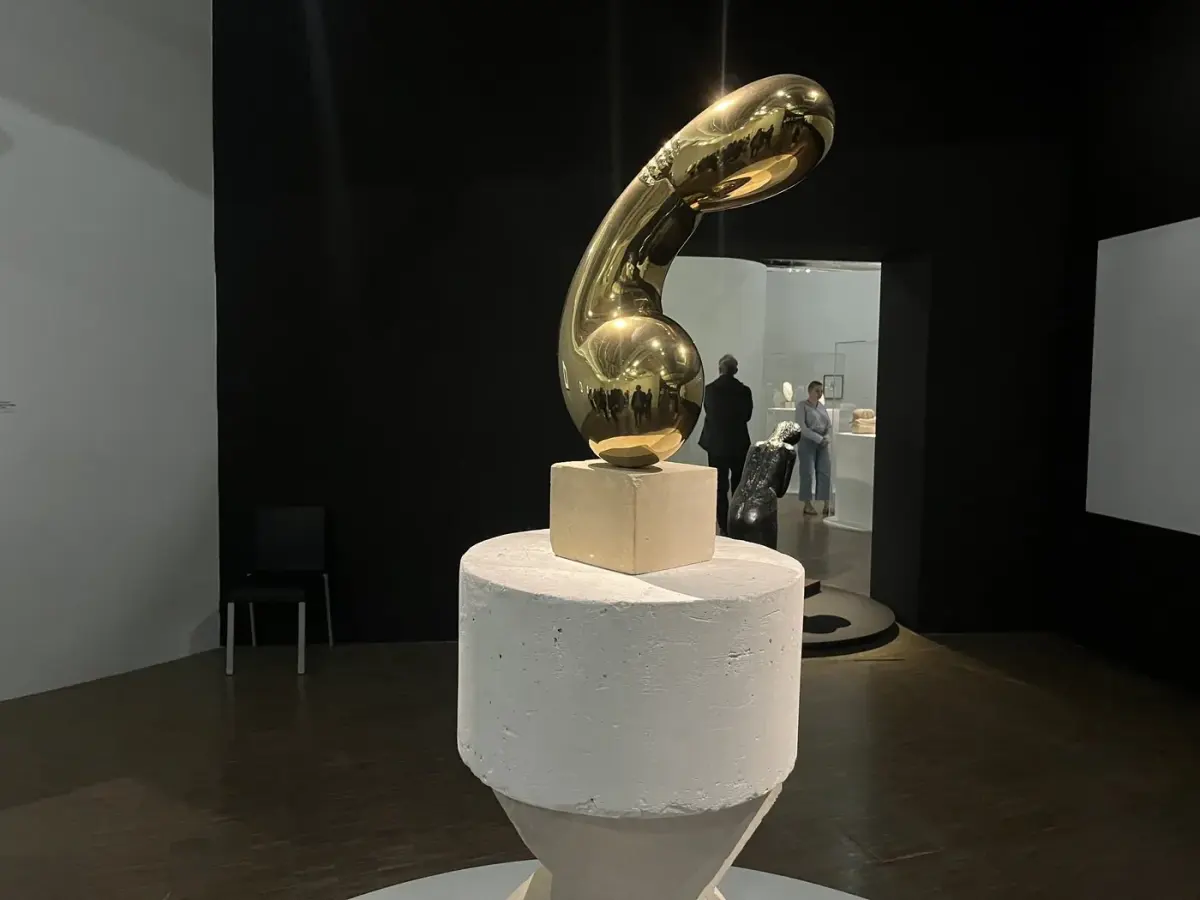
Brâncuși moved away from the ornate, descriptive modeling favored by his contemporaries, most notably Auguste Rodin. Instead of focusing on surface anatomy, he sought to capture the "essence" of his subjects. His work is characterized by extreme simplification, graceful curves, and a profound respect for the medium itself. He often polished his bronze sculptures to a mirror-like finish, which blurred the boundaries between the object and its environment.
This approach transformed how viewers interacted with art. By reducing forms to their most basic geometric components—such as eggs, cylinders, and teardrops—he encouraged the audience to look past the literal representation. His philosophy was rooted in the belief that "what is real is not the external form, but the essence of things." This intellectual shift paved the way for the minimalist and abstract movements that would dominate the art world in the decades following his death.
Why his work is considered revolutionary
The radical nature of Brâncuși’s work often sparked intense debate, most famously during the 1926 "Bird in Space" customs dispute. When he attempted to import the sculpture into the United States, customs officials refused to classify it as art, instead taxing it as a kitchen utensil or industrial component. This led to a landmark legal battle that eventually forced the government to acknowledge that non-representational objects could indeed be considered fine art.
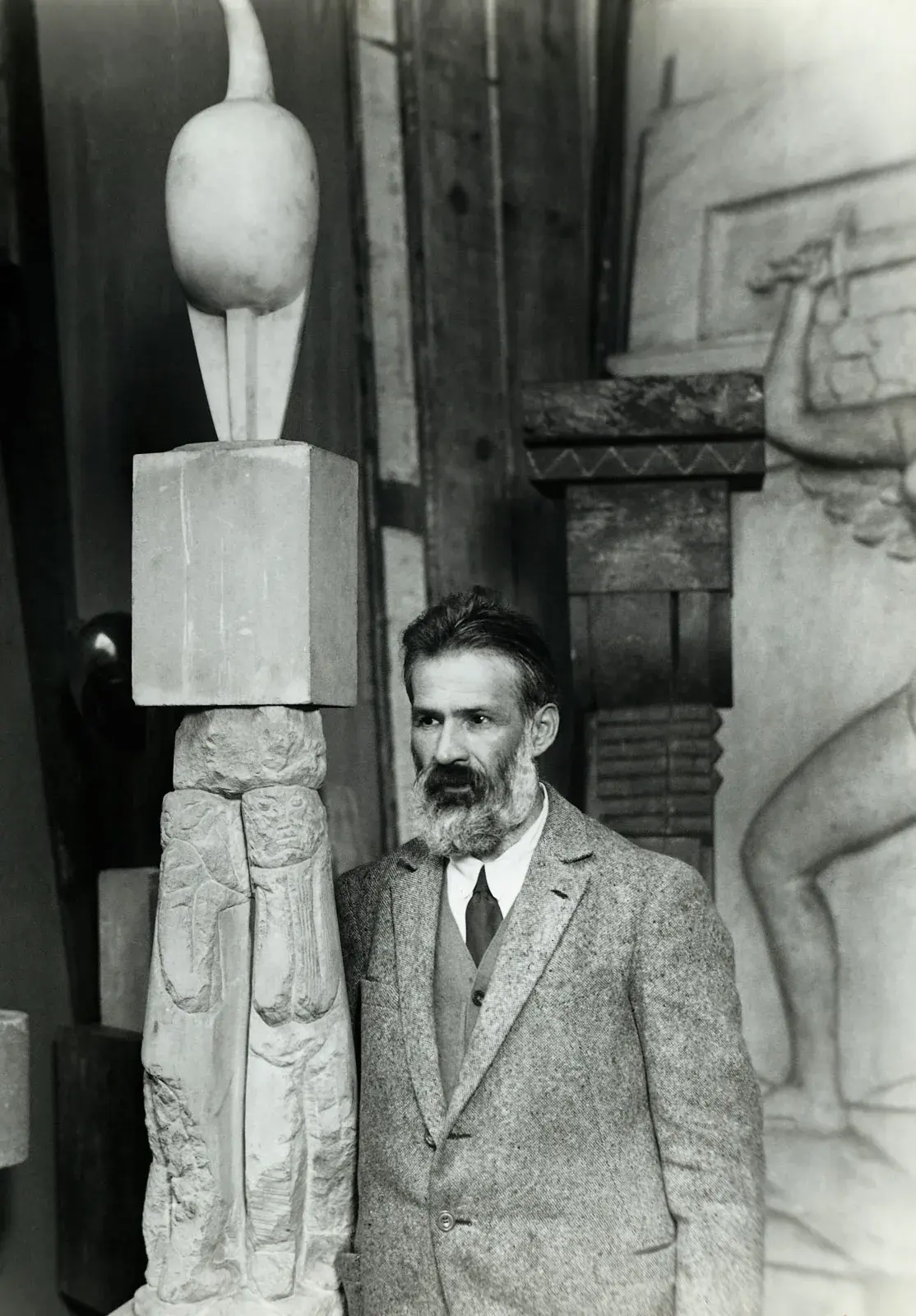
His innovations were not limited to shape but extended to the relationship between the sculpture and its base. Brâncuși treated the pedestal as an integral part of the artwork rather than a mere support. He often carved these bases himself, creating complex, stacked geometric structures that elevated the main piece. This holistic approach changed the standard for museum displays and gallery installations globally. Key aspects of his revolutionary influence include:
- The rejection of descriptive detail in favor of pure, abstract form.
- The elevation of the sculpture’s base into a formal artistic element.
- The emphasis on the inherent texture and grain of wood, stone, and metal.
- The pioneering use of non-representational titles to guide, rather than dictate, interpretation.
How to appreciate Brâncuși’s sculptures
To truly appreciate his work, one must observe how the sculptures interact with light and space. Because Brâncuși polished his bronze pieces to such a high degree, the surface acts like a curved mirror, reflecting the room and the viewer. As you move around a sculpture like "Bird in Space," the reflections shift and change, making the object appear to vibrate or ascend. This kinetic quality is a deliberate attempt to represent movement and flight through static materials.
When viewing his stone carvings, pay close attention to the way he treated the material's surface. He often left parts of the stone rough or textured to contrast with the highly polished areas. This interplay highlights the raw, geological history of the medium. To get the most out of viewing his work, follow these steps:
- Walk slowly around the sculpture to see how the profile changes from different angles.
- Note how the sculpture occupies the space and whether it feels heavy or weightless.
- Observe the base to see how it connects the artwork to the floor or pedestal.
- Consider the title of the piece and how it influences your perception of the abstract shape.
Common mistakes when analyzing his art
A frequent error is attempting to identify a specific, literal subject in every piece. Because his work is highly abstract, viewers often struggle if they cannot immediately recognize a bird, a fish, or a human head. It is important to remember that Brâncuși was not trying to replicate reality, but rather to distill it into a symbolic form. Trying to force a literal interpretation often blinds the viewer to the emotional and spiritual weight of the work.
Another common mistake is ignoring the importance of the material. Whether he used marble, limestone, or bronze, Brâncuși chose his medium to complement the specific energy of the form. For example, his wood carvings often utilize the natural cracks and knots of the timber to add character and history to the sculpture. By overlooking these material choices, viewers miss the tactile dialogue between the artist and his tools. Always consider:
- The way the material’s grain or luster contributes to the sculpture’s meaning.
- Why the artist chose a specific material for a specific shape.
- The historical context of the materials, such as his use of traditional Romanian wood-carving techniques.
Where to see his masterpieces today
While his sculptures are scattered across major institutions, the most immersive way to experience his legacy is at the Brâncuși Ensemble in Târgu Jiu, Romania. This site includes his monumental "Endless Column," a towering, rhythmic sculpture that exemplifies his interest in repetition and infinity. It is a rare example of his work designed specifically for an outdoor public space, demonstrating his ability to scale his intimate concepts into architectural landmarks.
Major museums also house significant collections that allow for a comprehensive study of his evolution. The Centre Pompidou in Paris maintains a reconstruction of his studio, which provides a unique glimpse into his creative process and the way he arranged his environment to inspire his work. Other essential locations include:
- The Museum of Modern Art (MoMA) in New York City.
- The Philadelphia Museum of Art, which holds a vast collection of his works.
- The Tate Modern in London, which features key examples of his abstract series.
Visiting these sites provides a clear timeline of how his style progressed from early representational influences to the pure, refined abstractions that define his enduring legacy in art history.
Key facts
- Constantin Brâncuși was a Romanian sculptor who became a central figure of the modern art movement in Paris during the early 20th century.
- He is best known for his "essentialist" style, which prioritized the simplification of forms to capture the "essence" of a subject rather than its realistic appearance.
- His most famous series, Bird in Space, consists of 27 variations of elongated, upward-stretching forms in bronze, marble, and plaster.
- Brâncuși often carved his sculptures directly into materials like stone and wood, rejecting the traditional academic practice of creating clay models to be cast later.
- He frequently integrated his sculptures into their environment by designing unique, stacked pedestals that became an inseparable part of the artwork itself.
- To appreciate his work, look for the smooth, polished surfaces and fluid lines that invite the viewer to focus on the interplay of light and shadow.
The bottom line
Constantin Brâncuși revolutionized modern sculpture by stripping away unnecessary detail to reveal the fundamental essence of his subjects. By emphasizing the intrinsic qualities of materials like stone and bronze, he created timeless, elegant forms that bridged the gap between representation and abstraction. His legacy remains defined by his dedication to craftsmanship, his innovative approach to spatial display, and his profound influence on the evolution of 20th-century art.
People also ask
Why did Brâncuși simplify his sculptures so much?
He believed that external appearances were superficial and that art should reveal the hidden truth or spirit of an object. By stripping away decorative details, he aimed to create universal forms that transcended specific time periods or cultures.
What is the significance of the "Endless Column"?
This work is a monumental sculpture consisting of a repeating, rhythmic geometric module that suggests infinite upward movement. It represents his interest in architectural scale and the connection between the earth and the sky.
Did Brâncuși use assistants to carve his stone works?
Unlike many of his contemporaries, he insisted on "direct carving" and performed almost all the physical labor himself. He believed the artist must have a tactile, intimate relationship with the material to truly understand its potential.
Where can I see the largest collection of his work?
The Centre Pompidou in Paris houses a reconstruction of his actual studio, which contains a vast array of his sculptures, tools, and furniture. This space provides the best insight into his working process and his philosophy of display.
What was the "Bird in Space" legal controversy?
In 1926, U.S. Customs officials refused to classify his abstract Bird in Space as art, instead taxing it as industrial metalware. A landmark court case eventually ruled in his favor, officially establishing that abstract works could be recognized as fine art.
How should a beginner approach viewing his sculptures?
Avoid looking for a literal representation of a person or animal. Instead, walk around the piece to observe how the polished surfaces reflect the surrounding light and how the silhouette changes from different angles.
This answer was created with the help of AI research tools and reference sources. Spotted an error? Let us know — we correct mistakes quickly. See our editorial policy.