What is anamorphic art?
Short answer
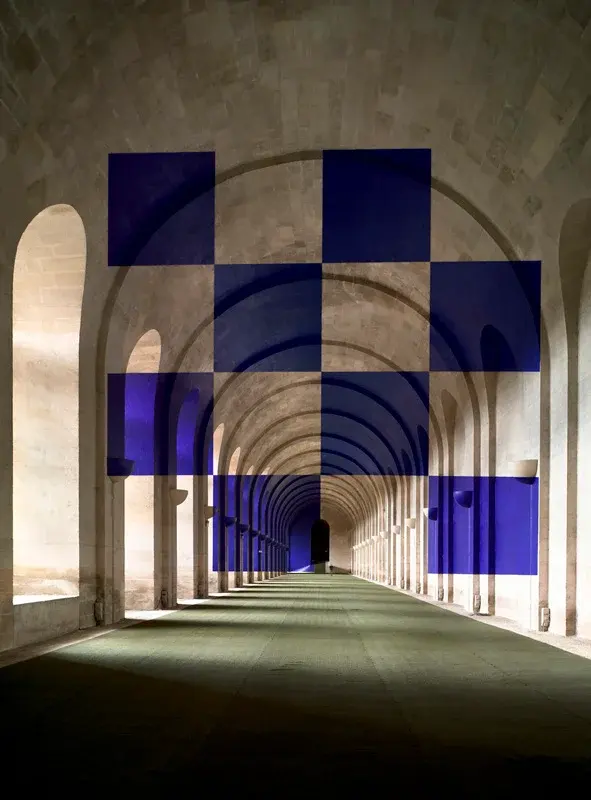
Anamorphic art is a distorted projection or perspective technique that requires the viewer to occupy a specific vantage point or use a special device to reconstruct the intended image. By manipulating geometry, artists create illusions where a seemingly abstract or stretched shape appears perfectly proportioned when viewed from a precise angle.
On this page
What is anamorphic art and how does it work?
Anamorphic art relies on the principles of projective geometry to manipulate how an image is perceived by the human eye. The technique involves stretching or compressing a subject across a surface, such as a floor, wall, or cylindrical mirror, so that it appears unintelligible from most angles. Only when the observer stands at a predetermined "sweet spot" does the brain interpret the distorted lines as a coherent, realistic representation. This process forces the viewer to engage physically with the artwork, turning the act of looking into an active, spatial experience.
Historically, this technique gained prominence during the Renaissance as artists experimented with perspective. Famous examples include Hans Holbein the Younger’s 1533 painting The Ambassadors, which features a famously distorted skull at the bottom of the canvas. To see the skull clearly, one must view the painting from a sharp side angle. Today, the practice has evolved into large-scale street art, where artists use chalk or paint to create 3D illusions on city pavements that appear to drop into deep chasms or rise out of the ground.
How to create simple anamorphic art
Creating your own anamorphic projection is a matter of mathematical planning rather than freehand drawing. The most common method involves using a grid system to map out the distortion before applying the final image. By projecting a light source onto a surface at an angle, you can trace the resulting shadow or light pattern, which provides the necessary geometric skew. This approach ensures that the proportions remain accurate regardless of the surface curvature or the angle of the viewer.
Follow these steps to create a basic anamorphic drawing:
- Select your target surface and decide on the exact vantage point where the image should appear correct.
- Place a light source or a projector at that specific vantage point to cast a grid or image onto your target surface.
- Trace the distorted lines created by the projection onto the surface using a pencil or masking tape.
- Fill in the traced shapes with color or texture, maintaining the distorted perspective established by your initial projection.
- Step back to your designated vantage point to verify the alignment and adjust any lines that appear misaligned from that specific angle.
Best tools for anamorphic art projects
The tools required for anamorphic art range from simple analog instruments to sophisticated digital software. For beginners, a basic projector is the most effective tool, as it removes the need for complex manual calculations. By positioning the projector at the desired viewing angle, you can easily map out the necessary distortions on any surface. If working outdoors, a long piece of string or a laser level is essential for maintaining a consistent line of sight across uneven terrain, such as sidewalks or brick walls.
For those interested in more technical applications, digital modeling software allows artists to simulate how an image will look from various perspectives before committing to a physical surface. Many artists use the following tools to ensure precision:
- Laser levels for establishing a consistent horizon line across 3D objects.
- Digital projectors to map complex, high-resolution images onto irregular surfaces.
- Grid-transfer paper to manually map distortions when digital tools are unavailable.
- High-contrast markers or chalk to ensure the artwork remains visible from a distance.
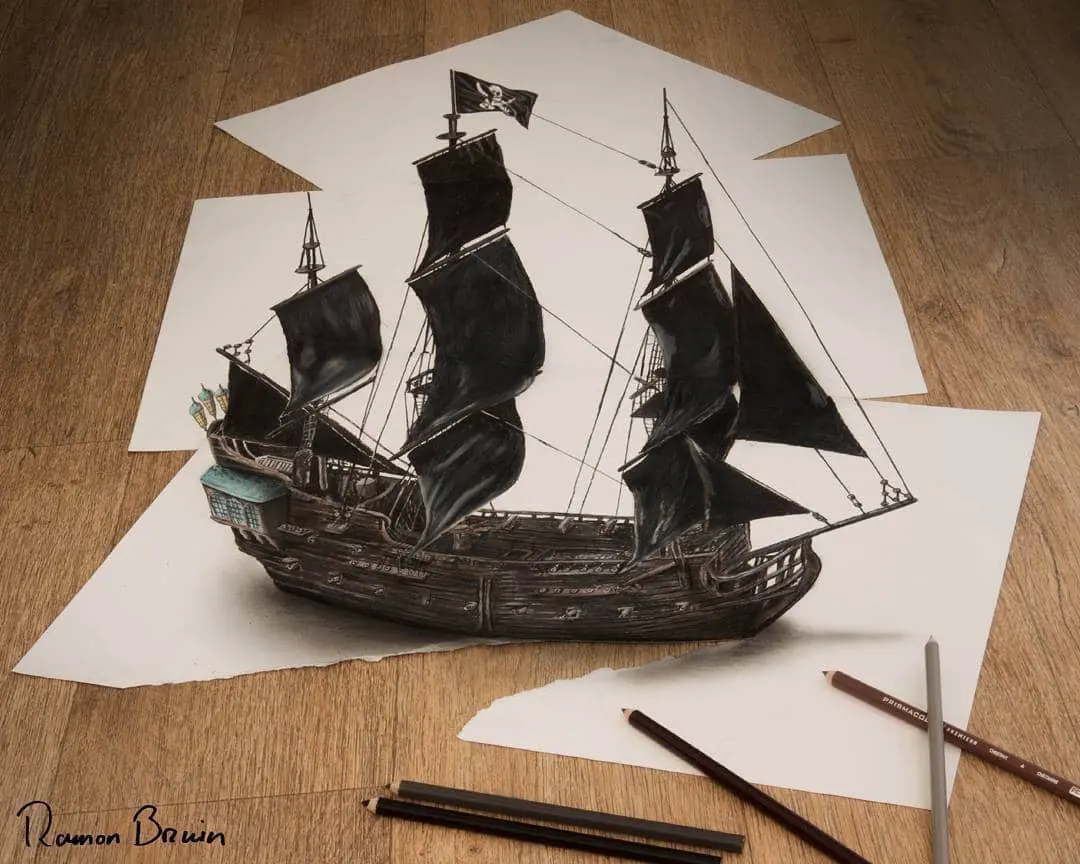
Why anamorphic illusions happen
The human brain is hardwired to interpret visual information based on depth cues and linear perspective. When we look at an anamorphic image, our brain initially struggles to reconcile the stretched, distorted shapes with our understanding of the physical environment. However, when we reach the correct vantage point, the brain processes the light hitting our retinas as a standard, undistorted scene. This phenomenon, known as perspective correction, occurs because the brain prioritizes the "correct" image once the geometry aligns with our expected field of vision.
This cognitive process is why anamorphic art feels so startling; it essentially "hacks" our visual system. By providing the eye with enough information to reconstruct a 3D form, the artist tricks the brain into ignoring the physical reality of the flat surface. The brain essentially discards the information about the surface's actual shape in favor of the coherent image suggested by the distorted lines. This creates a powerful sense of wonder, as the viewer feels as though they are interacting with a physical object that is not actually there.
Common mistakes when making anamorphic art
One of the most frequent errors in anamorphic art is failing to account for the viewer's height. If the artist calculates the perspective for a standing adult but the viewer is a child, the illusion will appear flattened or stretched incorrectly. Another common mistake is ignoring the texture of the surface, which can break the illusion if the paint or chalk does not adhere properly or if the surface has too many cracks. Always test the vantage point with multiple people of varying heights before finalizing a large-scale piece.
To ensure your project succeeds, avoid these common pitfalls:
- Neglecting to mark the exact "sweet spot" on the ground for the viewer to stand.
- Using surfaces with high-contrast patterns that clash with the anamorphic design.
- Forgetting to account for the width of the viewer's eyes, which can cause slight blurriness in the illusion.
- Failing to consider how changes in natural lighting throughout the day might alter the shadows and ruin the 3D effect.
- Rushing the initial mapping phase, which is the most critical step for ensuring the final image looks correct.
Key facts
- Anamorphic art is a distorted projection that appears in its true proportions only when viewed from a specific vantage point or reflected in a curved mirror.
- The technique relies on the principles of perspective, often requiring the artist to stretch an image across a surface like a sidewalk or a wall.
- Hans Holbein the Younger’s 1533 painting The Ambassadors features a famous anamorphic skull that is only recognizable when viewed from the side.
- To create a simple anamorphic drawing, use a grid system to stretch your reference image horizontally or vertically before sketching it onto your surface.
- Cylindrical anamorphic art uses a polished metal tube placed in the center of a distorted drawing to reveal the hidden, corrected image.
- A common mistake is failing to account for the viewer's eye level, which can result in the image looking permanently warped rather than realistic.
The bottom line
Anamorphic art is a fascinating intersection of geometry and creativity, transforming distorted shapes into coherent images through precise perspective. By mastering the relationship between the viewer’s eye and the canvas, artists can create illusions that seem to defy physical space. Whether applied to street murals or cylindrical reflections, this technique proves that what we perceive as reality is often dictated by our unique point of view.
People also ask
How does anamorphic chalk art work on sidewalks?
Artists use a technique called forced perspective to paint images that look three-dimensional from one specific angle. By calculating the angle of the viewer's eye, they elongate the drawing so it appears to rise out of or sink into the ground.
Can I create anamorphic art without special software?
Yes, you can use a manual grid method to distort your image. By drawing a grid on your paper and then stretching that grid onto a larger, angled surface, you can map the points of your image to achieve the correct anamorphic effect.
What is the difference between perspective and anamorphic art?
Perspective art creates the illusion of depth within a flat image to mimic three-dimensional space. Anamorphic art takes this further by requiring the viewer to move to a specific, often extreme, physical location to resolve the image's distortion.
Why do anamorphic images look strange when viewed from the wrong angle?
Because the image is mathematically calculated for a single focal point, any movement away from that spot breaks the illusion. The brain struggles to process the elongated shapes, causing them to appear as abstract or stretched forms rather than recognizable objects.
Is anamorphic art only used for paintings?
No, it is also used in architecture, cinema, and signage. For example, large letters painted on roads are often anamorphic so that drivers approaching at high speeds see them as perfectly proportioned, upright text.
What is the most common mistake beginners make with anamorphic art?
The most frequent error is neglecting to lock the viewer's perspective. If you do not define exactly where the viewer should stand, the illusion will fail because the image will appear distorted from every other possible angle in the room.
This answer was created with the help of AI research tools and reference sources. Spotted an error? Let us know — we correct mistakes quickly. See our editorial policy.