Why is The Ambassadors by Holbein so famous?
Short answer
Hans Holbein the Younger’s 1533 masterpiece, The Ambassadors, is famous for its technical virtuosity, complex symbolism, and the enigmatic anamorphic skull at its base. It serves as a profound meditation on mortality, political tension, and the Renaissance ideal of the "universal man," capturing the intellectual curiosity and religious anxieties of the sixteenth century.
On this page
Why is The Ambassadors so famous?
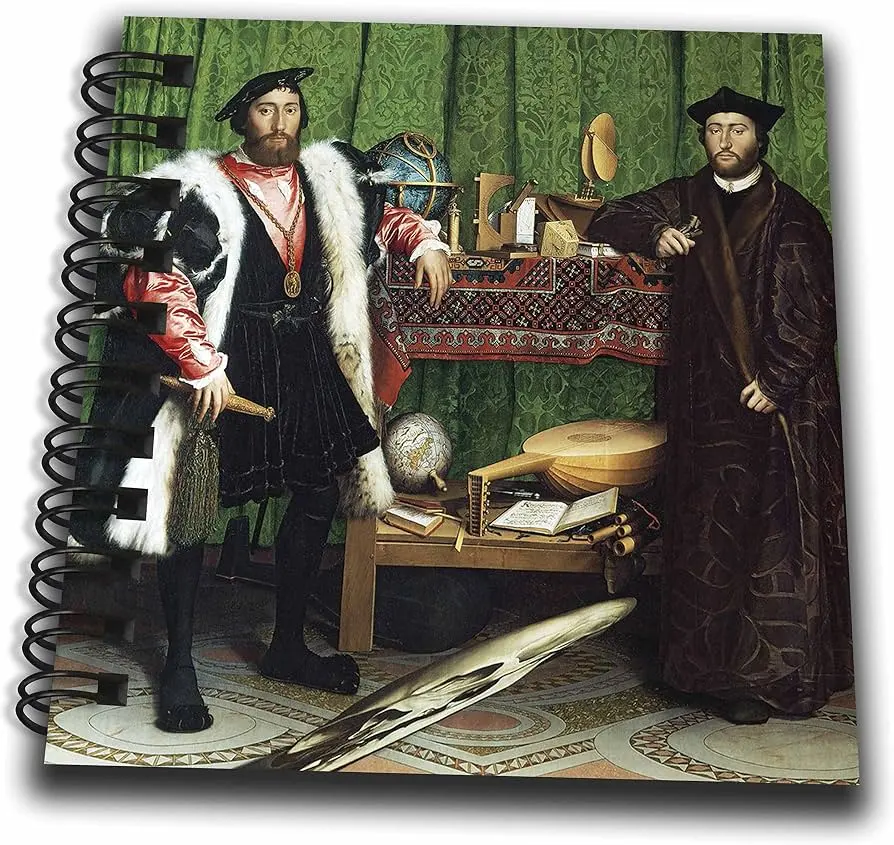
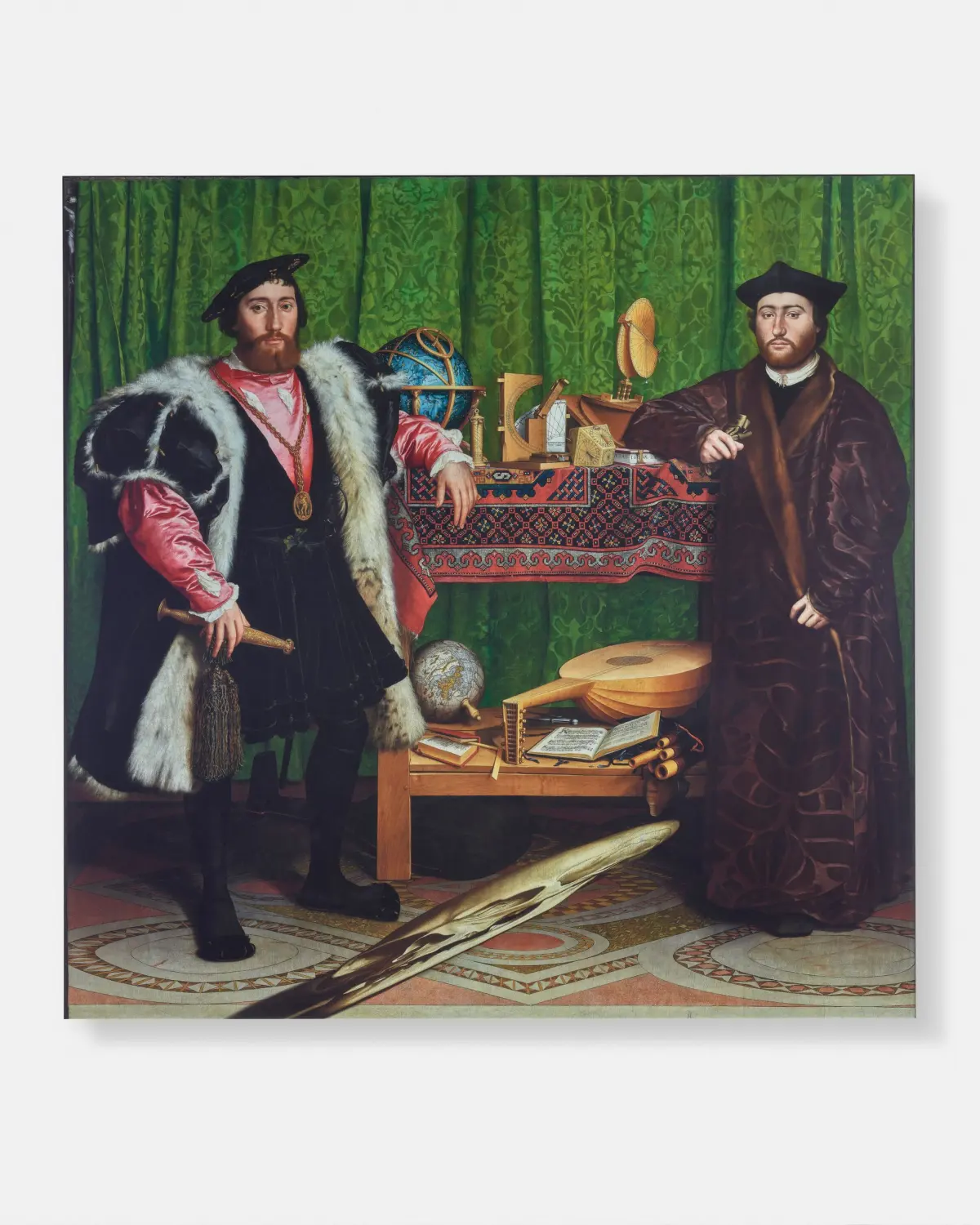
The painting is primarily celebrated for its extraordinary level of detail and the artist’s mastery of the oil medium. Commissioned in 1533, the work depicts Jean de Dinteville, a French ambassador to England, and his friend Georges de Selve, the Bishop of Lavaur. Holbein captured the textures of their luxurious garments, the sheen of the floor tiles, and the intricate craftsmanship of the scientific instruments with photographic precision. This technical brilliance established Holbein as one of the greatest portraitists of the Northern Renaissance.
Beyond its aesthetic appeal, the painting is a dense puzzle of iconography. The objects displayed on the two-tiered shelf represent the "quadrivium"—the four mathematical sciences of arithmetic, geometry, music, and astronomy. By including these items, Holbein highlights the intellectual breadth of his subjects, positioning them as figures of high culture and diplomacy. The work remains famous because it invites viewers to decode its hidden meanings, turning a simple portrait into a sophisticated intellectual exercise that rewards careful, repeated observation.
How to interpret the anamorphic skull
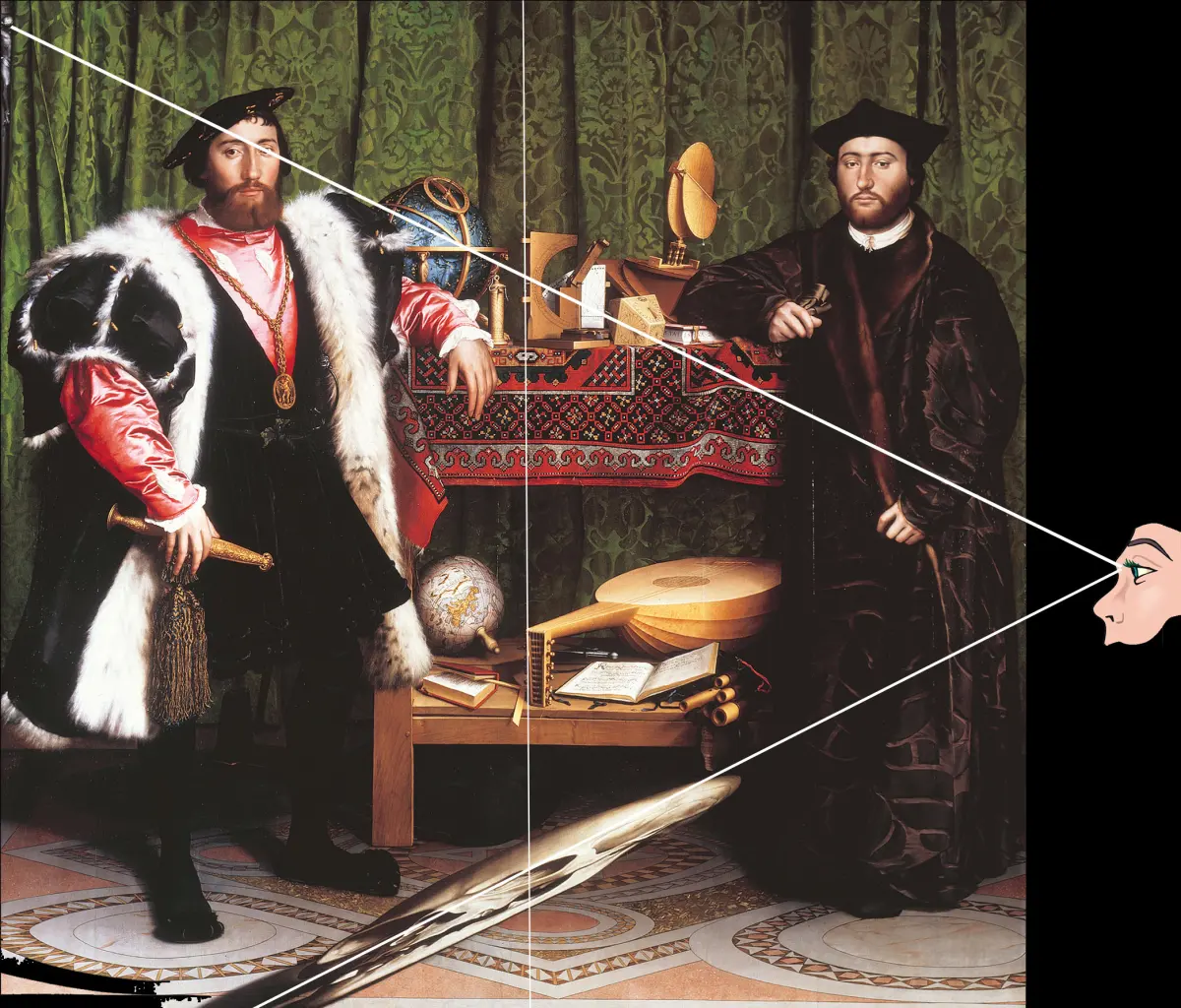
The most striking feature of the painting is the distorted, diagonal shape stretching across the foreground. When viewed from the front, it appears as an unidentifiable blur, but when the viewer stands to the far right of the canvas, the shape resolves into a human skull. This is a classic example of memento mori, a visual reminder of the inevitability of death. It serves as a sobering contrast to the worldly wealth and scientific knowledge displayed by the two ambassadors.
To properly view the anamorphic effect, follow these steps:
- Stand directly in front of the painting to appreciate the portraits and the still-life objects.
- Move slowly toward the right side of the frame, keeping your eyes fixed on the lower foreground.
- Tilt your head or adjust your angle until the distorted shape aligns into a recognizable skull.
- Note how the rest of the painting loses focus as the skull becomes clear, emphasizing the fleeting nature of life.
What do the objects in the painting represent?
The objects in the painting are not merely decorative; they are carefully selected symbols of the political and religious climate of the 1530s. The lute with a broken string, for example, is widely interpreted as a symbol of discord, likely referring to the religious upheavals of the Reformation. Similarly, the Lutheran hymn book placed on the shelf suggests a desire for reconciliation between the Catholic and Protestant factions that were tearing Europe apart at the time.
The items can be categorized into two distinct groups based on their symbolic function:
- Scientific instruments: Representing the mastery of the physical world through human reason and observation.
- Religious artifacts: Representing the spiritual realm and the looming reality of the afterlife.
- Political symbols: Including the globe and the map, which reflect the era’s expanding geographical knowledge and the territorial ambitions of powerful European monarchs.
Common mistakes when analyzing the painting
One common error is assuming the skull is a sign of occultism or dark magic. In the context of the sixteenth century, the skull was a standard, pious reminder of the transience of earthly life, meant to encourage the viewer to focus on salvation. Another mistake is ignoring the spatial relationship between the two men. By placing them on either side of the table, Holbein emphasizes their roles as mediators between the secular, intellectual world and the spiritual, eternal world.
Viewers also frequently overlook the small crucifix partially hidden behind the green curtain in the upper left corner. This detail is crucial because it provides the "answer" to the memento mori skull. While the skull represents the inevitability of death, the crucifix symbolizes the Christian promise of resurrection and victory over mortality. Failing to notice this detail leads to an incomplete understanding of the painting’s message, which is ultimately one of hope despite the surrounding political chaos and personal mortality.
Where to see the painting today
The Ambassadors is currently housed in the National Gallery in London, where it has been a centerpiece of the collection since its acquisition in 1891. Its presence in a major public institution has allowed millions of people to study its techniques and debate its meanings. The painting remains a staple of art history curricula worldwide because it perfectly encapsulates the tensions of the Renaissance, blending humanistic achievement with the humility required by the Christian faith.
If you are planning to visit the National Gallery to see the work, keep these tips in mind:
- Arrive early in the morning to avoid the largest crowds, as the painting is a popular attraction.
- Bring a pair of binoculars or use a high-resolution digital zoom to examine the intricate details of the scientific instruments.
- Spend at least fifteen minutes observing the painting from different angles to fully experience the anamorphic shift.
- Visit the gallery's online education portal beforehand to read about the historical context of the French embassy in London during the reign of Henry VIII.
Key facts
- Hans Holbein the Younger painted The Ambassadors in 1533, during the height of the Northern Renaissance.
- The painting measures approximately 6.7 feet by 6.8 feet, making it a life-sized, imposing double portrait.
- The central subjects are Jean de Dinteville, a French ambassador to England, and his friend Georges de Selve, a bishop.
- A distorted, anamorphic skull is stretched across the bottom foreground, serving as a memento mori or reminder of death.
- The objects on the two-tiered shelf represent the "quadrivium"—arithmetic, geometry, music, and astronomy—symbolizing the breadth of Renaissance knowledge.
- To view the skull correctly, stand to the far right of the painting and look across the canvas surface at a sharp angle.
The bottom line
The Ambassadors remains a masterpiece of the Northern Renaissance because it blends technical brilliance with complex intellectual symbolism. By juxtaposing worldly knowledge with the inescapable reality of mortality, Holbein created a profound visual puzzle. Whether through its precise depiction of textures or its famous anamorphic skull, the work invites viewers to look beyond the surface, reminding us that even the most powerful figures are subject to time.
People also ask
Who are the two men depicted in the painting?
The figure on the left is Jean de Dinteville, the French ambassador to England, while the figure on the right is his friend Georges de Selve, a diplomat and bishop. They were both prominent intellectuals of the 16th century.
What is the significance of the broken lute string?
The broken string on the lute is widely interpreted as a symbol of religious discord or the fragility of human harmony. It reflects the political and ecclesiastical tensions of the Reformation era.
Why is the skull painted in an anamorphic style?
Holbein used anamorphic perspective to create a hidden image that can only be resolved from a specific vantage point. This technique underscores the Renaissance interest in optics and the idea that human perception is limited.
Where is the painting currently located?
The Ambassadors is housed in the National Gallery in London. It has been part of the gallery's permanent collection since 1895.
What do the scientific instruments on the table signify?
The terrestrial globe, sundials, and quadrants represent the mastery of the physical world. These tools reflect the era's fascination with exploration, navigation, and the mathematical ordering of the universe.
Is there a hidden meaning behind the crucifix in the corner?
The small, partially obscured crucifix at the top left serves as a symbol of hope and resurrection. It contrasts with the skull, suggesting that faith provides a path beyond the inevitability of death.
This answer was created with the help of AI research tools and reference sources. Spotted an error? Let us know — we correct mistakes quickly. See our editorial policy.