What is the Sun Tower in Vancouver?
Short answer
The Sun Tower is a historic 17-story office building in Vancouver, British Columbia, completed in 1912. Located at 100 West Pender Street, it was once the tallest building in the British Empire. Renowned for its distinctive green dome and terracotta facade, it remains a prominent landmark in the city’s historic Gastown district.
On this page
Why is the Sun Tower historically significant?
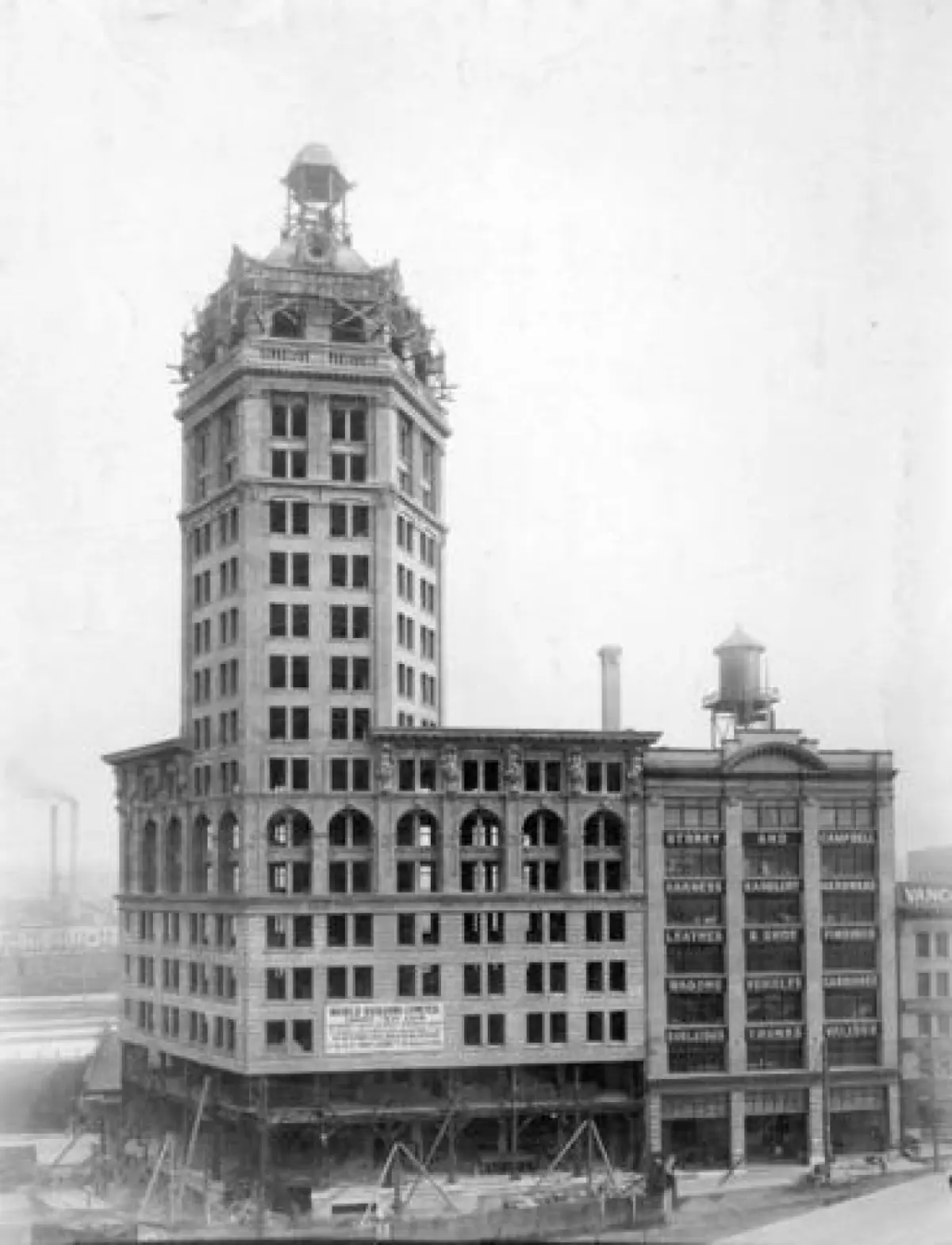
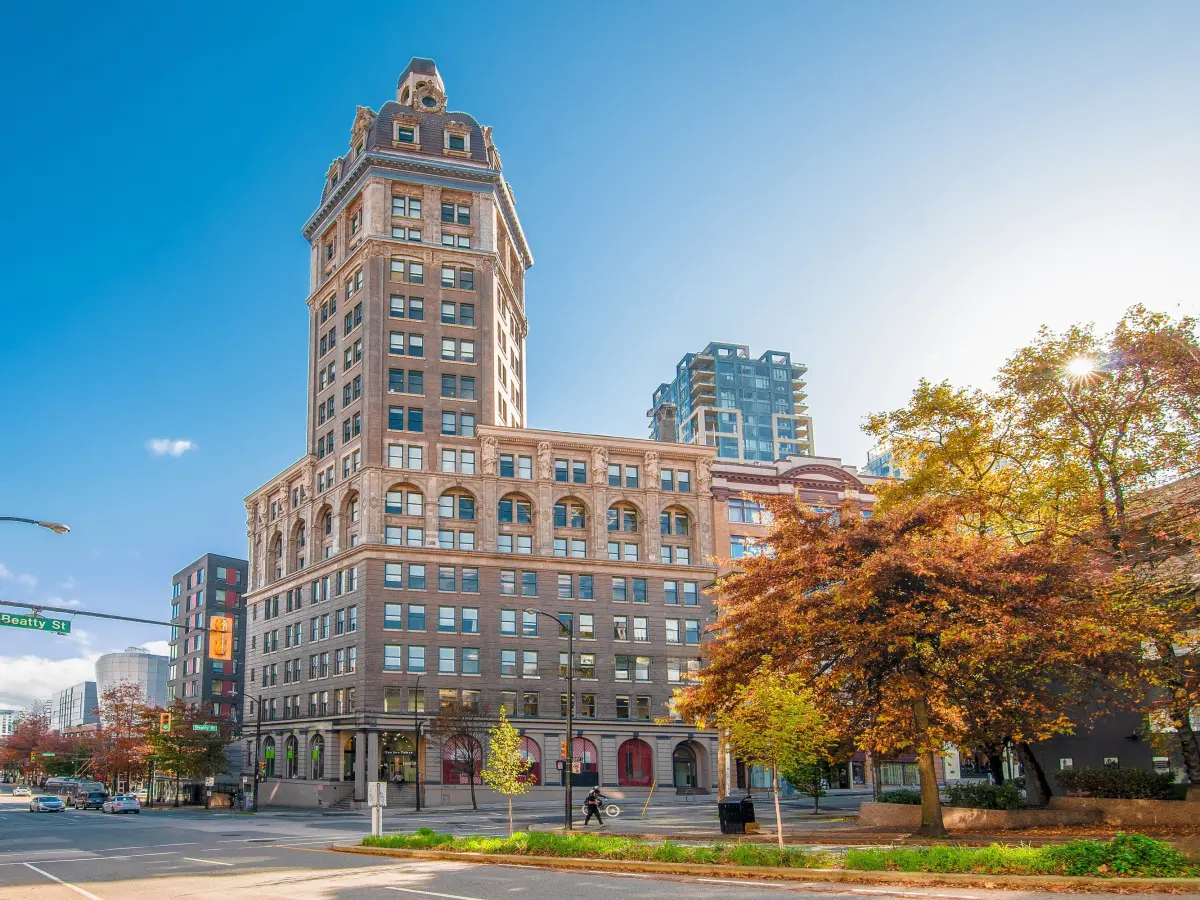
The Sun Tower holds a unique place in Vancouver’s architectural history, representing the city’s rapid economic expansion during the early 20th century. Designed by architect William Tuff Whiteway, the structure was commissioned by Louis Denison Taylor, the publisher of the Vancouver World newspaper. At the time of its completion in 1912, the building stood as the tallest structure in the British Empire, soaring 282 feet above the street level. This height was a bold statement of ambition for a young city, serving as a beacon of progress and media influence.
Beyond its height, the building is celebrated for its Beaux-Arts architectural style. It features an ornate, copper-clad dome and intricate terracotta detailing that mimics the appearance of stone. The building’s aesthetic was heavily influenced by the Flatiron Building in New York City, which explains its iconic wedge-shaped footprint. Today, it stands as a designated heritage site, reflecting the transition of Vancouver from a frontier town into a sophisticated urban center. Its presence continues to anchor the visual identity of the surrounding historic district.
How to visit the Sun Tower
Visiting the Sun Tower is primarily an outdoor experience, as the building serves as private office space and is not generally open for public tours. The best way to view the structure is by walking through the Gastown and Victory Square neighborhoods. The building is situated at the corner of West Pender and Beatty streets, making it easily accessible via public transit. Visitors often combine a trip to the tower with a walk through nearby Chinatown or the cobblestone streets of Gastown.
If you are planning a visit, consider these tips to maximize your experience:
- Start your walk at Victory Square to get an unobstructed view of the tower’s profile.
- Visit during the golden hour, as the sunlight reflects beautifully off the copper dome.
- Use the SkyTrain to reach the Stadium-Chinatown station, which is just a short walk away.
- Avoid visiting during heavy rain, as the architectural details are best appreciated in clear light.
- Pair your visit with a stop at a local cafe to enjoy the surrounding historic atmosphere.
What architectural features define the Sun Tower?
The Sun Tower is defined by its sophisticated use of materials and its challenging wedge-shaped geometry. The exterior is clad in glazed architectural terracotta, which was a popular, durable choice for high-end buildings during the Edwardian era. The most striking feature is the green, copper-sheathed dome, which has oxidized over the decades to create its signature patina. The base of the building features heavy, rusticated masonry, which provides a visual foundation for the lighter, more ornamental floors above.
The interior design was equally impressive for its time, featuring marble wainscoting and ornate ironwork. While the building has undergone several renovations to modernize its internal systems, the exterior remains largely faithful to Whiteway’s original vision. The building’s design demonstrates the "Chicago School" influence, emphasizing verticality and structural integrity. The transition from the heavy base to the delicate, domed crown showcases the transition from classical masonry to modern steel-frame construction. The building’s facade is decorated with caryatids and other classical motifs, adding a layer of artistic detail that is rare in modern office towers.
Common mistakes when photographing the Sun Tower
Capturing the Sun Tower on camera can be difficult due to its height and the narrow streets surrounding it. Many photographers make the mistake of trying to fit the entire building into a single frame from the sidewalk, which leads to significant perspective distortion. This "keystone effect" makes the building appear as if it is falling backward. To avoid this, move further away from the base, specifically toward the open space of Victory Square, to allow for a more balanced composition.
Another common error is failing to account for the harsh shadows cast by the building’s intricate facade. Because the tower is so tall, the lower levels often fall into deep shade while the dome remains in bright light. To achieve the best results, follow these steps:
- Use a wide-angle lens to capture the full height without standing directly beneath the structure.
- Shoot during the early morning or late afternoon to ensure even lighting across the terracotta surface.
- Use a polarizing filter to reduce glare on the glass windows and enhance the contrast of the green dome against the sky.
- Focus on architectural details like the caryatids to provide context beyond just the height of the tower.
How the Sun Tower changed over time
The building has undergone various transformations since it first opened as the Vancouver World headquarters. After the newspaper folded, the building housed various tenants and was eventually renamed the Sun Tower after the Vancouver Sun newspaper moved in during the 1930s. Over the decades, the building served as a hub for media, legal offices, and creative industries. Its role as a media center solidified its status as a landmark of civic importance, as it was often the site of major announcements and public gatherings.
In recent years, the Sun Tower has been carefully preserved to maintain its heritage status. The city and private owners have invested in structural reinforcements and facade repairs to ensure the terracotta remains secure. These efforts are essential for preserving the building’s original character while meeting modern safety codes. Today, the Sun Tower serves as a reminder of Vancouver’s early 20th-century boom, standing in stark contrast to the glass-and-steel skyscrapers that define the modern skyline. Its legacy is protected by municipal heritage designations, ensuring that the building will continue to serve as a visual link to the city's formative years for future generations.
Key facts
- The Sun Tower is a historic 17-story office building located at 100 West Pender Street in Vancouver, British Columbia.
- Completed in 1912, it was designed by architect William Tuff Whiteway for the Vancouver World newspaper.
- Upon its completion, it stood as the tallest building in the British Empire at 82 meters (269 feet).
- The building is easily recognized by its distinctive green copper dome, which was inspired by the Old City Hall in New York.
- It was designated as a National Historic Site of Canada in 1977 due to its architectural significance and role in the city's history.
- Visitors can view the exterior from the street, but the interior is primarily used for private office space and is not open to the public.
The bottom line
The Sun Tower remains a vital piece of Vancouver’s architectural heritage, serving as a reminder of the city's rapid expansion during the early 1900s. While it no longer holds the title of the tallest building in the British Empire, its Beaux-Arts design and iconic copper dome continue to define the skyline of the historic Gastown and Chinatown districts, making it an essential landmark for local history enthusiasts.
People also ask
Why was the building originally called the World Building?
It was named after the Vancouver World newspaper, which occupied the space when it first opened. The newspaper's publisher, L.D. Taylor, commissioned the tower to serve as a symbol of the city's growing prosperity.
Is the Sun Tower still the tallest building in Vancouver?
No, it has long been surpassed by many modern skyscrapers in the downtown core. Today, it is dwarfed by towers like the Living Shangri-La, which stands over 200 meters tall.
Can tourists go to the top of the Sun Tower?
The building does not offer public observation decks or tours. It serves as a functional office building, so access is generally restricted to tenants and their guests.
What architectural style is the Sun Tower?
It is built in the Beaux-Arts style, which is characterized by symmetry, ornate detailing, and classical elements. This style was popular for important civic and commercial buildings in the early 20th century.
Why is the dome green?
The dome is constructed from copper, which naturally oxidizes over time when exposed to air and moisture. This process, known as patination, creates the iconic soft green color seen today.
How do I get to the Sun Tower using public transit?
The tower is located near the Stadium-Chinatown SkyTrain station. You can walk there in about five minutes by heading north on Beatty Street toward Pender Street.
This answer was created with the help of AI research tools and reference sources. Spotted an error? Let us know — we correct mistakes quickly. See our editorial policy.