Who invented roller skates?
Short answer
Joseph Merlin, a Belgian inventor, is credited with the first recorded invention of roller skates around 1760. He famously debuted them at a London masquerade party by playing the violin while rolling. However, the design lacked brakes and steering, leading to his spectacular crash into a large, expensive wall-mounted mirror.
On this page
Who invented the first roller skates?
While Joseph Merlin is widely recognized for his 1760 invention, the concept of attaching wheels to shoes evolved through several inventors over the next century. Merlin’s early model used small metal wheels, but it was difficult to maneuver or stop. Because of these limitations, early skating remained a novelty rather than a reliable mode of transportation or sport.
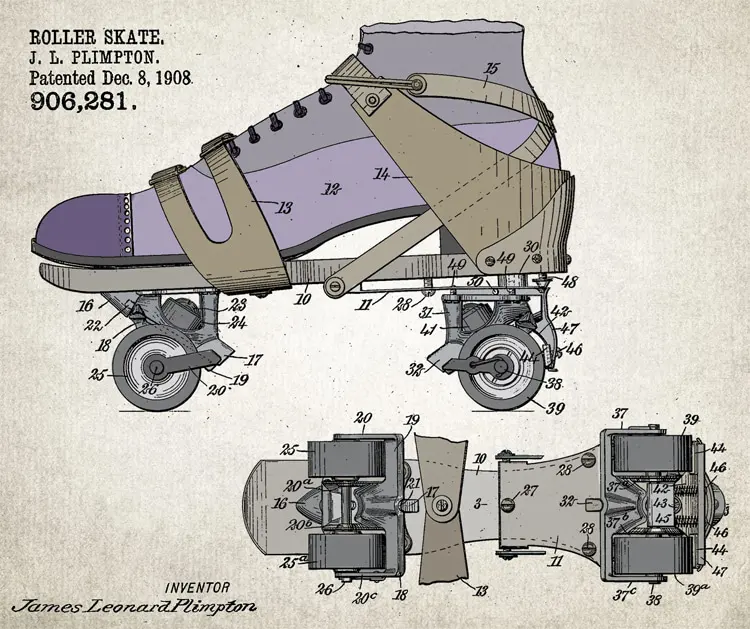
In 1819, M. Petitbled received the first patent for an inline-style skate, though it was notoriously difficult to use on anything but perfectly smooth surfaces. It wasn't until 1863 that James Leonard Plimpton revolutionized the industry. He invented the "rocking" skate, which utilized rubber cushions to allow the skater to turn by leaning their weight. This breakthrough transformed skating from a clumsy experiment into a practical and popular pastime for the general public.
How did roller skates evolve over time?
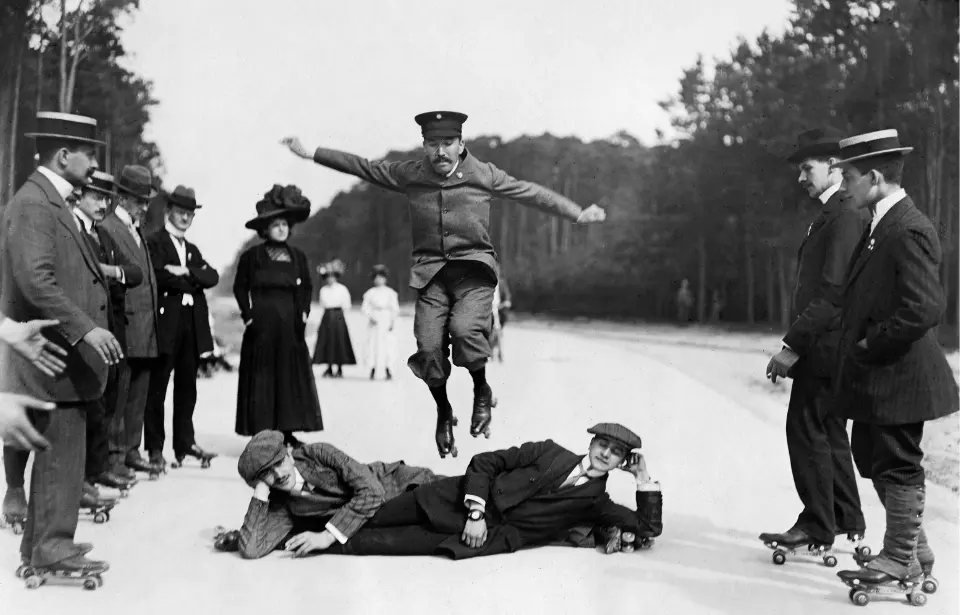
The progression of roller skating moved from crude metal wheels to sophisticated materials designed for performance and comfort. Following Plimpton’s invention, the late 19th century saw the rise of roller rinks across the United States and Europe. These venues became social hubs, and the design of the skates continued to improve to accommodate the growing demand for speed and stability.
By the 20th century, the design split into two primary categories: the traditional quad skate and the modern inline skate. The inline skate, which features wheels arranged in a single line, was actually patented as early as 1863 but did not gain mainstream traction until the 1980s. Scott and Brennan Olson refined the inline design, creating the famous Rollerblade brand that popularized the sport for fitness enthusiasts and hockey players alike.
- Quad skates: Four wheels arranged in two side-by-side pairs, offering high stability.
- Inline skates: Wheels arranged in a single row, providing speed and maneuverability.
- Ball bearings: Introduced in the late 1800s to reduce friction and increase wheel rotation speed.
- Polyurethane wheels: Developed in the 1970s to provide better grip and a smoother ride on rough surfaces.
How do you start roller skating for beginners?
Learning to skate requires patience and a focus on maintaining a low center of gravity. Most beginners find that quad skates are easier to balance on initially because of their wider base. Before you begin, ensure you are wearing protective gear, including a helmet, knee pads, elbow pads, and wrist guards, as falls are an inevitable part of the learning process.
To start, find a flat, smooth surface away from traffic, such as an empty parking lot or a dedicated roller rink. Stand with your feet shoulder-width apart and your knees bent in a "ready" position. This stance helps you absorb shocks and keeps your weight centered over your skates. Practice shifting your weight from one foot to the other without moving your feet to get a feel for the balance.
- Bend your knees deeply and keep your chest upright to maintain balance.
- Take small, deliberate steps rather than long strides to establish control.
- Keep your arms out to the sides to help stabilize your body.
- Practice the "V" position with your heels together and toes pointed outward to push off.
- Learn to stop by using the toe stop on quad skates or the heel brake on inline skates.
What are common mistakes when learning to skate?
One of the most frequent errors beginners make is looking down at their feet. When you stare at your wheels, your balance shifts forward, making it much more likely that you will fall on your face. Always keep your gaze fixed on the horizon or a point directly in front of you to keep your posture aligned.
Another common mistake is locking your knees. Rigid legs make it impossible to adjust to irregularities in the ground and make you top-heavy. Beginners also tend to lean too far backward, which causes the skates to shoot out in front of them. If you feel yourself falling, try to lean forward slightly and aim to land on your protective gear rather than your tailbone or wrists.
- Looking down at the ground instead of forward.
- Keeping legs straight and stiff instead of bent.
- Wearing skates that are too loose, which prevents proper control.
- Attempting to skate on surfaces with debris like pebbles or cracks.
- Failing to wear wrist guards, which are essential for preventing impact injuries.
Why is roller skating good for your health?
Roller skating is a low-impact aerobic exercise that provides a full-body workout while being significantly easier on the joints than running. It engages the core muscles, glutes, and quadriceps, helping to improve balance, coordination, and muscular endurance. Because it is a weight-bearing activity, it also contributes to bone density and cardiovascular health over time.
Beyond the physical benefits, skating is an excellent way to improve mental well-being and social connectivity. Whether you are skating at a local rink or commuting on a bike path, the activity releases endorphins and reduces stress. By mastering the mechanics of the skate and building confidence, you gain a sense of accomplishment that carries over into other areas of life. As you become more proficient, you can explore different disciplines such as artistic skating, roller derby, or simple distance skating to keep your routine engaging and physically challenging.
Key facts
- The first recorded roller skate was invented by Belgian inventor Joseph Merlin in 1760.
- Merlin famously crashed into a mirror while demonstrating his metal-wheeled skates at a masquerade party.
- In 1819, M. Petitbled received the first patent for a roller skate design using three wheels in a line.
- James Leonard Plimpton revolutionized the sport in 1863 by inventing the "rocking" skate that allowed for turning.
- Modern quad skates are designed for stability, while inline skates are built for speed and maneuverability.
- Always wear protective gear, including a helmet, wrist guards, and knee pads, to prevent common impact injuries.
The bottom line
The invention of roller skates evolved from Joseph Merlin’s 18th-century prototype to the refined, steerable designs of the 1860s. While the technology has advanced significantly, the core mechanics of balance and propulsion remain the same. Whether you choose quad or inline skates, mastering the sport requires proper protective equipment, a low center of gravity, and consistent practice on smooth, safe surfaces for the best experience.
People also ask
What is the difference between quad skates and inline skates?
Quad skates feature two sets of side-by-side wheels, providing a wide base for better balance and easier turning. Inline skates, or rollerblades, have wheels arranged in a single row, which allows for higher speeds and a feel similar to ice skating.
How do you stop on roller skates?
To stop on quad skates, shift your weight to your back foot and press the toe stop into the ground. For inline skates, use the heel brake by lifting the front of the skate to engage the rubber stopper against the floor.
Are roller skates and rollerblades the same thing?
While both are types of roller skates, "Rollerblade" is actually a brand name that became synonymous with inline skates. Quad skates remain distinct due to their four-wheel rectangular configuration.
Can you roller skate on any surface?
You can skate on most smooth, flat surfaces like concrete, asphalt, or wood. Avoid rough gravel, grass, or deep sand, as these surfaces can cause the wheels to lock up and result in a fall.
How do you choose the right size skates?
Skates should fit snugly like a firm shoe without causing pain or pinching. A good rule of thumb is to choose the same size as your regular athletic sneakers, ensuring your heel does not lift inside the boot.
What is the most common mistake for beginners?
The most frequent error is standing with legs too straight, which shifts the center of gravity backward. Beginners should keep their knees bent and lean slightly forward to maintain balance and avoid falling onto their tailbone.
This answer was created with the help of AI research tools and reference sources. Spotted an error? Let us know — we correct mistakes quickly. See our editorial policy.