Who invented the hula hoop?
Short answer
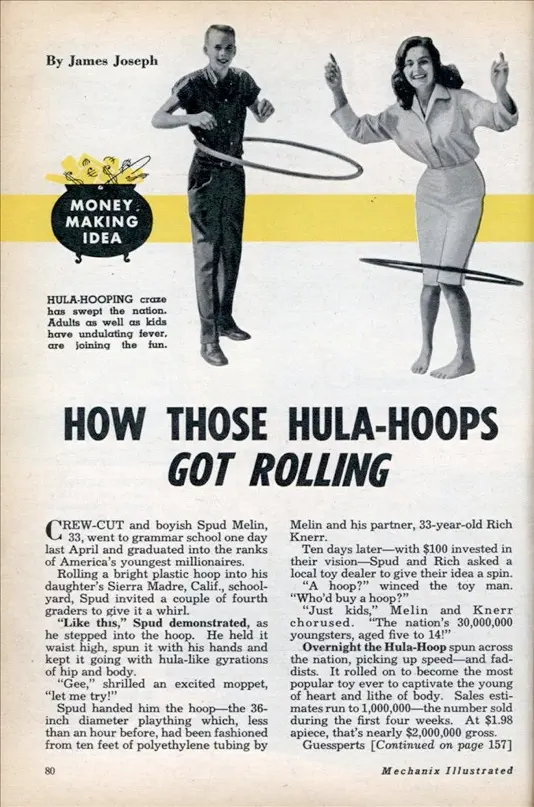
The modern plastic hula hoop was invented by Richard Knerr and Arthur "Spud" Melin, the co-founders of the Wham-O toy company, in 1958. While they popularized the toy in America, they were inspired by wooden hoops used by children in Australia, which they observed while visiting the region during the mid-1950s.
On this page
Who invented the hula hoop?
The modern hula hoop as we recognize it today was brought to market by Richard Knerr and Arthur "Spud" Melin. Operating out of a garage in California, the two men founded Wham-O in 1948, initially selling slingshots and boomerangs. After hearing reports of Australian children playing with bamboo hoops during physical education classes, the duo decided to experiment with a new, lightweight material.
They utilized a durable, colorful plastic called Marlex, which had been recently developed by Phillips Petroleum. By molding this plastic into a large, circular tube, they created a product that was lighter, more flexible, and cheaper to produce than traditional wooden versions. The resulting toy was officially launched in 1958, sparking a massive cultural phenomenon that saw millions of units sold within the first few months of production.
How to use a hula hoop properly
Mastering the hula hoop requires more than just hip movement; it involves finding a steady rhythm and maintaining consistent momentum. To begin, stand with your feet shoulder-width apart, with one foot slightly in front of the other for better balance. Place the hoop against your lower back, holding it level to the ground before giving it a firm, horizontal spin.
Once the hoop is in motion, move your hips in a forward-and-backward motion rather than a circular one. This shifting of weight from your front foot to your back foot provides the necessary energy to keep the hoop from falling. Keep your core muscles engaged throughout the process to maintain control. If you are struggling, try these steps to improve your technique:
- Start with a larger, heavier hoop, as these move more slowly and are easier to track.
- Keep your knees slightly bent to lower your center of gravity.
- Wear form-fitting clothing to minimize friction and prevent the hoop from catching on loose fabric.

Why do hula hoops stay up?
The physics behind the hula hoop relies on centripetal force and the conservation of angular momentum. As you push the hoop with your body, you are constantly applying energy to the object. This energy counteracts the force of gravity that would otherwise pull the hoop toward the ground. By moving your body in sync with the hoop’s rotation, you create a series of small, rhythmic impulses that keep the hoop centered around your waist.
The friction between the hoop and your clothing also plays a vital role in keeping the toy aloft. This friction allows the hoop to "grip" your body, transferring the kinetic energy from your movements directly into the hoop’s rotation. If the hoop begins to slip, it is usually because the rhythm of your hip movement has fallen out of sync with the velocity of the hoop, causing the momentum to dissipate.
Common mistakes when hula hooping
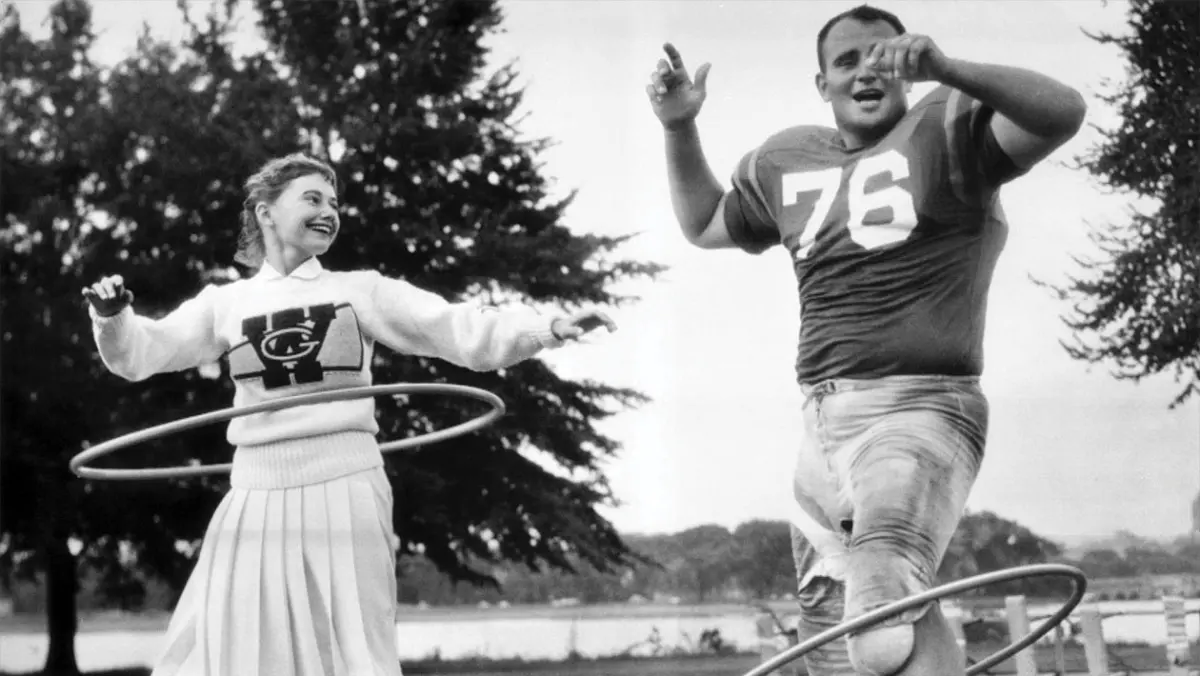
Many beginners struggle because they attempt to move their hips in a wide, circular motion. This often causes the hoop to lose its trajectory and fall immediately. Instead, focus on small, sharp pulses of the pelvis. Another frequent error is using a hoop that is too small or too light for a beginner's skill level. A smaller diameter requires a much faster rotation speed, which is significantly harder to maintain for those who are still learning the basic mechanics.
To ensure a successful practice session, avoid these common pitfalls:
- Looking down at the hoop, which can throw off your balance and posture.
- Using a hoop made of rigid, heavy material that has not been properly balanced.
- Stopping your movement abruptly when the hoop starts to wobble, which prevents you from correcting the rhythm.
- Practicing in a cramped space where the hoop constantly hits furniture or walls, disrupting your flow.
Is hula hooping good exercise?
Hula hooping is an effective form of aerobic exercise that engages the core, back, and abdominal muscles. Beyond simple play, weighted hula hoops are often used in fitness routines to improve cardiovascular health and muscular endurance. Because the activity requires constant engagement of the torso, it can help tone the midsection while improving overall flexibility and coordination. A typical session can burn a significant number of calories, making it a viable low-impact workout for people of all ages.
When incorporating hula hooping into a fitness regimen, start with short, ten-minute intervals to allow your muscles to adapt to the repetitive motion. Over time, you can increase the duration and intensity of your sessions. It is important to listen to your body, as the repetitive impact on the lower back can cause soreness if you are not accustomed to the movement. By maintaining good posture and staying consistent, you can turn this classic toy into a highly effective tool for physical conditioning and long-term health.
Key facts
- The modern plastic hula hoop was co-invented in 1958 by Arthur "Spud" Melin and Richard Knerr, the founders of the Wham-O toy company.
- The inspiration came from an Australian visitor who described children in his country exercising with bamboo hoops around their waists.
- Wham-O trademarked the name "Hula Hoop" and sold 25 million units in the first four months of production.
- While the plastic version is a 20th-century invention, similar hoops made of wood, grass, and metal were used for recreation in ancient Egypt, Greece, and Rome.
- To use a hoop effectively, place it against your lower back and give it a firm, horizontal spin while moving your hips in a circular motion.
- A common mistake is moving the entire body or jumping; instead, keep your feet planted and focus on a rhythmic, front-to-back rocking motion of the pelvis.
The bottom line
While Arthur Melin and Richard Knerr popularized the plastic hula hoop in 1958, the concept of hoop-based play dates back thousands of years across diverse global cultures. By combining simple physics with rhythmic movement, the toy became a cultural phenomenon. Today, it remains a popular tool for both nostalgic play and serious fitness, proving that even the simplest designs can endure through generations of users.
People also ask
Why is it called a hula hoop?
The name was coined by Wham-O founders after they observed the hip-swiveling motion used in the hoop resembled the movements of the traditional Hawaiian hula dance.
How much did the original hula hoop cost?
When the plastic hoop was first released in 1958, it retailed for $1.98, making it an affordable fad that contributed to its rapid mass-market success.
Is hula hooping a good form of exercise?
Yes, it is an effective aerobic activity that engages the core muscles, improves balance, and can burn significant calories depending on the intensity and duration of the session.
Are there different sizes of hula hoops?
Yes, hoops come in various diameters and weights; larger, heavier hoops are generally easier for beginners to keep spinning because they rotate more slowly.
Why did the hula hoop craze die out so quickly?
The initial novelty faded as quickly as it arrived, leading to a market saturation where almost every household already owned one, causing sales to plummet by late 1959.
Can you use a hula hoop for weighted fitness training?
Modern fitness hoops often feature weighted inserts or textured interiors to increase resistance, which helps tone abdominal muscles more effectively than standard lightweight plastic versions.
This answer was created with the help of AI research tools and reference sources. Spotted an error? Let us know — we correct mistakes quickly. See our editorial policy.