What is the longest word in English?
Short answer
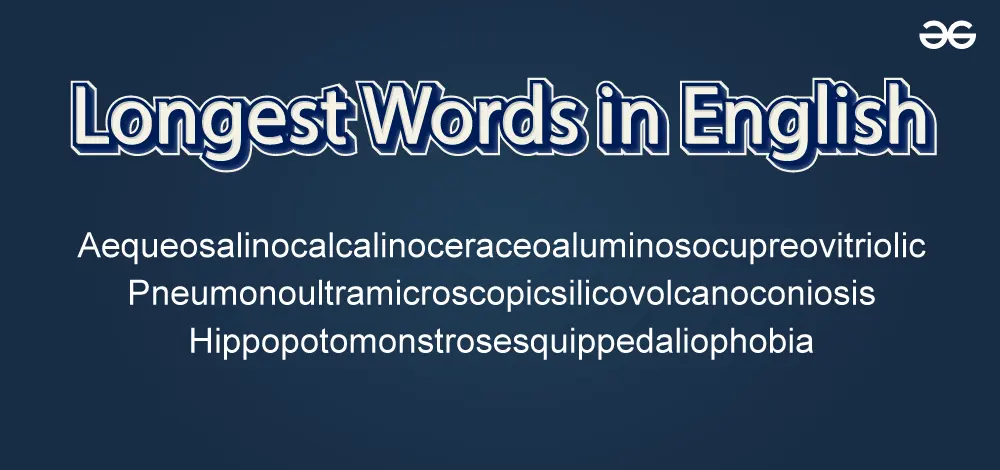
Pneumonoultramicroscopicsilicovolcanoconiosis, containing 45 letters, is widely recognized as the longest word in major English dictionaries. It refers to a lung disease caused by inhaling very fine ash and sand dust. While longer chemical names exist, they are considered technical formulas rather than standard vocabulary entries in the English language.
On this page
What is the longest word in English?
The word pneumonoultramicroscopicsilicovolcanoconiosis holds the title for the longest entry in standard dictionaries like the Oxford English Dictionary. It was coined in 1935 by Everett M. Smith, then president of the National Puzzlers' League, specifically to be the longest word in the English language. The term is a compound construction derived from Greek and Latin roots, describing a specific type of pneumoconiosis.
While this word is often cited as the champion, it is essentially a linguistic curiosity rather than a term used in everyday medical practice. Doctors typically use more concise terminology to describe the condition, such as silicosis. Because it was intentionally created for its length, it occupies a unique space between a legitimate technical term and a deliberate linguistic stunt.
Are there longer words in the English language?
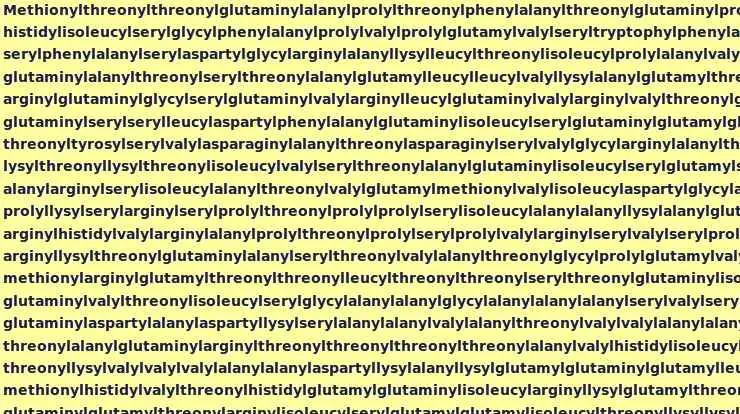
If you look beyond standard dictionaries, you will encounter chemical names that are exponentially longer. The full systematic name for the protein titin, which acts as a molecular spring in human muscles, contains 189,819 letters. If written out in full, it would take several hours to recite and would span dozens of pages. However, linguists and lexicographers do not consider this a word in the traditional sense.
Chemical nomenclature follows strict rules that allow for the creation of infinitely long strings of characters to describe complex molecular structures. Because these names are generated by formulas rather than being part of the lexicon of a language, they are excluded from dictionaries. To be considered a "word," a term generally needs to be used by a community of speakers and recognized as a distinct unit of meaning.
- Chemical names are structural formulas, not vocabulary.
- Dictionaries require words to have established usage.
- Length alone does not qualify a string as a standard word.
How to identify a legitimate word
Distinguishing between a real word and a technical construction requires understanding how language evolves. A legitimate word usually gains entry into a dictionary because it is used in literature, journalism, or professional discourse. Editors track these occurrences to determine if a term has become a stable part of the English language.
In contrast, many "long words" found online are fabricated or represent technical jargon that lacks broad usage. When evaluating whether a word is "real," consider the following criteria:
- Does it appear in multiple reputable, unabridged dictionaries?
- Is it used by professionals in a specific field to communicate ideas?
- Does it have a history of usage beyond a single source or puzzle?
- Is it a compound word that is commonly accepted as a single unit?
Common mistakes when discussing long words
A common error is assuming that length equates to linguistic importance or complexity. People often mistakenly believe that the longest word must be the most difficult to understand or the most scientifically significant. In reality, the longest words are often obscure, highly specialized, or intentionally crafted for the purpose of breaking records.
Another mistake is conflating agglutinative languages with English. Languages like German or Finnish naturally form very long words by stringing together multiple nouns or verbs, which is a standard grammatical feature. English is generally more analytical, meaning it prefers to use separate words to convey complex ideas. Attempting to force English words into an agglutinative structure often results in nonsense or purely artificial constructs that do not reflect how the language functions in practice.
How to use long words correctly
If you choose to use a long word in your writing, ensure it serves a purpose rather than acting as a distraction. Overusing sesquipedalian—or long-winded—vocabulary can make your writing feel pretentious or difficult to follow. Clarity should always be the primary goal of effective communication, regardless of how many letters a word contains.
If you must use a long technical term, follow these steps to ensure your reader understands:
- Define the term clearly upon its first appearance in the text.
- Provide a shorter, more common synonym if one exists.
- Use the term only when it provides necessary precision.
- Avoid using multiple long words in a single sentence to prevent reader fatigue.
By following these guidelines, you can maintain a professional tone while demonstrating a sophisticated command of the English language. Remember that the goal of any word is to bridge the gap between your thoughts and the reader's understanding.
Key facts
- The longest word found in major English dictionaries is "pneumonoultramicroscopicsilicovolcanoconiosis," which contains 45 letters.
- This term refers to a lung disease caused by inhaling very fine ash and sand dust.
- The chemical name for the protein titin is technically the longest word, containing 189,819 letters, but it is not included in dictionaries.
- Dictionaries generally exclude chemical names because they are considered formulas rather than standard vocabulary.
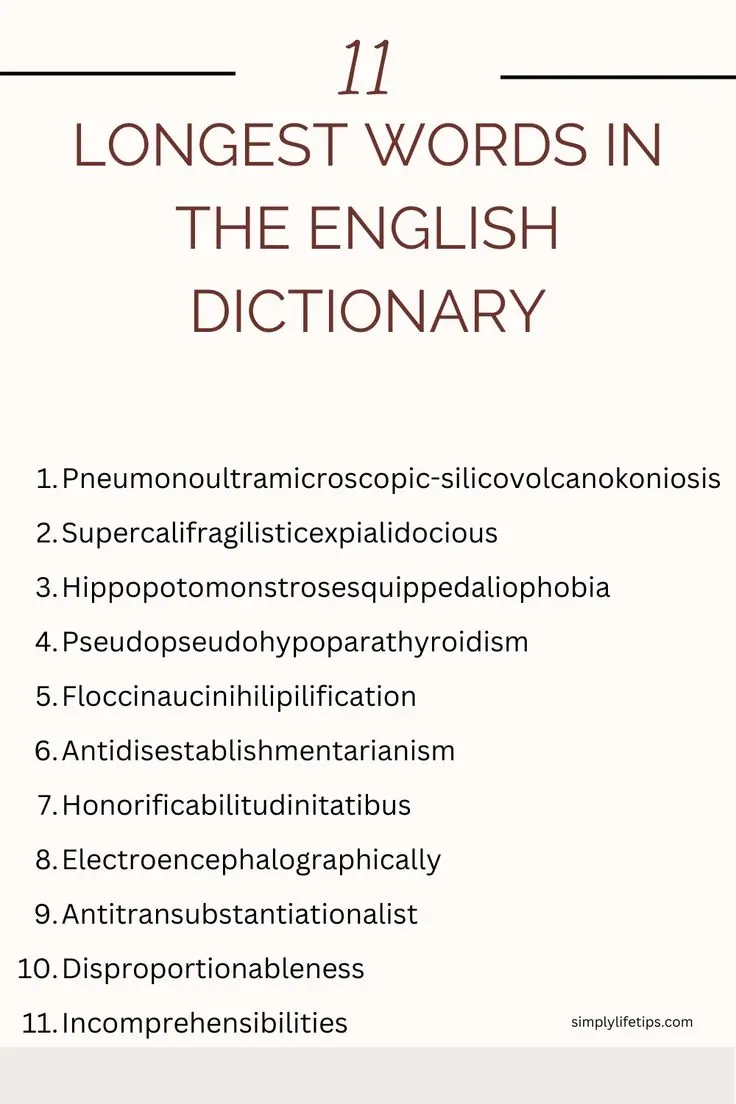
- "Floccinaucinihilipilification" is often cited as the longest non-technical word, consisting of 29 letters and meaning the act of estimating something as worthless.
- Avoid using these long words in professional writing, as they are usually considered linguistic curiosities rather than practical communication tools.
The bottom line
While the 45-letter "pneumonoultramicroscopicsilicovolcanoconiosis" holds the title in most standard dictionaries, the true longest word is the massive chemical name for the protein titin. Ultimately, these words serve as linguistic oddities rather than functional vocabulary. For clear and effective communication, it is best to stick to concise, commonly understood language, as these extreme examples are rarely appropriate for professional or academic writing contexts.
People also ask
Is "antidisestablishmentarianism" the longest word?
No, it is not. While it is a famous long word with 28 letters, it is significantly shorter than both the medical term for lung disease and the chemical name for titin.
Why are chemical names for proteins not in the dictionary?
Lexicographers consider these names to be systematic nomenclature rather than standard words. Including every possible chemical combination would make dictionaries impossibly long and impractical for general use.
How do you pronounce the longest medical term?
It is pronounced "noo-muh-no-ul-truh-my-kro-skop-ik-sil-i-ko-vol-kay-no-ko-ni-o-sis." Most people break it down into its Greek and Latin roots to manage the complex syllables.
Are there longer words in other languages?
Yes, languages like German and Finnish use compound words that can be extended almost indefinitely. For example, German allows for very long nouns by stringing multiple words together without spaces.
Does the longest word have a practical use?
It has very little practical use outside of medical contexts or trivia. In daily conversation, doctors simply refer to the condition by its clinical description or a shorter name.
Can I use these long words in a formal essay?
You should avoid using them unless you are specifically writing about linguistics or the history of word formation. Using extremely long, obscure words often obscures your meaning and confuses the reader.
This answer was created with the help of AI research tools and reference sources. Spotted an error? Let us know — we correct mistakes quickly. See our editorial policy.