Where do meerkats live?
Short answer
Meerkats live exclusively in the southern regions of Africa, specifically within the arid landscapes of the Kalahari Desert and surrounding areas. They inhabit parts of Botswana, Namibia, and South Africa. These small mongooses thrive in open, dry plains and grasslands where they can effectively burrow and maintain their complex social groups.
On this page
Where exactly do meerkats live in the wild?
Meerkats (Suricata suricatta) are endemic to the southern portion of the African continent. Their primary range spans the vast, semi-arid expanse of the Kalahari Desert, which covers much of Botswana and parts of Namibia and South Africa. They are not found in dense forests or high-altitude mountain ranges, as these environments do not support their specific burrowing requirements or their need for clear, open visibility to spot predators.
The specific habitats they favor include dry, open plains, savannas, and rocky outcrops. These regions are characterized by low rainfall and sparse vegetation, which allows the meerkats to maintain a clear line of sight. Within these areas, they establish large, intricate underground tunnel systems. A single colony may occupy several different burrow sites within their territory, rotating between them to ensure safety and access to varying food sources throughout the seasons.
How do meerkats choose their burrow locations?
The selection of a home site is critical for the survival of a meerkat mob. They require soil that is firm enough to prevent tunnel collapse but soft enough to dig efficiently. Because they spend the night underground to avoid nocturnal predators and extreme temperature fluctuations, the structural integrity of their burrows is a primary concern. They often look for areas with natural drainage to prevent flooding during the brief but intense rainy seasons.
When establishing a new den or expanding an existing one, meerkats look for the following environmental features:
- Proximity to open ground for foraging and sentry duty.
- Presence of low-lying shrubs or rocks that provide cover from aerial predators like eagles.
- Soil composition that allows for deep, multi-chambered tunnels.
- Integration with existing networks, as they frequently inherit and improve burrows used by other ground-dwelling animals.
Why do meerkats live in groups?
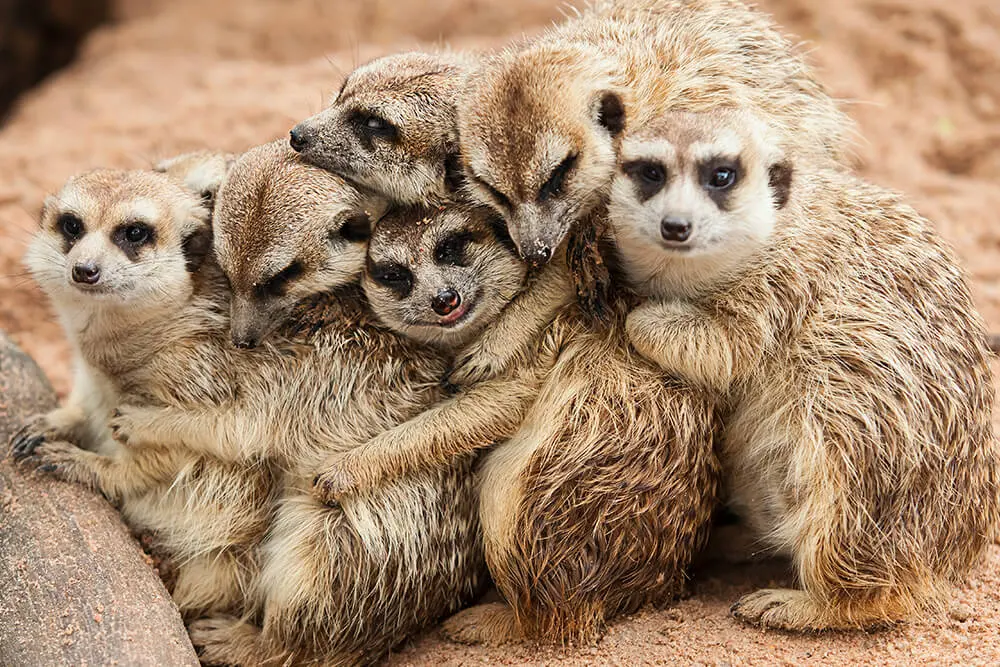
Living in a group, known as a mob or gang, is an essential survival strategy for meerkats. Their environment is filled with threats, including raptors, snakes, and larger mammalian predators. By living in groups of 20 to 50 individuals, they can implement a sophisticated system of sentry duty. While the rest of the group forages for insects, scorpions, and small reptiles, one or more individuals remain on high alert, scanning the horizon for danger.
This cooperative lifestyle extends beyond safety. Meerkats exhibit high levels of altruism, with older members often teaching the young how to handle dangerous prey, such as venomous scorpions. They also share the responsibilities of pup-sitting and grooming, which helps maintain social cohesion. This collective behavior is the reason they can survive in the harsh, unforgiving climate of the Kalahari, where a solitary animal would likely succumb to predation or starvation within a very short period.
Common mistakes when tracking meerkats in the wild
Many enthusiasts attempt to observe meerkats without understanding their sensitive nature, which can lead to negative outcomes for the animals. One common error is approaching a burrow too quickly or making loud noises. Meerkats are highly attuned to vibrations and sound; if they perceive a threat, they will immediately retreat into their tunnels, making it impossible to observe their natural behavior.
To observe meerkats safely and effectively, follow these steps:
- Maintain a distance of at least 15 to 20 feet from the burrow entrance.
- Remain completely still and quiet for at least 30 minutes to allow the mob to become accustomed to your presence.
- Avoid wearing bright colors or using strong perfumes, as these can alert the sentries to your presence.
- Never attempt to feed or touch the animals, as this disrupts their foraging patterns and can lead to habituation, which makes them vulnerable to predators.
How do meerkats adapt to their environment?
The Kalahari is a land of extreme temperatures, ranging from scorching heat during the day to freezing conditions at night. Meerkats have evolved several physiological adaptations to manage these swings. Their dark patches around their eyes act like sunglasses, reducing glare and allowing them to keep a sharp lookout even under the intense midday sun. Furthermore, their ears are designed to close tightly when they are digging, preventing sand from entering their ear canals.
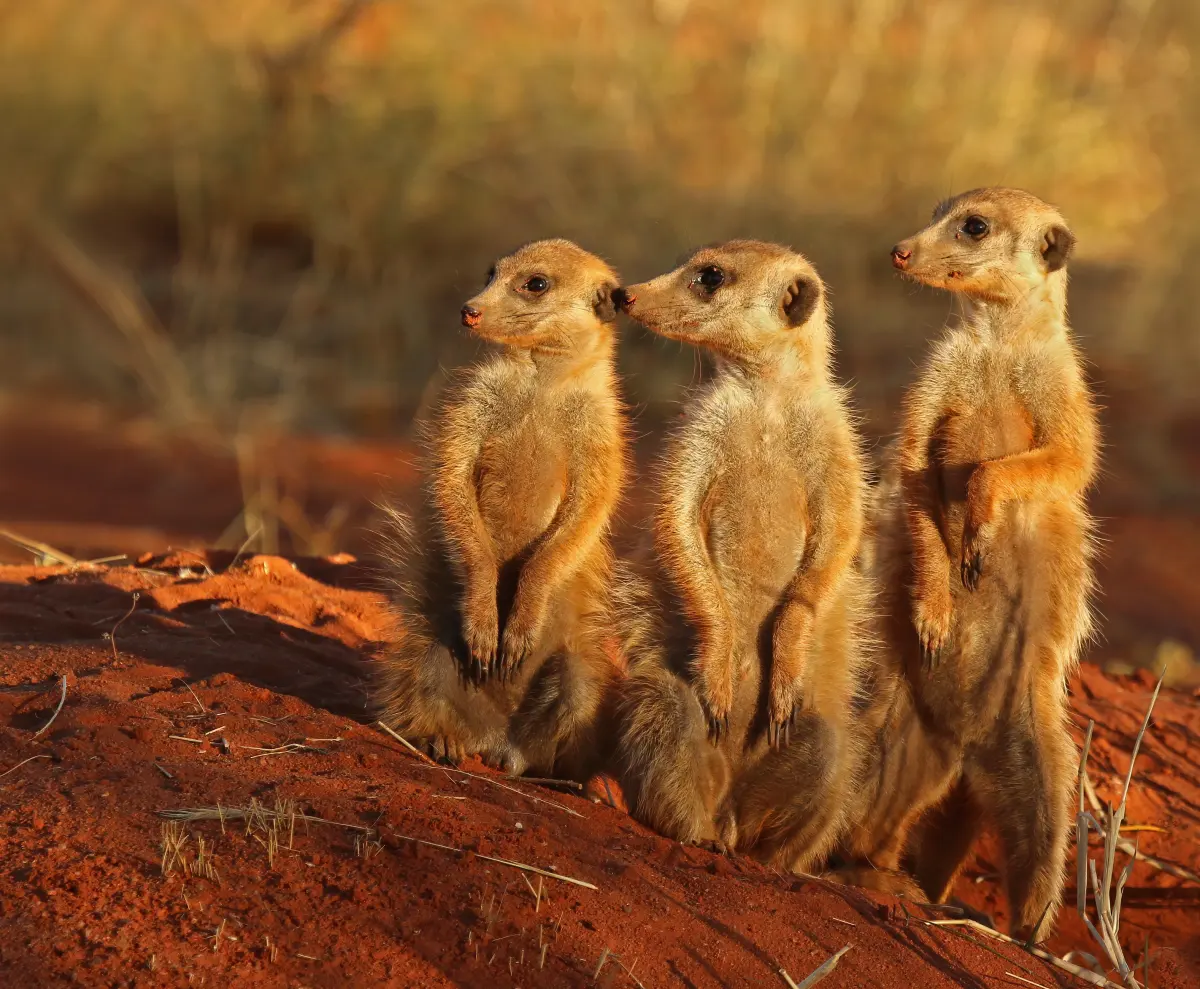
Beyond their physical traits, their behavioral adaptations are equally impressive. During the hottest part of the day, they often retreat to the cooler depths of their burrows to avoid overheating. In the early morning, they can be seen standing on their hind legs, exposing their bellies to the sun to absorb warmth after a cold desert night. By balancing these activities with their constant need to forage, meerkats successfully navigate the challenges of their home, ensuring their species continues to thrive in one of the most demanding ecosystems on the planet.
Key facts
- Meerkats live exclusively in the southern regions of Africa, specifically within the Kalahari Desert and surrounding grasslands.
- They inhabit countries including Botswana, Namibia, South Africa, and southwestern Angola.
- These animals prefer arid, open areas with firm, sandy soil that is easy to dig for their extensive burrow systems.
- A single meerkat colony may occupy a home range of up to 15 square kilometers to ensure enough food resources.
- They avoid dense forests and rocky mountains, as these environments lack the visibility needed to spot predators.
- When observing meerkats in the wild, maintain a distance of at least 10 meters to avoid disrupting their foraging behavior.
The bottom line
Meerkats are specialized inhabitants of the harsh, arid landscapes of southern Africa, primarily thriving in the Kalahari Desert. By living in large, cooperative social groups and constructing deep, protective underground burrows, they successfully navigate the challenges of their environment. Understanding their need for open, sandy terrain and social structure is essential for anyone interested in the natural history of these resilient and highly vigilant desert mammals.
People also ask
Do meerkats live in groups?
Yes, meerkats are highly social animals that live in groups called mobs or clans, typically consisting of 20 to 50 individuals. These groups work together to forage, raise young, and maintain their complex tunnel networks.
How deep are meerkat burrows?
Meerkat burrows can extend up to two meters deep and feature multiple entrances and chambers. These underground homes provide protection from extreme desert temperatures and predators.
What do meerkats eat in their natural habitat?
Their diet consists primarily of insects, such as beetles and scorpions, but they also consume small reptiles, eggs, and plant roots. They are skilled at digging and can consume a significant amount of food relative to their body size daily.
Are meerkats aggressive toward other groups?
Meerkats are territorial and will often engage in violent conflicts with neighboring clans to defend their home range. These interactions are essential for maintaining the boundaries of their territory in the competitive desert environment.
Can meerkats survive in captivity outside of Africa?
Meerkats can survive in zoos globally, provided they are kept in temperature-controlled environments that mimic their native arid climate. However, they are not suitable as domestic pets due to their complex social needs and wild instincts.
Why do meerkats stand upright?
Meerkats stand on their hind legs to act as sentinels, scanning the horizon for aerial and terrestrial predators. This behavior allows them to alert the rest of the group to danger, ensuring the survival of the entire clan.
This answer was created with the help of AI research tools and reference sources. Spotted an error? Let us know — we correct mistakes quickly. See our editorial policy.