What was the Great Vancouver Fire?
Short answer
The Great Vancouver Fire was a catastrophic blaze that destroyed almost the entire newly incorporated city of Vancouver, British Columbia, on June 13, 1886. Ignited by land-clearing fires that spiraled out of control, the inferno leveled the settlement in less than 30 minutes, resulting in significant property loss and multiple deaths.
On this page
How did the Great Vancouver Fire start?
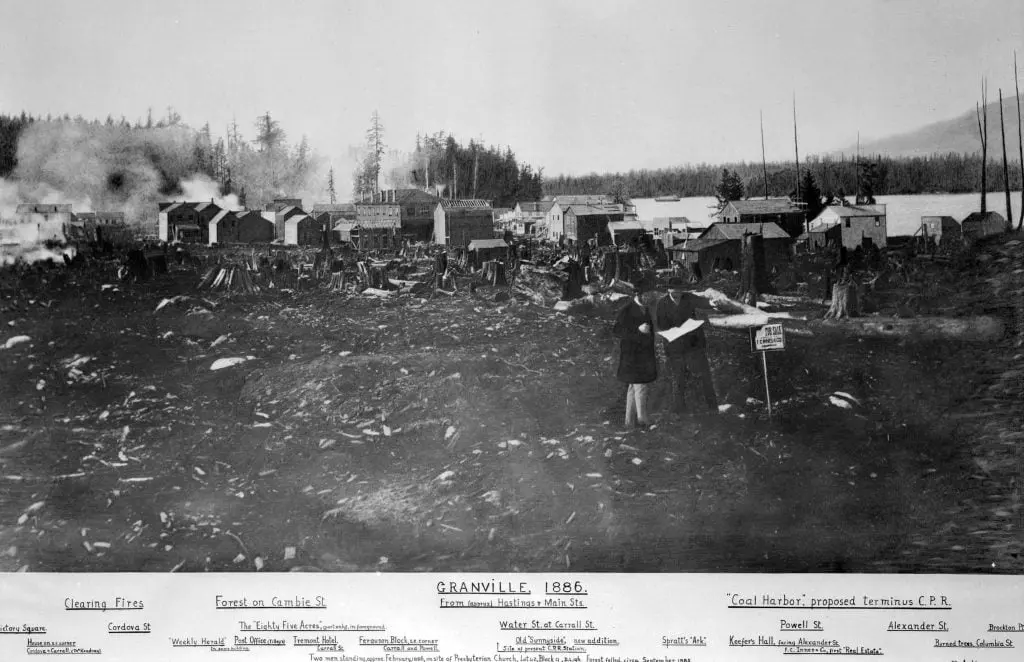
The fire originated during a period of intense land clearing as the city prepared for the arrival of the Canadian Pacific Railway. Settlers and laborers frequently used fire to clear dense forest debris and stumps from the townsite. On the afternoon of June 13, 1886, strong winds fanned these small, controlled burns into an uncontrollable wall of flame that swept toward the wooden structures of the infant city.
The dry, hot weather conditions exacerbated the situation, turning the forest floor into tinder. As the fire moved from the outskirts toward the waterfront, it quickly consumed the wooden buildings, boardwalks, and piles of lumber that defined the landscape. Residents had almost no time to react, as the combination of high winds and flammable building materials created a firestorm that moved with terrifying speed across the peninsula.
What were the immediate consequences of the fire?
The destruction was nearly total, leaving only a few buildings standing in the entire city. Within half an hour, the town was reduced to ash and blackened ruins. The human cost was significant, with estimates of the death toll varying between 10 and 28 people, though the exact number remains uncertain due to the transient nature of the population at the time.
Beyond the loss of life, the economic impact was devastating for the residents who had invested everything into the new municipality. Almost every business, home, and supply of food was incinerated. Survivors were forced to flee toward the waters of Burrard Inlet, with many wading into the cold sea to escape the encroaching heat and smoke.
- The loss of nearly all city records and property deeds.
- The destruction of the city’s entire inventory of building supplies.
- Widespread homelessness among the approximately 1,000 residents.
- The immediate mobilization of relief efforts from neighboring communities like New Westminster.
How did Vancouver rebuild after the fire?
Reconstruction began almost immediately, fueled by a spirit of resilience and the strategic importance of the city as a railway terminus. Within 24 hours of the disaster, tents and temporary shelters were erected to house the displaced population. The Canadian Pacific Railway played a crucial role in bringing in supplies and materials, which accelerated the recovery process significantly.
The city council, which had been incorporated only months earlier, acted quickly to implement new building standards. To prevent a similar catastrophe, they mandated that new structures be built with more fire-resistant materials, such as brick and stone, rather than wood. This transition transformed the architectural landscape of the city, moving it away from a temporary logging camp aesthetic toward a more permanent urban design.
- Establish temporary housing and medical aid stations for survivors.
- Clear the debris from the streets to allow for the transport of construction materials.
- Secure financial aid and supplies from the provincial government and neighboring settlements.
- Implement strict building codes requiring fire-resistant construction materials for downtown structures.
- Prioritize the completion of the railway terminus to ensure economic stability and growth.
Why was the fire so destructive?
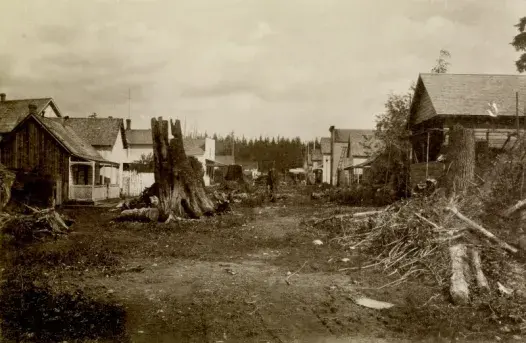
The primary reason for the fire's severity was the city's reliance on wood as the sole building material. Vancouver was essentially a collection of wooden shacks, frame houses, and boardwalks sitting in the middle of a recently cleared forest. The proximity of these structures to one another, combined with the presence of dry brush and logging debris, created a continuous fuel source that allowed the fire to jump easily from one building to the next.
Furthermore, the city lacked a professional fire department or an adequate water supply system at the time of the blaze. There was no organized way to fight a fire of such magnitude, and the volunteer efforts were quickly overwhelmed by the sheer intensity of the heat. The lack of firefighting infrastructure meant that once the fire gained momentum, there was no practical way to contain it until it had consumed everything in its path.
Common mistakes when studying historical fires
When researching historical disasters like the Great Vancouver Fire, it is a common mistake to focus solely on the immediate destruction rather than the long-term urban planning changes that followed. Many students overlook how the fire acted as a catalyst for modernization. By destroying the old, haphazard layout of the town, the fire inadvertently allowed city planners to implement more robust infrastructure, including better street layouts and improved water systems that were essential for the city's later expansion.
Another error is assuming that the fire was an isolated event. In reality, it was part of a broader pattern of forest fires that occurred frequently in the Pacific Northwest during the 19th century due to aggressive land clearing practices. Understanding the environmental context of the era is just as important as knowing the specific timeline of the disaster. By analyzing the fire as both a social and environmental event, one gains a much clearer picture of how the city of Vancouver evolved from a small, vulnerable settlement into the major metropolitan center it is today.
Key facts
- The Great Vancouver Fire occurred on June 13, 1886, destroying almost the entire city in less than 30 minutes.
- The blaze began as a small land-clearing fire set by settlers that spiraled out of control due to strong winds.
- Vancouver had only been incorporated as a city for two months, and its wooden structures provided ample fuel.
- Estimates suggest that between 10 and 28 people lost their lives, though exact numbers remain uncertain.
- Only a handful of buildings survived the inferno, most notably the Hastings Mill Store.
- To prevent future disasters, the city implemented strict building codes and established a professional fire department shortly after the event.
The bottom line
The Great Vancouver Fire stands as a pivotal moment in the city's history, transforming a fragile frontier settlement into a resilient urban center. By destroying the original wooden infrastructure, the blaze necessitated the rapid implementation of modern building codes and emergency services. Today, the event serves as a stark reminder of the importance of fire prevention and urban planning in rapidly growing coastal environments.
People also ask
How did the fire spread so quickly?
The city was built primarily of wood, and an unusually dry spring left the surrounding forest tinder-dry. Strong winds pushed the flames from the clearing site directly into the heart of the town, overwhelming the residents.
Were there any warning signs before the fire?
Settlers had been clearing land for development throughout the spring, and small fires were common. On the day of the disaster, the wind shifted suddenly, turning a routine clearing operation into a massive wall of flame.
What happened to the survivors?
Many survivors fled toward the harbor, seeking refuge in the cold waters of Burrard Inlet. Local ships and Indigenous people in canoes helped rescue those trapped on the shoreline.
How long did it take to rebuild Vancouver?
Rebuilding began almost immediately, with some residents starting construction the very next day. Within a year, the city had largely recovered, featuring more permanent structures made of brick and stone.
Is there a memorial for the victims?
A commemorative plaque is located near the site of the original Hastings Mill Store. It serves as a historical marker to honor those who perished during the city's most devastating early tragedy.
Did the fire change the city's urban planning?
Yes, the disaster forced the city government to prioritize fire safety. They widened streets to act as firebreaks and mandated the use of non-combustible materials for new downtown buildings.
This answer was created with the help of AI research tools and reference sources. Spotted an error? Let us know — we correct mistakes quickly. See our editorial policy.