How is coffee grown?
Short answer
Coffee is grown from seeds of the Coffea plant, primarily in the tropical "Bean Belt" between the Tropics of Cancer and Capricorn. Farmers plant seedlings in nutrient-rich soil, nurture them for several years until they produce cherries, and then harvest, process, and dry the seeds, which are known as green coffee beans.
On this page
Where is coffee grown best?
Coffee plants thrive in specific environmental conditions found within the equatorial zone, spanning regions in Latin America, Africa, and Southeast Asia. The two most commercially significant species are Coffea arabica, which prefers high altitudes and cooler temperatures, and Coffea canephora (Robusta), which is more resilient and grows at lower elevations. Ideal locations provide consistent rainfall, rich volcanic soil, and a delicate balance of sunlight and shade.
Altitude significantly influences the flavor profile of the final cup. High-altitude environments, typically between 2,000 and 6,000 feet, cause the coffee cherries to mature more slowly. This extended development period allows the bean to concentrate complex sugars and acids, resulting in the nuanced, acidic, and aromatic qualities prized by specialty coffee roasters. Conversely, lower-altitude regions often produce beans with lower acidity and a more straightforward, earthy flavor profile.
- Brazil: The world’s largest producer, known for vast, mechanized plantations.
- Ethiopia: The birthplace of Arabica, characterized by heirloom varieties and forest-grown systems.
- Vietnam: A major producer of Robusta, utilizing the country's humid, tropical lowlands.
- Colombia: Renowned for mountainous terrain that facilitates high-quality, hand-picked Arabica production.
How long does it take to grow coffee?
The journey from seed to harvest is a multi-year commitment that requires patience and precise agricultural management. After planting a seed in a nursery, it typically takes six to twelve months for the seedling to reach a size suitable for transplantation into the main field. Once established in the soil, the plant undergoes a vegetative phase, growing leaves and branches before it is ready to flower.
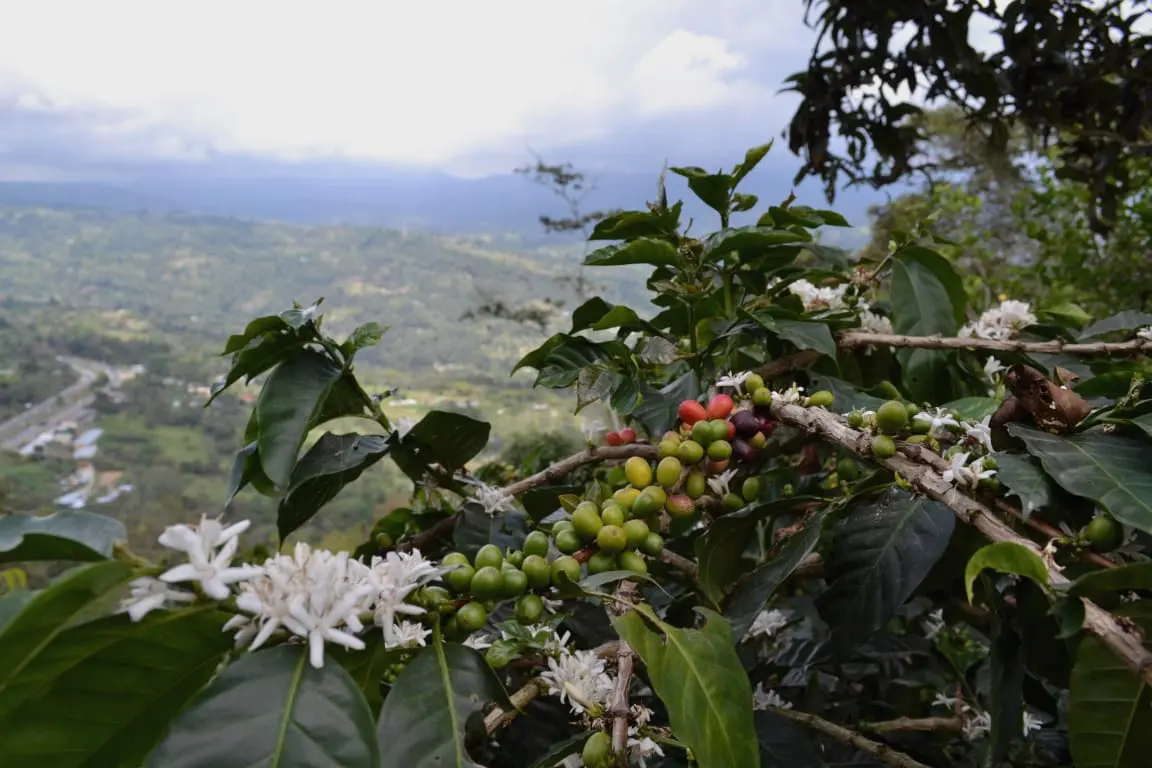
Most coffee trees do not produce a commercially viable harvest until they are three to four years old. Once the tree reaches maturity, it produces white, jasmine-scented flowers that bloom shortly after the rainy season begins. Following pollination, these flowers develop into green cherries that take approximately six to nine months to ripen. The entire cycle requires careful monitoring of soil nutrients and pest control to ensure the tree remains productive for its 20- to 30-year lifespan.
- Germination: Seeds are planted in shaded nurseries for 6-12 months.
- Transplantation: Young trees are moved to the field during the rainy season.
- Maturation: The plant grows for 3-4 years before the first significant harvest.
- Flowering: Seasonal blooms lead to fruit development.
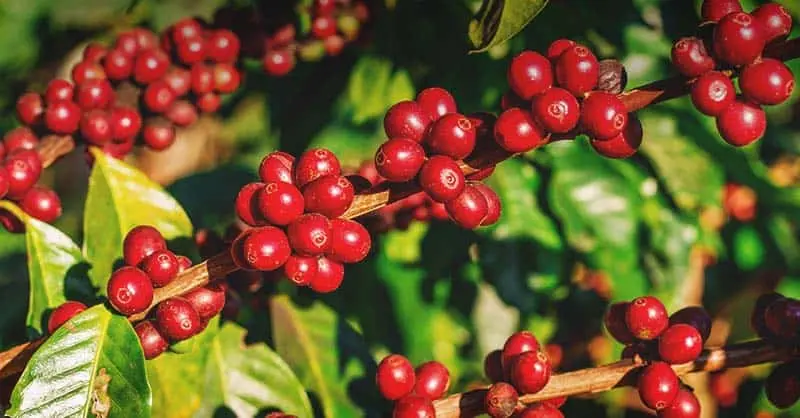
- Harvesting: Ripe cherries are picked once they turn deep red.
What are the stages of coffee harvesting?
Harvesting is a labor-intensive process that determines the quality of the raw product. Because coffee cherries on a single branch do not always ripen simultaneously, farmers must decide between two primary methods. Selective picking involves manual labor to harvest only the perfectly ripe, deep-red cherries, necessitating multiple passes through the same field over several weeks. This method is costly but ensures the highest quality.
Strip picking is a more efficient, less selective method where all cherries—ripe, unripe, and overripe—are removed from the branch at once. This is often done by hand or with mechanical harvesters in flatter, industrial-scale plantations. While faster, this approach requires rigorous post-harvest sorting to remove defects. Regardless of the method, the goal is to minimize damage to the tree while maximizing the volume of ripe fruit collected for processing.
- Hand-picking: Ensures only the best cherries are selected, common in specialty coffee.
- Mechanical harvesting: Uses vibration to shake cherries off, common in high-volume regions.
- Sorting: Flotation tanks and optical sorters remove debris and under-ripe "floaters."
How is coffee processed after picking?
Processing is the critical step of removing the outer fruit layers to reveal the green bean inside. The "washed" process involves removing the pulp mechanically and fermenting the beans in water tanks to break down the remaining mucilage. This produces a clean, consistent flavor profile that highlights the bean's inherent acidity. It is the standard for high-quality Arabica coffee worldwide.
The "natural" or dry process is the oldest method, where entire cherries are spread out on patios or raised beds to dry in the sun. This allows the bean to absorb sugars from the fruit pulp, resulting in a heavier body and fruity, wine-like notes. A third method, known as "honey" or semi-washed, sits between these two, leaving some fruit residue on the bean during drying. Each method requires careful control of moisture levels to prevent mold and fermentation defects.
- Washed: High clarity, bright acidity, clean finish.
- Natural: Heavy body, sweet, complex, berry-like notes.
- Honey: Balanced, syrupy body, moderate acidity.
Common mistakes when growing coffee
One of the most frequent errors in coffee cultivation is improper shade management. While some varieties can tolerate full sun, excessive exposure can lead to heat stress and premature exhaustion of the tree. Integrating shade trees, such as banana or leguminous species, helps regulate temperature, prevents soil erosion, and provides a habitat for birds that naturally control insect populations. Neglecting this balance often leads to lower yields and shorter tree lifespans.
Another major mistake is poor soil nutrient management. Coffee is a heavy feeder, requiring nitrogen, phosphorus, and potassium to produce healthy fruit. Farmers who fail to conduct regular soil testing often apply fertilizers incorrectly, leading to nutrient imbalances or environmental runoff. Additionally, improper pruning is a common pitfall; without regular trimming of old, non-productive branches, the tree directs energy into wood rather than fruit. Consistent maintenance is the only way to ensure a sustainable and profitable harvest season after season.
Key facts
- Coffee plants thrive best in the "Bean Belt," a tropical region located between the Tropics of Cancer and Capricorn.
- Arabica coffee, which accounts for about 60% of global production, prefers high altitudes between 2,000 and 6,000 feet.
- Robusta coffee is hardier, grows at lower elevations, and contains nearly twice the caffeine of Arabica beans.
- Coffee seeds, known as "beans," are typically planted in shaded nurseries before being transplanted to the field after 6 to 12 months.
- A single coffee tree takes three to four years to reach maturity and produce its first harvest of "cherries."
- Overwatering is a common mistake that leads to root rot; ensure soil has excellent drainage to keep the plant healthy.
The bottom line
Growing coffee is a labor-intensive process that requires precise environmental conditions, including specific altitudes, consistent rainfall, and careful shade management. From the initial nursery stage to the delicate harvest of ripe cherries, success depends on balancing soil health with climate protection. Whether grown commercially or as a hobby, understanding these biological needs is essential to producing high-quality beans that capture the unique characteristics of their origin.
People also ask
How long does it take for a coffee cherry to ripen?
Once the tree flowers, it generally takes between six and nine months for the fruit to ripen from green to a deep red color. Timing varies significantly based on the specific variety and the local climate conditions.
Do coffee plants require direct sunlight?
While some varieties tolerate sun, many high-quality Arabica plants prefer partial shade to protect them from heat stress. Farmers often intercrop coffee with taller trees like banana or avocado to provide this necessary canopy.
What is the difference between wet and dry processing?
Wet processing involves removing the fruit pulp before drying the seeds, which results in a cleaner, more acidic flavor. Dry processing involves drying the entire cherry in the sun, which often imparts a heavier body and sweeter fruit notes.
How much water does a coffee plant need?
Coffee plants require consistent rainfall, typically between 60 and 100 inches annually. Periods of dry weather are actually beneficial during the flowering stage to encourage a uniform crop.
Can I grow coffee at home?
You can grow coffee as a houseplant in cooler climates, provided you offer bright, indirect light and humidity. It is unlikely to produce a harvestable amount of beans, but it serves as an attractive ornamental plant.
What are the biggest pests for coffee farmers?
The coffee berry borer is the most destructive pest, as it drills into the fruit to lay eggs. Farmers manage this through careful field sanitation and the use of specific biological traps.
This answer was created with the help of AI research tools and reference sources. Spotted an error? Let us know — we correct mistakes quickly. See our editorial policy.