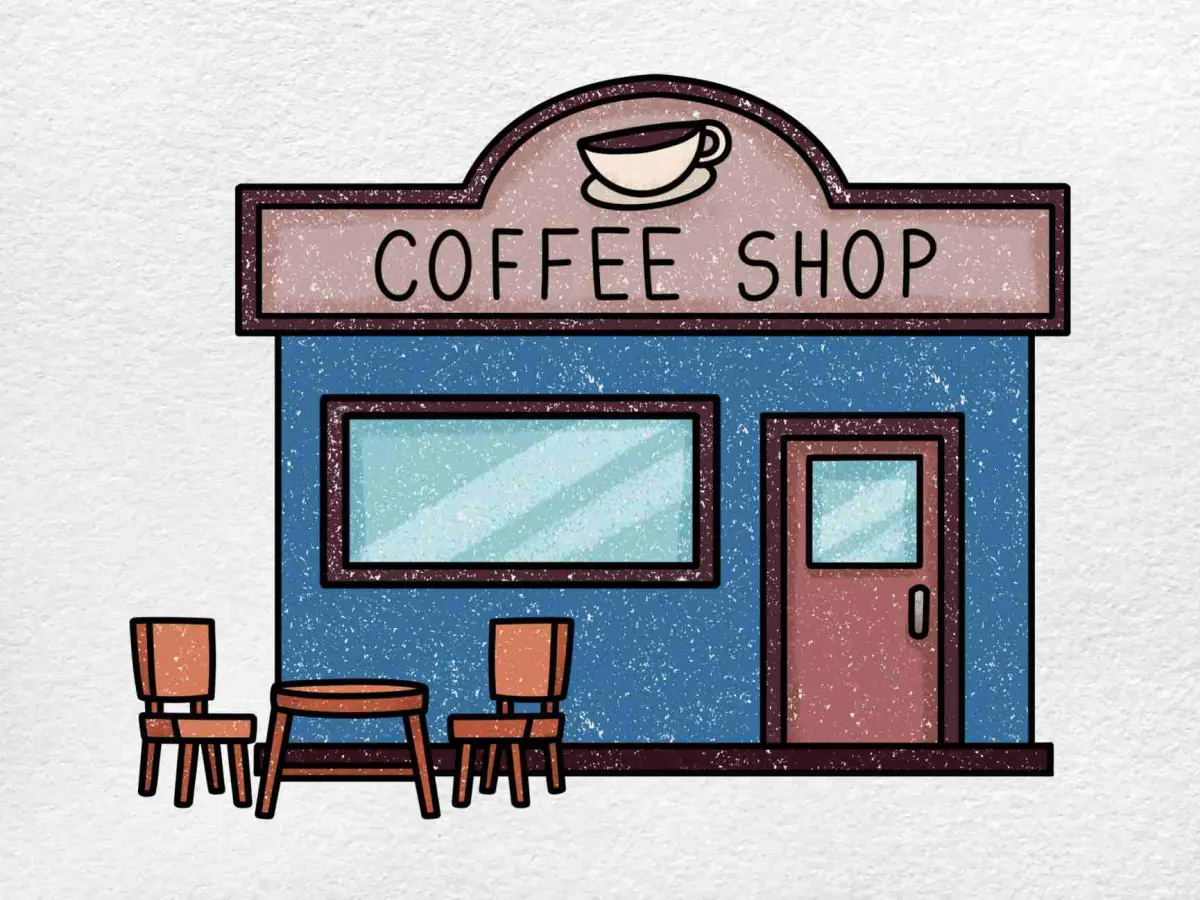
How do you draw a coffee shop?
Short answer
Drawing a coffee shop requires establishing a strong perspective, defining the storefront’s architectural features, and populating the space with characteristic furniture. By mastering one-point or two-point perspective, you can create depth. Focus on the interplay between large glass windows, interior lighting, and the cozy, cluttered details that define the coffee house aesthetic.
On this page
How to draw a coffee shop in perspective
Perspective is the foundation of any architectural drawing. To capture a coffee shop, most artists use one-point perspective, placing a single vanishing point on the horizon line to draw the viewer’s eye toward the service counter. This technique creates a sense of depth, making the room feel inviting rather than flat. Start by lightly sketching your horizon line and placing a central point; all lines representing the floor, ceiling, and walls should eventually converge there.
If you prefer a more dynamic view, utilize two-point perspective. This approach is ideal for drawing the exterior corner of a building or a complex interior layout where two walls meet at an angle. By establishing two vanishing points on the horizon line, you can accurately depict the depth of tables and the slant of chairs. Always use a ruler for your initial structural lines to maintain geometric accuracy before adding the softer, organic details of the environment.
How to sketch storefront architecture
The facade is the first thing a viewer notices, so it must convey the shop’s unique character. Modern coffee shops often feature large, floor-to-ceiling glass windows that allow light to spill onto the sidewalk. When drawing these, use a light blue or grey wash to indicate transparency, and add reflections of nearby trees or street lamps to ground the building in its environment. Don’t forget the signage, which acts as a focal point for the composition.
- Draw the basic rectangular outline of the building frame.
- Sketch the window panes, ensuring they are evenly spaced.
- Add a door frame and a handle, keeping them proportional to the windows.
- Include architectural details like brick textures, awnings, or hanging plants.
- Place the shop’s name in a clear, legible font above the entrance.
Best tools for drawing coffee shops
Choosing the right tools depends on your desired style and level of detail. For beginners, a simple HB pencil and a set of fine-liner pens are sufficient to establish structure and add clean, crisp outlines. Graphite allows for easy erasing during the initial layout phase, while waterproof ink pens are essential if you plan to add watercolor washes later. A kneaded eraser is also helpful for lifting graphite without damaging the paper’s surface.
For those interested in adding color, alcohol-based markers or watercolors are excellent choices. Markers provide vibrant, flat colors that mimic the sleek, modern aesthetic of many cafes, while watercolors offer a softer, more atmospheric look. Consider using a sketchbook with at least 140-pound weight paper if you intend to use wet media. This prevents the paper from buckling or tearing when you apply layers of paint to represent the warm, ambient lighting inside the shop.
Why perspective distortion happens
Perspective distortion is a common issue where objects appear warped or out of place, often caused by placing vanishing points too close together. When the vanishing points are too near, the objects at the edges of your drawing will look unnaturally stretched or skewed. To fix this, move your vanishing points further apart or off the page entirely. This adjustment creates a more natural field of vision that mimics how the human eye actually perceives a room.
Another cause of distortion is incorrect scaling of furniture. A common mistake is drawing a chair that appears too large for the table it sits next to, which ruins the illusion of space. To maintain scale, remember that objects further away from the viewer must be drawn smaller and higher up on the page. Use a consistent scale reference, such as the height of a standard door, to ensure that every table, chair, and coffee machine remains proportional to the overall environment.
Common mistakes when drawing cafes
One frequent error is neglecting the "clutter" that makes a coffee shop feel authentic. A perfectly clean, empty cafe often looks sterile and uninviting. To make your drawing feel lived-in, add details like steaming mugs, stacks of books, laptops on tables, and chalkboard menus. These small elements suggest human presence and warmth, which are essential for capturing the true essence of a coffee house environment.
- Over-detailing: Do not try to draw every single grain of wood on the floor.
- Ignoring light sources: Always decide where the light is coming from—such as a window or a pendant lamp—to create consistent shadows.
- Flat surfaces: Avoid drawing tables as perfect rectangles; add thickness to the edges to show they are three-dimensional objects.
- Neglecting the background: Ensure the street outside or the wall behind the counter has enough detail to prevent the scene from feeling like a stage set.
- Rigid lines: While perspective requires precision, avoid making every line perfectly straight; add slight variations to show the texture of materials.
By focusing on these structural and atmospheric elements, you will successfully create a compelling and realistic depiction of a coffee shop.
Key facts
- Start by drawing a simple rectangle to represent the storefront, then add a horizontal line across the middle to establish the horizon.
- Use one-point perspective by drawing all depth lines toward a single vanishing point located on the horizon line.
- Sketch the door and windows using vertical lines that remain parallel to the sides of your paper to ensure they look stable.
- Add architectural details like awnings, signage, and brick textures only after the basic structural box is correctly proportioned.
- Draw tables and chairs as smaller shapes inside the shop, keeping them lower on the page to suggest they are closer to the viewer.
- Use a soft graphite pencil for initial layout lines so they can be easily erased after you ink the permanent outlines.
The bottom line
Drawing a coffee shop requires a solid grasp of one-point perspective to ensure the structure remains grounded and realistic. By starting with a simple rectangular frame and carefully aligning your depth lines to a single vanishing point, you create a professional foundation. Focus on maintaining vertical integrity and adding details incrementally. With practice, these structural steps will allow you to capture the inviting atmosphere of any cafe.
People also ask
How do I make the coffee shop look three-dimensional?
Use linear perspective by connecting the corners of your building to a central vanishing point. This technique creates the illusion of depth by making objects appear smaller as they move toward the horizon.
What is the most common mistake when drawing buildings?
Beginners often tilt vertical lines, which makes the structure appear as if it is falling over. Always use a ruler or a straight edge to keep your vertical lines perfectly perpendicular to the bottom of the page.
Should I draw the interior or the exterior first?
It is best to establish the exterior shell first to define the boundaries of your scene. Once the frame is set, you can populate the interior with furniture and customers without losing your sense of space.
How do I represent glass windows realistically?
Draw thin, light diagonal lines across the window panes to suggest reflections. Adding a slight tint with a grey pencil helps distinguish the glass from the surrounding wall material.
What tools are best for beginners?
Start with an HB pencil for sketching, a fine-liner pen for outlining, and a kneaded eraser for cleaning up mistakes. These basic supplies allow for precision without the complexity of advanced shading tools.
How do I add people to the scene without cluttering it?
Use simple silhouettes or stick figures to represent customers sitting at tables. Keep them small and focus on their placement relative to the furniture to maintain the scale of the room.
This answer was created with the help of AI research tools and reference sources. Spotted an error? Let us know — we correct mistakes quickly. See our editorial policy.