What is Vienna known for?
Short answer
Vienna is globally renowned as the former seat of the Habsburg Empire and a premier center for classical music. It is celebrated for its opulent imperial palaces, historic coffee house culture, and high quality of life. The city serves as a living museum of architectural grandeur, artistic innovation, and sophisticated culinary traditions.
On this page
Why is Vienna famous for music?
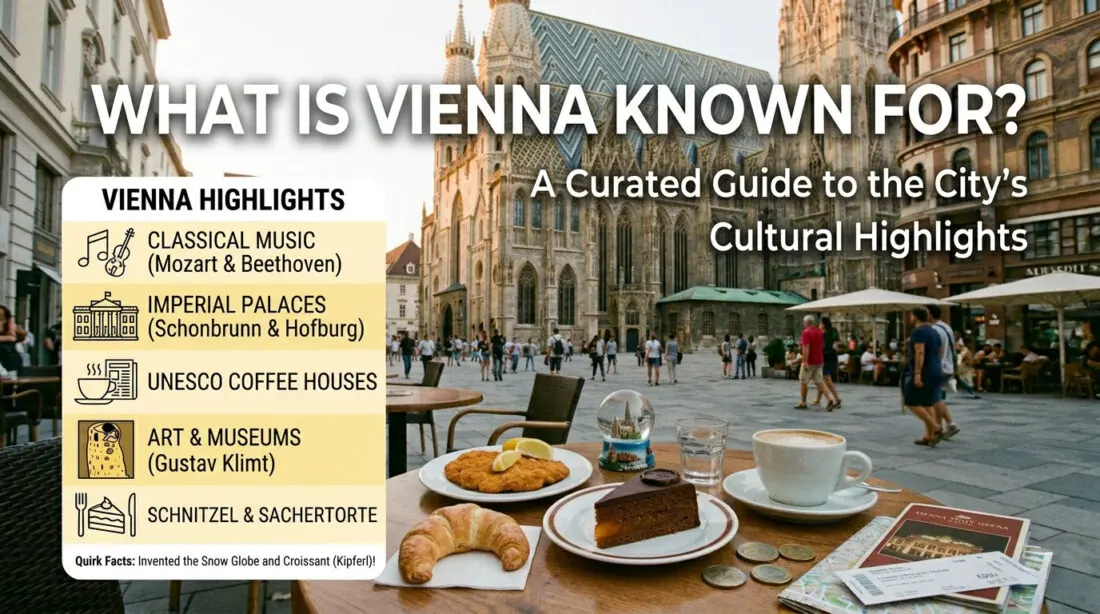
Vienna is frequently called the "City of Music" because more famous composers have lived there than in any other city in the world. Figures such as Wolfgang Amadeus Mozart, Ludwig van Beethoven, Franz Schubert, and Johannes Brahms all defined their careers within the city’s concert halls. Today, the Vienna Philharmonic and the Vienna State Opera remain among the most prestigious musical institutions on the planet.
Visitors can engage with this legacy through several world-class venues and experiences:
- The Vienna State Opera: Offers standing-room tickets for a nominal fee.
- The Musikverein: Famous for its "Golden Hall," which hosts the annual New Year’s Concert.
- Haus der Musik: An interactive sound museum perfect for families and beginners.
- Central Cemetery: Visit the graves of Beethoven, Schubert, and Strauss in the musicians' section.
To fully appreciate the musical heritage, attend a performance at one of these historic sites. Booking tickets well in advance is essential for popular shows, as they often sell out months ahead of time.
How to experience the Viennese coffee house culture
The Viennese coffee house is a social institution recognized by UNESCO as an Intangible Cultural Heritage. These establishments are designed as "extended living rooms" where guests are encouraged to linger for hours with a single cup of coffee and a newspaper. This tradition dates back to the late 17th century, following the Ottoman siege of the city.
When visiting a traditional coffee house like Café Central or Café Sacher, follow these local customs to blend in:
- Order a "Melange," which is the local equivalent of a cappuccino with creamy foam.
- Pair your coffee with a slice of Sachertorte or Apfelstrudel.
- Signal the waiter when you are ready to pay; they will not bring the bill until asked.
- Do not expect a quick service, as the pace is intentionally slow and relaxed.
Avoid the mistake of rushing your visit or asking for "to-go" cups, as the culture values the act of sitting and observing the surroundings.
What are the must-see imperial palaces?
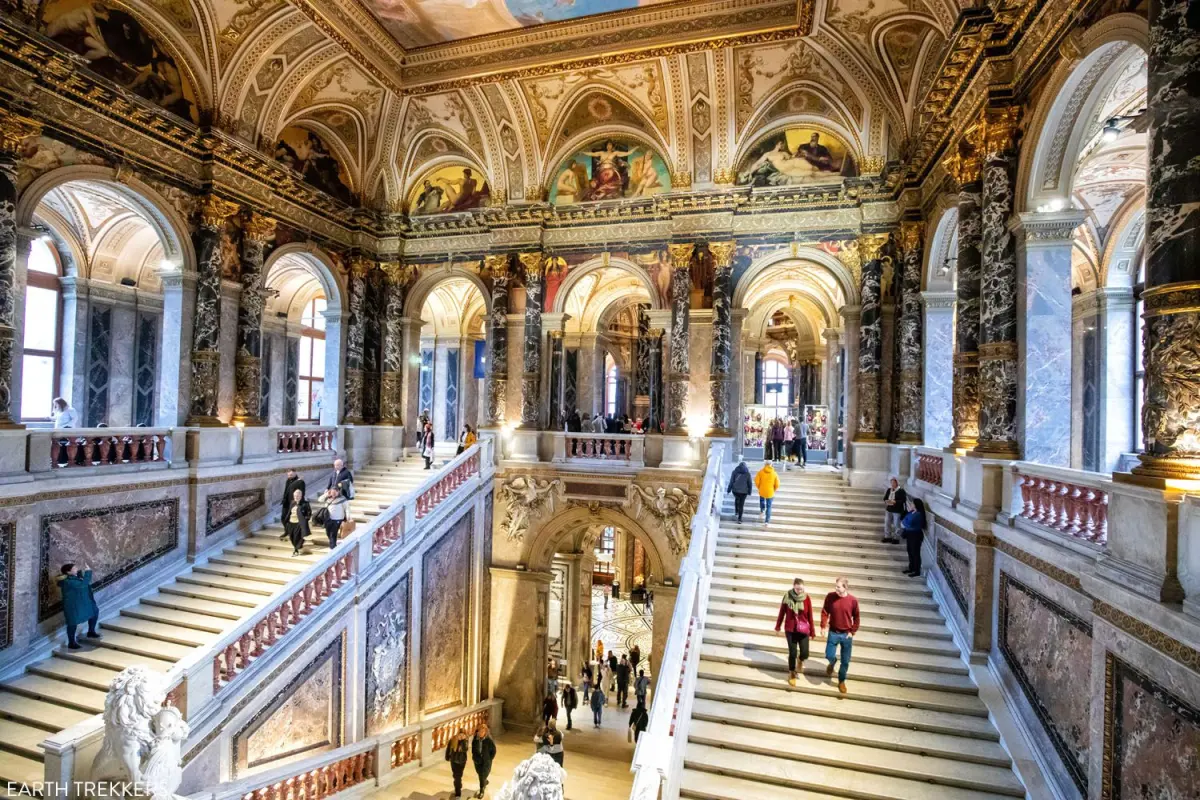
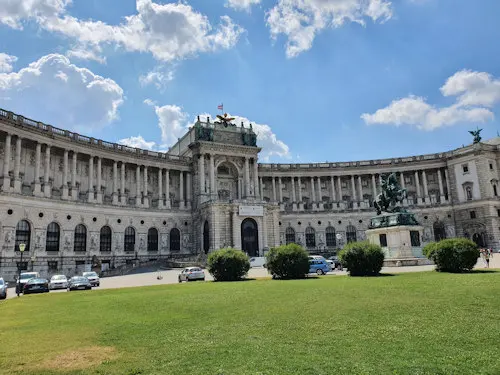
As the capital of the Habsburg Empire for centuries, Vienna features an extraordinary collection of royal architecture. The Hofburg Palace served as the winter residence, while Schönbrunn Palace functioned as the summer home for the imperial family. Both sites offer a glimpse into the lavish lifestyle of monarchs like Empress Maria Theresa and Emperor Franz Joseph I.
Schönbrunn Palace is particularly notable for its vast gardens, which include the world’s oldest zoo and a hilltop structure called the Gloriette. The Belvedere Palace is another essential stop, housing the world’s largest collection of Gustav Klimt paintings, including the iconic work "The Kiss."
- Hofburg Palace: Visit the Sisi Museum and the Imperial Treasury.
- Schönbrunn Palace: Take the Grand Tour to see the full suite of state rooms.
- Belvedere: Focus on the Upper Belvedere for the main art collection.
Plan to dedicate at least half a day to each palace, as the grounds are expansive and require significant walking to explore fully.
How to navigate Vienna like a local
Vienna consistently ranks as one of the most livable cities in the world due to its efficient public transportation and safety. The city is divided into districts, with the first district, or "Innere Stadt," containing most of the historical landmarks. The public transit system, known as Wiener Linien, includes an extensive network of subways, trams, and buses that cover the entire metropolitan area.
For a smooth travel experience, consider these practical tips:
- Purchase a 24, 48, or 72-hour Vienna transport pass to save on individual fares.
- Use the tram lines that circle the Ringstrasse for a scenic, low-cost tour of the city center.
- Rent a city bike during the warmer months to explore the extensive paths along the Danube Canal.
- Always validate your paper ticket upon entering the transit system to avoid heavy fines.
Common mistakes include relying solely on taxis, which are expensive, or failing to check the operating hours of shops, which are typically closed on Sundays.
Best time of year to visit Vienna
The city transforms significantly throughout the seasons, offering different experiences depending on the time of year. Summer brings vibrant outdoor festivals, film screenings at the Rathausplatz, and lively wine garden visits in the nearby vineyards. However, the city is arguably most magical in December, when the famous Christmas markets open throughout the city squares.
If you are planning a trip, keep these seasonal highlights in mind:
- Spring (April–May): Ideal for visiting the blooming gardens at Schönbrunn and the Prater amusement park.
- Summer (June–August): Perfect for evening concerts and outdoor dining along the Danube.
- Autumn (September–October): The best time for wine tasting in the Grinzing district.
- Winter (November–December): Essential for the Christmas markets and the traditional ball season.
Regardless of when you visit, pack comfortable walking shoes, as the city’s cobblestone streets and extensive museum galleries require significant time on your feet. By focusing on these core pillars of Viennese life, you will gain a comprehensive understanding of what makes this historic capital endure as a top global destination.
Key facts
- Vienna has been ranked as the world's most livable city by the Economist Intelligence Unit multiple times due to its infrastructure and safety.
- The city’s coffee house culture is a social institution; it is acceptable to stay for hours with a single cup of coffee.
- Visit the Naschmarkt, Vienna’s most popular market, which has existed since the 16th century and offers diverse international foods.
- Avoid tipping excessively; in restaurants, rounding up the bill or adding 5–10% is standard and sufficient.
- Use the U-Bahn (subway) system, which is clean, efficient, and covers almost every major tourist site in the city.
- Purchase the Vienna City Card for unlimited public transport and discounts on entry fees to major museums and attractions.
The bottom line
Vienna offers a sophisticated blend of imperial grandeur and modern urban convenience. Whether you are exploring the opulent halls of the Hofburg Palace, attending a classical concert, or relaxing in a traditional coffee house, the city provides a rich cultural experience. By utilizing the efficient public transit and embracing the local pace of life, visitors can easily enjoy the historical beauty that defines this Austrian capital.
People also ask
Is Vienna expensive to visit?
Vienna is generally comparable to other major Western European capitals. While luxury dining and high-end hotels are costly, travelers can save money by utilizing the efficient public transit system and enjoying affordable street food like the famous Bosna sausage.
What is the best time of year to visit Vienna?
The city is beautiful year-round, but spring and autumn offer the most pleasant weather for walking. December is also highly popular due to the city's world-famous Christmas markets, which transform the squares into festive, light-filled attractions.
Do I need to speak German to get around?
English is widely spoken in hotels, restaurants, and tourist areas, making it easy for international travelers to navigate. Learning basic German phrases like "Danke" (thank you) and "Bitte" (please) is polite and appreciated by locals.
What is the dress code for the Vienna State Opera?
While there is no strictly enforced dress code, most patrons dress in business casual or formal attire for evening performances. Avoid wearing athletic wear or flip-flops, as the atmosphere remains elegant and traditional.
Can I drink the tap water in Vienna?
Yes, Vienna’s tap water is some of the highest quality in the world. It is piped directly from the Styrian Alps and is perfectly safe and delicious to drink straight from any public fountain or faucet.
Is Sunday a good day for shopping in Vienna?
Most shops, including supermarkets and clothing stores, are closed on Sundays in accordance with Austrian law. Plan your shopping for weekdays or Saturdays, as museums and restaurants remain open and active throughout the weekend.
This answer was created with the help of AI research tools and reference sources. Spotted an error? Let us know — we correct mistakes quickly. See our editorial policy.