Why do leaves change color in the fall?
Short answer
Leaves change color because trees prepare for winter by reducing chlorophyll production as daylight hours shorten and temperatures drop. This decline reveals underlying pigments like carotenoids and anthocyanins that were previously masked by green. The process serves as a protective mechanism, allowing trees to conserve energy and survive the dormant winter season.
On this page
Why do leaves change color?
The primary driver of autumnal color change is the reduction of sunlight. As the autumn equinox passes and days grow shorter, trees receive hormonal signals that it is time to prepare for winter. The tree begins to shut down its food-making factories, the leaves, by forming a layer of cells called the abscission zone at the base of each leaf stem. This layer gradually cuts off the flow of water and nutrients between the branch and the leaf.
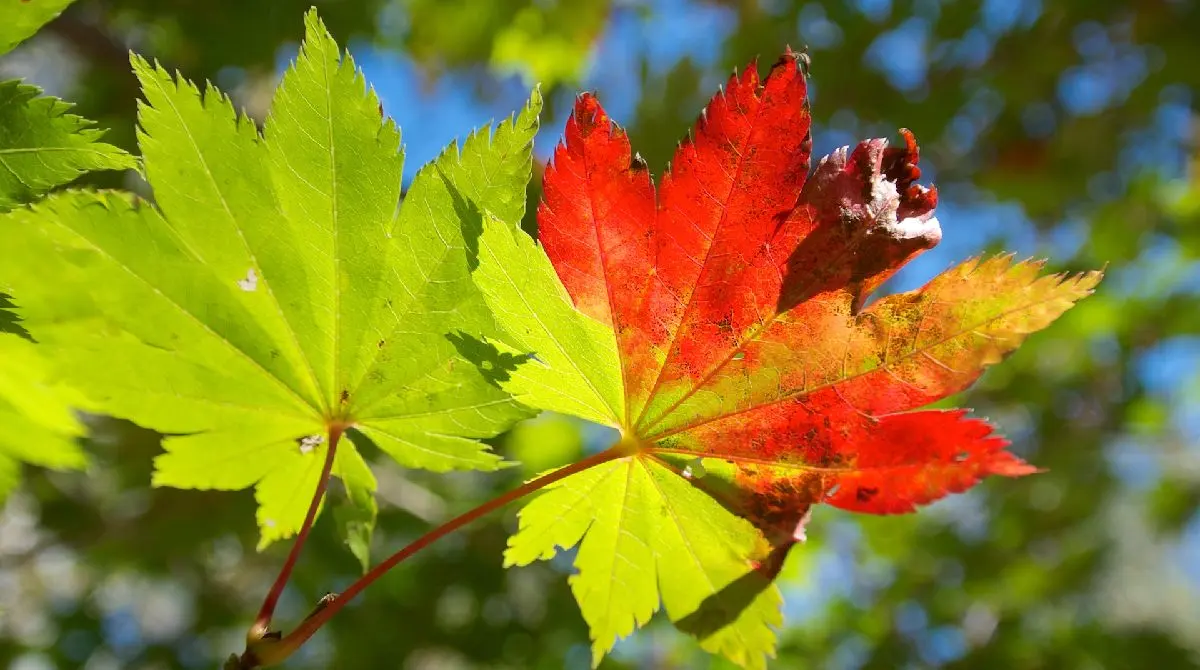
When the supply of chlorophyll—the green pigment responsible for photosynthesis—is interrupted, the green color fades. Chlorophyll is unstable and requires constant renewal by the tree to remain vibrant. Once the tree stops producing it, the green pigment breaks down rapidly. This reveal allows other pigments, which are always present in the leaf but hidden by the dominant green, to become visible to the naked eye.
What pigments create fall colors?
Leaves contain a variety of chemical compounds that dictate their final appearance. The most prominent colors are produced by three specific types of pigments:
- Chlorophyll: Provides the green color and is essential for capturing energy from sunlight.
- Carotenoids: Produce yellow, orange, and brown hues, commonly found in carrots and corn.
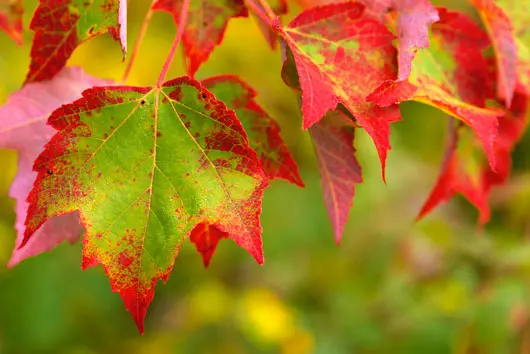
- Anthocyanins: Generate red, purple, and crimson shades, which are often produced in response to high sugar concentrations in the leaves.
Carotenoids are present in the leaf throughout the growing season, waiting for the chlorophyll to vanish. Anthocyanins, however, are often produced only in late summer and early autumn. Their synthesis is triggered by the breakdown of sugars trapped in the leaf as the abscission zone begins to close. The interaction between these pigments and environmental factors creates the diverse palette seen in forests across the Northern Hemisphere.
How does weather affect fall foliage?
The intensity and duration of the color display depend heavily on local weather patterns. A series of warm, sunny days followed by cool, crisp nights—typically below 45 degrees Fahrenheit—provides the ideal conditions for the most vibrant displays. The sunlight during the day promotes the production of sugars, while the cool nights trap those sugars within the leaf, stimulating the production of brilliant red anthocyanins.
Conversely, adverse weather can significantly mute the colors. A late spring or a severe summer drought can cause leaves to drop prematurely, often turning brown before they can show their true colors. Furthermore, early frosts can kill the leaves quickly, preventing the chemical processes necessary for color development. If the autumn remains unusually warm and cloudy, the trees may produce less sugar, resulting in a display dominated by duller yellows and browns rather than vivid reds.
How to predict the best time for leaf peeping?
Timing a trip to view fall foliage requires monitoring regional reports and understanding the progression of the season. Colors typically begin in the northernmost latitudes or at higher elevations, where temperatures drop earliest. The change then moves southward and downward in elevation over several weeks. To maximize your chances of seeing peak color, follow these steps:
- Check local "foliage trackers" provided by state forestry departments or tourism bureaus starting in early September.
- Monitor the elevation of your destination; higher altitudes usually reach peak color 7 to 10 days before the valleys below.
- Look for regions with diverse tree species, such as maples, oaks, and beeches, which offer a wider variety of colors.
- Plan your travel for the "peak" window, which usually lasts only about 7 to 14 days in any given location.
Common mistakes when photographing fall leaves
Many visitors fail to capture the beauty of the season because they do not account for lighting and composition. One of the most frequent errors is shooting during the middle of the day when the sun is directly overhead. This creates harsh shadows and washes out the delicate textures of the leaves. Instead, aim to photograph during the "golden hour," shortly after sunrise or before sunset, when the light is soft and warm.
Another common mistake is ignoring the background. A single vibrant leaf may look beautiful, but it often lacks context if the surrounding forest is cluttered or out of focus. Try to incorporate elements like water reflections, winding paths, or architectural features to provide scale and interest. Avoid over-saturating your photos during post-processing, as this often makes the colors look artificial rather than natural. By focusing on the interplay of light and shadow, you can better capture the fleeting transition of the autumn season.
Key facts
- Chlorophyll, the pigment responsible for photosynthesis, breaks down as days shorten and temperatures drop.
- Carotenoids, which produce yellow and orange hues, are present in leaves all summer but are masked by green chlorophyll.
- Anthocyanins, the pigments that create vibrant reds and purples, are produced in late summer as sugars become trapped in leaves.
- Sugar maples are famous for producing brilliant red colors, while birches and hickories typically turn bright yellow.
- A sequence of warm, sunny autumn days followed by cool, crisp nights produces the most intense fall foliage colors.
- To preserve autumn leaves, press them between sheets of newspaper under heavy books for one to two weeks.
The bottom line
The transition of leaf color is a biological response to the shortening days and cooling temperatures of autumn. As trees prepare for winter dormancy, they stop producing chlorophyll, allowing hidden pigments like carotenoids and anthocyanins to emerge. While weather patterns dictate the intensity of the display, this annual cycle serves as a vital signal that trees are conserving energy to survive the coming cold months.
People also ask
Does frost cause leaves to change color?
No, frost does not trigger the color change. In fact, an early, hard frost can kill the leaves prematurely, causing them to turn brown and drop before they can develop vibrant colors.
Why do some leaves turn brown instead of red or yellow?
Brown leaves occur because of tannins, which are waste products left behind in the leaf after the chlorophyll and other pigments have completely broken down. These are common in oak trees.
Do all trees lose their leaves in the autumn?
Only deciduous trees, such as maples, oaks, and elms, shed their leaves annually. Coniferous trees, like pines and spruces, retain their needles throughout the year.
How does weather affect the intensity of the colors?
Drought during the growing season can delay the color change, while excessive rain can lead to duller colors. The best displays occur when the summer is moist and the autumn is dry and sunny.
Why do leaves fall off the tree at all?
Trees create a layer of cork-like cells called the abscission layer at the base of the leaf stem. This layer eventually cuts off the flow of water and nutrients, causing the leaf to detach.
Can I speed up the drying process for fall leaves?
You can place leaves in a microwave between paper towels for 30 to 60 seconds to dry them quickly. Be careful not to overheat them, as they can become brittle or catch fire.
This answer was created with the help of AI research tools and reference sources. Spotted an error? Let us know — we correct mistakes quickly. See our editorial policy.