What is the Colosseum?
Short answer
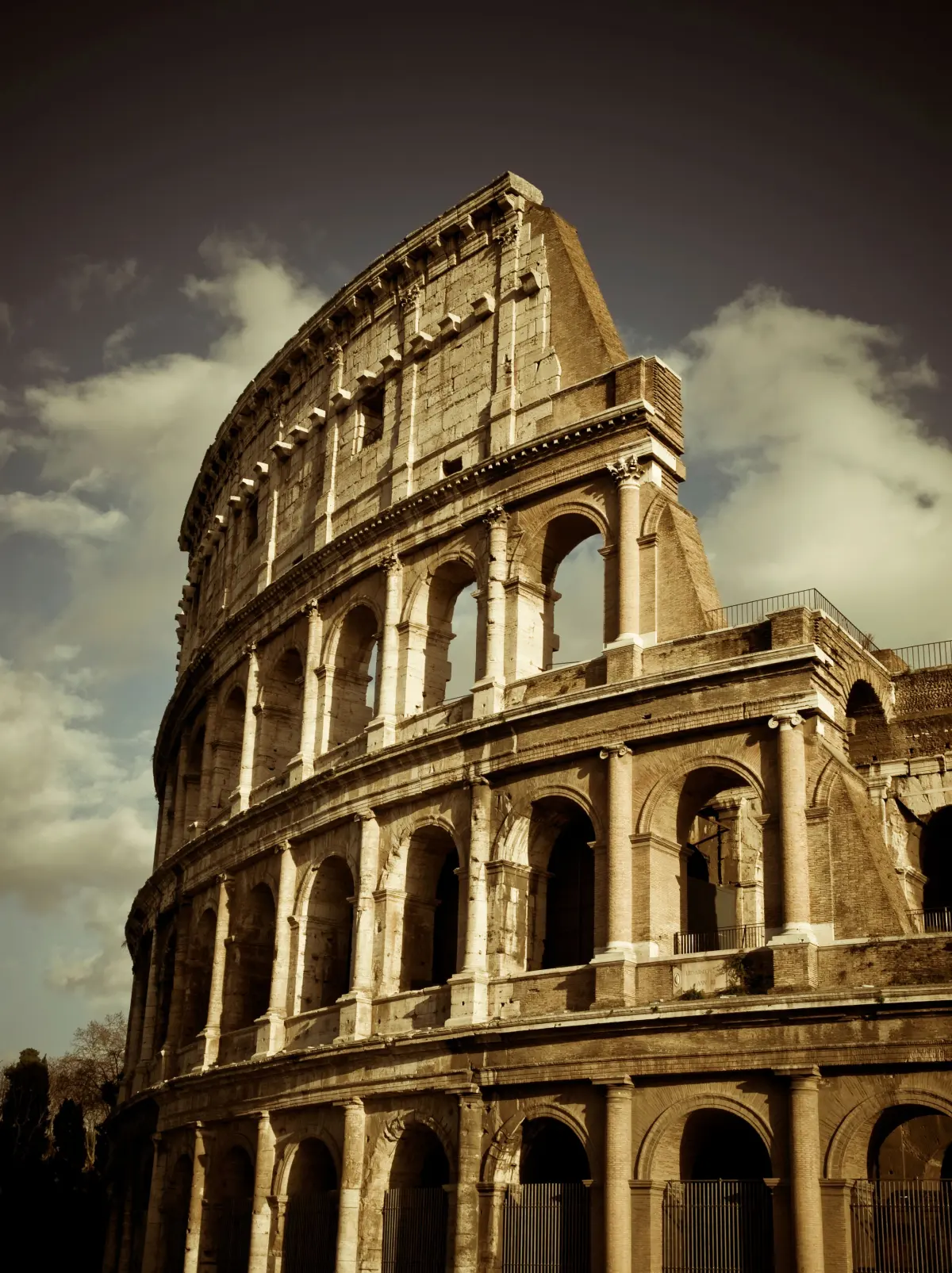
The Colosseum is a massive stone amphitheater located in the center of Rome, Italy. Commissioned by Emperor Vespasian around 70–72 CE and completed by his son Titus in 80 CE, it served as the premier venue for gladiatorial contests, public spectacles, and dramatic performances during the height of the Roman Empire.
On this page
What is the history of the Colosseum?
The Colosseum, originally known as the Flavian Amphitheatre, stands as the largest ancient amphitheater ever built. Its construction was funded by the spoils taken from the Jewish Temple after the Great Revolt in Jerusalem. The structure was built on the site of Emperor Nero’s former palace complex, specifically over a drained artificial lake, as a symbolic gesture to return public land to the Roman citizens.
The arena remained in active use for nearly five centuries. While gladiatorial combat eventually declined due to changing cultural values and the rise of Christianity, the venue continued to host animal hunts and other public events until the 6th century. Over the following millennium, the structure suffered from neglect, earthquakes, and stone robbers who stripped it of its marble and metal clamps. Today, it remains an iconic symbol of Imperial Rome and a testament to the architectural ingenuity of the Flavian dynasty.
How do I visit the Colosseum today?
Visiting the Colosseum requires careful planning, as it is one of the most popular tourist destinations in the world. You must purchase tickets well in advance through the official government-run website or authorized resellers. Tickets are typically sold in timed slots, and you must arrive at the security checkpoint at least 15 to 30 minutes before your scheduled entry time to clear the mandatory security screening.
When planning your visit, consider the following logistical tips to ensure a smooth experience:
- Book your tickets at least 30 to 60 days in advance during the peak summer season.
- Choose a guided tour if you want access to restricted areas like the underground hypogeum or the top tier.
- Wear comfortable walking shoes, as the ancient stone floors are uneven and slippery.
- Bring a reusable water bottle, which can be filled at fountains located near the entrance.
- Check the official website for closures on major holidays or during special events.
What are the architectural features of the Colosseum?
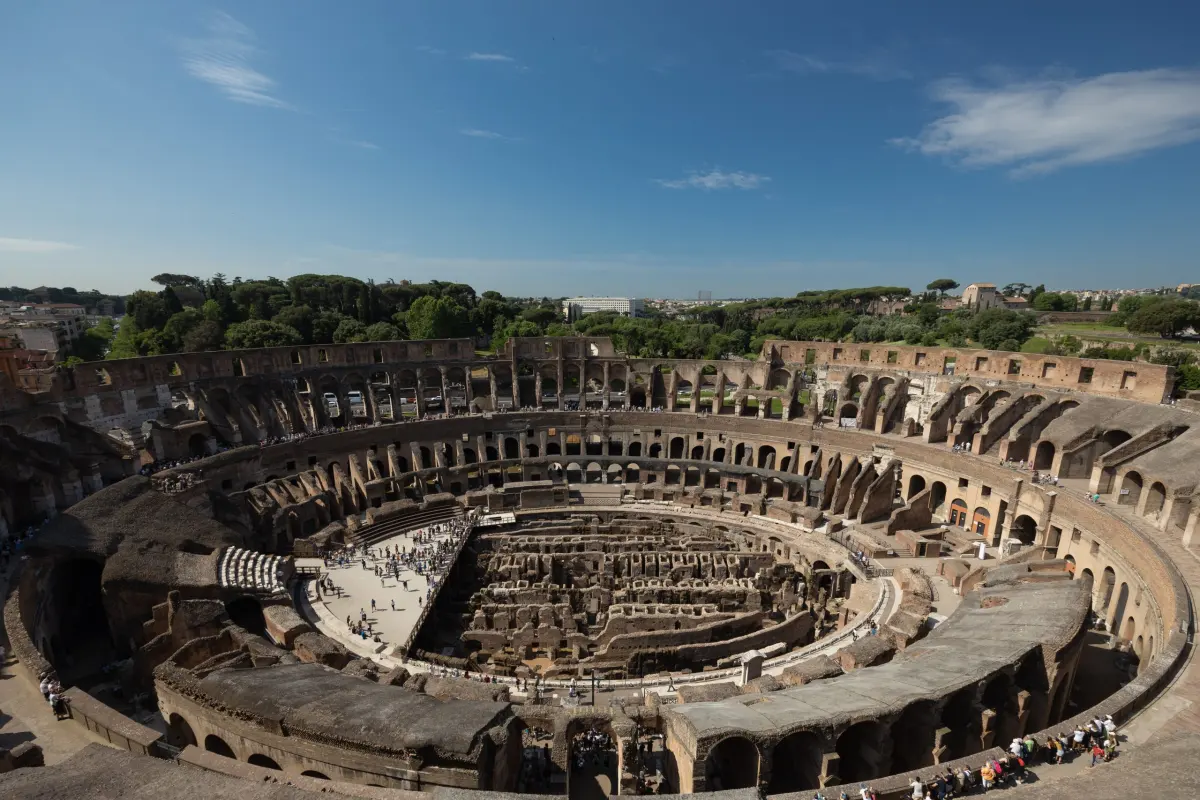
The Colosseum was an engineering marvel designed to accommodate an estimated 50,000 to 80,000 spectators. Its exterior facade features four levels, with the first three consisting of rows of arches framed by columns of different architectural orders: Doric on the ground floor, Ionic on the second, and Corinthian on the third. The fourth level is a solid wall decorated with Corinthian pilasters and brackets that once supported a massive retractable awning known as the velarium.
Beneath the wooden arena floor lay the hypogeum, a complex two-level network of tunnels and cages. This area served as the backstage for the spectacles, housing gladiators, wild animals, and the sophisticated machinery used to hoist scenery or animals into the arena through trapdoors. The seating was strictly hierarchical, with the best views reserved for the emperor, senators, and vestal virgins, while the poor and enslaved citizens were relegated to the highest wooden tiers at the very top.
Common mistakes when visiting the Colosseum
Many visitors underestimate the size of the archaeological park and the intensity of the Roman sun. A frequent error is attempting to visit the Colosseum, the Roman Forum, and Palatine Hill all in a single, rushed morning. These sites are connected, but they contain vast amounts of history and require significant walking. It is better to allocate at least four to five hours to see all three areas properly without exhaustion.
Avoid these common pitfalls to improve your experience:
- Buying tickets from unofficial street vendors who often charge double or sell invalid passes.
- Forgetting to bring a valid photo ID, which is required for entry with many ticket types.
- Arriving without sun protection, as there is very little shade inside the amphitheater.
- Attempting to bring large backpacks or luggage, as there is no storage facility available on-site.
- Ignoring the signs that prohibit climbing on structural ruins or entering restricted zones.
Why is the Colosseum significant to world culture?
The Colosseum represents the pinnacle of Roman social and political engineering. It functioned as a tool for the emperors to maintain public order and demonstrate their generosity by providing "bread and circuses" to the populace. By hosting elaborate games, the state reinforced the social hierarchy and showcased the reach of the empire, as animals and performers were brought to Rome from the furthest corners of the known world.
Beyond its political utility, the building set the standard for modern sports stadium design. The system of vaulted corridors, numbered entrances, and efficient crowd-control measures used in the Colosseum is mirrored in the design of contemporary football stadiums and arenas. It remains a powerful architectural archetype and a somber reminder of the brutal nature of ancient entertainment. As a UNESCO World Heritage site, it continues to draw millions of visitors who seek to connect with the complex, often violent, history of human civilization.
Key facts
- The Colosseum, originally known as the Flavian Amphitheatre, is the largest ancient amphitheater ever built.
- Construction began under Emperor Vespasian around 70–72 CE and was completed by his son Titus in 80 CE.
- It could hold an estimated 50,000 to 80,000 spectators who watched gladiatorial contests and public spectacles.
- The structure is located in the center of Rome, Italy, just east of the Roman Forum.
- Visitors should book tickets online weeks in advance to avoid long queues and ensure entry to the arena floor.
- Avoid hiring unofficial guides outside the entrance, as they often overcharge and provide inaccurate historical information.
The bottom line
The Colosseum stands as a monumental achievement of Roman engineering and a symbol of the empire's complex social history. By visiting this iconic amphitheater, you witness the scale of ancient public life and the architectural ingenuity that has allowed the structure to endure for millennia. It remains an essential destination for anyone seeking to understand the grandeur and brutality of the ancient Roman world today.
People also ask
Why was the Colosseum built?
Emperor Vespasian commissioned the structure as a gift to the Roman people to gain popularity after the chaotic reign of Nero. It served as a venue for public entertainment, including gladiatorial games, animal hunts, and mock sea battles.
How did spectators enter and exit the building?
The stadium featured 80 arched entrances, known as vomitoria, which allowed the massive crowd to enter and exit efficiently. Spectators were assigned seating based on their social status, with the best views reserved for the Emperor and senators.
What is the hypogeum?
The hypogeum is the complex underground network of tunnels and cages beneath the arena floor. It housed gladiators and wild animals before they were hoisted into the arena using a system of pulleys and elevators.
Can you go inside the Colosseum today?
Yes, the Colosseum is a major tourist site that is open to the public daily. Visitors can purchase tickets to explore the upper tiers, the arena floor, and the underground tunnels.
What caused the damage to the Colosseum?
While the structure has survived for nearly 2,000 years, it was severely damaged by a major earthquake in 1349. Additionally, centuries of stone robbing and pollution have contributed to the degradation of its exterior walls.
What were the gladiatorial games?
These were organized combat events where trained fighters, often enslaved people or prisoners of war, battled each other or wild animals. The games were intended to showcase Roman power and provide entertainment for the masses.
This answer was created with the help of AI research tools and reference sources. Spotted an error? Let us know — we correct mistakes quickly. See our editorial policy.