What is the Parthenon?
Short answer
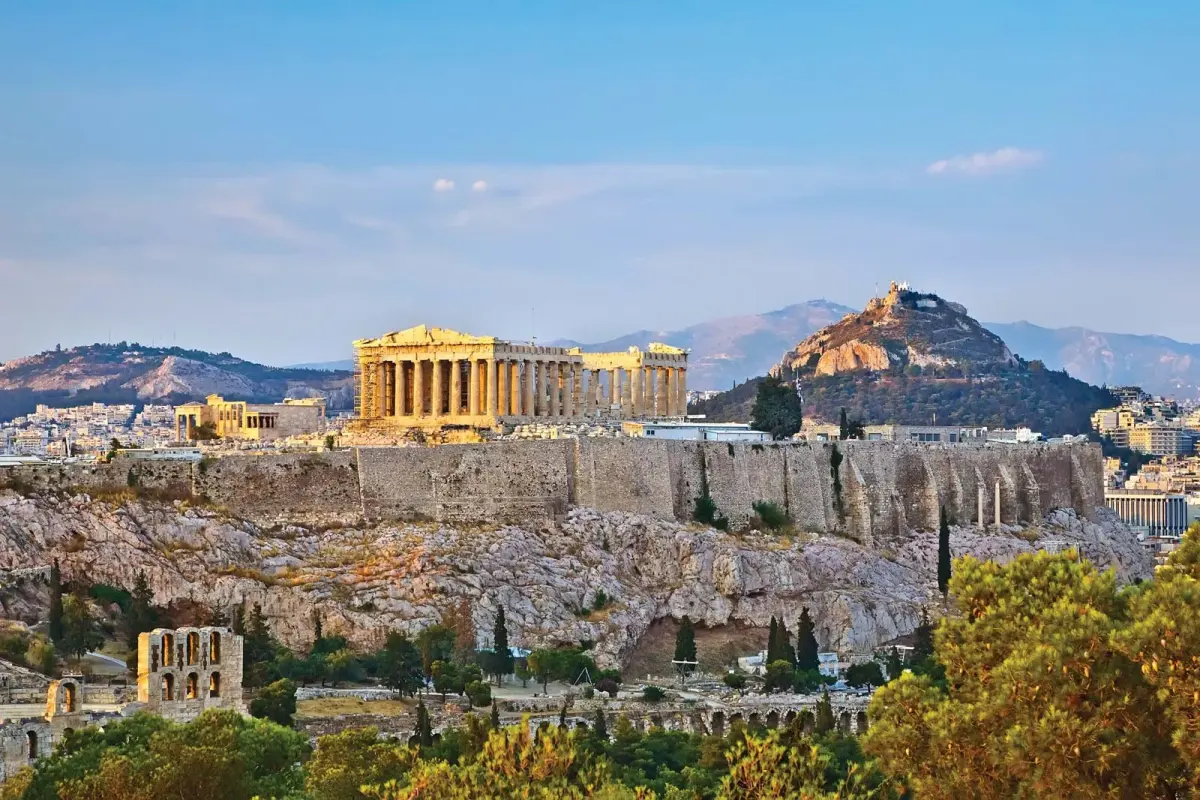
The Parthenon is a former temple on the Athenian Acropolis in Greece, dedicated to the goddess Athena. Constructed between 447 and 432 BCE during the height of the Athenian Empire, it stands as the most important surviving building of Classical Greece and an enduring symbol of ancient democracy, architecture, and Western civilization.
On this page
Why was the Parthenon built?
The Parthenon was commissioned by the statesman Pericles to serve as a grand treasury and a religious sanctuary for the city of Athens. Following the Persian destruction of the original temple on the site in 480 BCE, the Athenians sought to showcase their political dominance and cultural superiority. It was designed to house a massive chryselephantine—gold and ivory—statue of Athena Parthenos, created by the renowned sculptor Phidias.
Beyond its religious function, the structure served as a statement of Athenian pride during the Golden Age. The project utilized the vast wealth of the Delian League, a confederation of Greek city-states led by Athens. By building such a monumental structure, the city cemented its status as the intellectual and artistic center of the Mediterranean. The temple remains a testament to the transition of Athens from a regional power to a dominant imperial force.
How to understand the architecture of the Parthenon
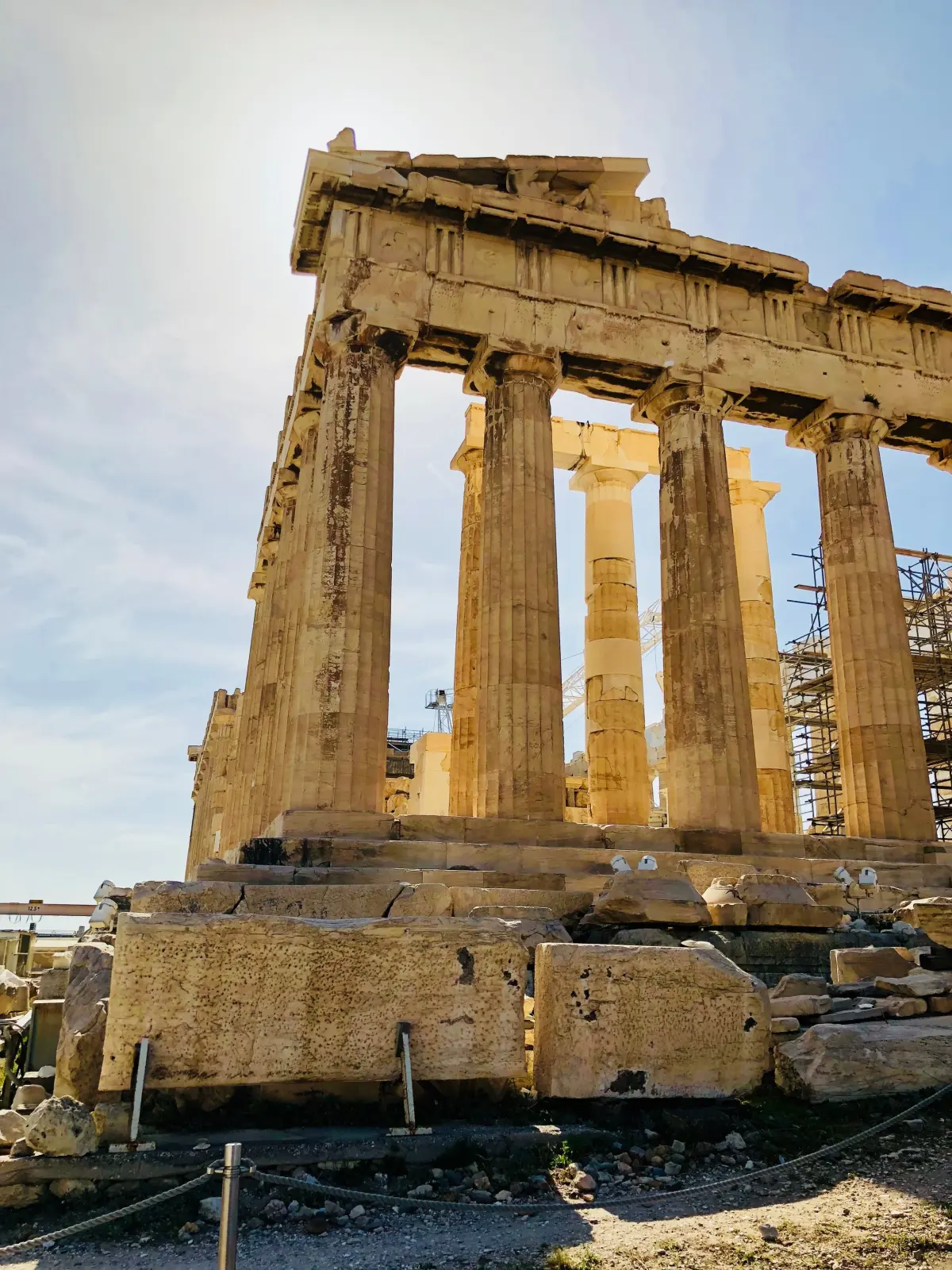
The Parthenon is a masterpiece of the Doric order, characterized by its sturdy columns and simple capitals. Architects Ictinus and Callicrates employed sophisticated optical refinements to ensure the building appeared perfect to the human eye. Because the human brain perceives long, straight lines as sagging, the architects curved the base and tilted the columns slightly inward.
These architectural nuances include:
- The stylobate, or floor platform, curves upward in the center to prevent a sagging appearance.
- The columns lean slightly inward, which creates a subtle pyramidal effect that adds stability.
- The corner columns are thicker than the others to compensate for the brightness of the sky behind them.
- The entasis, or slight swelling of the columns, prevents the shafts from appearing concave from a distance.
These adjustments demonstrate a deep understanding of geometry and human perception, making the Parthenon the most refined example of Greek temple architecture ever constructed.
What happened to the Parthenon over time?
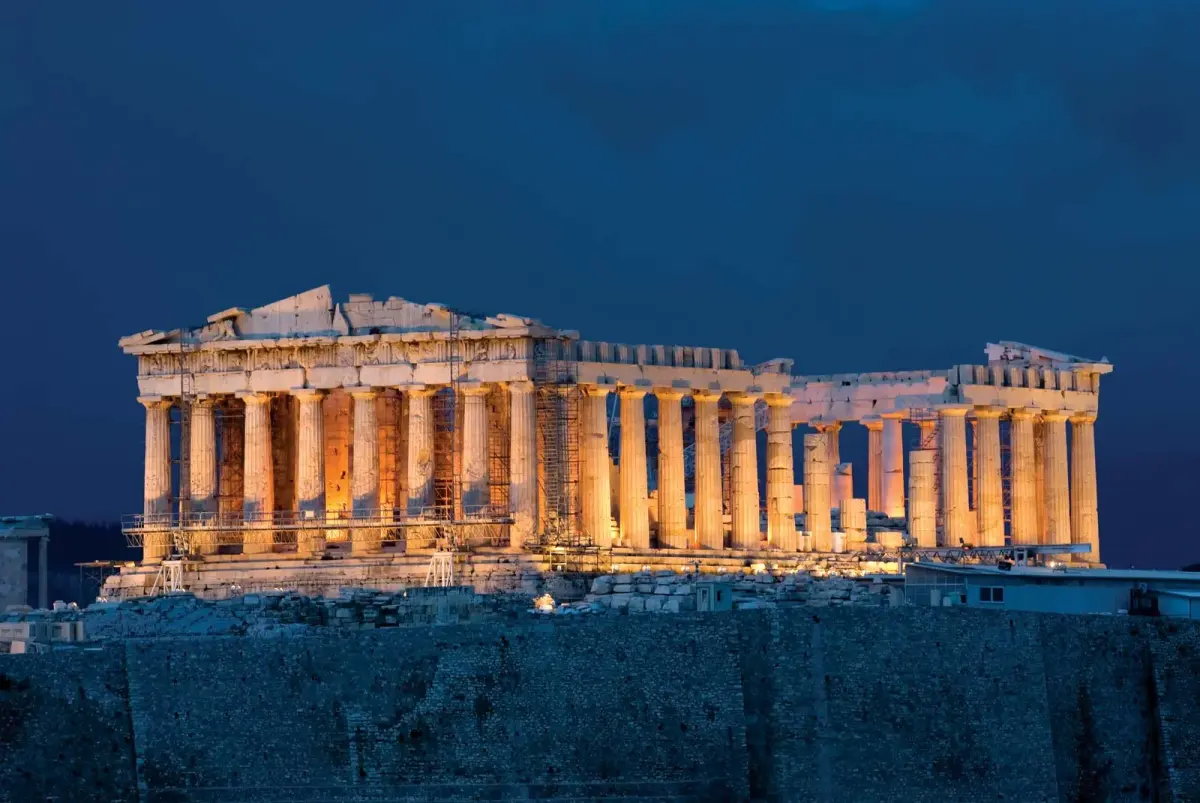
Throughout its long history, the Parthenon has undergone several functional transformations that altered its original design. In the 6th century CE, it was converted into a Christian church dedicated to the Virgin Mary. Later, under Ottoman rule in the 15th century, it was transformed into a mosque. These changes necessitated the removal of interior walls and the addition of features like an apse and a minaret.
The most catastrophic damage occurred in 1687 during the Morean War. The Ottoman Turks used the temple as a gunpowder magazine, believing the Venetians would not fire upon such a historic site. However, a Venetian mortar shell struck the building, causing a massive explosion that destroyed the central portion of the structure. Much of the surviving sculpture was later removed by Lord Elgin in the early 19th century and transported to the British Museum.
Common mistakes when studying the Parthenon
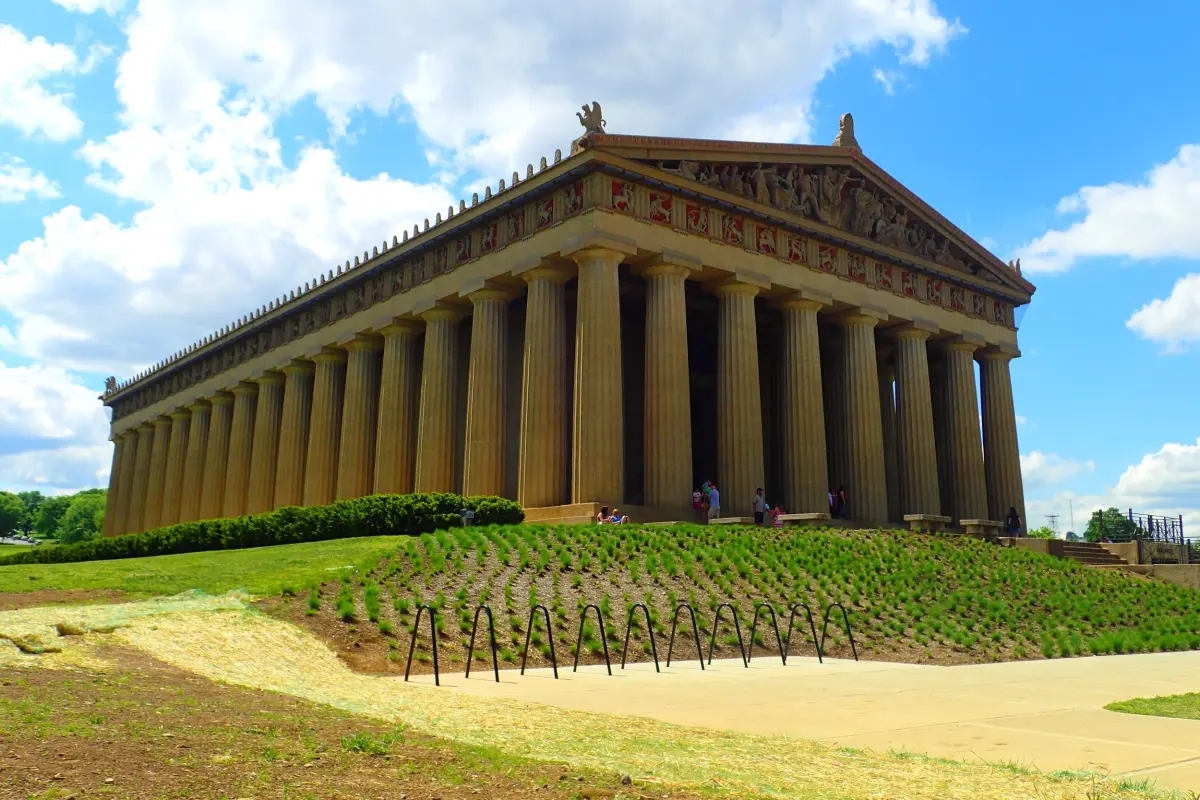
Many visitors and students often confuse the Parthenon with the entire Acropolis. The Acropolis is the rocky citadel or hill upon which the Parthenon sits, along with other structures like the Erechtheion and the Temple of Athena Nike. Another frequent error is assuming the temple was always white; historical evidence suggests that the building was originally decorated with vibrant colors, including deep reds, blues, and golds.
When researching the site, avoid these common pitfalls:
- Assuming the temple was solely a place for public worship; rituals usually occurred at outdoor altars.
- Believing the building was constructed in a single year; it took roughly fifteen years to complete the main structure and decorative elements.
- Ignoring the role of enslaved labor and tribute money in the financing of the project.
- Overlooking the damage caused by centuries of neglect and looting rather than just the 1687 explosion.
Best ways to visit the Parthenon today
Visiting the Acropolis requires careful planning to ensure a meaningful experience. It is highly recommended to arrive as early as possible, ideally at the opening time, to avoid both the intense Mediterranean heat and the heavy cruise ship crowds. Wear sturdy, non-slip footwear, as the ancient marble paths around the site are extremely worn and can be dangerously slippery, especially during the summer months.
To maximize your visit, follow these practical steps:
- Purchase your tickets online in advance to skip the long queues at the main entrance.
- Hire a licensed guide or use a reputable audio tour to understand the historical context of the ruins.
- Visit the Acropolis Museum first to view the original sculptures and friezes that were removed from the temple for preservation.
- Bring plenty of water and sun protection, as there is almost no shade on the summit of the hill.
By following these suggestions, you can better appreciate the structural integrity and historical gravity of this ancient monument while navigating the modern challenges of tourism.
Key facts
- The Parthenon is a former temple on the Athenian Acropolis in Greece, dedicated to the goddess Athena.
- Construction began in 447 BCE and was completed in 438 BCE, though decorative work continued until 432 BCE.
- It was designed by the architects Ictinus and Callicrates, with the sculptor Phidias overseeing the artistic program.
- The structure is built primarily of Pentelic marble and represents the pinnacle of the Doric architectural order.
- Optical refinements, such as slightly curved columns and a bowed floor, were used to correct human visual distortion.
- To visit, arrive at the Acropolis early in the morning to avoid the intense Mediterranean heat and the largest crowds.
The bottom line
The Parthenon remains the most iconic symbol of Ancient Greece, representing the zenith of classical architecture and democratic ideals. Despite centuries of war, explosions, and looting, its structural integrity and mathematical precision continue to influence modern design. Visiting the Acropolis offers a profound connection to history, provided you respect the conservation efforts in place to protect this fragile monument for future generations of global observers.
People also ask
Why is the Parthenon in ruins today?
In 1687, during a Venetian siege, an Ottoman ammunition dump stored inside the temple exploded. This blast destroyed the central portion of the building, which had previously survived for over 2,000 years.
What happened to the Parthenon Marbles?
Many of the original sculptures were removed by Lord Elgin in the early 19th century and are currently held by the British Museum. Greece has long campaigned for their return, arguing they were taken illegally during the Ottoman occupation.
Did the Parthenon always look like white marble?
No, the temple was originally painted in vibrant colors, including deep blues, reds, and golds. Over centuries of exposure to the elements, the pigments faded away, leaving the bare white stone seen today.
What was inside the temple?
The interior housed a massive chryselephantine—gold and ivory—statue of Athena Parthenos created by Phidias. This statue stood nearly 40 feet tall and served as the focal point of the temple's religious function.
Can tourists walk inside the Parthenon?
No, visitors are prohibited from entering the structure to prevent further erosion and damage to the marble. You must view the temple from the designated paths surrounding the perimeter of the foundation.
How long does it take to tour the Acropolis?
Most visitors spend between two to three hours exploring the site. This allows enough time to view the Parthenon, the Erechtheion, and the Propylaea while navigating the steep, often slippery marble pathways.
This answer was created with the help of AI research tools and reference sources. Spotted an error? Let us know — we correct mistakes quickly. See our editorial policy.