What are the Seven Wonders of the Ancient World?
Short answer
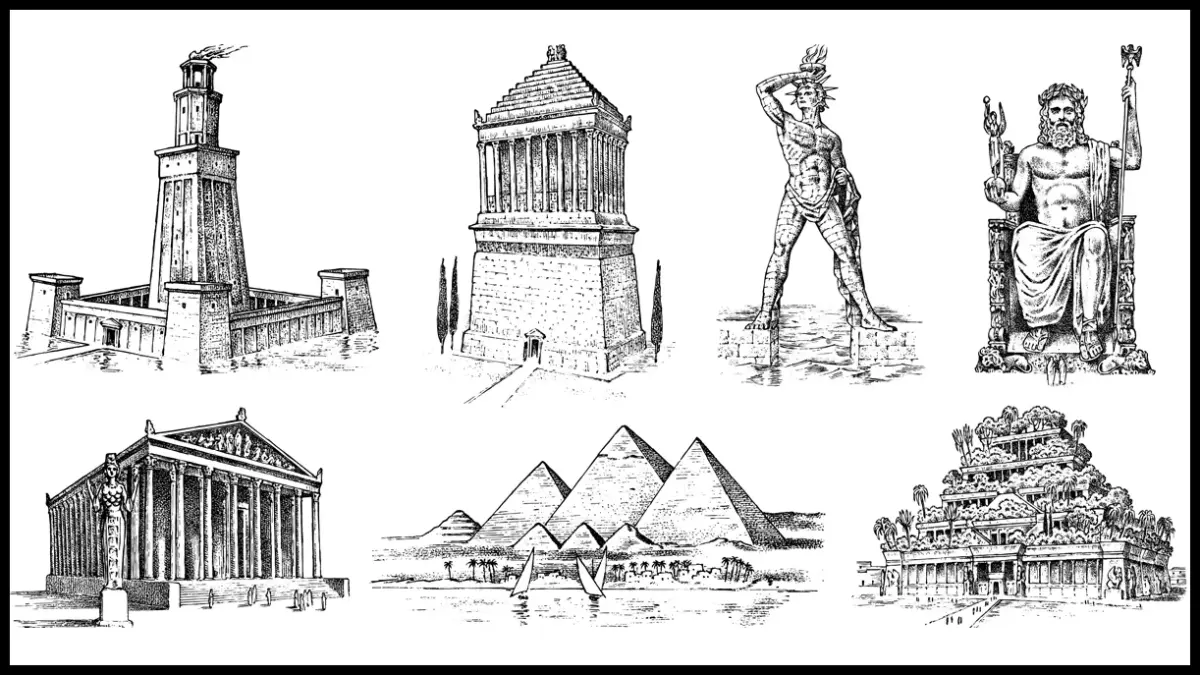
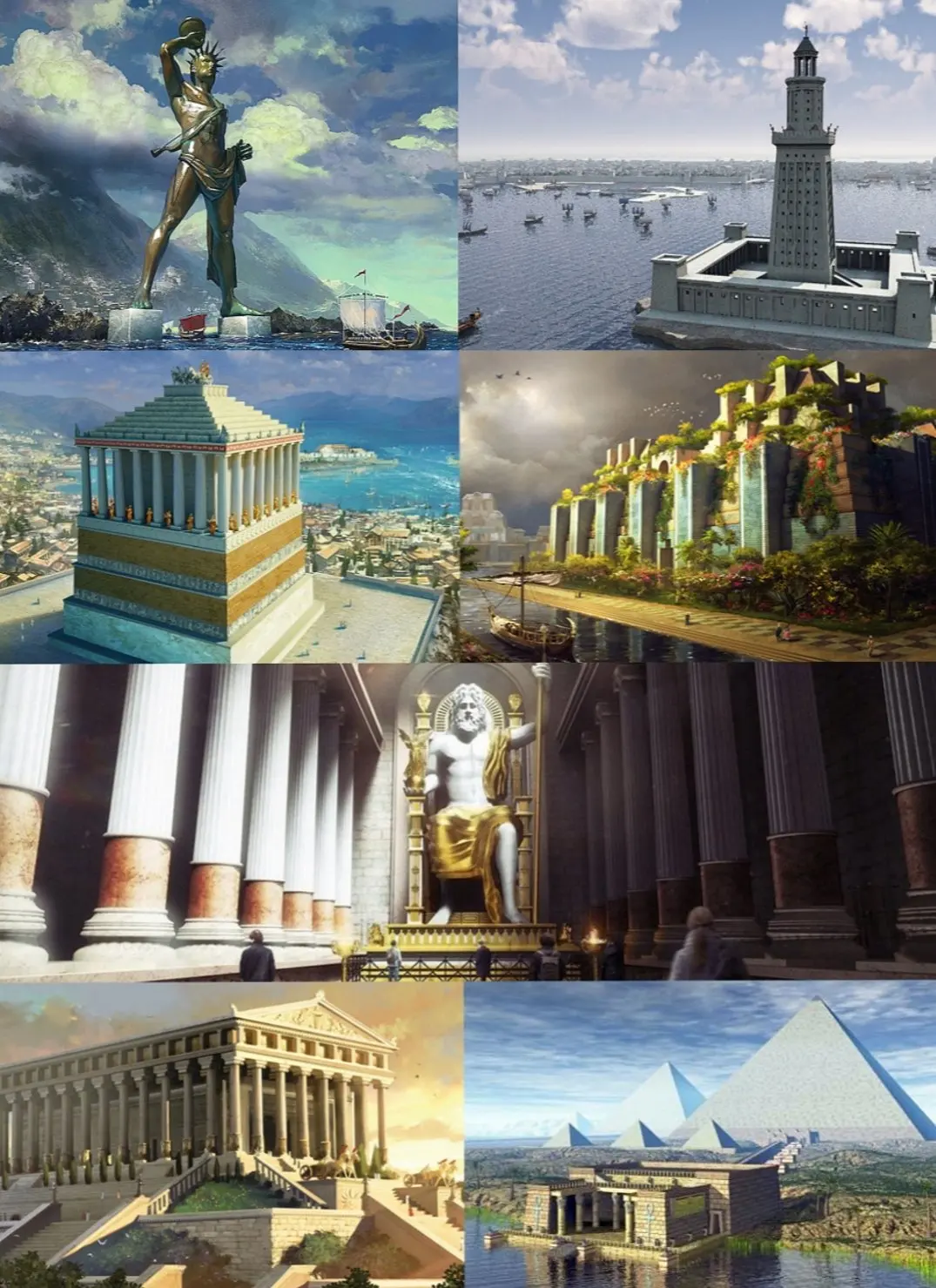
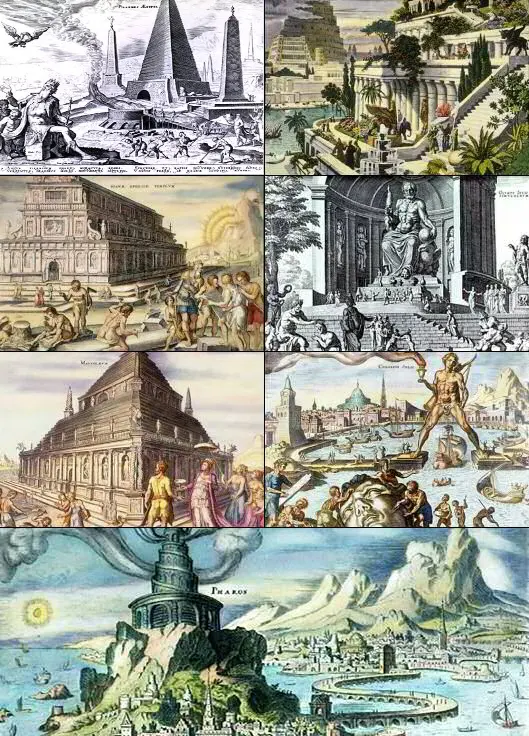
The Seven Wonders of the Ancient World are a collection of remarkable architectural feats from antiquity. They include the Great Pyramid of Giza, the Hanging Gardens of Babylon, the Statue of Zeus at Olympia, the Temple of Artemis at Ephesus, the Mausoleum at Halicarnassus, the Colossus of Rhodes, and the Lighthouse of Alexandria.
On this page
What are the Seven Wonders of the Ancient World?
The list of the Seven Wonders was compiled by various ancient Greek writers, most notably the poet Antipater of Sidon and the historian Philo of Byzantium. These authors sought to document the most impressive structures of the Mediterranean and Middle Eastern regions. The selection criteria focused on scale, engineering complexity, and aesthetic beauty. Among the seven, only the Great Pyramid of Giza remains standing today, while the others were destroyed by natural disasters, warfare, or neglect over the centuries.
Historians categorize these sites as follows:
- The Great Pyramid of Giza: The oldest and only surviving wonder.
- The Hanging Gardens of Babylon: A legendary terraced garden structure.
- The Statue of Zeus at Olympia: A massive gold and ivory sculpture.
- The Temple of Artemis at Ephesus: A grand marble structure dedicated to the goddess.
- The Mausoleum at Halicarnassus: An elaborate tomb for a regional ruler.
- The Colossus of Rhodes: A towering bronze statue of the god Helios.
- The Lighthouse of Alexandria: A functional marvel of maritime navigation.
Why were these specific sites chosen?
The ancient Greeks were obsessed with the concept of "theamata," or "sights to be seen." The list served as a travel guide for Hellenistic tourists who wanted to witness the peak of human achievement. By selecting seven sites, the writers adhered to the Greek belief that the number seven represented perfection and completeness. The geographic scope was limited to the known world of the Greeks, which explains why wonders from Asia or the Americas were excluded from the original canon.
These structures represented the pinnacle of ancient technology, utilizing advanced mathematics and labor management. For example, the Lighthouse of Alexandria utilized a system of mirrors to reflect light over great distances, while the Temple of Artemis featured 127 columns, each standing 60 feet tall. These projects were not merely decorative; they were expressions of political power, religious devotion, and the desire to immortalize a civilization’s legacy through monumental architecture.
How can you visit the remains today?
Visiting these sites requires careful planning, as most exist only as archaeological ruins or historical footnotes. The Great Pyramid of Giza is the only site that is fully accessible to the public. Located in Egypt, it is part of the Giza Necropolis and can be reached easily from Cairo. For the other wonders, you must visit the museum collections or archaeological parks where their fragments are preserved.
- Research the current archaeological status of the site before booking travel.
- Visit the British Museum in London to see remnants of the Mausoleum at Halicarnassus.
- Travel to the site of the Temple of Artemis in Selçuk, Turkey, where a single column remains.
- Explore the archaeological site in Olympia, Greece, to understand the scale of the sanctuary where the Statue of Zeus once stood.
- Check local regulations regarding photography and site access, as many ruins are protected heritage zones.
Common mistakes when studying the wonders
A frequent error is assuming that the Hanging Gardens of Babylon actually existed as described in ancient texts. While classical authors wrote extensively about them, no archaeological evidence has confirmed their location, leading many experts to believe they may have been mythical or misidentified. Another common mistake is conflating the Seven Wonders of the Ancient World with modern lists, such as the New Seven Wonders of the World, which were selected via a global poll in 2007.
To avoid confusion, always verify the historical context of the list you are consulting. The ancient list is static and reflects the worldview of the Mediterranean during the Hellenistic period. Do not confuse these structures with later medieval or modern achievements. Furthermore, be cautious of travel advertisements claiming to show the "original" wonders, as most have been lost to earthquakes or fire for over a millennium. Relying on academic sources rather than travel brochures will ensure you have an accurate understanding of what remains.
What happened to the missing wonders?
The destruction of the wonders was primarily caused by the passage of time and geological instability. The Colossus of Rhodes, for instance, stood for only 54 years before an earthquake snapped its knees in 226 BCE. The Statue of Zeus and the Temple of Artemis were eventually dismantled or destroyed during periods of religious transition and conflict. The Lighthouse of Alexandria suffered several major earthquakes between the 10th and 14th centuries, eventually falling into the sea, where its ruins were rediscovered by divers in the 1990s.
Understanding the fate of these structures helps historians learn about the environmental and political challenges faced by ancient societies. The loss of these monuments serves as a reminder of the fragility of human construction. While the physical structures are largely gone, their influence persists in modern architecture, art, and literature. By studying the remnants and the historical accounts, we continue to bridge the gap between our modern world and the ambitious civilizations that preceded us, ensuring that these wonders remain a vital part of our collective human memory.
Key facts
- The list was originally compiled by ancient Greek travelers as a guide to the most remarkable structures of the Mediterranean and Middle Eastern world.
- Only one of the seven wonders, the Great Pyramid of Giza, remains standing today.
- The Hanging Gardens of Babylon is the only wonder on the list whose actual existence has never been verified by archaeology.
- The Colossus of Rhodes stood for only 54 years before it was snapped at the knees by an earthquake in 226 BCE.
- Most of the wonders were destroyed by natural disasters, specifically earthquakes and fires, rather than human warfare.
- Visitors today should avoid confusing the ancient list with the "New Seven Wonders of the World," which were selected by a global poll in 2007.
The bottom line
The Seven Wonders of the Ancient World represent the pinnacle of human engineering and artistic ambition during the Hellenistic era. Although time and seismic activity have claimed six of these legendary sites, they continue to serve as a testament to the ingenuity of early civilizations. Studying these structures offers profound insight into the cultural, religious, and architectural priorities of the ancient Mediterranean and Near Eastern worlds.
People also ask
Where were the Seven Wonders located?
They were spread across the Mediterranean basin, specifically in Egypt, Greece, Turkey, and modern-day Iraq. The Great Pyramid is in Giza, while the others were scattered throughout the Hellenistic world.
Why are there only seven wonders?
The ancient Greeks chose the number seven because they considered it to represent perfection and plenty. It was also associated with the five known planets plus the Sun and the Moon.
What happened to the Statue of Zeus at Olympia?
The massive gold and ivory statue was moved to Constantinople in the 5th century CE. It was eventually destroyed, likely by a fire that consumed the palace where it was housed.
How tall was the Lighthouse of Alexandria?
Estimates suggest the lighthouse stood between 330 and 450 feet tall. It served as a functional beacon for ships entering the busy harbor of Alexandria for over 1,500 years.
Can I visit the site of the Temple of Artemis?
Yes, the site is located near the modern town of Selçuk in Turkey. While the temple itself is gone, visitors can see a single remaining column and the foundations of the structure.
Were the Hanging Gardens actually in Babylon?
While traditionally attributed to Babylon, some scholars argue the gardens were actually located in Nineveh. Recent research suggests the irrigation technology required for such a structure may have been more advanced than what was available in Babylon.
This answer was created with the help of AI research tools and reference sources. Spotted an error? Let us know — we correct mistakes quickly. See our editorial policy.