What is Angkor Wat?
Short answer
Angkor Wat is a massive 12th-century temple complex in Cambodia, originally built as a Hindu temple for the Khmer Empire before transitioning into a Buddhist site. It remains the world’s largest religious monument, celebrated for its intricate bas-reliefs, soaring lotus-bud towers, and sophisticated hydraulic engineering that defined its ancient capital.
On this page
What is the history of Angkor Wat?
King Suryavarman II commissioned the construction of Angkor Wat in the early 12th century, dedicating the site to the Hindu god Vishnu. Unlike previous Khmer temples that faced east, this structure faces west, leading many scholars to believe it was intended as a funerary temple for the monarch. It served as the state temple and capital city of the Khmer Empire at the height of its power.
By the late 13th century, the site began a gradual transition toward Theravada Buddhism. This shift is reflected in the modification of various statues and the addition of new religious iconography throughout the galleries. Despite the decline of the Khmer Empire and the eventual abandonment of the surrounding city, the temple remained a site of continuous worship. Local monks maintained the grounds, ensuring that Angkor Wat never fell into total ruin like many other structures in the region.
How to visit Angkor Wat?
Visiting the temple requires careful planning, as the site is part of a much larger archaeological park. Most travelers stay in the nearby city of Siem Reap, which offers a wide range of accommodations and transport options. You must purchase an Angkor Pass to enter the park, which is available in one-day, three-day, or seven-day increments.
To make the most of your visit, consider these logistical steps:
- Purchase your pass online or at the official ticket center before arriving at the gates.
- Hire a licensed guide to explain the complex symbolism of the bas-reliefs.
- Start your visit before sunrise to witness the iconic silhouette against the morning sky.
- Arrange a tuk-tuk driver for the day to navigate between the distant temples in the park.
- Wear clothing that covers your shoulders and knees to respect the site's ongoing religious significance.
Why is Angkor Wat famous?
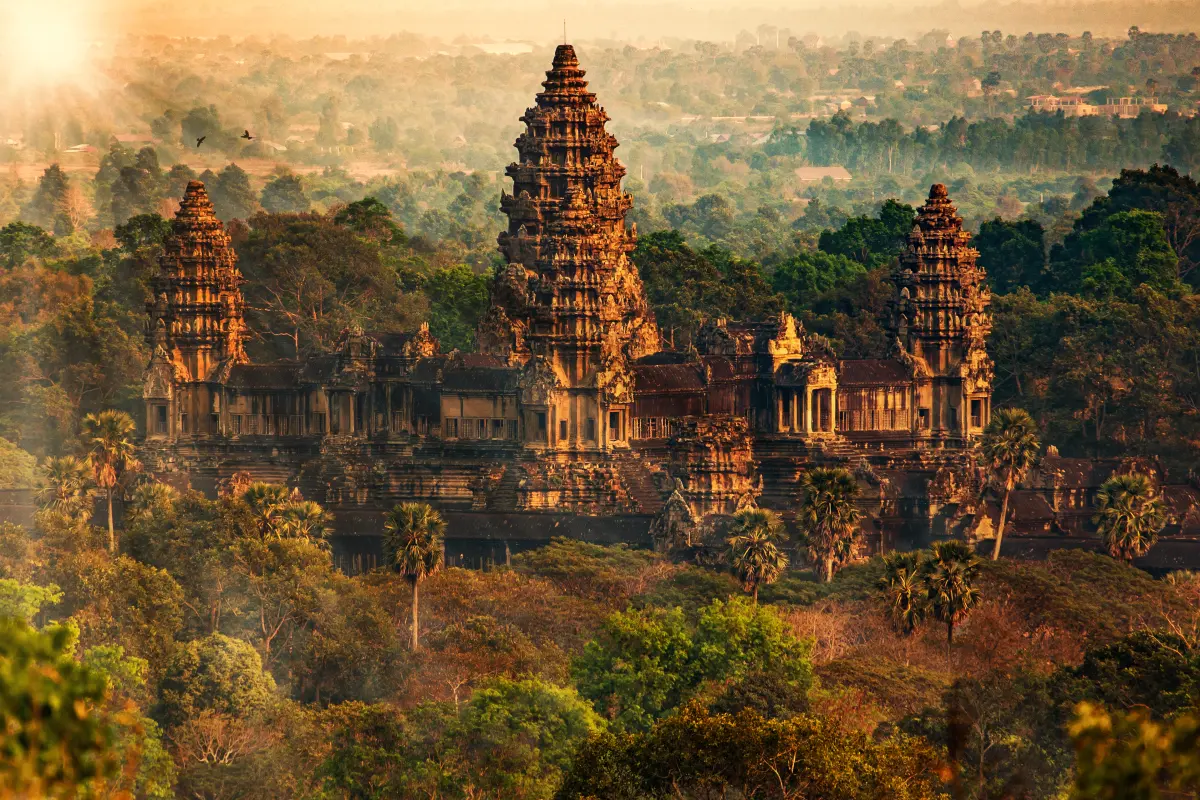
The fame of Angkor Wat stems from its architectural perfection and sheer scale. The temple is designed to represent Mount Meru, the home of the gods in Hindu mythology, with its five central towers mirroring the peaks of the mountain. The entire complex is surrounded by a massive rectangular moat that measures over five kilometers in perimeter, serving both a symbolic and functional purpose for water management.
The artistry found within the walls is equally renowned. The temple features over 3,000 Apsaras, or celestial dancers, each carved with unique hairstyles and expressions. The outer gallery walls contain nearly 600 meters of intricate bas-reliefs depicting scenes from the Hindu epics, the Ramayana and the Mahabharata. These carvings demonstrate a level of craftsmanship that remains unmatched in Southeast Asian history, drawing millions of visitors who wish to witness the pinnacle of Khmer artistic achievement.
Common mistakes when visiting Angkor Wat
Many visitors underestimate the physical demands of exploring the temple grounds. The site is spread across a vast area, and the Cambodian heat can be intense, especially during the middle of the day. A frequent error is attempting to see too many temples in a single trip, which leads to "temple fatigue" and prevents a meaningful appreciation of the details.
Avoid these common pitfalls to improve your experience:
- Failing to bring enough water, as vendors inside the park charge premium prices.
- Ignoring the dress code, which will result in being denied entry to the upper levels.
- Visiting during the hottest hours of the day, typically between 12:00 PM and 3:00 PM.
- Forgetting to bring a hat or sunscreen, as there is very little shade in the open courtyards.
- Rushing through the main temple without exploring the quieter, surrounding structures like Ta Prohm or Bayon.
What is the best time to visit Angkor Wat?
The ideal time to visit is during the cool, dry season, which runs from November to February. During these months, the temperatures are relatively manageable, and the humidity is lower, making it much easier to walk through the expansive stone corridors. However, this period also coincides with the peak tourist season, meaning the most popular spots will be crowded with tour groups.
If you prefer fewer crowds, consider visiting during the shoulder months of May or October. While you may encounter occasional rain showers, the landscape is lush and green, providing a beautiful backdrop for photography. Regardless of the season, the early morning hours are the best time to explore. Arriving at dawn allows you to experience the serene atmosphere of the temple before the heat and the largest crowds arrive, providing a much more intimate connection with the history of this remarkable monument.
Key facts
- Angkor Wat is the largest religious monument in the world, covering approximately 400 acres in Siem Reap, Cambodia.
- It was constructed in the early 12th century by King Suryavarman II as a Hindu temple dedicated to the god Vishnu.
- By the end of the 12th century, the site gradually transitioned into a Buddhist temple, which it remains today.
- The temple is famous for its "bas-reliefs," which are intricate stone carvings depicting scenes from Hindu epics and historical battles.
- Visitors should dress modestly by covering their shoulders and knees, as it is an active sacred site.
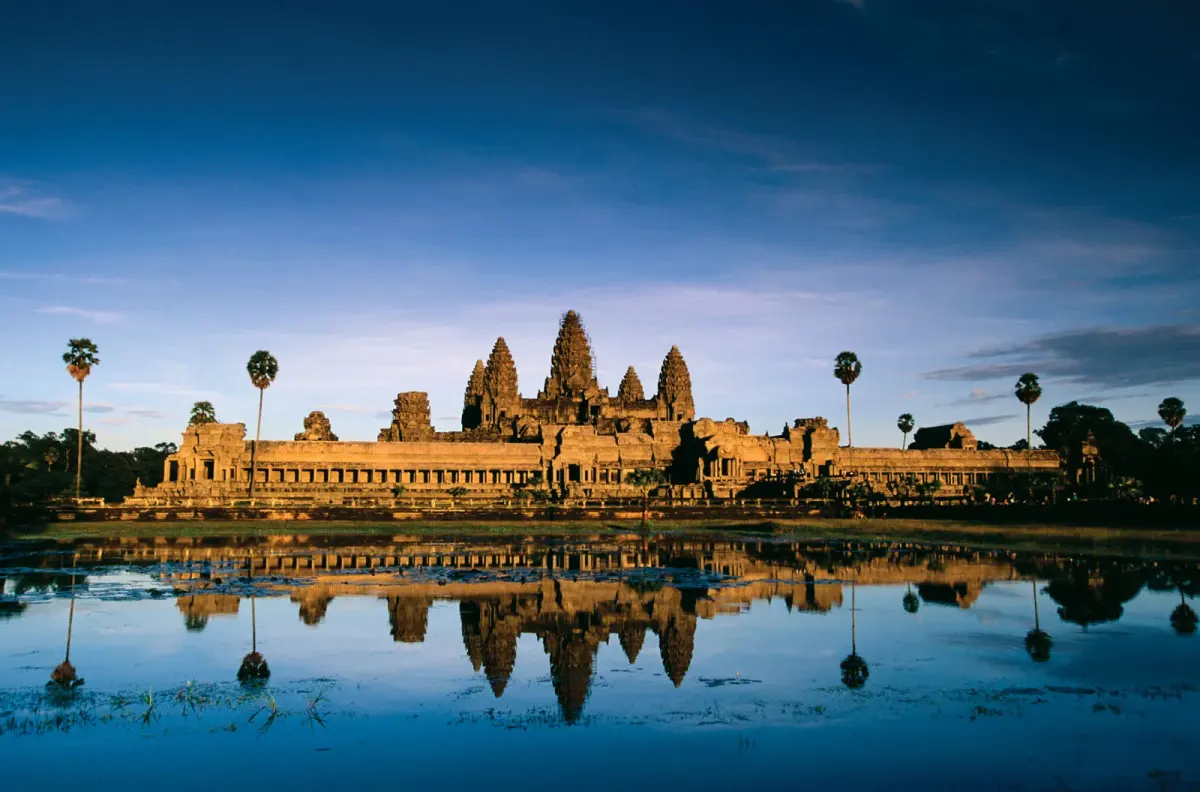
- The best time to visit is at sunrise, when the silhouette of the five lotus-like towers is perfectly reflected in the temple's lotus ponds.
The bottom line
Angkor Wat stands as a masterpiece of Khmer architecture and a profound symbol of Cambodia’s cultural heritage. Originally built as a Hindu temple, its evolution into a Buddhist site reflects the religious shifts of Southeast Asian history. Today, it serves as a major pilgrimage destination and a global icon, offering visitors an unparalleled look at ancient engineering, artistic devotion, and the enduring legacy of the Khmer Empire.
People also ask
Why was Angkor Wat built?
King Suryavarman II commissioned the temple as his state temple and eventual mausoleum. It was designed to represent Mount Meru, the home of the gods in Hindu mythology.
How long does it take to explore the temple?
Most visitors spend at least three to four hours walking through the galleries and courtyards. If you wish to see the surrounding Angkor Archaeological Park, you should plan for at least three full days.
Is it possible to climb the central tower?
Yes, visitors can climb the steep stairs to the Bakan sanctuary at the top level. However, the number of people allowed at the summit is limited, and the area is closed during major Buddhist holidays.
What is the most common mistake tourists make?
Many visitors underestimate the heat and humidity, leading to exhaustion. It is essential to carry plenty of water, wear a hat, and start your visit early in the morning to avoid the midday sun.
Are there guides available at the entrance?
Yes, official licensed guides are available at the main ticket office. Hiring a guide is highly recommended to understand the complex history and the meaning behind the thousands of carvings.
What should I bring with me?
You should bring a valid Angkor Pass, comfortable walking shoes, sunscreen, and insect repellent. Ensure your camera batteries are fully charged, as there are no power outlets inside the temple complex.
This answer was created with the help of AI research tools and reference sources. Spotted an error? Let us know — we correct mistakes quickly. See our editorial policy.