What is a tsunami?
Short answer
A tsunami is a series of powerful ocean waves typically caused by underwater earthquakes, volcanic eruptions, or landslides. Unlike wind-driven waves, these displace massive volumes of water, traveling across entire oceans at high speeds. Upon reaching shallow coastal waters, they slow down and grow significantly in height, causing catastrophic flooding and destruction.
On this page
Why a tsunami happens
Tsunamis are primarily triggered by the sudden vertical displacement of the seafloor. When a major earthquake occurs at a subduction zone—where one tectonic plate slides beneath another—the resulting crustal movement pushes the entire water column upward. This energy radiates outward in all directions, similar to ripples in a pond, but on a massive scale. While earthquakes are the most frequent cause, underwater landslides and volcanic collapses can also displace enough water to generate lethal waves.
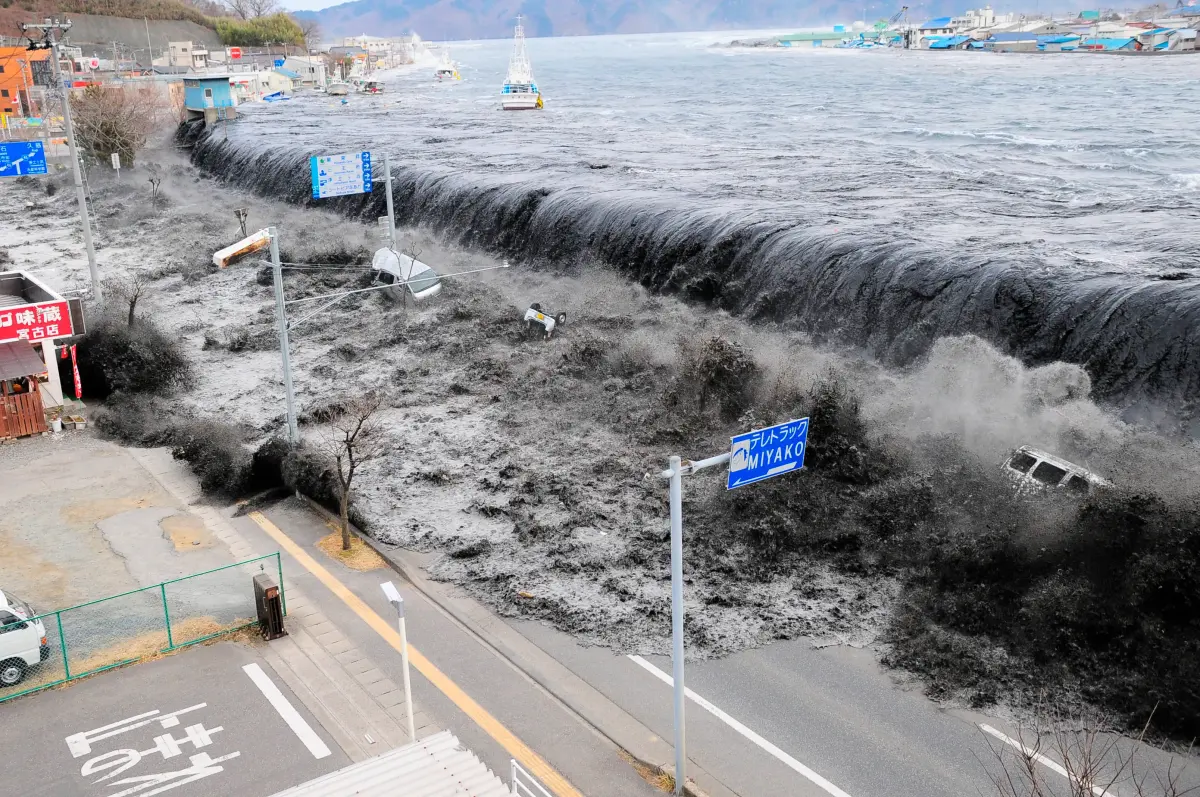
The physics of a tsunami differ drastically from standard surf. In the deep ocean, the waves are often only a few feet high but can span hundreds of miles in length. Because they possess such long wavelengths, they move at speeds exceeding 500 miles per hour, often going unnoticed by ships at sea. As they approach land, the friction from the rising seafloor forces the waves to compress, causing their height to surge dramatically while their speed decreases.
How long does it take to arrive
The time between a geological event and the arrival of a tsunami depends on the distance from the source. In the open ocean, the waves travel as fast as a jet plane. If an earthquake occurs thousands of miles away, coastal communities may have several hours to prepare. However, if the source is local, the first wave can strike within minutes of the initial tremor, leaving almost no time for formal warnings.
Residents in coastal areas should recognize the following natural warning signs that a tsunami is imminent:
- A strong, prolonged earthquake that makes it difficult to stand.
- A noticeable, sudden retreat of the ocean, exposing the seafloor, reefs, and fish.
- A loud, roaring sound coming from the ocean, often compared to the noise of a freight train or jet engine.
How to stay safe during a tsunami
If you are in a coastal zone and feel a strong earthquake, do not wait for an official siren or radio alert. Move immediately to higher ground or inland at least two miles. If you cannot reach high ground, move to the third floor or higher of a sturdy, reinforced concrete building. Never go to the beach to watch the waves; if you can see the wave, you are already too close to escape its reach.
Follow these emergency steps to maximize your chances of survival:
- Abandon your vehicle if traffic is gridlocked; the waves move faster than cars in congested areas.
- Stay away from rivers and streams that lead to the ocean, as these are primary paths for tsunami surges.
- Remain in your safe location until officials declare that the danger has passed, as the first wave is rarely the largest.
- Listen to a battery-powered radio for updates from local authorities.
Common mistakes when dealing with tsunamis
One of the most dangerous mistakes is assuming that a "small" earthquake will not produce a tsunami. Many devastating events, such as the 1992 Nicaragua tsunami, were caused by "tsunami earthquakes" that produced little shaking but massive water displacement. Another common error is returning to the coast too soon. Tsunamis arrive in a series of waves that can be separated by an hour or more, and the second or third wave is frequently the most powerful and destructive.
People also frequently make the mistake of underestimating the power of the water. Even a wave that is only a few feet high carries enough force to knock a person off their feet and carry heavy debris, such as cars or trees, which can cause fatal injuries. Furthermore, relying solely on cell phone alerts is risky, as infrastructure can fail during a disaster. Always have a physical map of evacuation routes and a pre-planned meeting point for your family.
Historical examples of major tsunamis
The 2004 Indian Ocean tsunami remains one of the deadliest natural disasters in recorded history. Triggered by a 9.1 magnitude earthquake off the coast of Sumatra, it sent waves across 14 countries, claiming over 230,000 lives. The event highlighted the critical lack of an early warning system in the region at the time, which led to the subsequent implementation of the Indian Ocean Tsunami Warning and Mitigation System.
In 2011, the Tōhoku earthquake and tsunami struck Japan, demonstrating the limitations of even advanced engineering. Despite high-tech sea walls, the massive surge caused widespread destruction and triggered a nuclear crisis at the Fukushima Daiichi power plant. These events underscore the necessity of community preparedness and education. Understanding the mechanics of these waves and respecting natural warning signs remains the most effective way to mitigate the risk of loss of life.
Key facts
- A tsunami is a series of powerful ocean waves, not a single wave, typically caused by underwater earthquakes, volcanic eruptions, or landslides.
- These waves can travel across the open ocean at speeds exceeding 500 miles per hour, similar to the speed of a jet airliner.
- As a tsunami approaches shallow coastal waters, its speed decreases, but its height increases dramatically, sometimes reaching over 100 feet.
- If you feel a strong earthquake while at the beach, move to high ground immediately rather than waiting for an official siren or warning.
- A common mistake is going to the shoreline to watch the water recede; this exposure reveals the seafloor and is a sign that a massive wave is imminent.
- Tsunami waves can last for several hours, with the first wave often not being the largest or the most destructive.
The bottom line
Tsunamis are catastrophic geological events triggered by massive underwater disturbances that displace vast volumes of water. Because they travel at incredible speeds and arrive as a series of unpredictable surges, they pose a severe threat to coastal populations. Understanding natural warning signs—such as intense ground shaking or receding shorelines—is critical for survival, as immediate evacuation to high ground remains the only effective defense against these powerful waves.
People also ask
How are tsunamis different from regular wind-driven waves?
Regular waves are caused by wind blowing over the surface of the water and only affect the top layer. Tsunamis involve the movement of the entire water column from the seafloor to the surface, carrying massive amounts of energy.
Can you surf a tsunami?
No, surfing a tsunami is impossible and lethal. Unlike breaking surf waves, a tsunami acts more like a rapidly rising flood or a wall of turbulent debris that destroys everything in its path.
Do all underwater earthquakes cause tsunamis?
Not all underwater earthquakes trigger tsunamis. A quake must be large, usually magnitude 7.0 or greater, and must cause significant vertical displacement of the seafloor to displace enough water to create a wave.
How long does a tsunami warning last?
A tsunami warning remains in effect until local authorities officially cancel it. Even after the initial waves pass, dangerous currents and subsequent waves can continue to strike the coast for many hours.
What should I do if I am on a boat when a tsunami warning is issued?
If you are in deep water, it is safer to stay there because tsunami waves are barely noticeable in the open ocean. Do not return to port, as the harbor acts as a funnel that amplifies the wave's destructive power.
Can we predict exactly when a tsunami will hit?
Scientists can predict the arrival time of a tsunami at specific coastal locations based on the earthquake's epicenter and ocean depth. However, they cannot predict the exact height or intensity of the waves before they arrive.
This answer was created with the help of AI research tools and reference sources. Spotted an error? Let us know — we correct mistakes quickly. See our editorial policy.