What causes volcanoes to erupt?
Short answer
Volcanoes erupt primarily due to the movement of tectonic plates, which generates intense heat and pressure deep underground. As magma—molten rock—accumulates, it becomes buoyant and rises toward the surface. When the pressure from dissolved gases exceeds the strength of the overlying crust, the magma forces its way out, causing eruptions.
On this page
Why do volcanoes erupt?
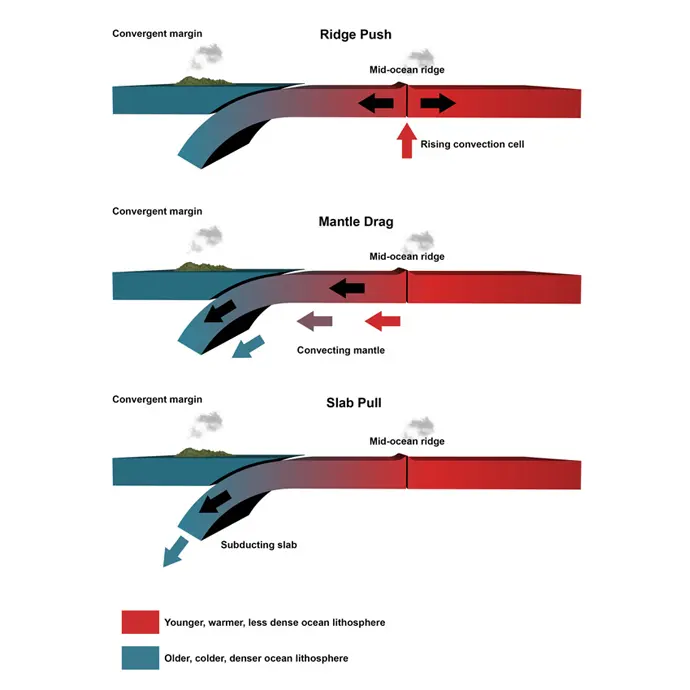
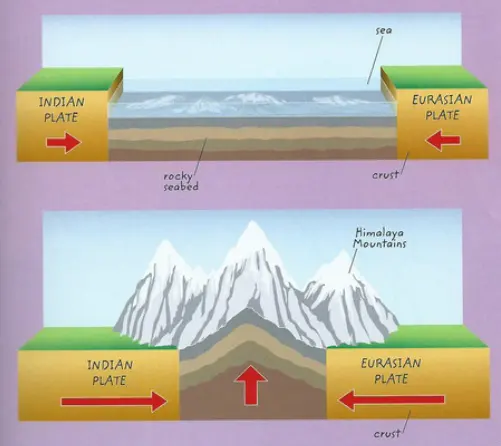
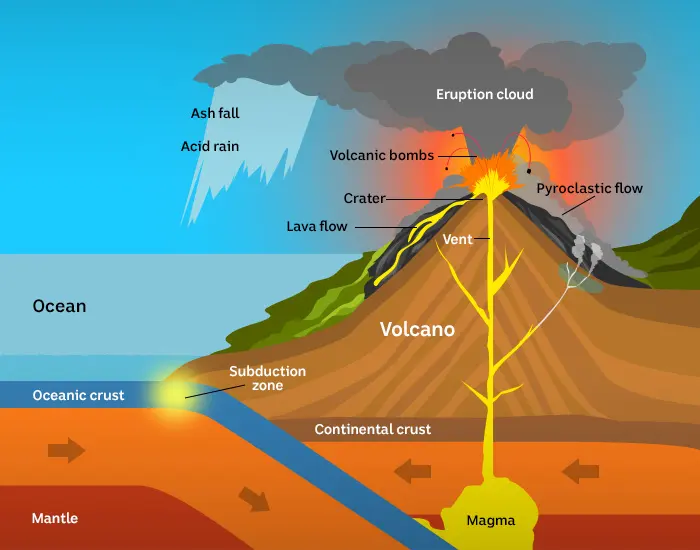
Volcanoes erupt because of the dynamic nature of Earth’s interior. The planet's outer shell, the lithosphere, is broken into massive tectonic plates that float on the semi-fluid asthenosphere. When these plates collide or pull apart, they create conditions that allow rock to melt into magma. This process often occurs at subduction zones, where one plate slides beneath another, carrying water-rich minerals into the hot mantle. The introduction of water lowers the melting point of the rock, generating large volumes of magma that seek a path to the surface.
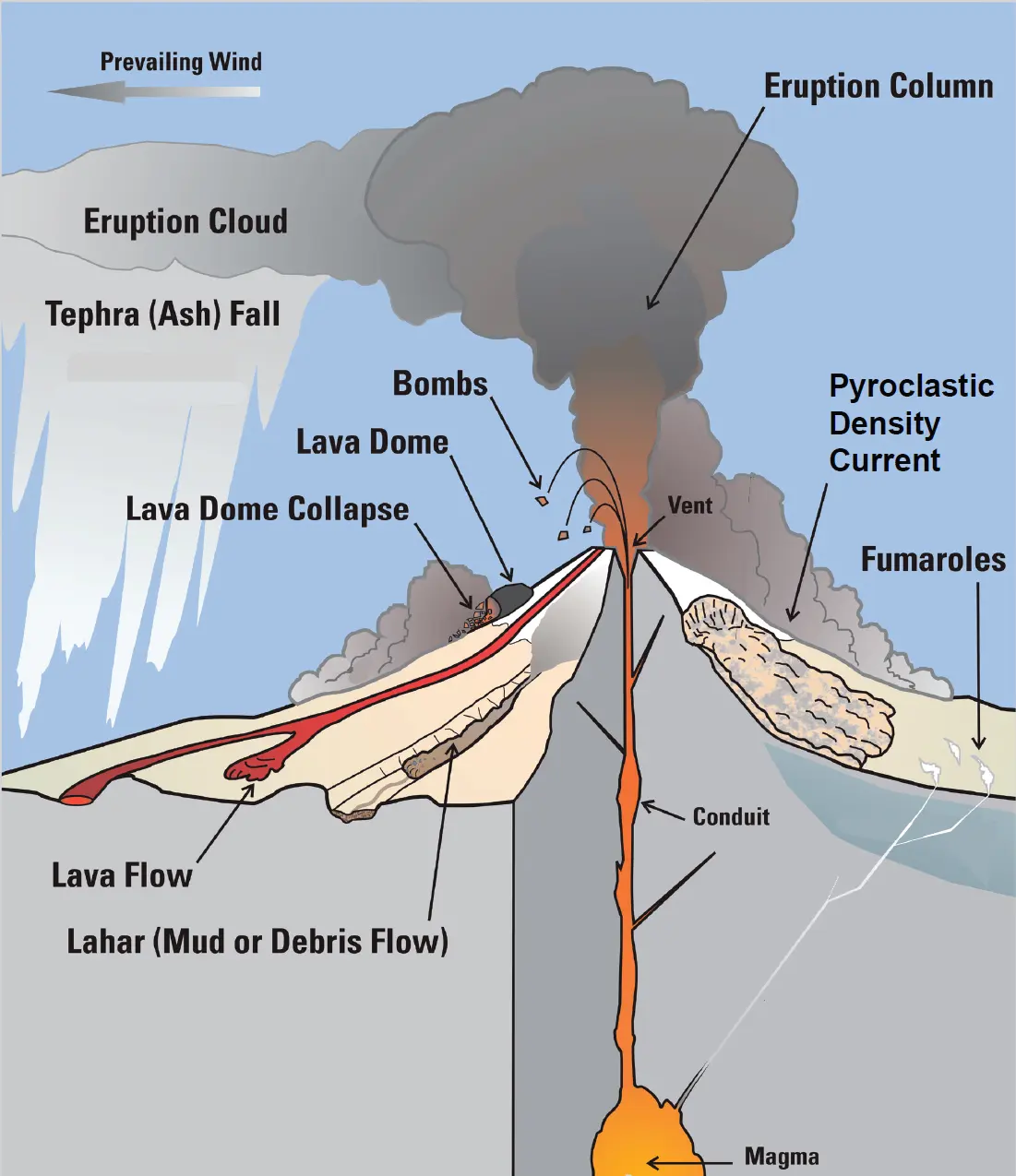
The ascent of magma is driven by buoyancy. Because magma is less dense than the surrounding solid rock, it rises through cracks and fissures in the crust. As it nears the surface, the decrease in pressure allows dissolved gases, such as water vapor, carbon dioxide, and sulfur dioxide, to expand rapidly. This gas expansion acts like the carbonation in a shaken soda bottle, providing the explosive force necessary to propel lava, ash, and volcanic gases into the atmosphere.
How do scientists predict volcanic eruptions?
Predicting eruptions is a complex task that relies on monitoring subtle changes in a volcano's behavior. Volcanologists use a variety of instruments to detect precursors before an event occurs. By tracking these signals, experts can provide warnings to nearby populations, though pinpointing the exact timing remains difficult. No single method is foolproof, so scientists look for patterns across multiple data streams to assess the level of risk.
Key indicators that a volcano may be preparing to erupt include:
- Increased seismic activity, often manifesting as swarms of small earthquakes.
- Ground deformation, where the volcano’s surface bulges due to rising magma.
- Significant changes in gas emissions, such as a spike in sulfur or carbon dioxide levels.
- Changes in the temperature of local hot springs or crater lakes.
When these indicators show a clear upward trend, authorities may raise the alert level. This allows for the implementation of evacuation protocols and the closing of airspace to prevent damage to aircraft engines from volcanic ash.
What are the different types of volcanic eruptions?
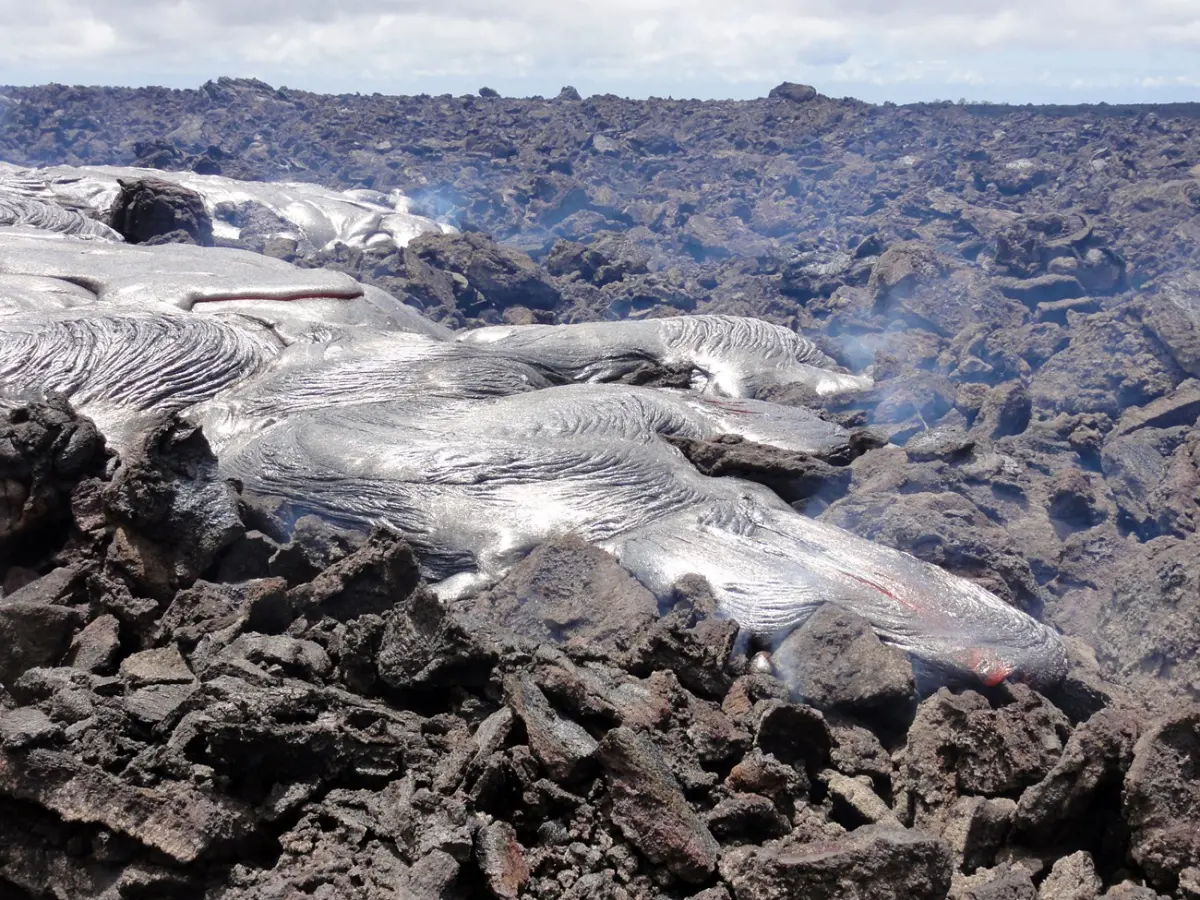
Not all eruptions are the same; they vary based on the viscosity of the magma and the amount of gas trapped within it. Magma with high silica content is thick and sticky, preventing gases from escaping easily. This leads to high-pressure buildup and violent, explosive eruptions. Conversely, low-silica magma is runny, allowing gases to escape steadily, which results in quieter, effusive eruptions where lava flows across the landscape.
The classification of eruptions is often named after famous volcanoes or historical events:
- Hawaiian: Characterized by fluid lava flows and fire fountains.
- Strombolian: Frequent, small bursts of incandescent lava.
- Vulcanian: Short, violent explosions of ash and rock.
- Plinian: Massive, sustained columns of gas and ash reaching the stratosphere.
Understanding these types helps researchers categorize the potential impact of an eruption. Plinian eruptions, such as the 1991 eruption of Mount Pinatubo, are the most dangerous because they can alter global climate patterns by injecting aerosols into the upper atmosphere.
Common mistakes when studying volcanoes
A frequent error for beginners is assuming that all volcanoes are tall, cone-shaped mountains. In reality, volcanic activity takes many forms, including vast fissures, underwater ridges, and massive calderas. Another mistake is believing that volcanoes are always active; many are dormant or extinct. Distinguishing between these states is vital, as a dormant volcano can remain quiet for thousands of years before suddenly waking up, as seen with the 1980 eruption of Mount St. Helens.
People also often underestimate the danger of volcanic ash. Unlike the soft, fluffy ash from a fireplace, volcanic ash is composed of tiny, jagged particles of rock and glass. These particles are abrasive and can cause severe respiratory issues and mechanical failure in machinery. If you are in an area affected by ashfall, avoid these common mistakes:
- Do not attempt to drive, as ash clogs air filters and obscures visibility.
- Do not use water to clean ash off roofs, as the weight can cause structural collapse when the ash becomes wet.
- Do not remain outdoors without a high-quality mask or respirator.
How to stay safe during an eruption
If you live near an active volcano, preparation is essential for survival. Emergency management agencies provide specific guidelines for residents in high-risk zones. The most important step is to have a pre-planned evacuation route that avoids known hazards like valleys or low-lying areas where mudflows, known as lahars, can travel at high speeds.
Follow these steps to ensure your safety if an eruption warning is issued:
- Stay informed via local radio or official government alerts.
- Keep an emergency kit ready, including goggles, masks, and fresh water.
- Move to high ground if you are near a river that could be affected by lahars.
- Seal windows and doors to prevent fine ash from entering your home.
By respecting the power of volcanic systems and following expert guidance, residents can significantly reduce their risk. Always prioritize official instructions over rumors or social media speculation during a crisis, as volcanic conditions can shift rapidly and unpredictably.
Key facts
- Magma rises because it is less dense than the solid rock surrounding it.
- Volcanoes typically erupt when pressure from dissolved gases in magma exceeds the strength of the overlying rock.
- Most volcanic activity occurs at tectonic plate boundaries, where plates pull apart or collide.
- Silica content determines magma viscosity; high-silica magma is thick and causes more explosive eruptions.
- Monitoring equipment like seismographs and tiltmeters helps scientists predict eruptions by detecting ground movement.
- Never ignore official evacuation orders from local authorities, as volcanic gases can be lethal even miles from the crater.
The bottom line
Volcanic eruptions are primarily driven by the buildup of pressure from dissolved gases within molten rock. As magma rises toward the surface, decreasing pressure allows these gases to expand, potentially triggering explosive events. Understanding the geological context of a volcano, such as its plate tectonic setting and magma composition, is essential for identifying risks and staying safe when living near active volcanic regions worldwide.
People also ask
How do scientists predict when a volcano will erupt?
Scientists monitor volcanoes using seismometers to detect earthquakes caused by rising magma. They also track ground deformation with GPS and analyze gas emissions like sulfur dioxide, which often increase before an eruption.
What is the difference between magma and lava?
Magma is molten rock located beneath the Earth's surface. Once that material erupts through a vent and reaches the surface, it is officially classified as lava.
Can a volcano erupt without any warning signs?
While most volcanoes provide signals like tremors or gas releases, some phreatic or steam-driven eruptions can occur with little notice. These happen when water is heated by magma and flashes into steam, causing a sudden explosion.
What are the primary hazards during a volcanic eruption?
The most dangerous hazards include pyroclastic flows, which are fast-moving currents of hot gas and rock, and volcanic ash clouds. Other risks include lava flows, mudflows known as lahars, and toxic volcanic gases.
Why do some volcanoes explode while others just ooze lava?
The explosivity depends on the magma's viscosity and gas content. Thick, sticky magma traps gases, leading to high-pressure explosions, while thin, runny magma allows gases to escape easily, resulting in gentle lava flows.
Are all volcanoes located on mountains?
No, volcanoes can take many forms, including underwater vents, vast flat plains created by flood basalts, and depressions known as calderas. A volcano is defined by the vent through which material erupts, not its elevation.
This answer was created with the help of AI research tools and reference sources. Spotted an error? Let us know — we correct mistakes quickly. See our editorial policy.